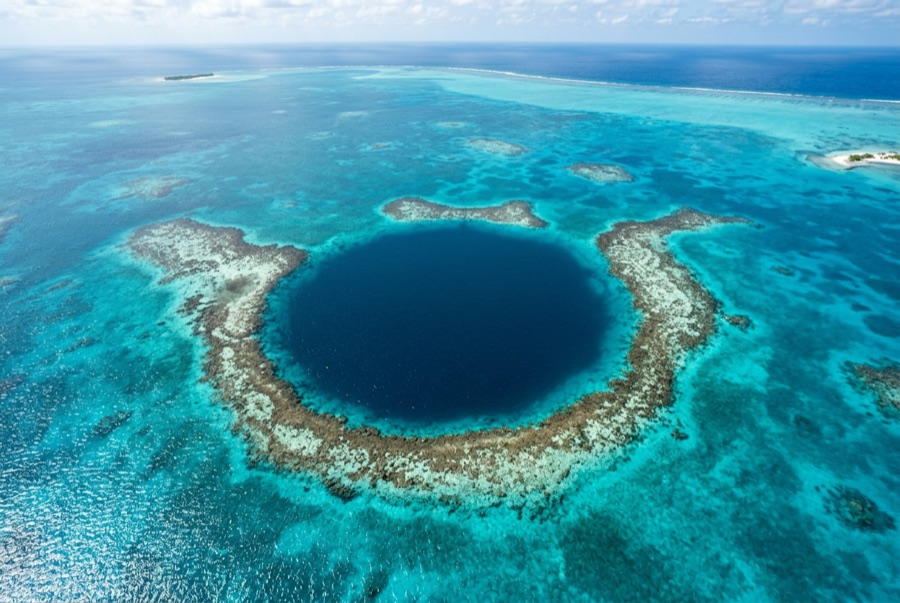
Blue Hole
Depth is the range from the top of the site to its usual maximum; "recommended cert" is the mainstream-agency level operators usually ask for, not a legal rule. Currents and visibility change daily, so treat everything here as planning ranges.
The Blue Hole is Guam's best-known dive, a natural shaft cut into the limestone reef near the tip of the Orote Peninsula. Divers drop into the opening at roughly 15 to 18 m and sink down the shaft, which continues past 90 m, far beyond air-diving limits. A large window in its side opens onto the outer wall at about 38 to 40 m; the dive leaves through it and climbs back along the wall. Daytime visibility usually tops 30 m, often enough to see the opening from the surface. Moray eels and nudibranchs live in holes in the shaft, jacks, barracuda and reef sharks work the wall, and eagle rays, dolphins, pilot whales and even whale sharks have been seen nearby.
The moment you come for: Free-fall through a reef shaft; exit window onto the wall near 40 m; visibility often over 30 m; chance of pelagics
Topography: Vertical limestone shaft in the reef with a side window onto the outer wall
Entry: Descend into the top of the shaft, free-fall down it, exit through the side window onto the outer wall and ascend along the wall.
Know before you splash
Hazards: Rapid descent to about 40 m with short no-decompression time and narcosis risk; the shaft continues far deeper than the exit window, so watch your gauge and leave through the window with the guide.
Nitrox: Worth it here: profiles sit in the range where enriched air meaningfully extends no-stop time (with the training to use it).
Who you'll meet
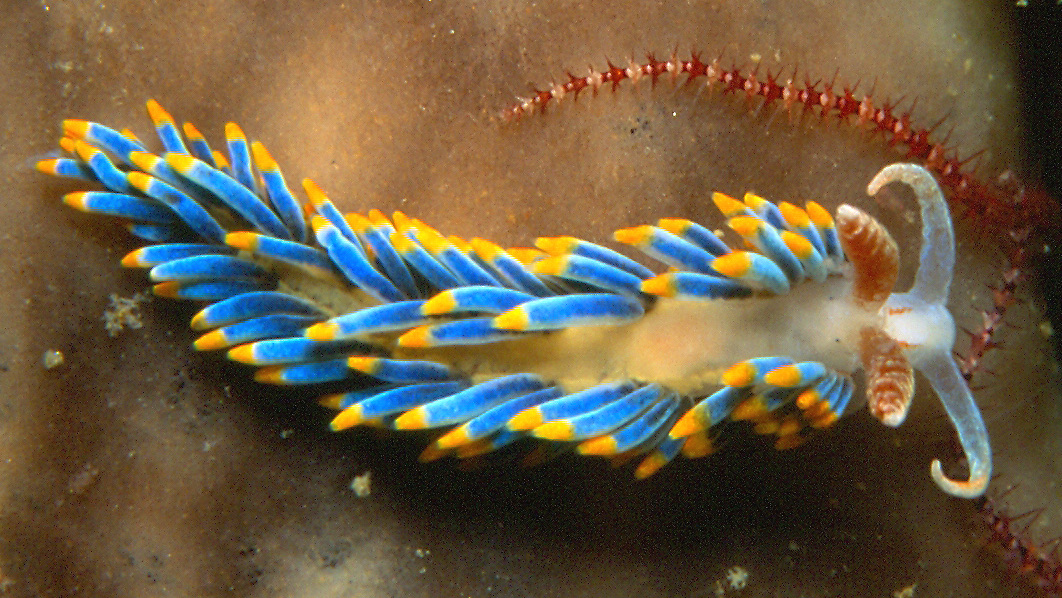
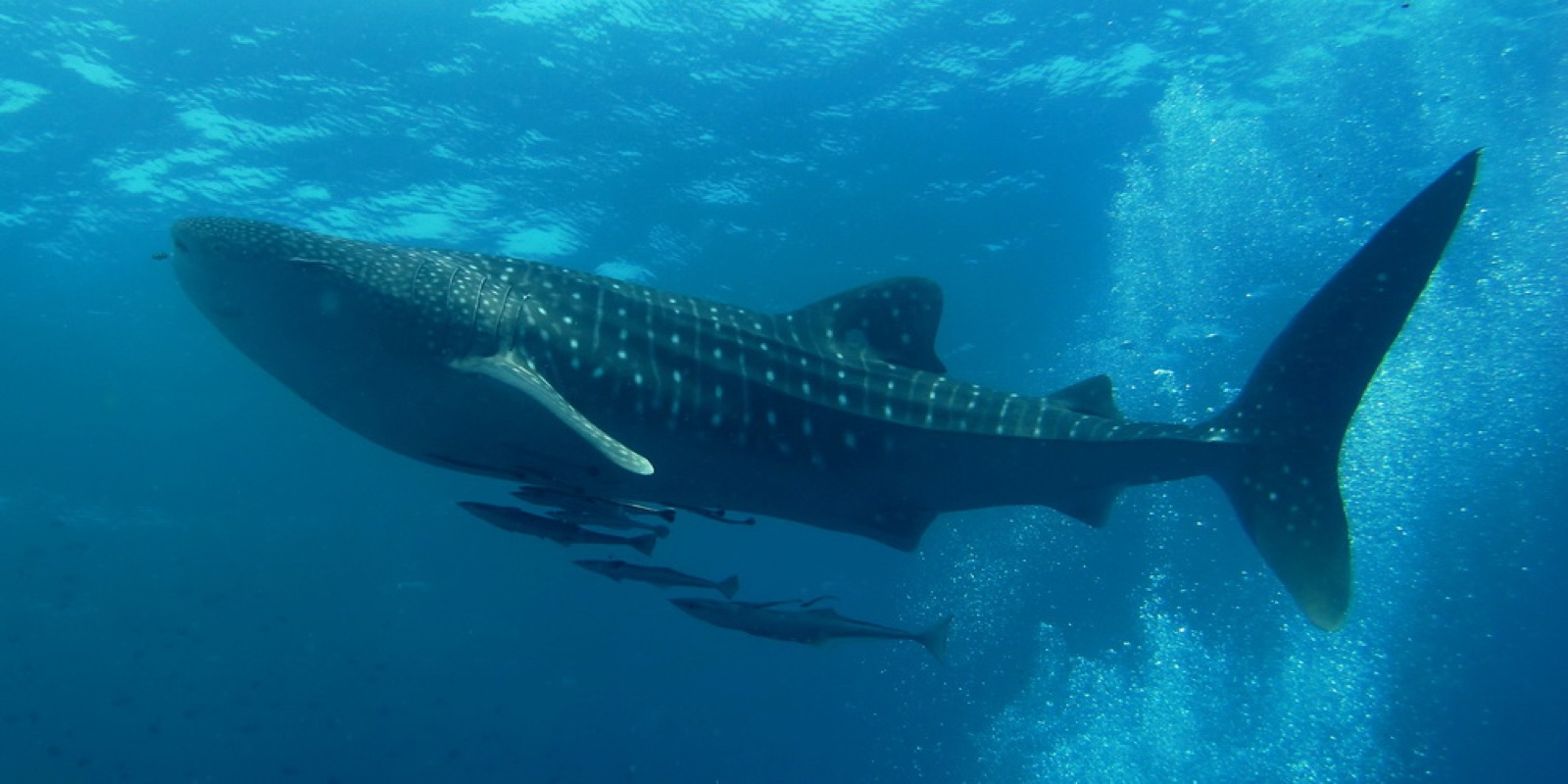
"Charted here" species were listed by our editors from the sources on this page. Counts are GBIF occurrence records: observations logged within about 5 km of the charted position since 1990, matched only against the species in our catalogue. They show what has been seen there, not a promise of what you will see.