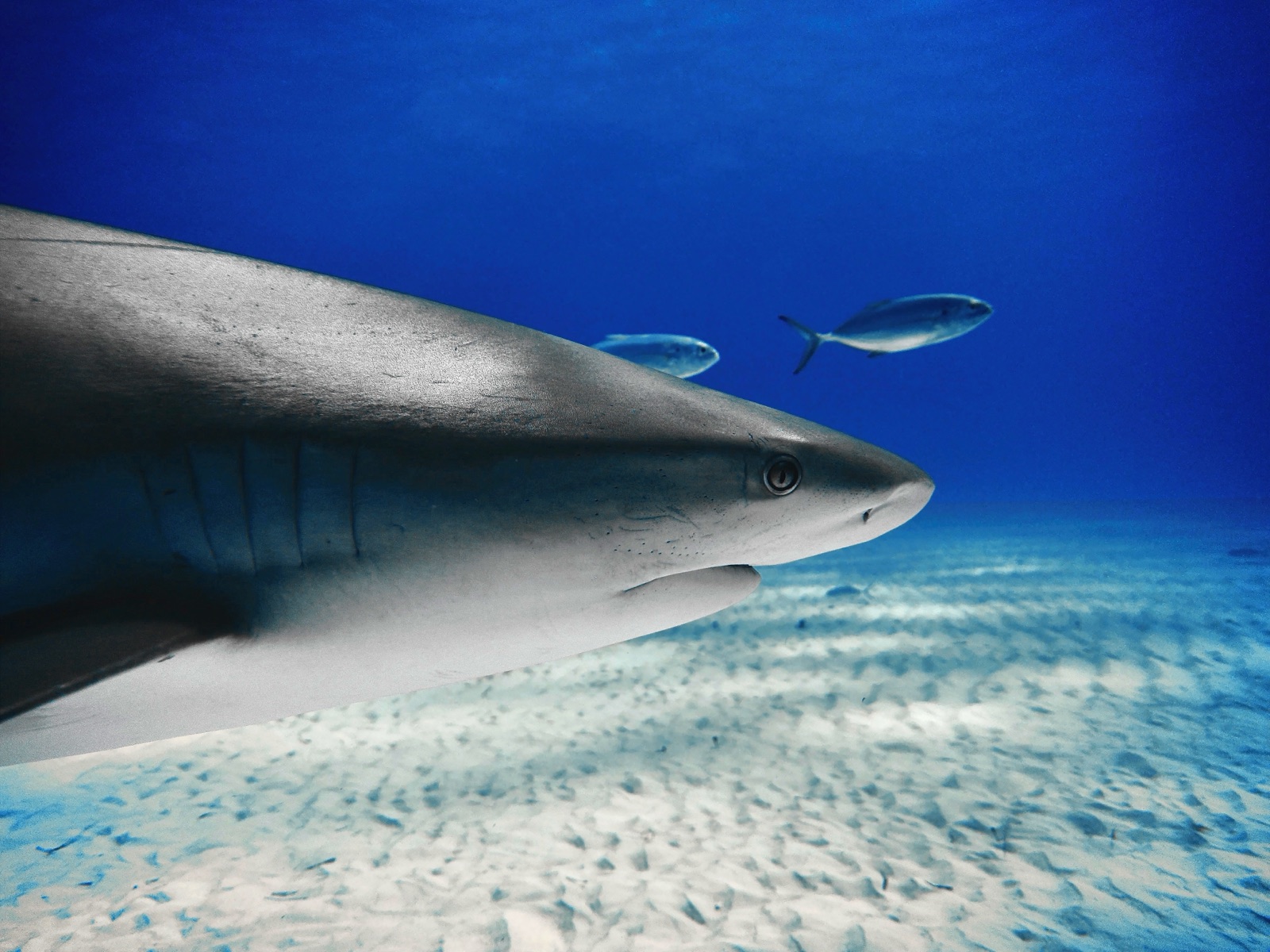
Tiger Beach & Grand Bahama
Some twenty miles northwest of Grand Bahama's West End, a pale sandbank in six meters of clear Atlantic water has become the most dependable place on the planet to dive with tiger sharks. Day boats and liveaboards anchor over the bank while tigers, lemons, and Caribbean reef sharks circle for hours at a time. Grand Bahama itself adds wall dives, a storied deep wreck, and one of the Caribbean's original organized shark feeds.
Why dive here
Tiger Beach delivers what almost nowhere else can: multiple large tiger sharks on a single shallow dive, in bright sand-bottom conditions that flatter photographers and stretch bottom time past an hour. Lemon sharks gather in dozens, resting on the sand or cruising with remoras streaming, and in the cooler months a great hammerhead may sweep through the arena. The Bahamas banned longlining decades ago and declared its entire exclusive economic zone a shark sanctuary in 2011, which is a large part of why these populations remain so robust. This is baited diving run to strict protocols, not a casual reef tour, and it rewards divers who can hold position calmly. Between bank trips, Grand Bahama offers the ledge-side wreck of Theo's, the shallow fish-swarmed Sugar Wreck, and Shark Junction, where UNEXSO has run reef shark encounters since the 1990s.
Month by month
October through April is prime, with tiger shark numbers highest in the cooler months. Many bank operations slow or pause during the June-November hurricane season.
| Month | Water | Visibility | What it's like |
|---|---|---|---|
| January●●●●● | 23–25 °C / 73–77 °F | 20–40 m | Peak tiger season; occasional cold fronts bring wind. |
| February●●●●○ | 23–25 °C / 73–77 °F | 20–40 m | |
| March●●●●○ | 24–26 °C / 75–79 °F | 20–40 m | |
| April●●●●○ | 25–27 °C / 77–81 °F | 20–40 m | |
| May●●●○○ | 26–28 °C / 79–82 °F | 20–35 m | |
| June●●○○○ | 27–29 °C / 81–84 °F | 15–30 m | Hurricane season begins; many bank trips pause. |
| July●●○○○ | 28–30 °C / 82–86 °F | 15–30 m | |
| August●●○○○ | 28–30 °C / 82–86 °F | 15–30 m | |
| September●●○○○ | 28–30 °C / 82–86 °F | 15–30 m | Statistical peak of hurricane season. |
| October●●●●○ | 27–29 °C / 81–84 °F | 15–35 m | Season restarts as storms taper. |
| November●●●●● | 25–27 °C / 77–81 °F | 20–40 m | |
| December●●●●● | 24–26 °C / 75–79 °F | 20–40 m |
Monthly figures confidence: Documented. Months without a row have no verified data. We would rather show a gap than invent one.
The dive sites (6)
| Site | Type | Depth | Level | Access | |
|---|---|---|---|---|---|
| El Dorado Winter great hammerhead encounters, quieter alternative arena to the main… | Reef | — | Intermediate | Boat | |
| Fish Tales Tiger and lemon sharks over living reef, packed fish holes, photogenic… | Reef | 10–15 m | Intermediate | Boat | |
| Shark Junction Close-range Caribbean reef sharks, professional feed format, easy depth | Reef | 12–15 m | Intermediate | Boat | |
| Sugar Wreck Dense fish swarms on shallow wreckage, superb night and snorkel site | Wreck | 4–6 m | Beginner | Boat | |
| Theo's Wreck Intact hull on its side at the drop-off edge, resident groupers and turtles | Wreck | 12–33 m | Advanced | Boat | |
| Tiger Beach Multiple tiger sharks at touching distance, lemon shark packs, hour-plus… | Reef | 5–12 m | Intermediate | Boat |
Marine life you can plan around
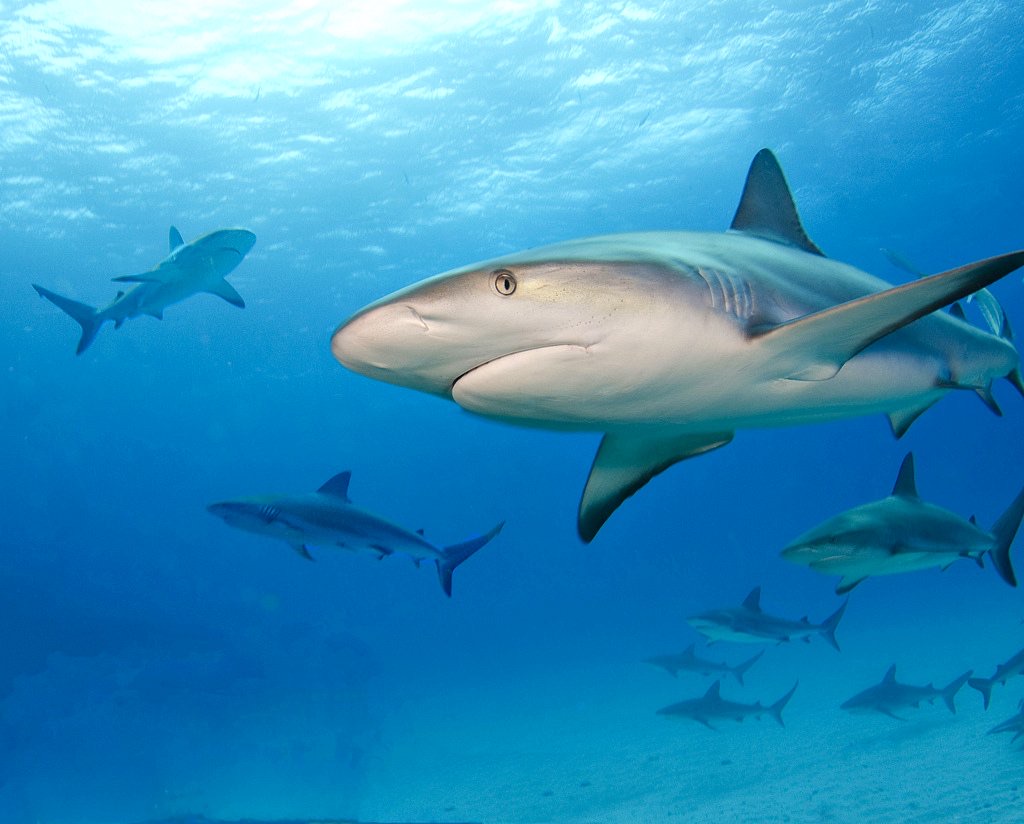
Caribbean Reef Shark
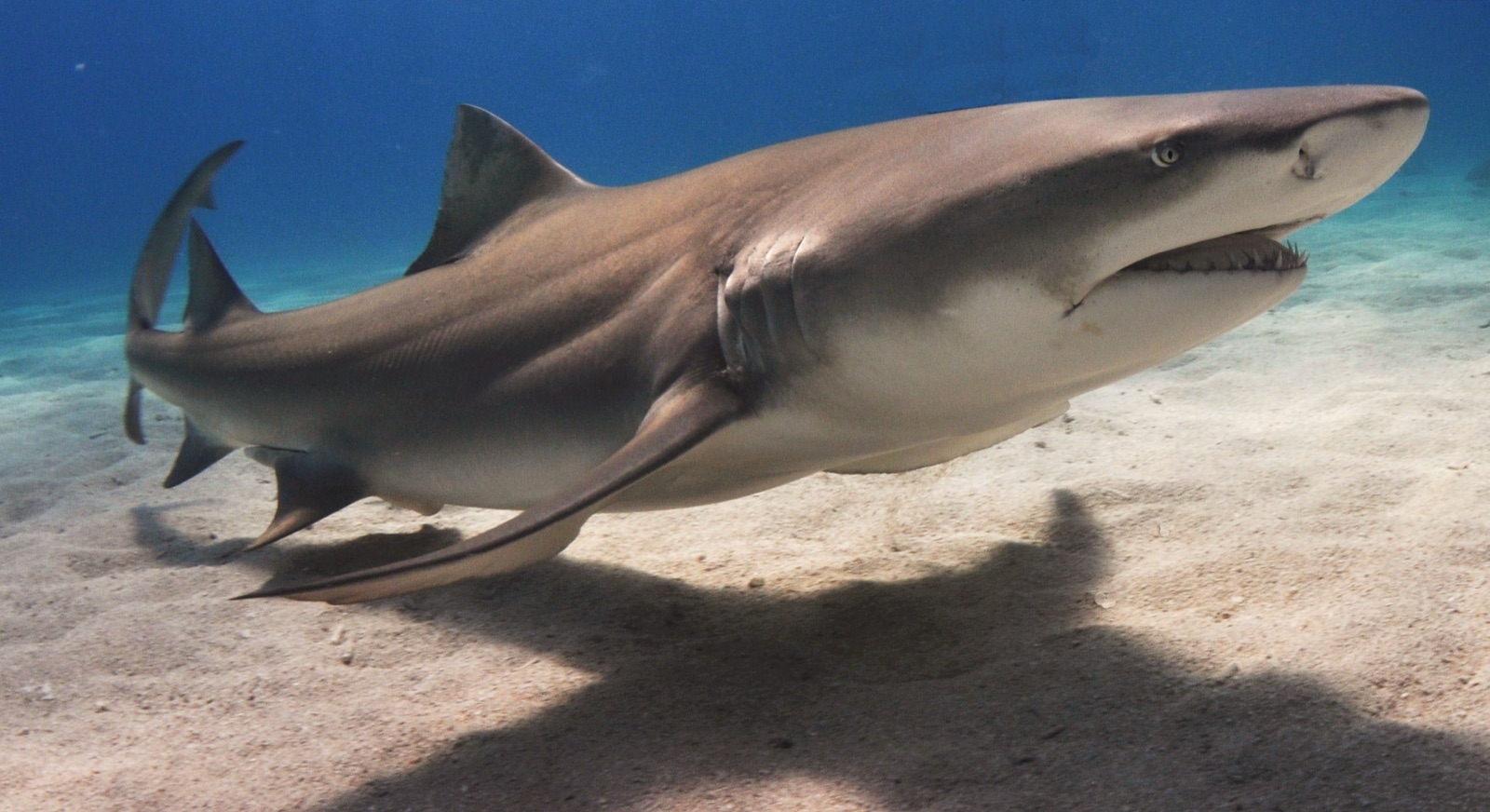
Lemon Shark
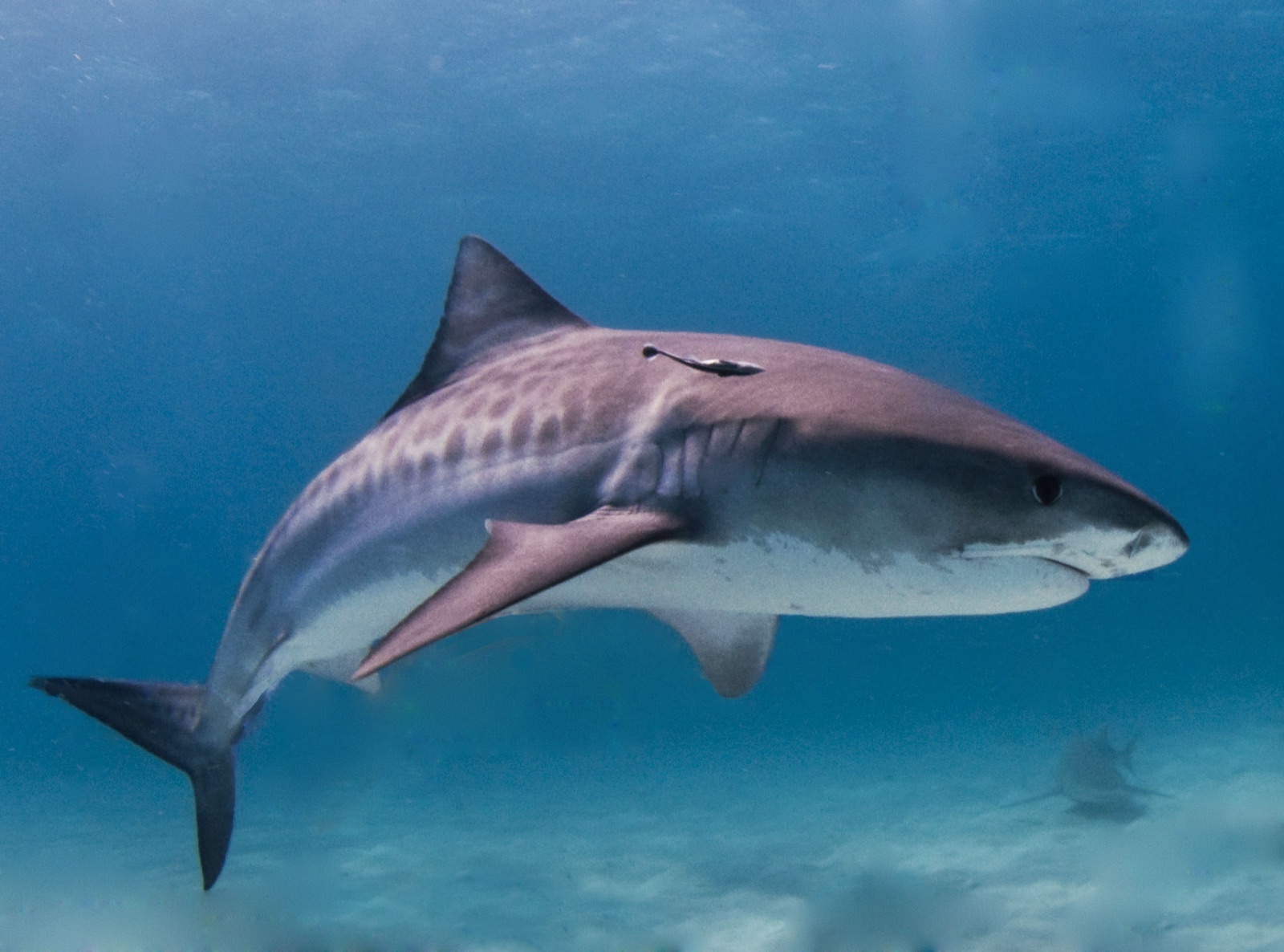
Tiger Shark
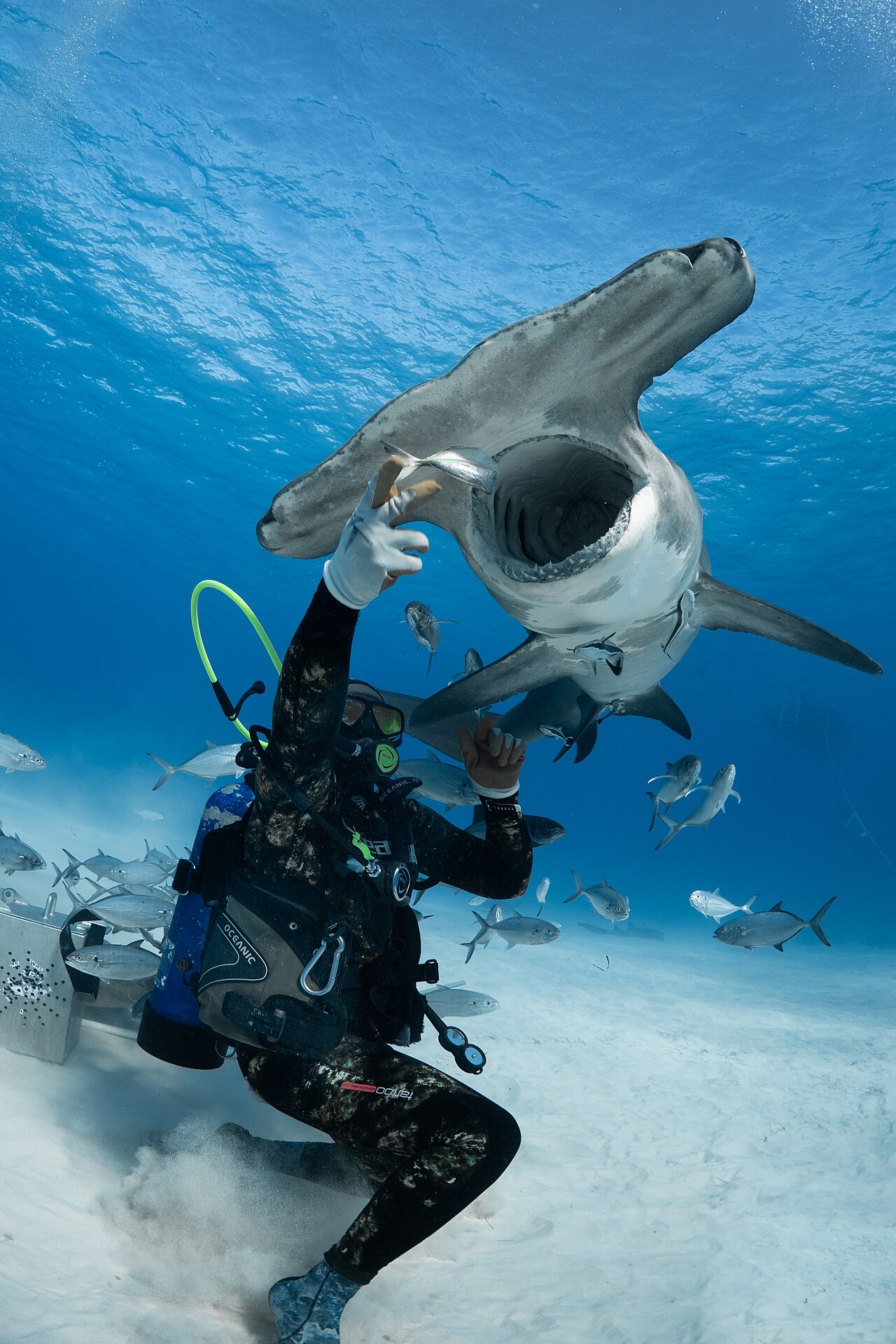
Great Hammerhead
Tiger sharks are the headline act year-round with a winter peak, joined by thick aggregations of lemon sharks, Caribbean reef sharks, and nurse sharks. Great hammerheads appear occasionally in winter, southern stingrays work the sand, and dolphins sometimes buzz the boats.
Getting there & staying
Getting there: Fly to Freeport via Nassau or Florida gateways. Day boats to the bank leave from West End marinas; several liveaboards cross directly from Palm Beach, Florida.
Where to stay: Base at West End for the shortest boat runs, or in the Freeport-Lucaya resort area for more hotel and restaurant choice.
Liveaboards: Florida-based liveaboards run 3-7 night Tiger Beach itineraries, often adding Bimini or other Bahamas banks.
Costs: Range covers standard Grand Bahama reef two-tanks. Dedicated Tiger Beach charters are full-day or multi-day trips costing several times more, and many visitors book Florida-departing liveaboards. Editorial estimate; confirm current rates.
Between dives: Lucayan National Park's caves and mangrove creeks, long empty beaches, and kayaking round out surface days.
Safety & practicalities
Hazards: Baited dives concentrate large predatory sharks in open water; hurricane season June-November; long open-ocean crossings to the bank.
Follow shark-dive briefings exactly: dark gloves and hood, no dangling gear, stay in the group, keep hands close, and never swim on the surface away from the boat. These are wild predators and the protocols exist because of real incidents.
Nearest recompression: Recompression facilities have operated on Grand Bahama; availability changes, so emergencies go through EMS and DAN first.