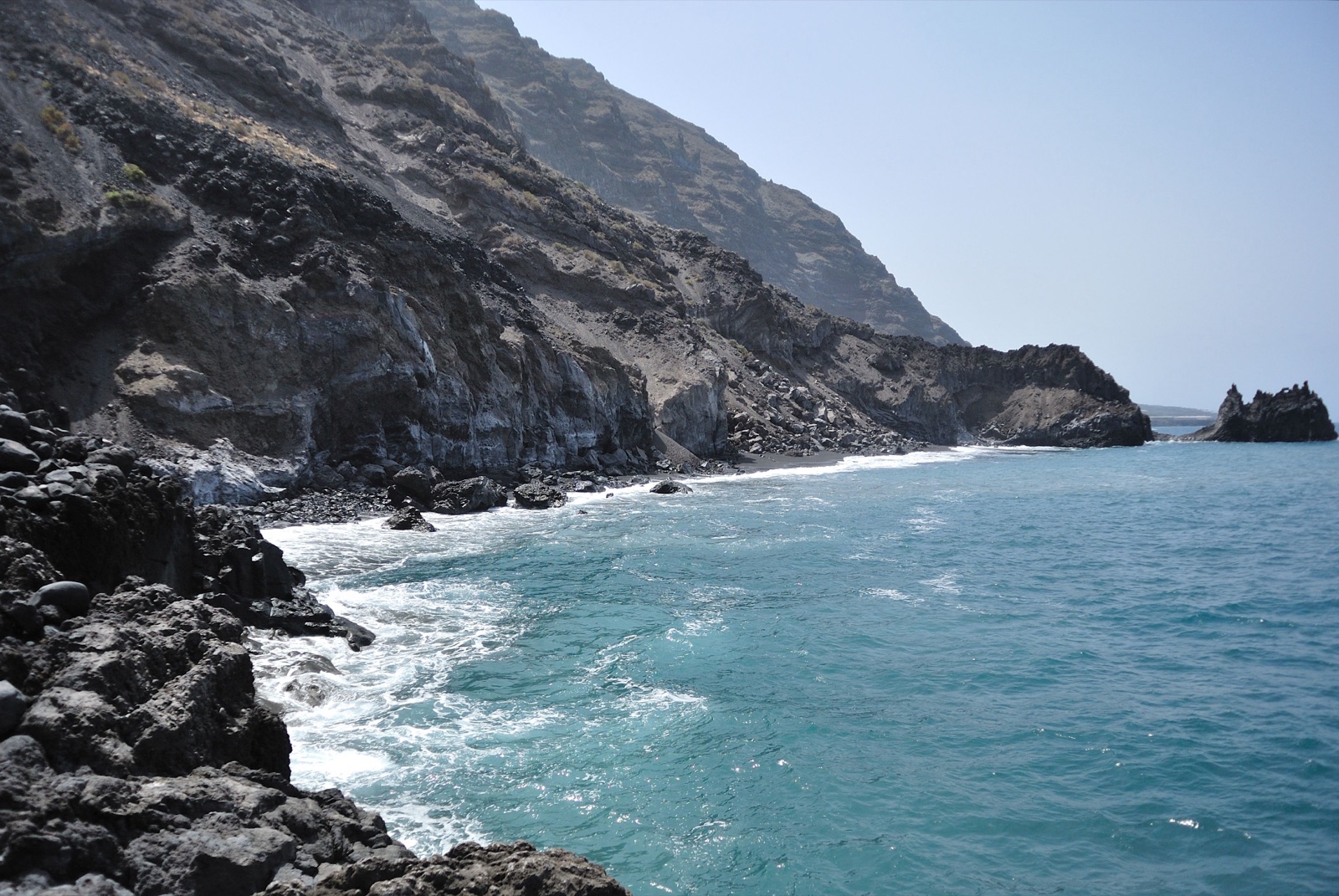
Canary Islands
Spain's Atlantic archipelago serves easy volcanic diving all year: lava arches and caverns, black-sand training bays, Europe's first underwater sculpture museum off Lanzarote, and El Hierro's celebrated pinnacle El Bajon. Water runs 18–25 °C, infrastructure is mature on every major island, and the Canaries remain the world stronghold of the critically endangered angelshark, a winter sighting divers travel specifically to attempt.
Why dive here
Each island has its own character. Lanzarote pairs the sculpture galleries of Museo Atlantico with Puerto del Carmen's walk-in shore diving, where seahorses and garden eels live within sight of the promenade. Gran Canaria's El Cabron reserve concentrates more fish species along one volcanic headland than anywhere else in the archipelago. Tenerife offers turtle bays and rays over black sand, while tiny El Hierro, the far southwestern outpost, delivers the Canaries at their wildest: the Mar de las Calmas and the twin towers of El Bajon, thick with groupers and amberjacks in blue, often 30-meter visibility. Between October and spring, cold-adapted angelsharks move onto the sand shallows, giving European divers their best chance to see a critically endangered species that has vanished from most of its former range. Add year-round flights, budget-friendly pricing and no real off-season, and the Canaries earn their status as Europe's default warm-water training ground with genuine highlights on top.
Month by month
Genuinely year-round; September–November brings the warmest, clearest water. Winter (roughly November–March) is angelshark season on the sand, with slightly cooler water and occasional swell.
| Month | Water | Visibility | What it's like |
|---|---|---|---|
| January●●●○○ | 19–20 °C / 66–68 °F | 12–25 m | Angelshark season; occasional northern swell. |
| February●●●○○ | 18–19 °C / 64–66 °F | 12–25 m | |
| March●●●○○ | 18–19 °C / 64–66 °F | 12–25 m | |
| April●●●○○ | 18–20 °C / 64–68 °F | 15–25 m | |
| May●●●●○ | 19–21 °C / 66–70 °F | 15–30 m | |
| June●●●●○ | 20–22 °C / 68–72 °F | 15–30 m | |
| July●●●●○ | 21–23 °C / 70–73 °F | 15–30 m | |
| August●●●●○ | 22–24 °C / 72–75 °F | 15–30 m | |
| September●●●●● | 23–25 °C / 73–77 °F | 20–30 m | Warmest water and typically the best visibility. |
| October●●●●● | 23–24 °C / 73–75 °F | 20–30 m | |
| November●●●●○ | 21–23 °C / 70–73 °F | 15–30 m | Angelsharks begin appearing on the shallows. |
| December●●●○○ | 20–21 °C / 68–70 °F | 12–25 m |
Monthly figures confidence: Editorial estimate. Months without a row have no verified data. We would rather show a gap than invent one.
The dive sites (5)
| Site | Type | Depth | Level | Access | |
|---|---|---|---|---|---|
| El Bajon Twin towers in blue water, large groupers, summer pelagic fly-bys | Pinnacle | 8–40 m | Advanced | Boat | |
| El Cabron Dense fish schools, lava arches and caves, winter angelshark encounters | Reef | 5–30 m | Intermediate | Shore | |
| El Puertito Green turtle encounters when luck cooperates, calm shallow water, easy… | Shore | 3–12 m | Beginner | Shore | |
| Museo Atlantico Sculpture installations acquiring marine growth, easy depth, seasonal… | Artificial reef | 10–14 m | Beginner | Boat | |
| Playa Chica Seahorses and garden eels, the Cathedral cavern, effortless logistics | Shore | 3–40 m | Beginner | Shore |
Getting there & staying
Getting there: Dense year-round charter and scheduled flights connect northern Europe to all main islands; inter-island flights and ferries reach El Hierro, whose dive scene concentrates in the southern village of La Restinga.
Where to stay: Base near your diving: Puerto del Carmen or Playa Blanca on Lanzarote, Arinaga for El Cabron, Costa Adeje for Tenerife's turtle coast, La Restinga for El Hierro's reserve.
Costs: Editorial estimate; shore-diving packages on Lanzarote and Gran Canaria can come in cheaper, El Hierro trips and museum fees higher.
Between dives: Teide National Park and Lanzarote's Timanfaya volcanic landscapes, Cesar Manrique's architecture, surfing on Fuerteventura, hiking on La Palma and El Hierro, and winter sun in general.
Safety & practicalities
Hazards: Swell on exposed coasts, surge in shallow lava topography, and boat traffic at busy resort sites. El Bajon carries current and open-water exposure.
A 5 mm suit works in summer, 7 mm in winter. Angelsharks are protected: never touch, chase or uncover a buried animal.
Nearest recompression: Hyperbaric facilities exist on the main islands, but availability changes; confirm current arrangements with your operator. Emergencies go through 112 and DAN Europe.