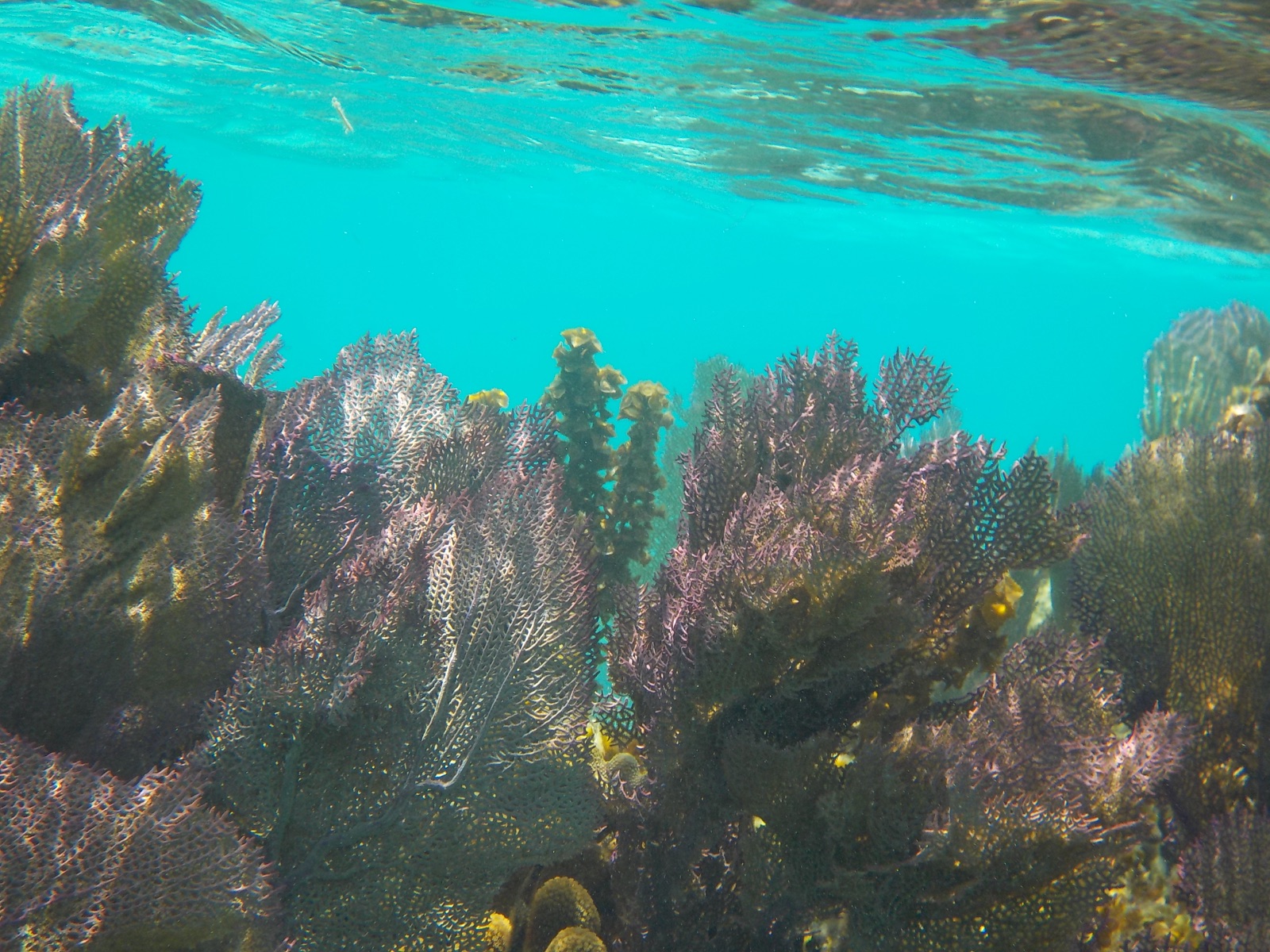
Belize Barrier Reef
Belize protects the longest barrier reef in the Western Hemisphere, a UNESCO World Heritage system that runs the length of the country and throws three coral atolls out into deep water. The range is unusual: the Great Blue Hole's stalactite gallery, sheer walls off Half Moon Caye, fish-thick channels at Hol Chan, and whale sharks over the snapper spawn at Gladden Spit. English-speaking, small-scale, and reachable by short island hops.
Why dive here
Most reef countries offer one kind of trip; Belize offers four within a hundred kilometers. Day boats from Ambergris Caye and Caye Caulker work the inner barrier reef, where protected cuts like Hol Chan boil with snappers, rays, and nurse sharks. The atolls are the prize: Turneffe's mangrove-backed reefs end at the current-swept Elbow, and Lighthouse Reef pairs the Great Blue Hole (a 124 m collapsed cavern with stalactites hanging at 40 m) with the technicolor wall at Half Moon Caye, where garden eels carpet the sand and red-footed boobies nest a stone's throw from the mooring. In spring, aggregating snappers off Placencia draw whale sharks to Gladden Spit under full moons. Liveaboards stitch the atolls together; land-based divers trade range for barefoot cayes. The scale stays human: small boats, small crowds, long national experience running marine reserves.
Month by month
February through June brings the driest, calmest water, and whale sharks appear at Gladden Spit around the March–June full moons. September and October are the wettest, stormiest months; winter cold fronts can blow out the atoll crossings for a day or two.
| Month | Water | Visibility | What it's like |
|---|---|---|---|
| January●●●●○ | 26–27 °C / 79–81 °F | 15–30 m | Dry and pleasant; occasional cold front. |
| February●●●●● | 26–27 °C / 79–81 °F | 20–35 m | Settled seas; atoll crossings reliable. |
| March●●●●● | 26–28 °C / 79–82 °F | 20–35 m | Prime conditions; first Gladden Spit spawns. |
| April●●●●● | 27–28 °C / 81–82 °F | 20–35 m | Whale-shark full moons; calm and clear. |
| May●●●●● | 27–29 °C / 81–84 °F | 20–35 m | Warm and calm; whale sharks continue. |
| June●●●●○ | 28–29 °C / 82–84 °F | 15–30 m | Rains begin; last spawning moons. |
| July●●●●○ | 28–30 °C / 82–86 °F | 15–30 m | Hot, greener water inshore. |
| August●●●●○ | 28–30 °C / 82–86 °F | 15–30 m | Warm and quiet; tropical waves pass. |
| September●●●○○ | 28–30 °C / 82–86 °F | 10–25 m | Peak storm season; unsettled. |
| October●●●○○ | 28–29 °C / 82–84 °F | 10–25 m | Wettest month on the cayes. |
| November●●●●○ | 27–28 °C / 81–82 °F | 15–30 m | Drying out; seas settle. |
| December●●●●○ | 26–27 °C / 79–81 °F | 15–30 m | Fresh northers alternate with calm spells. |
Monthly figures confidence: Documented. Months without a row have no verified data. We would rather show a gap than invent one.
The dive sites (6)
| Site | Type | Depth | Level | Access | |
|---|---|---|---|---|---|
| Gladden Spit Whale sharks feeding on snapper spawn, massed spawning aggregations, wild… | Blue water | 10–30 m | Advanced | Boat | |
| Great Blue Hole Swimming through 40 m stalactites, reef sharks in the bowl, one of diving's… | Blue hole | 10–124 m | Advanced | Boat | |
| Half Moon Caye Wall Garden-eel flats, a sheer sponge-clad wall, eagle rays and turtles, booby… | Wall | 8–40 m | Intermediate | Boat | |
| Hol Chan Cut Fearless big groupers and morays, nurse sharks and rays, protected-channel… | Channel | 3–9 m | Beginner | Boat | |
| The Aquarium (Long Caye) Fish density on the reef top, streaming creole wrasse, easy profile after… | Reef | 8–30 m | Beginner | Boat | |
| The Elbow (Turneffe Atoll) Eagle-ray squadrons, massed snapper and jacks, big-water drift at the… | Drift | 15–40 m | Advanced | Boat |
Marine life you can plan around
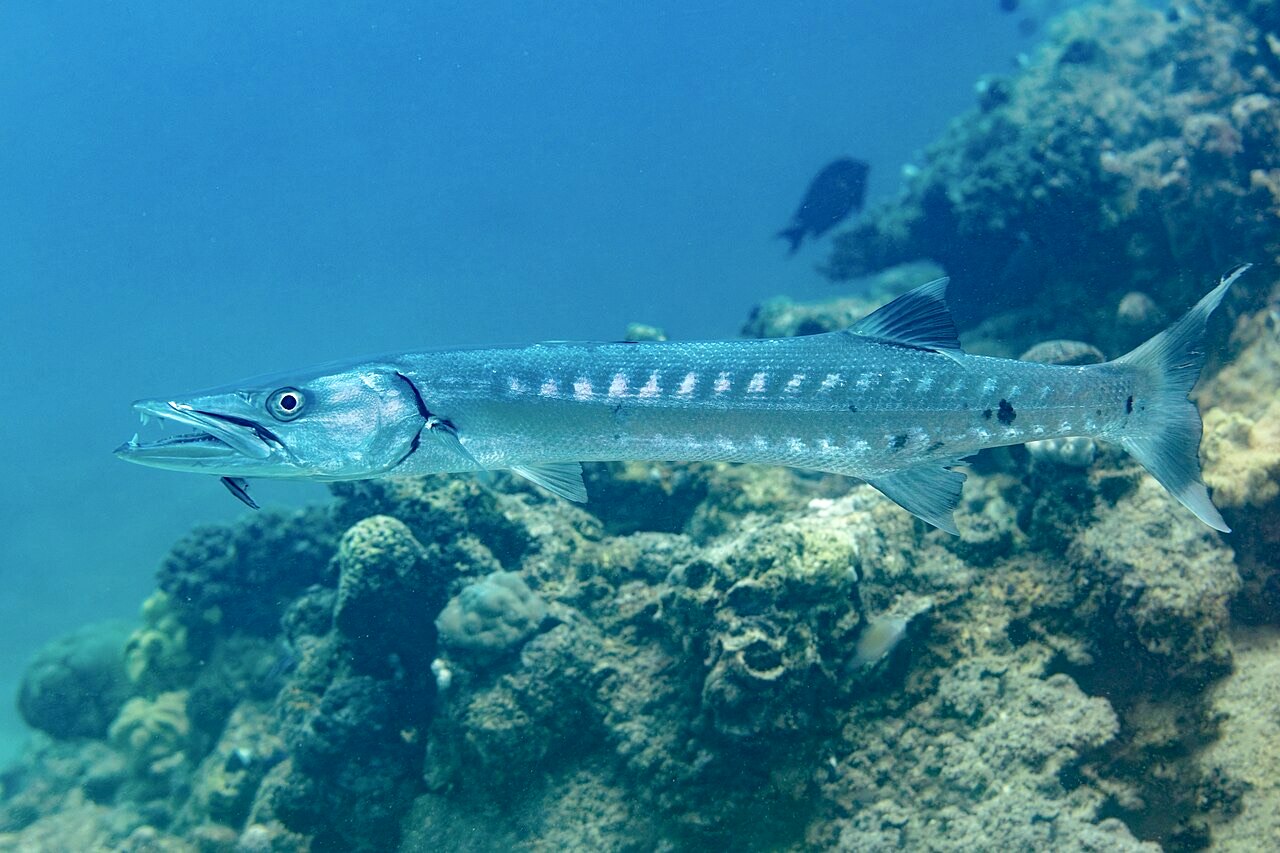
Great Barracuda
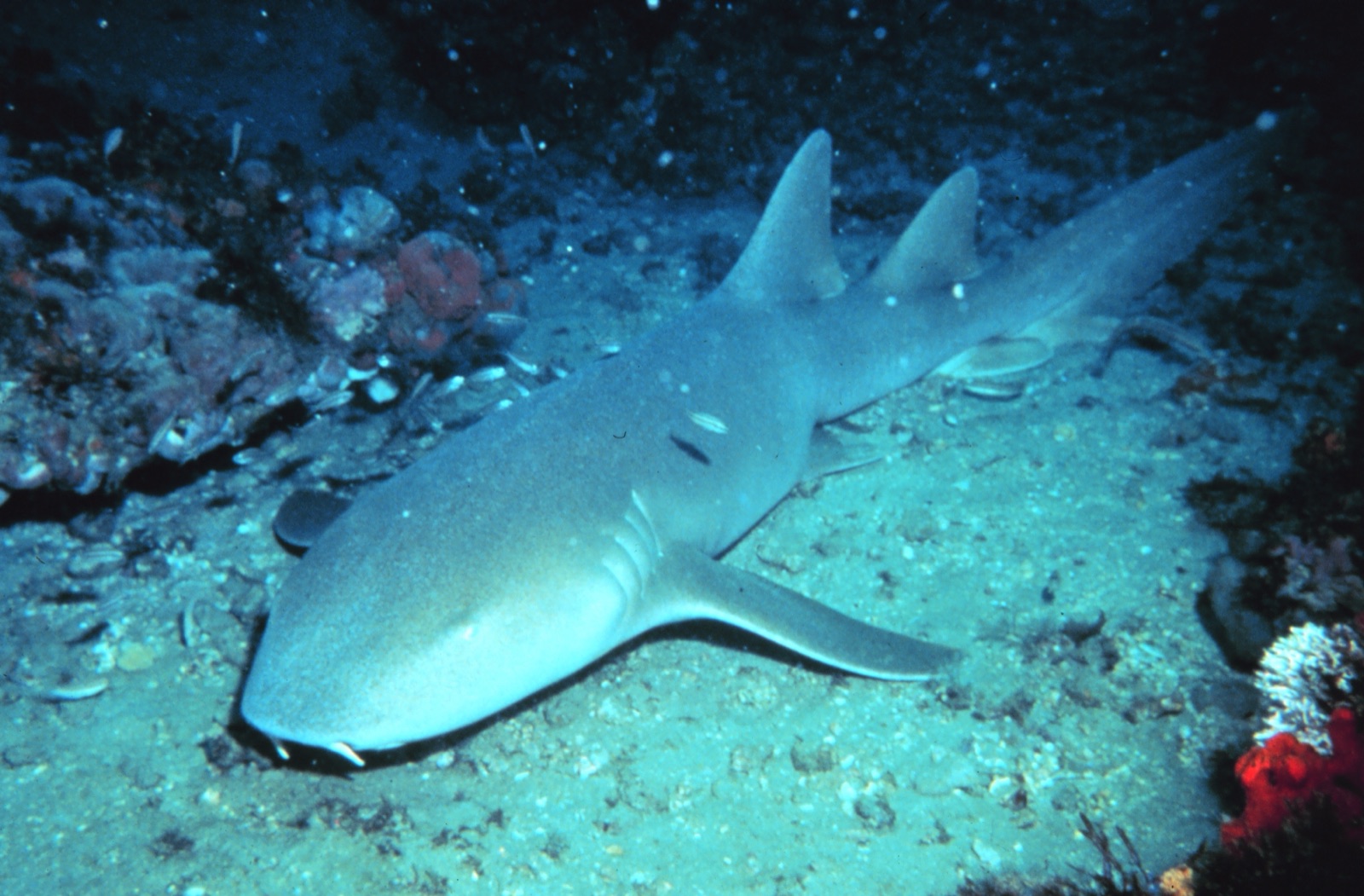
Nurse Shark
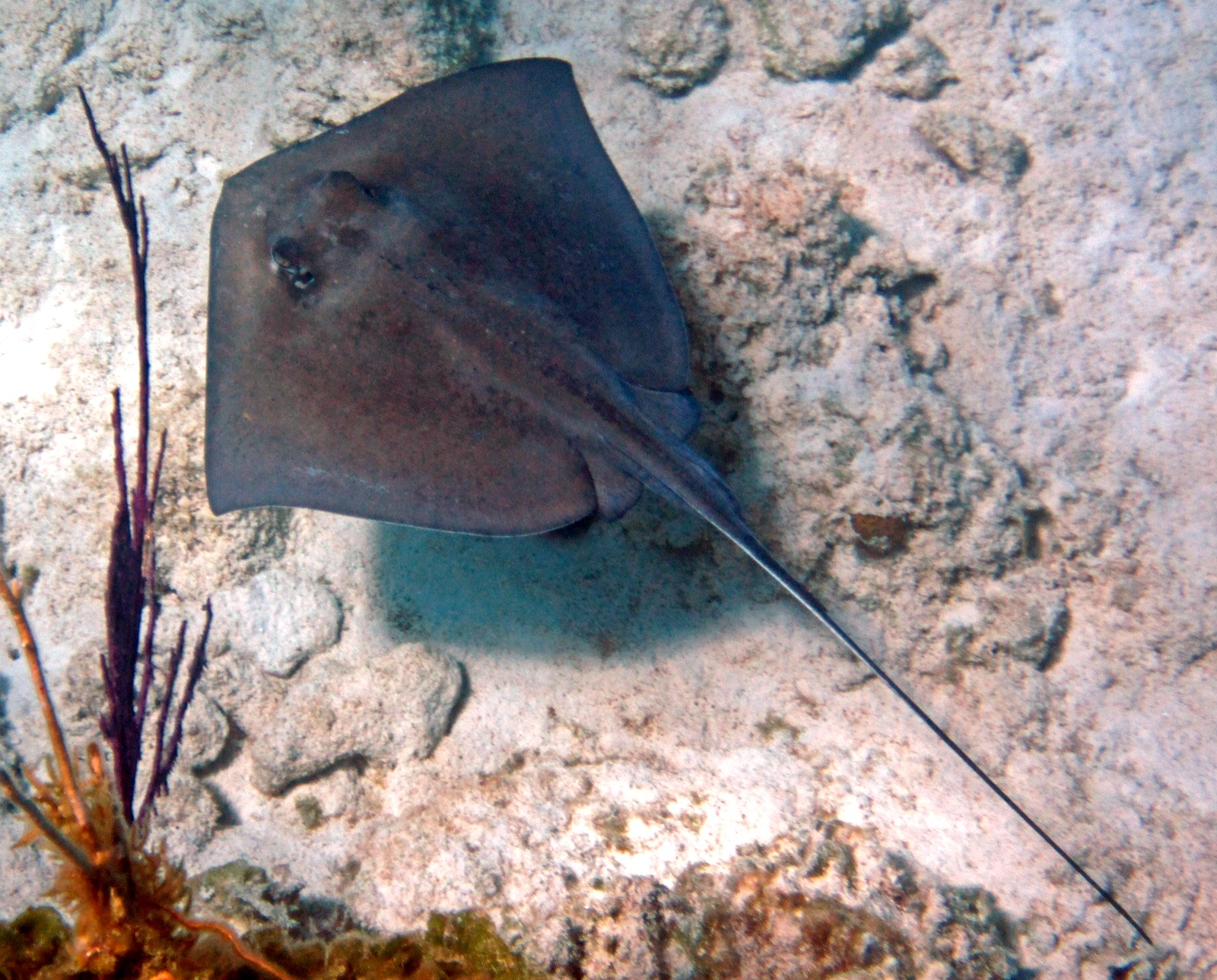
Southern Stingray
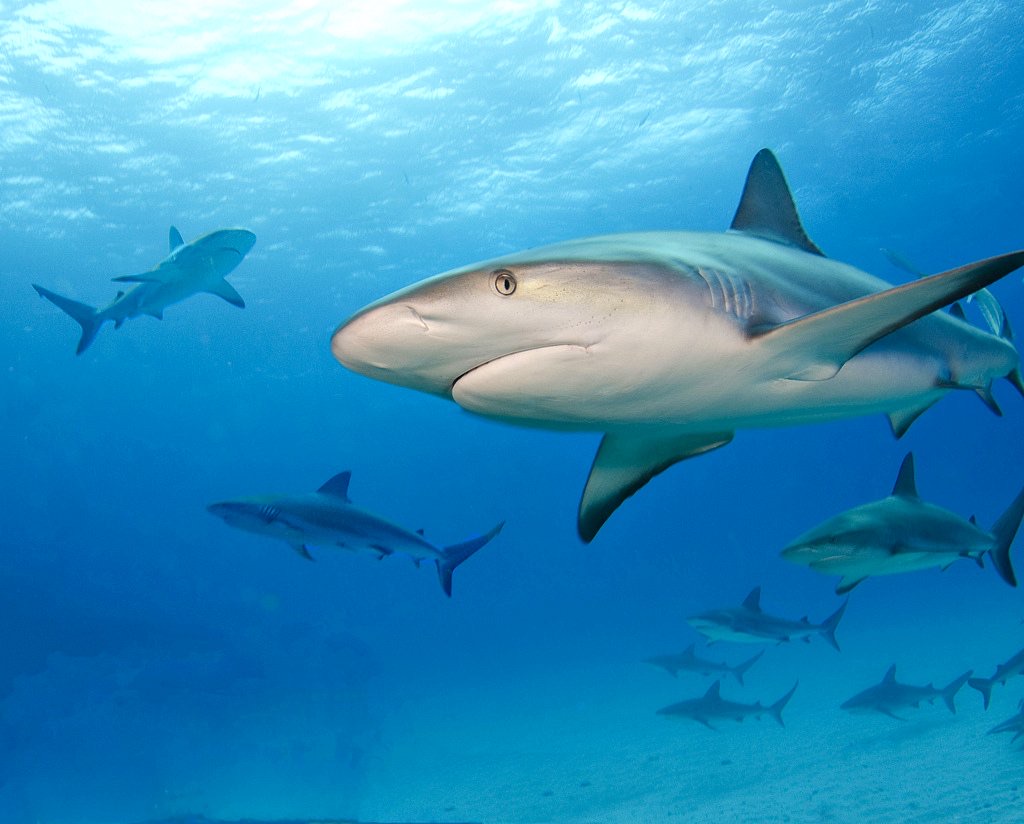
Caribbean Reef Shark
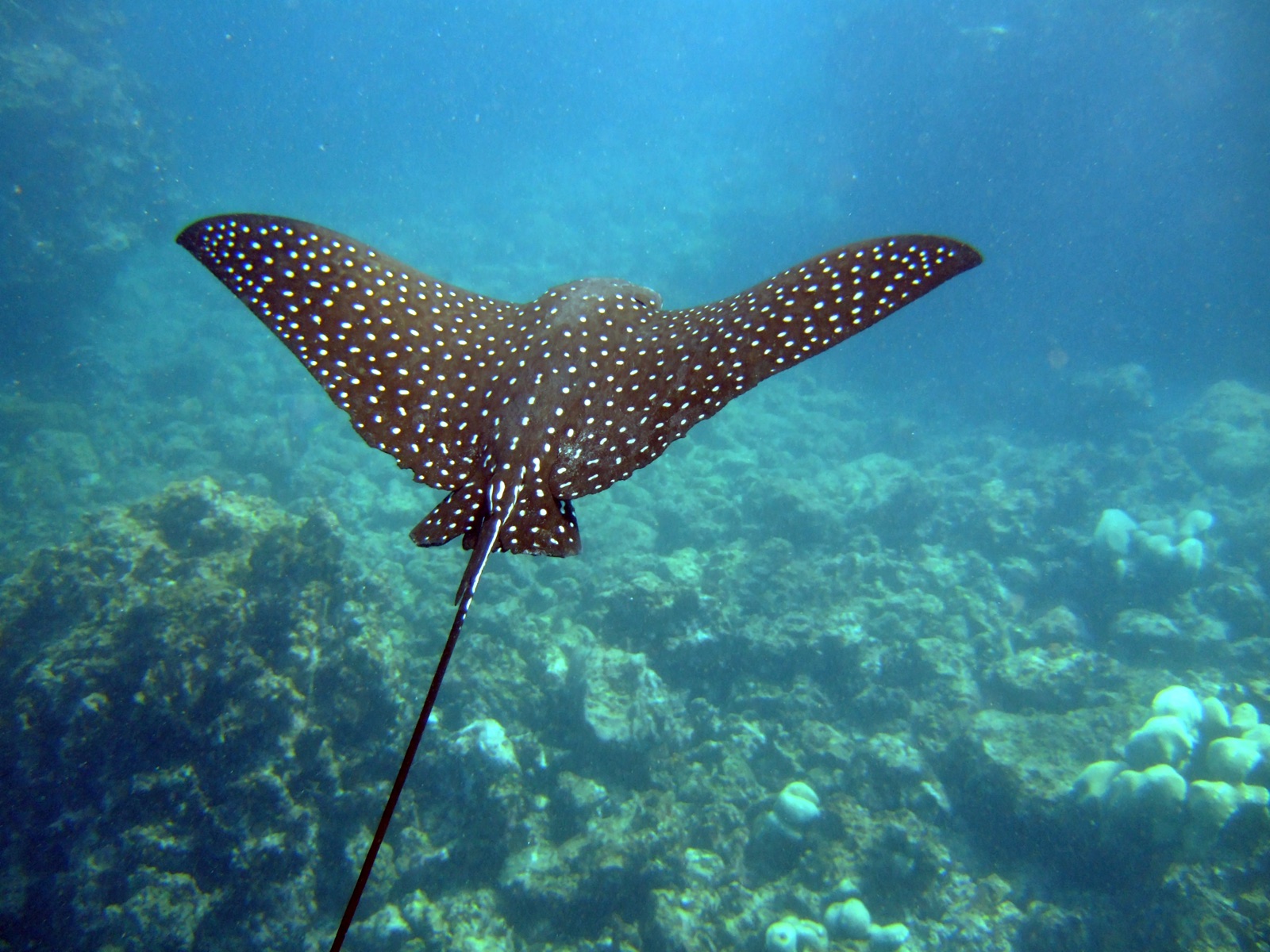
Spotted Eagle Ray
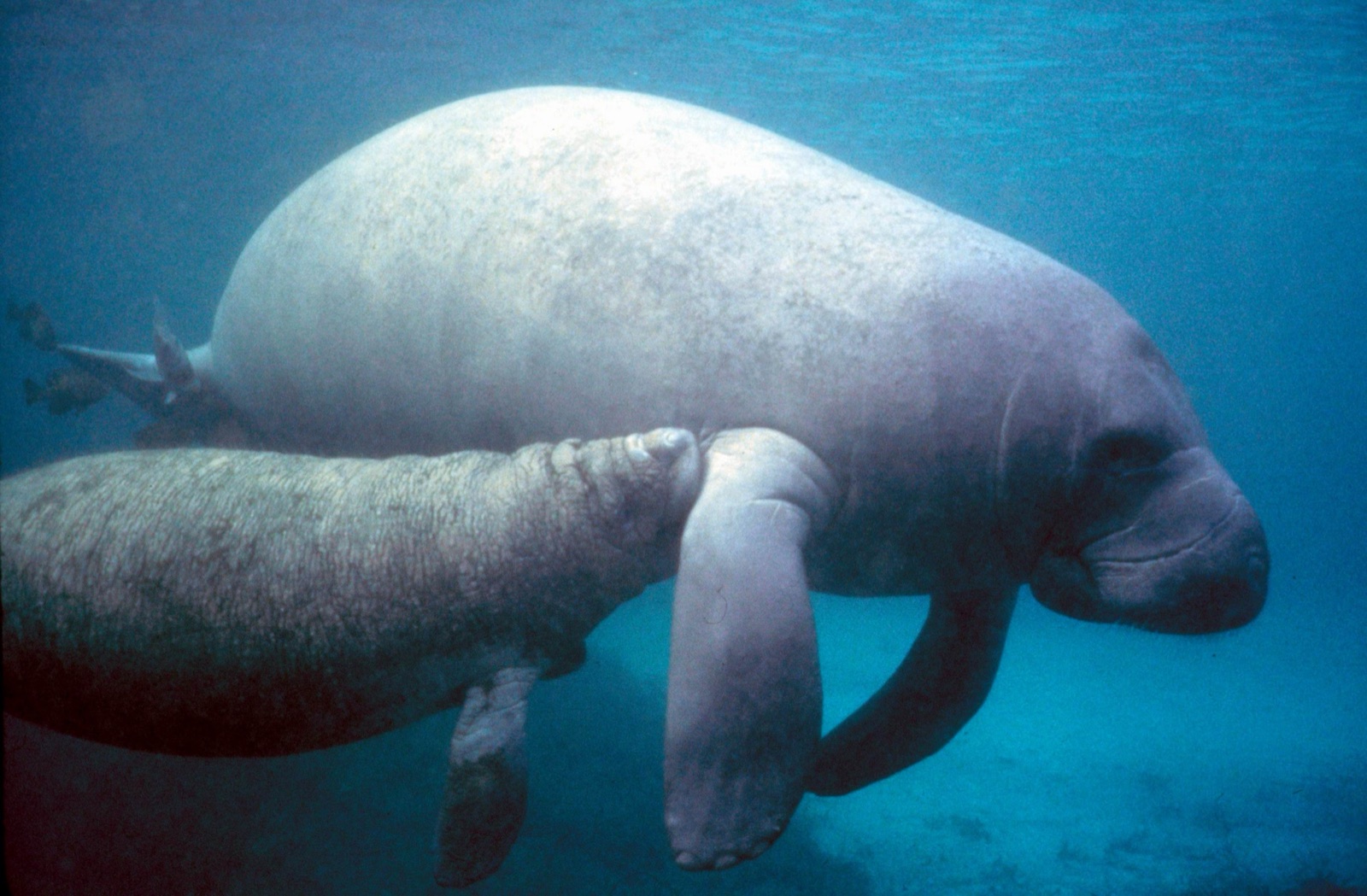
West Indian Manatee
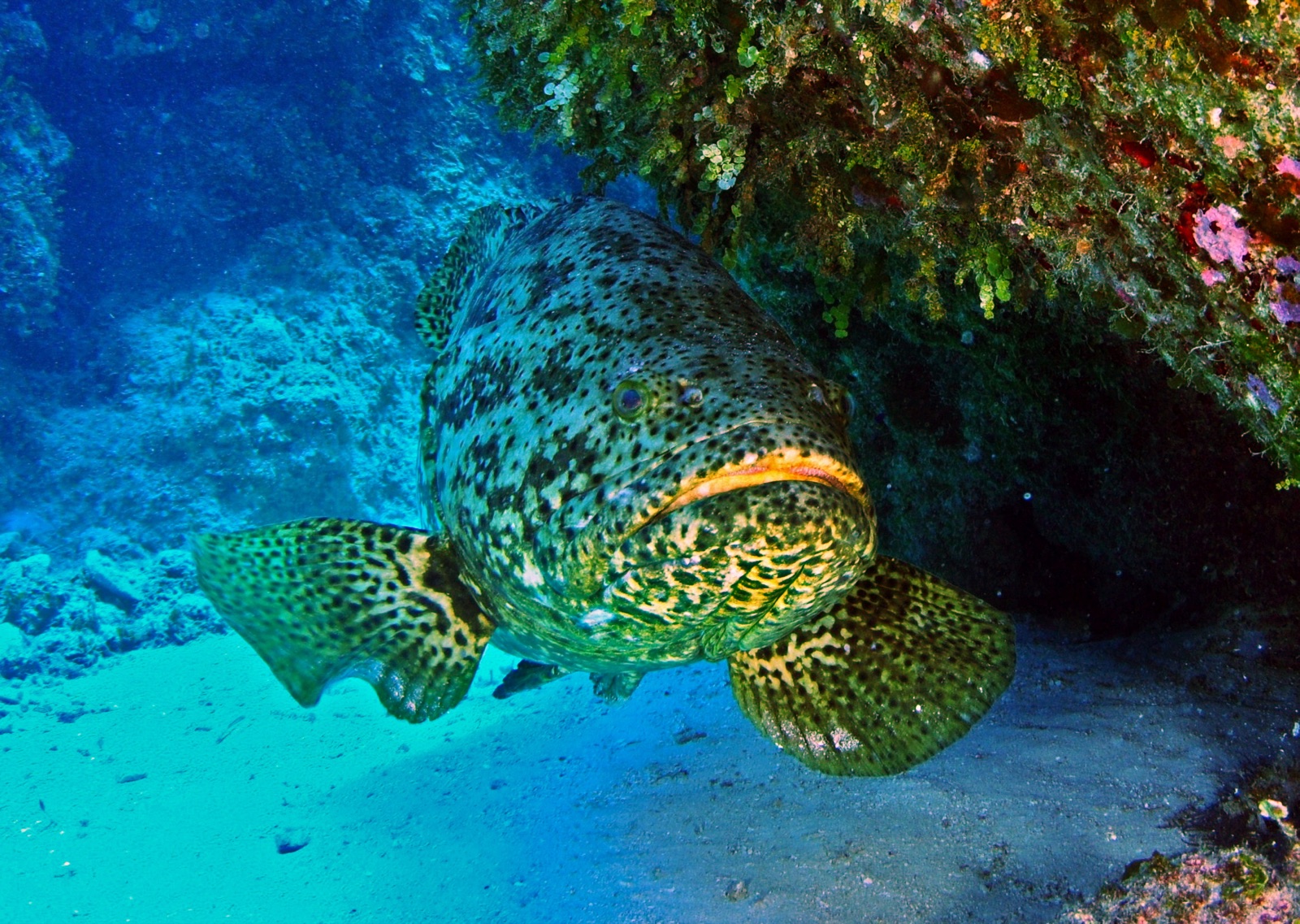
Atlantic Goliath Grouper
Nurse sharks and southern stingrays crowd the reserve cuts, Caribbean reef sharks patrol the Blue Hole and atoll walls, eagle rays school at the Elbow, garden eels carpet Lighthouse Reef's sand, and whale sharks visit Gladden Spit in spring. Turtles and huge black groupers round out the walls.
Getting there & staying
Getting there: Fly to Belize City, then hop by small plane or water taxi to San Pedro or Caye Caulker. Liveaboards board near Belize City; Placencia serves the southern reserves.
Where to stay: San Pedro has the widest fleet and nightlife; Caye Caulker runs cheaper and slower. Placencia positions you for Gladden Spit in spring, and liveaboards suit atoll-focused itineraries.
Costs: Local two-tanks from the cayes are mid-priced; the three-tank Blue Hole day trip from San Pedro or Caye Caulker typically runs US$250–350 with park fees. Marine-reserve fees stack per site.
Between dives: Cave tubing and the ATM cave on the mainland, Maya sites from Altun Ha to Caracol, birding at Half Moon Caye, and the reef by snorkel from any caye.
Safety & practicalities
Hazards: Long open-water crossings to the atolls in small boats, current at the channel mouths and the Elbow, and depth at the Blue Hole, where the interesting features start around 30 m and bottom time is minutes.
Treat the Blue Hole as a disciplined deep dive (brief bottom time, firm turn pressure, guides in the water) and skip it if deep diving is new to you; the reef outside is superb. Check reserve rules before every dive and keep hands off the structure.
Nearest recompression: A recompression facility has operated in San Pedro; availability changes, so route emergencies through your operator, Belizean EMS, and DAN.