Daymaniyat Islands
The Daymaniyat Islands string nine uninhabited limestone islets across roughly 20 kilometers of the Gulf of Oman, an hour's boat ride from Muscat's marinas and Oman's oldest marine nature reserve. Turtles nest on the beaches, zebra sharks rest on sand channels between coral gardens, and late summer brings whale sharks with the plankton. Permits, mooring buoys, and a seasonal landing ban keep the place feeling cared for.
Why dive here
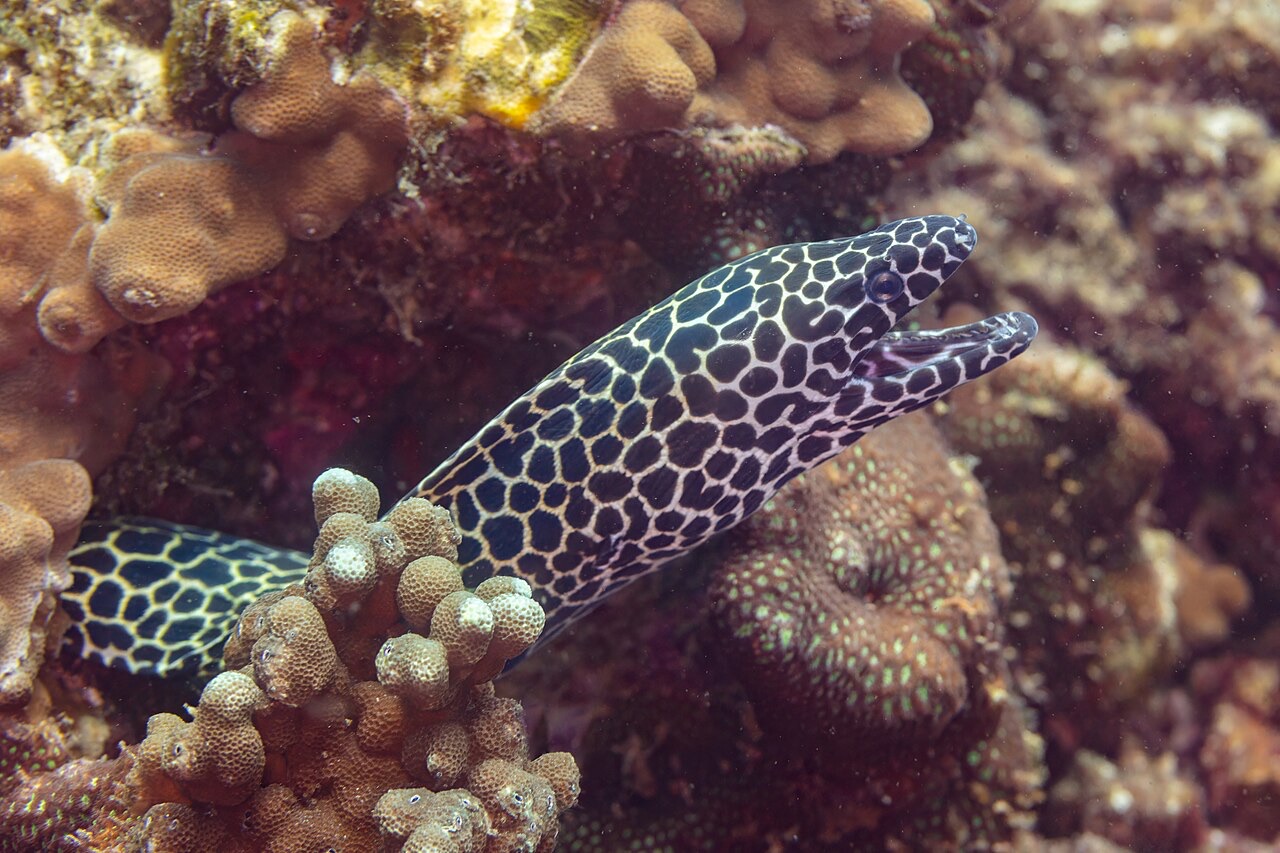
This is the Gulf of Oman at its most generous. Hard and soft corals grow densely for a sea outside the tropics proper, and reserve protection since 1996 shows in the fish life: barracuda and trevally over the points, honeycomb morays in every second crevice, hawksbill and green turtles everywhere in season. Zebra sharks - locally called leopard sharks - are the signature sighting, parked on sand at sites like the Aquarium; whale sharks cruise through from roughly September to November. Thermoclines and algal blooms keep divers honest: 25-meter visibility one week, green soup the next, cool layers sliding beneath warm surface water. Day boats from Al Mouj and Al Sawadi make the reserve an easy add-on to any Oman itinerary, and the diving asks nothing heroic - just curiosity and decent buoyancy.
Month by month
Diveable year-round from Muscat-area marinas. September-November pairs warm water with whale shark chances; February-April is cooler and often clearer. Island landings are banned May through October for bird and turtle nesting: diving and snorkeling continue.
| Month | Water | Visibility | What it's like |
|---|---|---|---|
| January●●●●○ | 23–25 °C / 73–77 °F | 10–25 m | Cool and frequently clear; jackets for the ride out. |
| February●●●●○ | 22–25 °C / 72–77 °F | 10–25 m | Coolest water, often the year's best visibility. |
| March●●●●○ | 24–26 °C / 75–79 °F | 10–25 m | Pleasant transition month. |
| April●●●●○ | 26–29 °C / 79–84 °F | 10–25 m | Warming fast; blooms possible. |
| May●●●○○ | 28–31 °C / 82–88 °F | 8–20 m | Hot; island landings close for nesting season. |
| June●●●○○ | 29–32 °C / 84–90 °F | 8–20 m | Warm layered water; green patches drift through. |
| July●●●○○ | 29–32 °C / 84–90 °F | 8–20 m | Peak heat; early starts. |
| August●●●○○ | 28–31 °C / 82–88 °F | 8–20 m | Plankton builds: the big-animal prelude. |
| September●●●●● | 28–31 °C / 82–88 °F | 10–25 m | Whale shark season opens; warm and lively. |
| October●●●●● | 27–30 °C / 81–86 °F | 10–25 m | Prime month; whale sharks still passing. |
| November●●●●● | 26–28 °C / 79–82 °F | 10–25 m | Warm, calmer, clearer: superb. |
| December●●●●○ | 24–26 °C / 75–79 °F | 10–25 m | Cooling into the clear season. |
Monthly figures confidence: Editorial estimate. Months without a row have no verified data. We would rather show a gap than invent one.
The dive sites (4)
| Site | Type | Depth | Level | Access | |
|---|---|---|---|---|---|
| Garden of Eden Soft-coral color on giant blocks; table-coral terraces; reliable turtles at… | Reef | 6–25 m | Beginner | Boat | |
| Hayut Run Conveyor-belt drifting over turtle gardens; napping zebra sharks; a working… | Reef | 5–20 m | Beginner | Boat | |
| The Aquarium Zebra sharks at rest; fish density that earns the name; seasonal whale… | Reef | 6–22 m | Beginner | Boat | |
| Three Sisters Ray-and-shark sand gullies between the outcrops; a naturally structured… | Reef | 5–25 m | Beginner | Boat |
Getting there & staying
Getting there: Fly to Muscat; boats leave Al Mouj Marina, about 30-45 minutes from the islands, and Al Sawadi to the west. Most operators collect from city hotels.
Where to stay: Base in Muscat or at coastal resorts toward Barka and Al Sawadi; there is no accommodation on the islands and anchoring is regulated.
Costs: Two-tank boat trips from Al Mouj or Al Sawadi usually fold the reserve permit fee into the price; book ahead on winter weekends. Oman is mid-priced - above Egypt, below the Maldives.
Between dives: Muscat's Grand Mosque, souq, and corniche; wadis and the Hajar mountains inland; dolphin-watching runs; and turtle-watching elsewhere on the coast in season.
Snorkeling: Sheltered coral gardens make the reserve one of Arabia's best snorkel trips, and whale shark encounters often happen at the surface.
Safety & practicalities
Hazards: Thermoclines and sudden visibility drops from algal blooms; boat traffic at popular moorings; occasional current on the outer points; summer heat on open decks.
Carry a surface marker, mind the cool layers on deeper profiles, and keep hands off everything - rangers enforce reserve rules, and the no-touch ethic is why the reef looks as it does.
Nearest recompression: Hyperbaric provision in Oman is limited; emergencies route through Muscat via EMS and DAN - confirm current arrangements with your operator.