Seychelles
The inner Seychelles serve granite, not just coral: house-sized boulders continue underwater into canyons, arches, and split rocks patrolled by hawksbill turtles and marbled rays. Diving centers on Mahé, Praslin, and La Digue, with sites like Shark Bank and the Ennerdale wreck a short boat ride from Beau Vallon. Reefs took bleaching hits in 1998 and 2016, but the fish life on the granite remains dense and the islands themselves are absurdly good-looking.
Why dive here
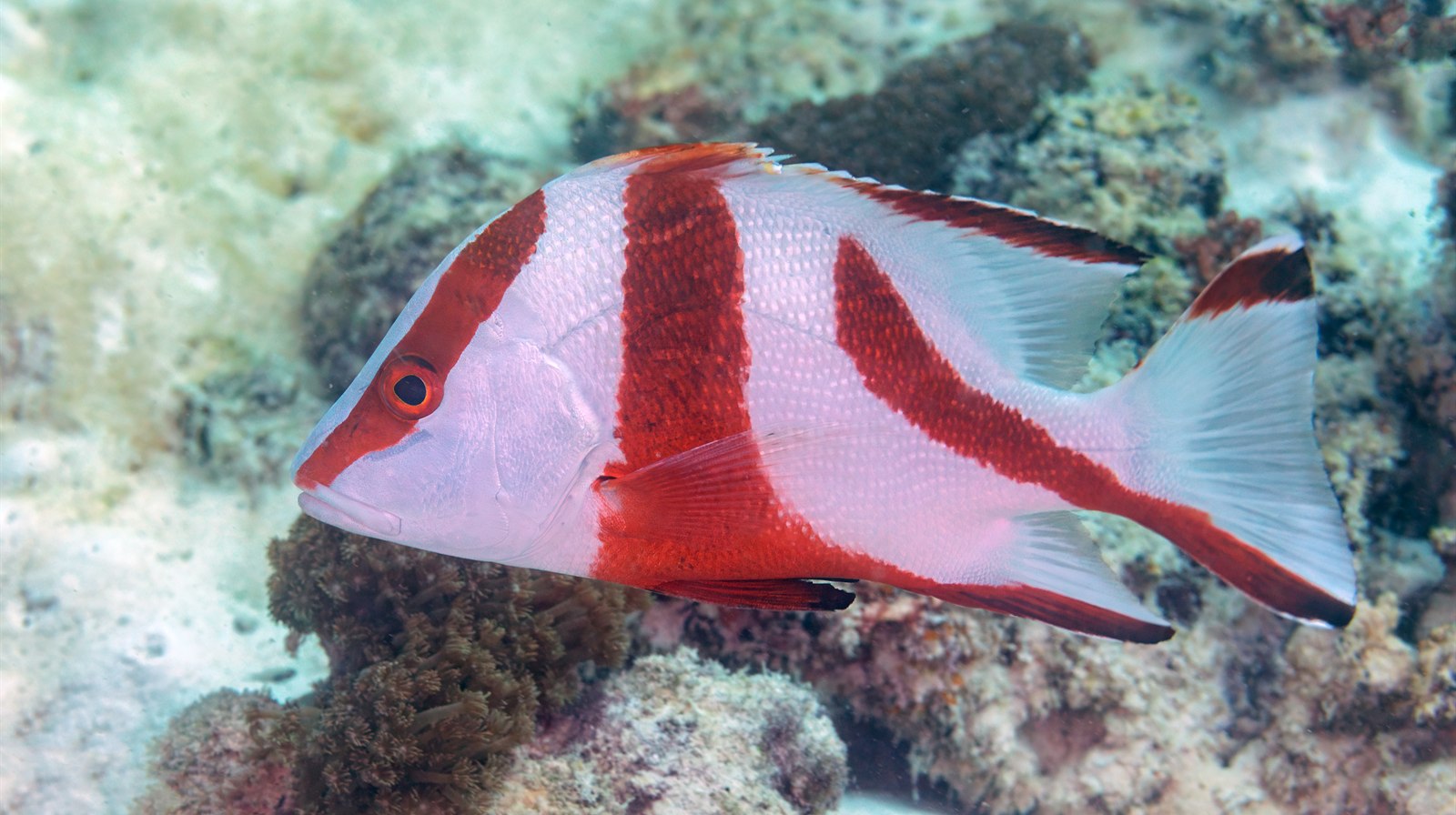
Granite defines the diving the way it defines the beaches. Sites are piles of rounded boulders draped in orange sponge and white gorgonians, with gullies and overhangs that funnel snapper and soldierfish into dense, photogenic knots. Shark Bank, a submerged granite plateau off Mahé, pulls in schooling barracuda, big marbled rays, and, in season, the occasional whale shark. The Ennerdale, a Royal Fleet Auxiliary tanker lost in 1970, lies broken at diveable depth with resident morays and grouper. Hawksbill turtles are a near-daily sight and, uniquely, nest here in daylight. Be honest about the corals: warm-water bleaching in 1998 and again in 2016 hit the inner-island reefs hard, and recovery is patchy; you come for topography, fish, and turtles more than for pristine hard coral. Conditions are gentle most of the year, the season splits cleanly around two calm windows, and surface intervals happen next to some of the finest beaches anywhere.
Month by month
The calm inter-monsoon windows: roughly March-May and October-November, bring the flattest seas and best visibility. June-September trade winds cool the water and stir the southeast coasts; December-February is warmer, wetter, and greener.
| Month | Water | Visibility | What it's like |
|---|---|---|---|
| January●●●○○ | 28–30 °C / 82–86 °F | 8–20 m | Northwest monsoon; warm, humid, rain squalls. |
| February●●●○○ | 28–30 °C / 82–86 °F | 8–20 m | Hot and still; visibility variable. |
| March●●●●○ | 28–30 °C / 82–86 °F | 10–25 m | Winds drop; seas begin to flatten. |
| April●●●●● | 28–30 °C / 82–86 °F | 15–30 m | Calm window; warmest, clearest diving. |
| May●●●●● | 27–29 °C / 81–84 °F | 15–30 m | Glassy days; excellent all around the inner islands. |
| June●●●○○ | 26–28 °C / 79–82 °F | 10–20 m | Southeast trades build; exposed coasts get lumpy. |
| July●●●○○ | 25–27 °C / 77–81 °F | 10–20 m | Coolest water; sheltered northwest coasts still dive well. |
| August●●●○○ | 25–27 °C / 77–81 °F | 10–20 m | Trade winds persist; plankton feeds the food chain. |
| September●●●○○ | 25–28 °C / 77–82 °F | 10–20 m | Winds begin to ease late month. |
| October●●●●● | 26–29 °C / 79–84 °F | 15–30 m | Second calm window; historically the whale shark month. |
| November●●●●● | 27–29 °C / 81–84 °F | 15–30 m | Flat seas continue; superb conditions. |
| December●●●○○ | 28–30 °C / 82–86 °F | 10–20 m | Northwest monsoon returns with rain. |
Monthly figures confidence: Documented. Months without a row have no verified data. We would rather show a gap than invent one.
The dive sites (5)
| Site | Type | Depth | Level | Access | |
|---|---|---|---|---|---|
| Ave Maria Rocks Reliable turtles and resting whitetips in granite gullies | Pinnacle | 6–20 m | Beginner | Boat | |
| Brissare Rocks Rope-like fusilier streams; turtle traffic; honest granite topography | Pinnacle | 8–24 m | Intermediate | Boat | |
| Ennerdale Wreck Moray-dense broken tanker; grouper and rays around 30-meter sand | Wreck | 18–30 m | Advanced | Boat | |
| L'Ilot Glassfish-stuffed crevices; gorgonian color; superb night diving | Pinnacle | 5–22 m | Beginner | Boat | |
| Shark Bank Huge marbled rays; permanent snapper and trevally walls over granite | Pinnacle | 14–30 m | Advanced | Boat |
Marine life you can plan around
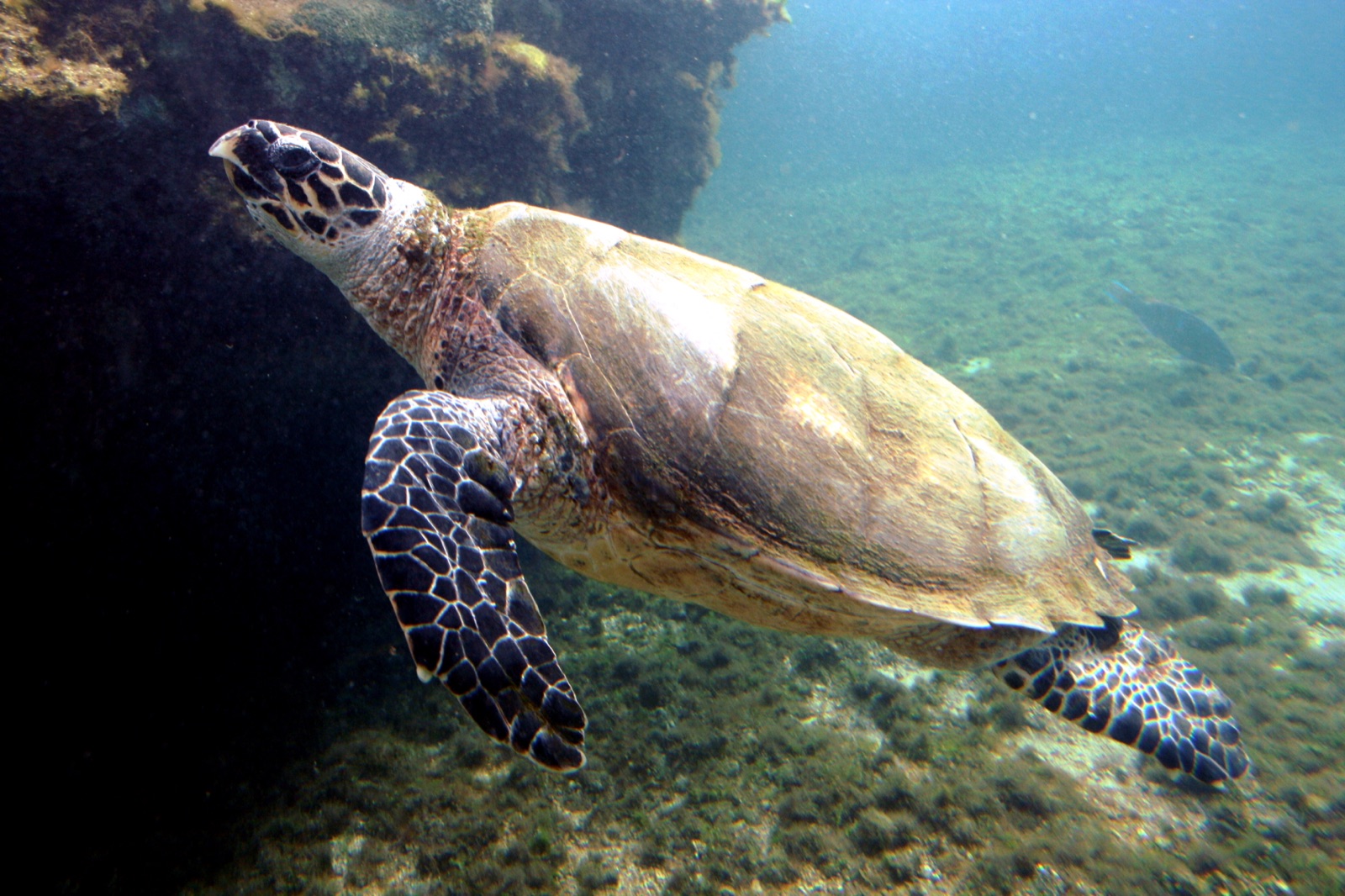
Hawksbill and green turtles, marbled and eagle rays, schooling barracuda and snapper, whitetip reef sharks, morays in every crack, seasonal whale sharks (much scarcer than in past decades), and nudibranch-rich macro on the granite.
Getting there & staying
Getting there: Direct flights reach Mahé from the Gulf, Europe, and East Africa; ferries and short hops connect Praslin and La Digue, each with its own dive operators.
Where to stay: Beau Vallon on Mahé is the main dive hub; Praslin and La Digue suit slower island time with diving on the side. Self-catering guesthouses are the value play.
Costs: The Seychelles are a high-cost destination across the board; marine-park entry fees apply at some sites and gear rental adds up. Guesthouse self-catering keeps trips affordable.
Between dives: Anse Lazio and Anse Source d'Argent beaches, the Vallée de Mai palm forest, giant tortoises, Creole food, hiking on Mahé's granite ridges, and island-hopping by ferry.
Snorkeling: Marine parks such as Ste Anne and Port Launay offer easy snorkeling; Anse Source d'Argent's shallows suit beginners at high tide.
Safety & practicalities
Hazards: Current over exposed banks, surge in boulder gullies during trade-wind months, and boat traffic off Beau Vallon in high season.
Whale shark encounters are conducted under local code-of-conduct rules; keep distance and skip the flash. Most sites are within recreational limits; dive the plan your operator briefs.
Nearest recompression: A recompression facility has operated at the main hospital on Mahé; availability changes. In an emergency call local EMS and DAN before arranging transport.