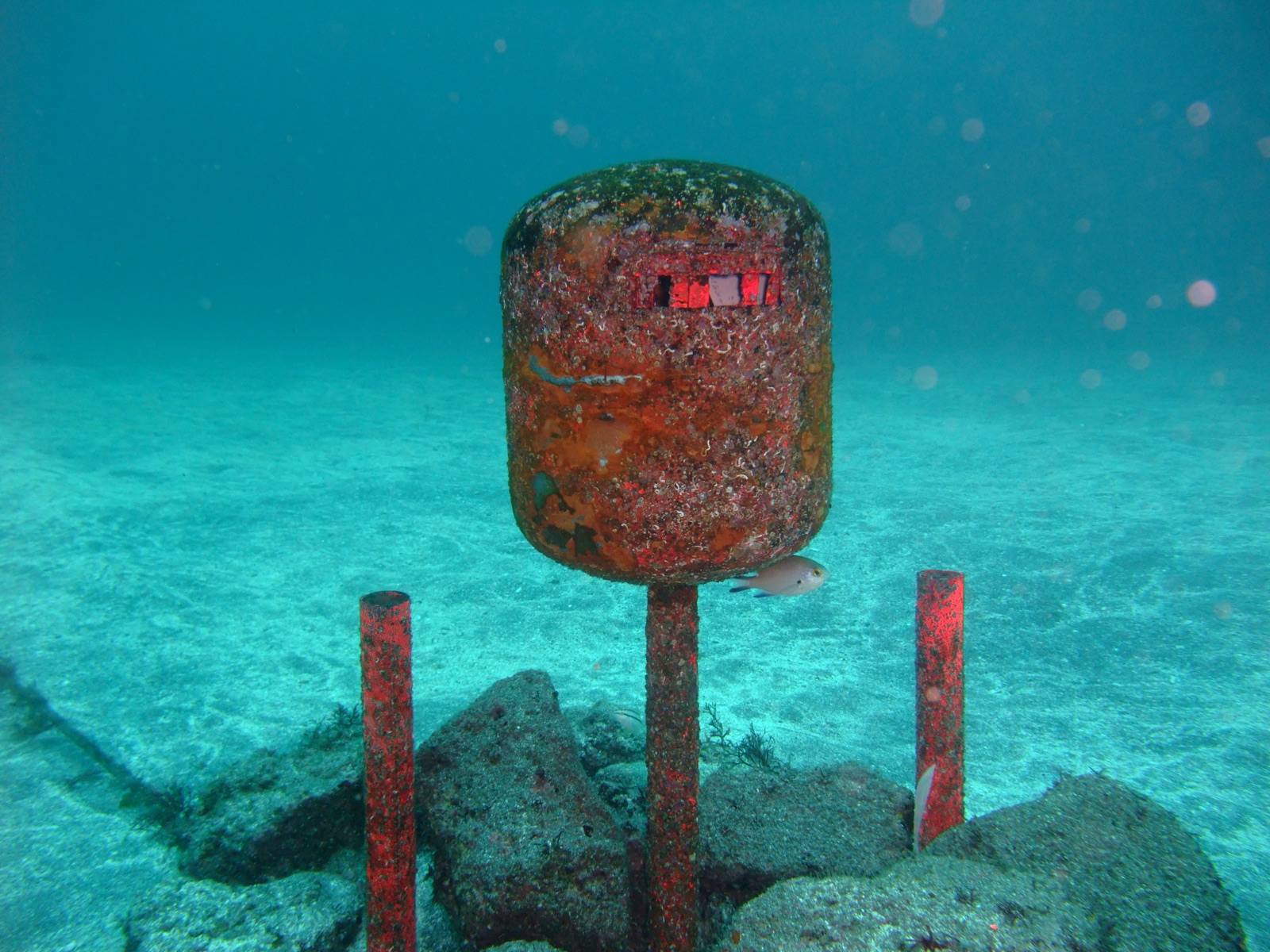
Izu Peninsula
The Izu Peninsula is Tokyo's home reef: volcanic coastline two to three hours from the capital, dived hard every weekend by the country's largest dive community. Osezaki's sheltered bay is Japan's muck-and-macro classroom, the east coast has organized shore entries like the Izu Oceanic Park, and Mikomoto Island off Shimoda serves schooling hammerheads to advanced divers in summer and autumn.
Why dive here
Izu rewards repeat visits because the cast changes with the seasons. Warm Kuroshio pulses carry tropical drifters north each summer and autumn, so frogfish, ghost pipefish, and juvenile tropicals appear among temperate soft corals and boulder reefs; winter cools the shallows and clears the water, and Osezaki's deep bay occasionally delivers bizarre deep-sea visitors within recreational range. The diving culture is its own attraction: numbered entry steps, gear carts, and tidy fill stations. Osezaki's calm inner bay suits training and slow macro hunts, while its outer point drops quickly into Suruga Bay, one of Japan's deepest. On the east coast, the Izu Oceanic Park's rocky reef and the twin coves of Futo offer classic shore profiles. The marquee thrill is Mikomoto, a set of current-washed rocks off Shimoda where scalloped hammerheads school from roughly June to November; it is a drift dive in real current and Izu's one genuinely advanced staple.
Month by month
September to November is the sweet spot: warm water, calming seas, and tropical drifters at their peak. Summer is warm and busy, with typhoon swell possible on the east coast. Winter offers the clearest, coldest water; spring plankton blooms feed everything and drop visibility.
| Month | Water | Visibility | What it's like |
|---|---|---|---|
| January●●●○○ | 14–16 °C / 57–61 °F | 10–20 m | Cold and clear; rare deepwater visitors at Ose |
| February●●●○○ | 13–15 °C / 55–59 °F | 10–20 m | Coldest water; drysuit country |
| March●●●○○ | 14–16 °C / 57–61 °F | 8–18 m | Spring bloom begins |
| April●●●○○ | 15–17 °C / 59–63 °F | 5–15 m | Plankton-rich green water, busy life |
| May●●●○○ | 17–19 °C / 63–66 °F | 5–15 m | Squid spawning starts as water warms |
| June●●●○○ | 19–21 °C / 66–70 °F | 5–15 m | Rainy season; hammerheads reach Mikomoto |
| July●●●●○ | 21–24 °C / 70–75 °F | 5–15 m | Summer warmth and weekend crowds |
| August●●●●○ | 24–27 °C / 75–81 °F | 5–15 m | Warmest water; typhoon swell possible |
| September●●●●● | 23–26 °C / 73–79 °F | 8–18 m | Autumn calm; peak conditions |
| October●●●●● | 20–23 °C / 68–73 °F | 8–18 m | Warm water, cleaner visibility, fewer crowds |
| November●●●●○ | 18–20 °C / 64–68 °F | 10–20 m | Southern drifters linger in cooling water |
| December●●●○○ | 16–18 °C / 61–64 °F | 10–20 m | Winter clarity arrives |
Monthly figures confidence: Documented. Months without a row have no verified data. We would rather show a gap than invent one.
The dive sites (4)
| Site | Type | Depth | Level | Access | |
|---|---|---|---|---|---|
| Futo Squid egg beds in early summer, resident frogfish and octopus, calm long… | Reef | 3–25 m | Beginner | Shore | |
| Izu Oceanic Park Classic organized shore entry, anemonefish colonies, seasonal tropical… | Reef | 5–40 m | Beginner | Shore | |
| Mikomoto Island Hammerhead schools within sight of Honshu, energetic Kuroshio drifts… | Reef | 12–40 m | Advanced | Boat | |
| Osezaki Muck diving with deep-sea surprises, dense macro on dark sand, all-weather… | Muck | 3–40 m | Beginner | Shore |
Getting there & staying
Getting there: Take the Tokaido line or Odoriko limited express toward Ito and Shimoda for the east coast, or drive; Osezaki on the west side is easiest by car. Most shops expect reservations and start early.
Where to stay: Dive lodges and onsen inns cluster at Osezaki, Ito, Futo, and Shimoda; staying the night beats fighting weekend traffic back to Tokyo.
Costs: Approximate conversion from yen for two guided shore or boat dives; Japanese pricing usually itemizes facility fees, guiding, and rental separately.
Between dives: Hot springs everywhere, Mount Fuji views across Suruga Bay, the Jogasaki coastal trail, Shimoda's beaches and Perry-expedition history, and wasabi and seafood worth the drive alone.
Safety & practicalities
Hazards: Typhoon and low-pressure swell closing east-coast entries, current at Mikomoto, cold water outside high summer, slippery entry rocks, and weekend crowding at popular steps.
Respect the shops' entry calls: Japanese operators close sites for swell readily and are right to. Mikomoto requires drift experience, a surface marker, and comfort with negative entries.
Nearest recompression: Hyperbaric facilities exist in the wider Tokyo-Shizuoka region rather than at each dive town. Emergencies go through 119 and DAN Japan; availability changes, so call emergency services first.