Reptiles
American Crocodile
Crocodylus acutus · Reptile, family Crocodylidae; one of only two crocodiles that commonly live in full seawater
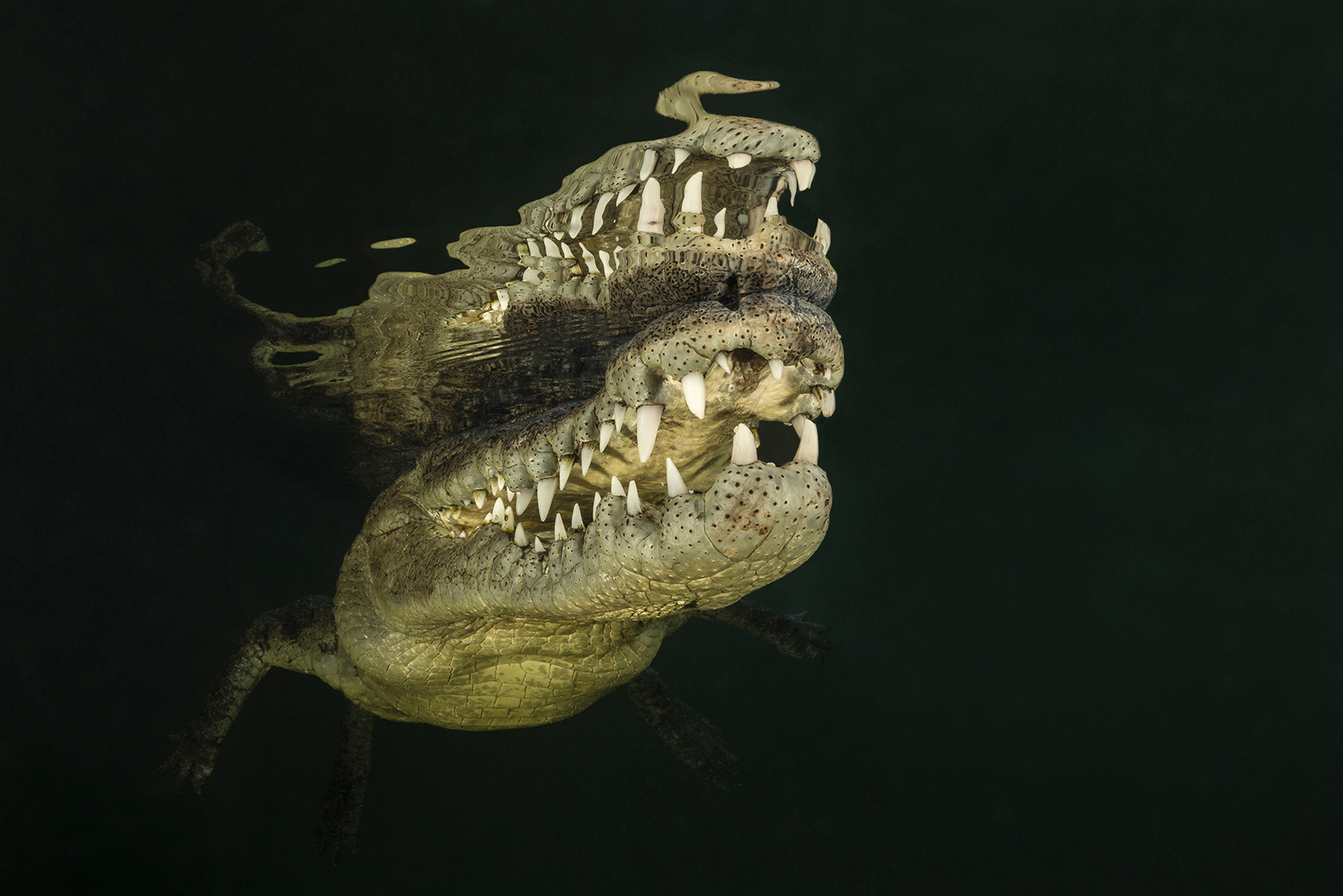
Few encounters in diving feel as primal as finning beside a wild crocodile in clear Caribbean water. The American crocodile is the region's big reptile, gray-green and narrow-snouted, and one of only two crocodiles that commonly live in full seawater, out on cays and islets far from any river. In Cuba's Jardines de la Reina, a national park of mangrove keys and reefs, scientists describe the species as relatively abundant, crocodiles hunt in the shallows near the islands, and guides there have described 9-foot animals visiting their floating base. Compared with Nile or saltwater crocodiles it has a shy temperament and usually retreats from people, yet it is still an ambush predator that has, on rare occasions, injured and killed people. Treat any in-water meeting as a guided, controlled encounter: stay calm at the surface and keep your distance.
Where and when to see one
"Resident" means most dives at that destination encounter them; "seasonal" means reliably present in the listed months; anything else is a bonus, not a plan.
| Destination | Reliability | Months | Notes |
|---|---|---|---|
| Jardines de la ReinaCuba | Occasional | Year-round |
Best month, at a glance
| Month | Reliable destinations |
|---|---|
| January | Jardines de la Reina |
| February | Jardines de la Reina |
| March | Jardines de la Reina |
| April | Jardines de la Reina |
| May | Jardines de la Reina |
| June | Jardines de la Reina |
| July | Jardines de la Reina |
| August | Jardines de la Reina |
| September | Jardines de la Reina |
| October | Jardines de la Reina |
| November | Jardines de la Reina |
| December | Jardines de la Reina |
Understanding them
Habitat: Mangrove creeks, coastal lagoons, cays and small islands, river mouths and brackish or hypersaline lakes; it lives on offshore cays with no fresh water at all.
Range: Coasts of southern Florida, the Caribbean islands, Mexico, Central America and northern South America, on both the Atlantic and Pacific sides.
Behavior: Shy for a crocodile and usually quick to retreat from people, but an ambush hunter that waits motionless at the surface. In Jardines de la Reina crocodiles hunt in the shallows near the keys.
Diet: Mostly fish, plus frogs, turtles and the occasional bird or small mammal; juveniles eat more aquatic invertebrates and small fish.
Size: typically around 3.5 m; documented up to 4 m (total length; Animal Diversity Web gives an average of 3.5 m and says some individuals grow longer than 4 m, so treat 4 m as a floor for the biggest males; reports of 7 m are unconfirmed. Males are larger than females).
How to behave around one
Snorkel with crocodiles only on a guided trip; stay calm and horizontal at the surface, keep at least a body length away and out of line with the head, never touch or bait it, and get out if it turns toward you or starts to follow.
Conservation
Vulnerable (assessed 2022) and listed on CITES Appendix I. Hunting for hides depleted it across its range; protection has brought recoveries, as in southern Florida, but coastal development still eats into nesting habitat.
Watch
From the official channels

Catch this wave 🌊 | #montereybayaquarium #reeflife

Giant Pacific Octopus

Live African Penguin Cam After Hours | Monterey Bay Aquarium
Videos are embedded links to their creators' own channels. We host nothing and credit everything.