Berwyn
Depth is the range from the top of the site to its usual maximum; "recommended cert" is the mainstream-agency level operators usually ask for, not a legal rule. Currents and visibility change daily, so treat everything here as planning ranges.
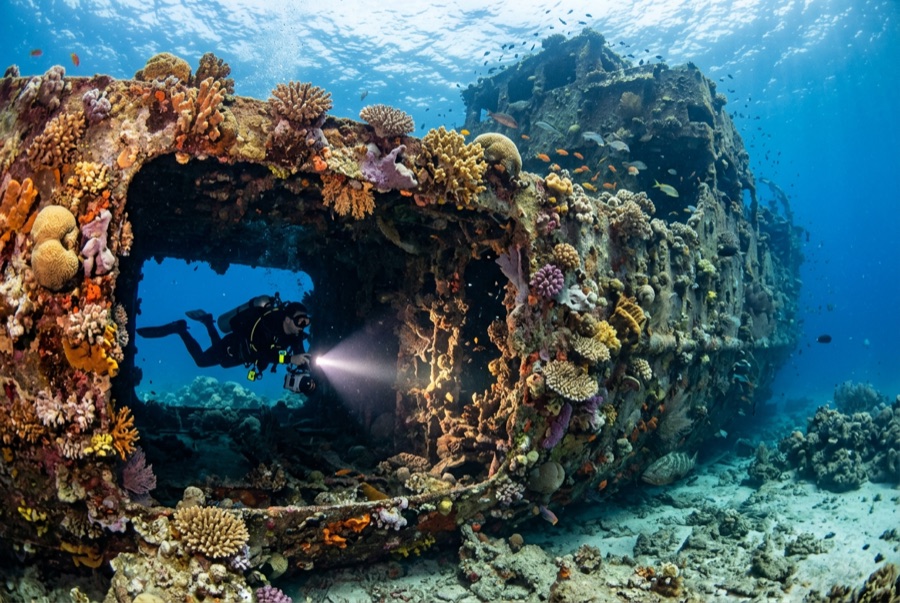
The Berwyn is the oldest of the Carlisle Bay wrecks, a French tug from the First World War that her own crew scuttled in 1919; one operator adds that a German submarine had damaged her first. She is a small vessel, around 21 m long, resting on sand in about 6 to 8 m of water, and her upper works come within 2 to 3 m of the surface depending on the tide, which makes her easy to see from a snorkel. A century underwater has wrapped her in hard and soft corals and sponges, and shoals of reef fish hang over the deck. Shallow depth makes her a natural first wreck, and she sits within easy reach of the bay's other hulls.
The moment you come for: Scuttled 1919 French tug; upper works just under the surface; coral and sponge cover with shoaling reef fish
Topography: Small steel tug on a sandy bay floor
Entry: Visited daily by boat as part of the Carlisle Bay wreck circuit; it can also be reached with a surface swim from the beach, following the mooring buoys.
Know before you splash
Hazards: Very shallow structure close to the surface; boat traffic in Carlisle Bay, so surface beside the mooring buoys or the dive boat.
Conservation: Carlisle Bay is a protected area, designated to preserve its marine life and six major wrecks, and is managed by the Coastal Zone Management Unit.