Grand Congloué
La profondità indica l'intervallo dalla sommità del sito al suo massimo abituale; il "brevetto consigliato" è il livello richiesto dalla maggior parte degli operatori delle principali agenzie, non una norma di legge. Correnti e visibilità cambiano ogni giorno, quindi considera tutto come intervalli di pianificazione.
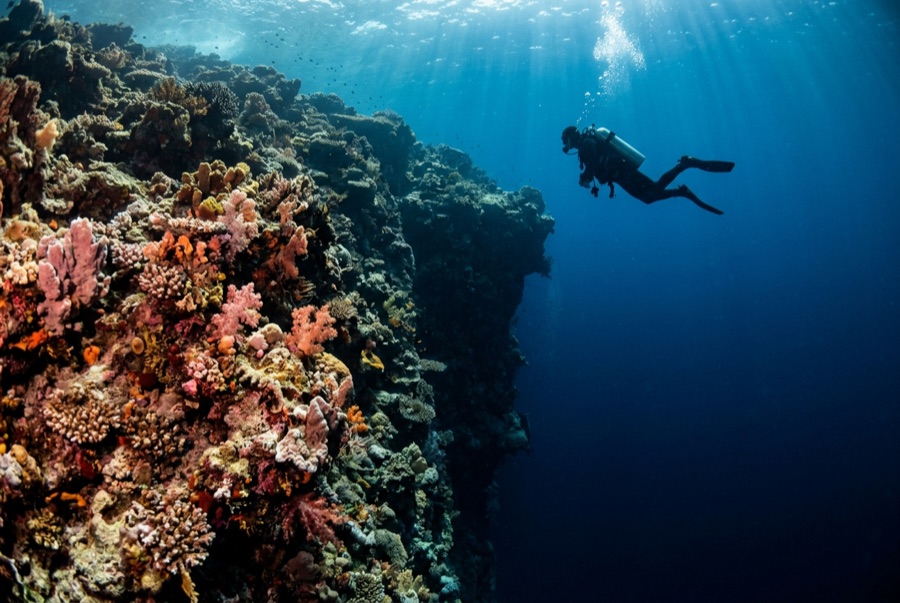
Grand Congloué is a rocky islet beside Île Riou with a special place in diving history: from 1952 Cousteau's Calypso team excavated Roman wrecks at its foot, in one of the first underwater archaeological digs. Those wrecks, the oldest dated to around 200 BCE, lie in the Triangle Cousteau, an archaeological protection zone closed to diving. Recreational dives use three drop-offs on the islet: the Pierre de Cassis wall, from about 25 m down to 65 m; a corridor of gorgonians at 55 m; and Anse Falco at about 40 m, all better suited to experienced divers. Amphorae placed at 14 m give newer divers a taste of the site's story.
Il momento che aspettavi: Birthplace of underwater archaeology; Pierre de Cassis wall to 65 m; gorgonian corridor at 55 m
Topografia: Islet with deep drop-offs, a gorgonian corridor and placed amphorae at 14 m
Sapere prima di tuffarsi
Pericoli: Very deep walls to 65 m where depth builds quickly; decompression planning on the deeper sections; the Triangle Cousteau zone around the Roman wrecks is off limits.
Permessi & regole: The area around the Roman wrecks, known as the Triangle Cousteau, is an archaeological protection zone where diving is prohibited.
Nitrox: Vale la pena qui: i profili rientrano nell'intervallo in cui l'aria arricchita (nitrox) prolunga in modo significativo il tempo di non-decompressione (con la formazione necessaria per utilizzarla).