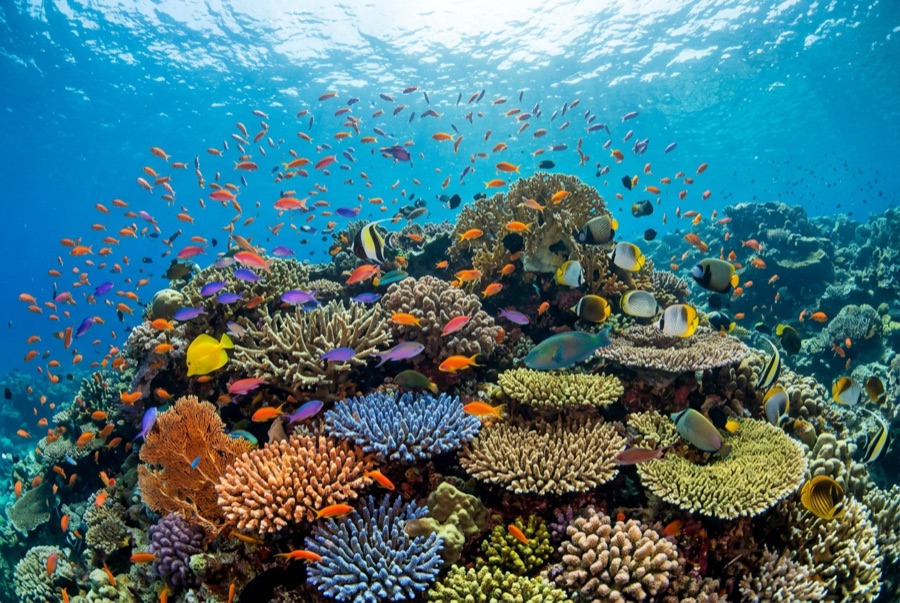
Iglesia
Depth is the range from the top of the site to its usual maximum; "recommended cert" is the mainstream-agency level operators usually ask for, not a legal rule. Currents and visibility change daily, so treat everything here as planning ranges.
Iglesia, Spanish for church, is a reef of separate rock formations and jagged pinnacles linked by broad patches of sand, usually sheltered from the currents that run through the nearby channel. That shelter makes it a common choice for check-out, training and night dives. Newer divers can stay above about 12 m, while a typical deeper tour starts near 9 m and descends to a pinnacle at around 30 to 35 m before working back up; the eastern slope terraces on down to 44 m. Schooling rays, bigeye jacks, Pacific spadefish, snapper and barracuda frequent the site, reef sharks and turtles are common, and lobsters poke their antennae from crevices. Sponges and soft corals shelter seahorses, frogfish, octopus and scorpionfish.
The moment you come for: A sheltered site for training and night dives; seahorses and frogfish in the sponges; schools of bigeye jacks and spadefish
Topography: Separate rock formations and jagged pinnacles linked by sand, terracing to 44 m on the eastern slope
Current: Normally sheltered from the currents in the channel; a little current brings the most life.
Entry: A typical tour starts near 9 m, descends to a deeper pinnacle at 30 to 35 m and returns to 9 m for the safety stop; newer divers stay above about 12 m.
Know before you splash
Hazards: The deeper pinnacle lies at 30 to 35 m and the eastern slope continues to 44 m; keep track of depth when leaving the shallow section.
Who you'll meet
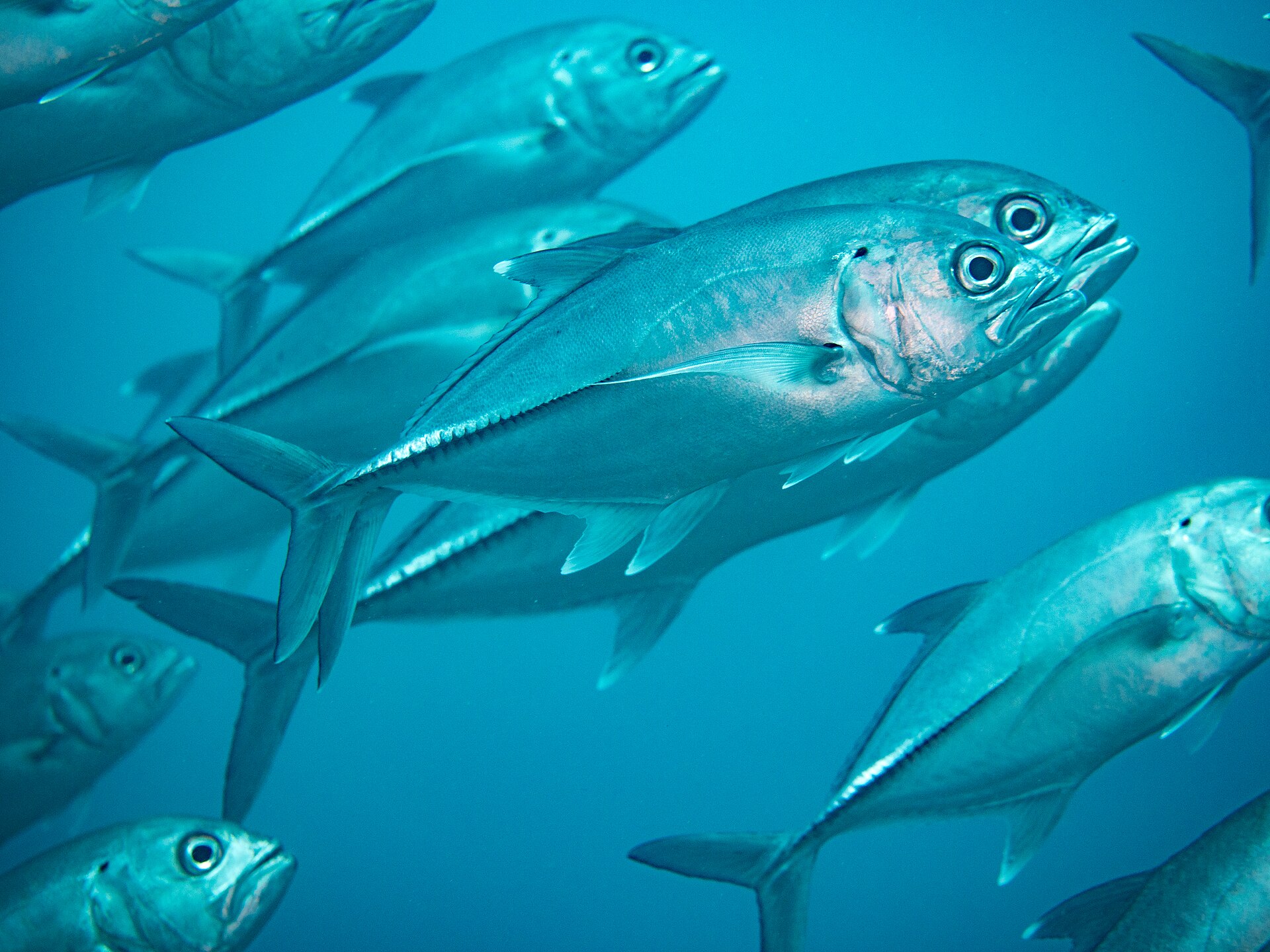
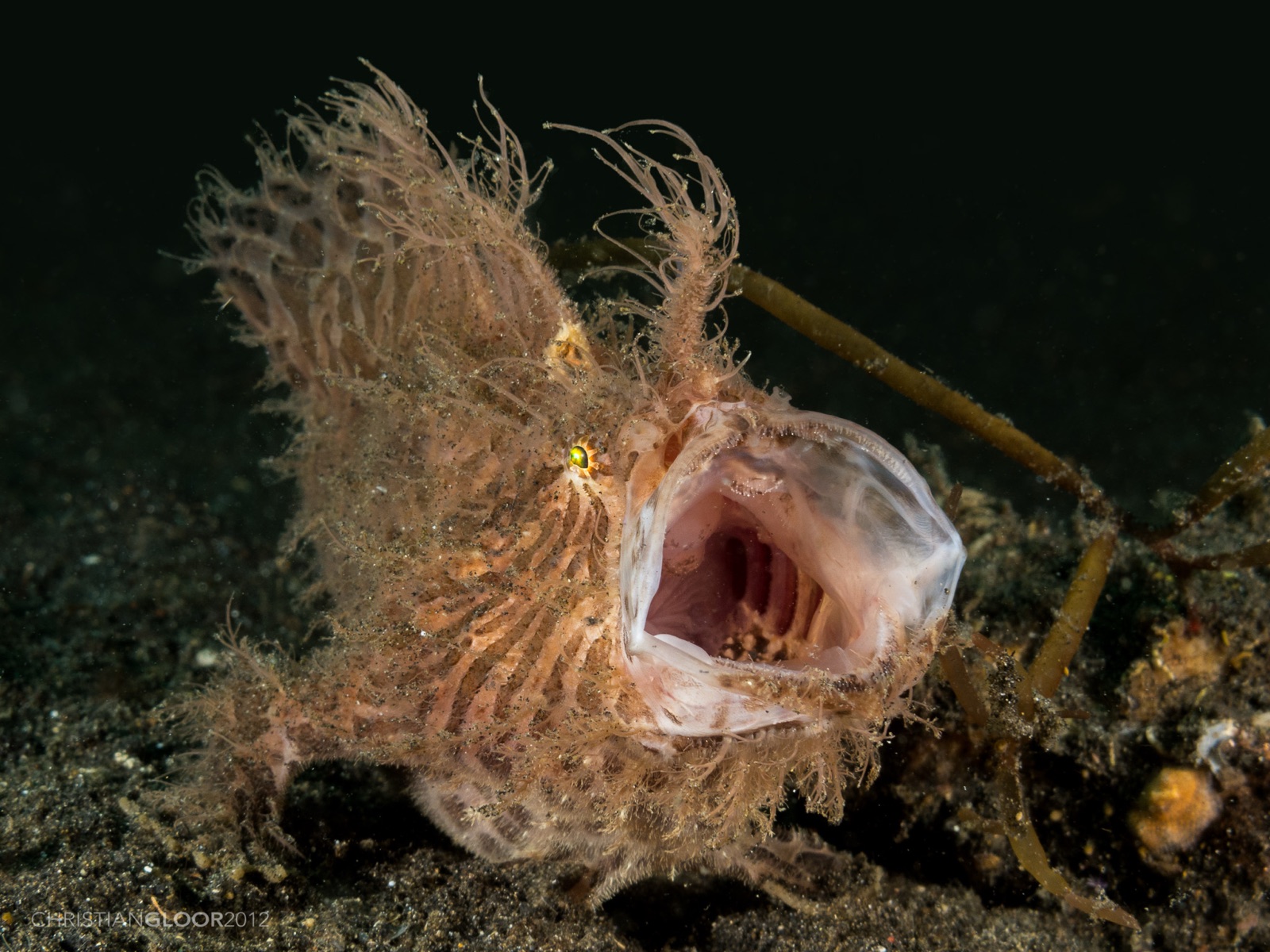
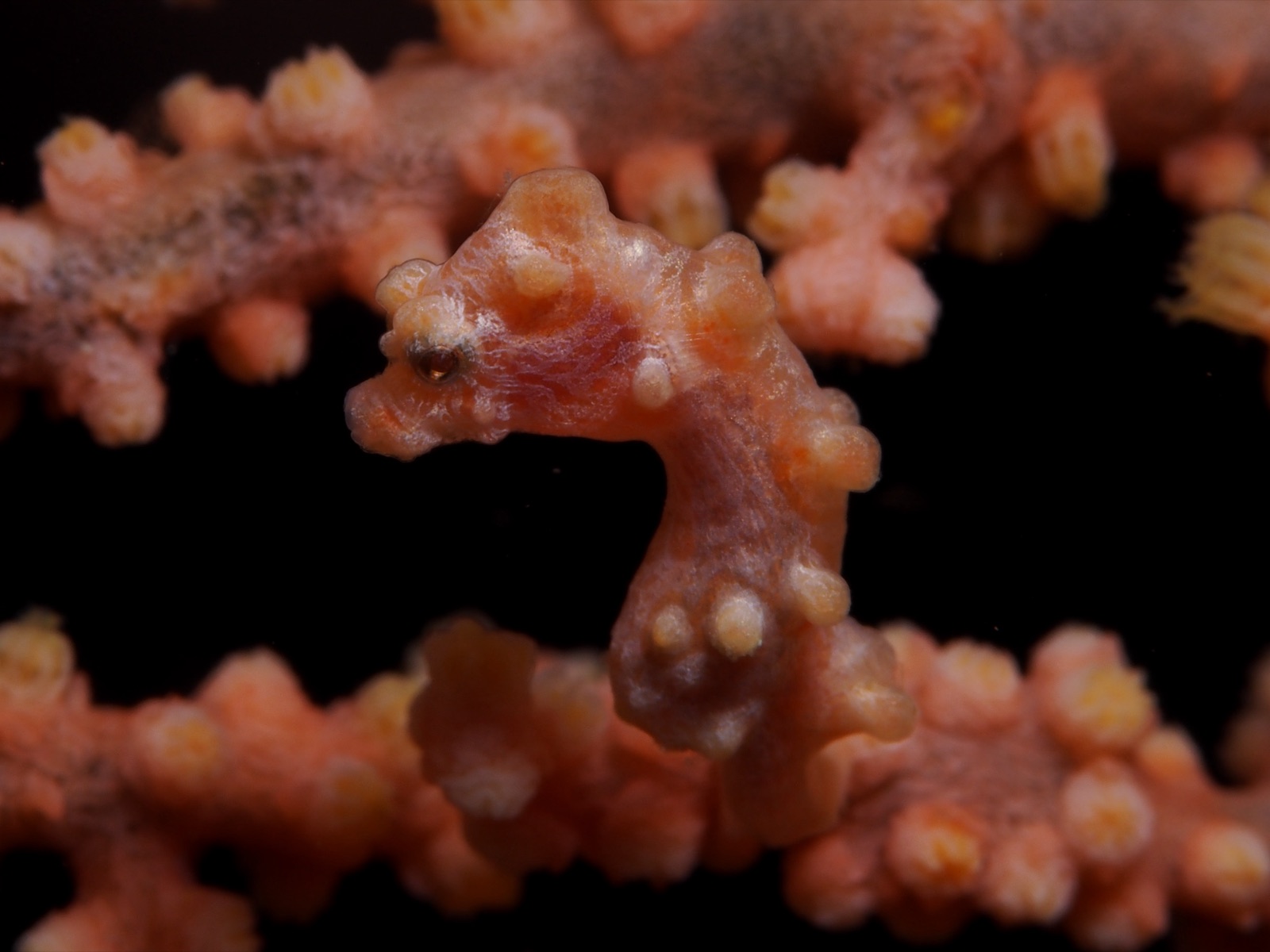
"Charted here" species were listed by our editors from the sources on this page. Counts are GBIF occurrence records: observations logged within about 5 km of the charted position since 1990, matched only against the species in our catalogue. They show what has been seen there, not a promise of what you will see.