Maine
Depth is the range from the top of the site to its usual maximum; "recommended cert" is the mainstream-agency level operators usually ask for, not a legal rule. Currents and visibility change daily, so treat everything here as planning ranges.
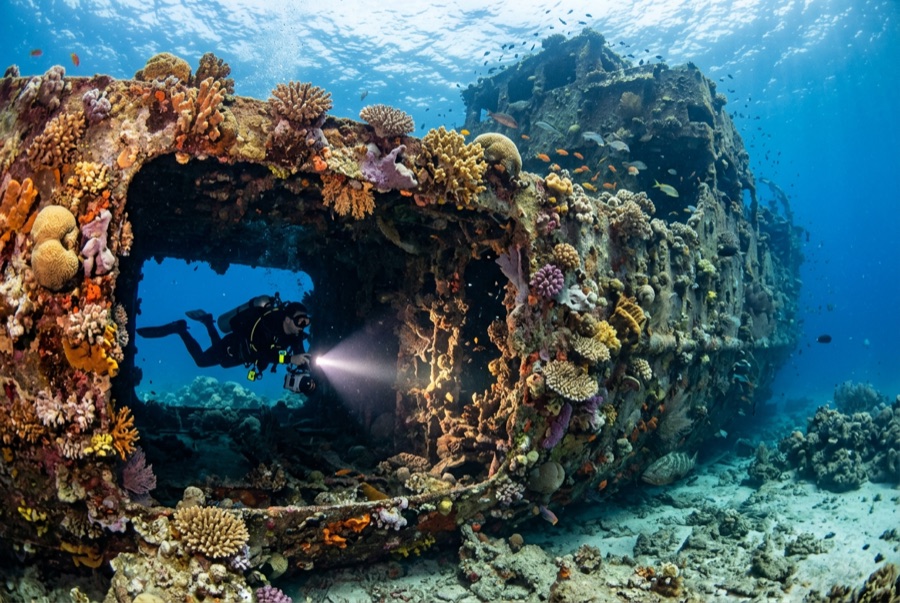
The steamer Maine was torpedoed on her port side by UC-17 on 23 March 1917 and now rests upright less than a nautical mile off Bolt Head on white sand and coarse shingle. Her deck lies around 22 m, the seabed about 29 m, and the stern reaches 34 m. Apart from a collapsed section amidships she is fairly intact and stands several meters proud, so torch-lit swim-throughs lead into holds full of fish and through the torpedo damage in her side. Tompot blennies, schools of bib, lobsters, crabs, scallops and an old conger by the bow live around the hull, and big anglerfish have been met here. The water is often clear, with around 20 m of visibility reported, but strong tides restrict diving to slack water.
The moment you come for: Upright, largely intact First World War steamer; swim-throughs into fish-filled holds; often clear water
Topography: Upright steamer on white sand and coarse shingle, collapsed amidships
Current: Strong current makes it a slack-water dive.
Entry: Boat dive less than a nautical mile off Bolt Head; on spring tides dive at slack, about two hours after high water or two and a half hours after low water.
Know before you splash
Hazards: Strong current outside slack, which can make the wreck hard to find from the shot; collapsed midships section; depth to 34 m at the stern.
Nitrox: Worth it here: profiles sit in the range where enriched air meaningfully extends no-stop time (with the training to use it).