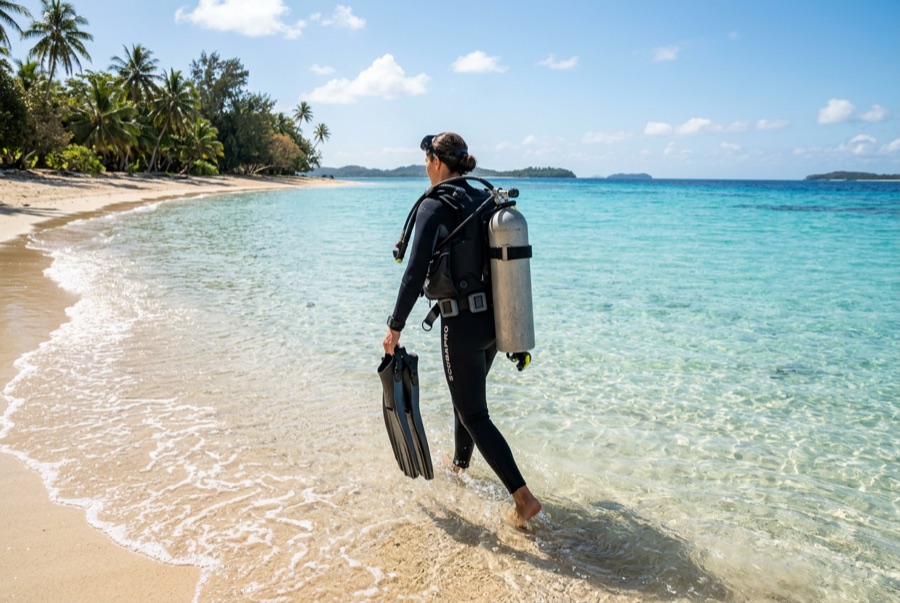
Chesil Cove
Depth is the range from the top of the site to its usual maximum; "recommended cert" is the mainstream-agency level operators usually ask for, not a legal rule. Currents and visibility change daily, so treat everything here as planning ranges.
Chesil Cove lies where the 18-mile shingle bank of Chesil Beach ends against the limestone of Portland. Divers walk down the ramp by the storm gate, cross the steep pebbles and are swimming within a few steps, as the bottom falls quickly to around 3 to 6 m. Heading west, pebbles give way to sand patches, rock outcrops and reef, with the richest ground at 8 to 14 m and the reef edge and scattered wreckage, including the broken remains of the Preveza, between 6 and 18 m. Cuttlefish lay eggs here in season, and divers regularly meet John Dory, catsharks, lobsters, wrasse, bass, sand eels, sea hares and many nudibranchs, with triggerfish in summer. It is dived all year and by night too.
The moment you come for: Year-round shore dive at the end of Chesil Beach; cuttlefish, John Dory and nudibranchs among rocks and wreckage; popular night dive
Topography: Steep pebbles giving way to rock outcrops, reef, kelp, sand and scattered wreckage
Current: Diveable at any state of tide; currents are generally weak inside the cove but tidal pull increases further out and on spring tides.
Entry: Shore entry from the divers' ramp beside the storm gate at Chiswell, at the Portland end of Chesil Beach; walk in with the BCD inflated, as the pebble beach drops away within a few steps. Navigate on the rule that out is west and home is east.
Know before you splash
Hazards: Swell and undertow on the steep beach make entry and especially exit hard; avoid in winds above about Force 3 from the south or west; visibility can take days to recover after storms; fishing line and torn nets near the old sewer pipe.
Who you'll meet
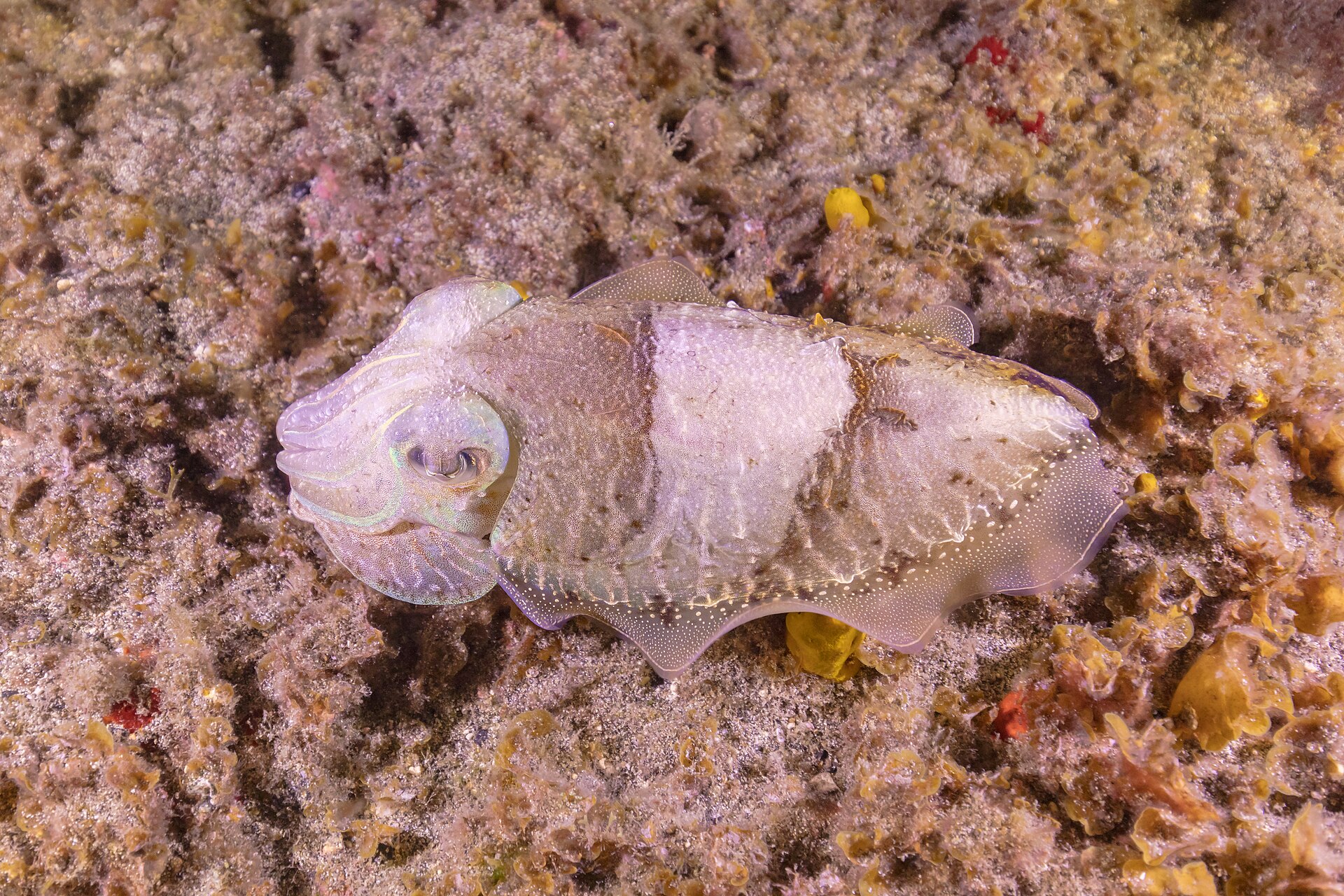
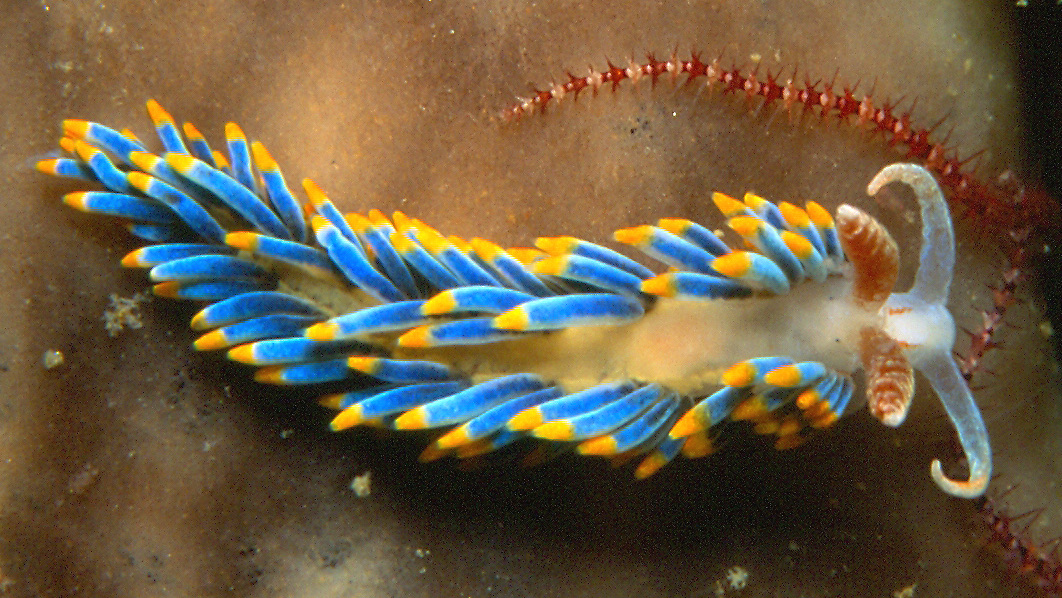
"Charted here" species were listed by our editors from the sources on this page. Counts are GBIF occurrence records: observations logged within about 5 km of the charted position since 1990, matched only against the species in our catalogue. They show what has been seen there, not a promise of what you will see.