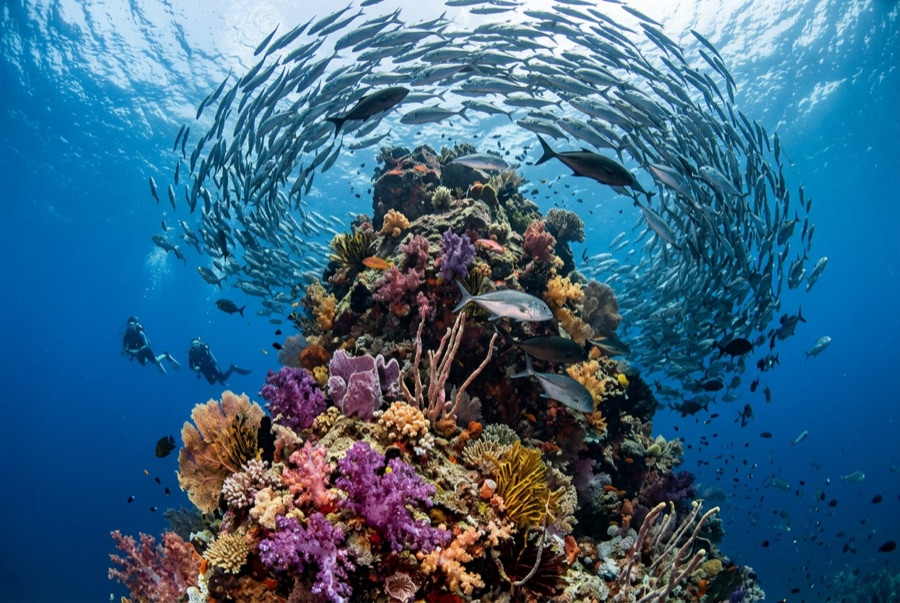
Nakanougan Island
La profondeur correspond à la plage allant du sommet du site jusqu'à son maximum habituel ; le « niveau recommandé » est le niveau demandé en général par les opérateurs auprès des grandes agences, pas une règle légale. Les courants et la visibilité varient chaque jour, traitez donc tout cela comme des plages indicatives de planification.
Nakanougan lies about 15 km southwest of Iriomote, and the sea around it holds some 50 dive sites among rocky underwater ridges that look like mountain ranges. It is the big-fish destination of the Yaeyama area: dogtooth tuna, giant and bluefin trevally, rainbow runners and barracuda gather where the current strikes the rocks, and whale sharks, hammerheads, tiger sharks and false killer whales have all been seen. The best-known spots are Higashi-no-ne, a rock like a tall building standing in 40 m, and San-no-ne on the west side, a giant rock rising from 36 m where about a thousand bluefin trevally can school in strong current. Boats take 40 to 50 minutes from Shirahama port.
Le moment pour lequel vous venez: Dogtooth tuna and schools of bluefin trevally; giant rocks such as Higashi-no-ne and San-no-ne; chance of whale sharks
Topographie: Steep rocks and pinnacles rising from 36 to 40 m around the island, in open-sea current
Courant: Occasionally very strong.
Entrée: Day trips on large boats of about 40 to 50 minutes from Shirahama port on Iriomote.
À savoir avant de plonger
Dangers: Open-ocean site with currents that are occasionally very strong and rocks reaching 40 m, far from port: advanced divers only, with a surface marker buoy, close contact with the guide and careful no-decompression planning.
Qui vous croiserez
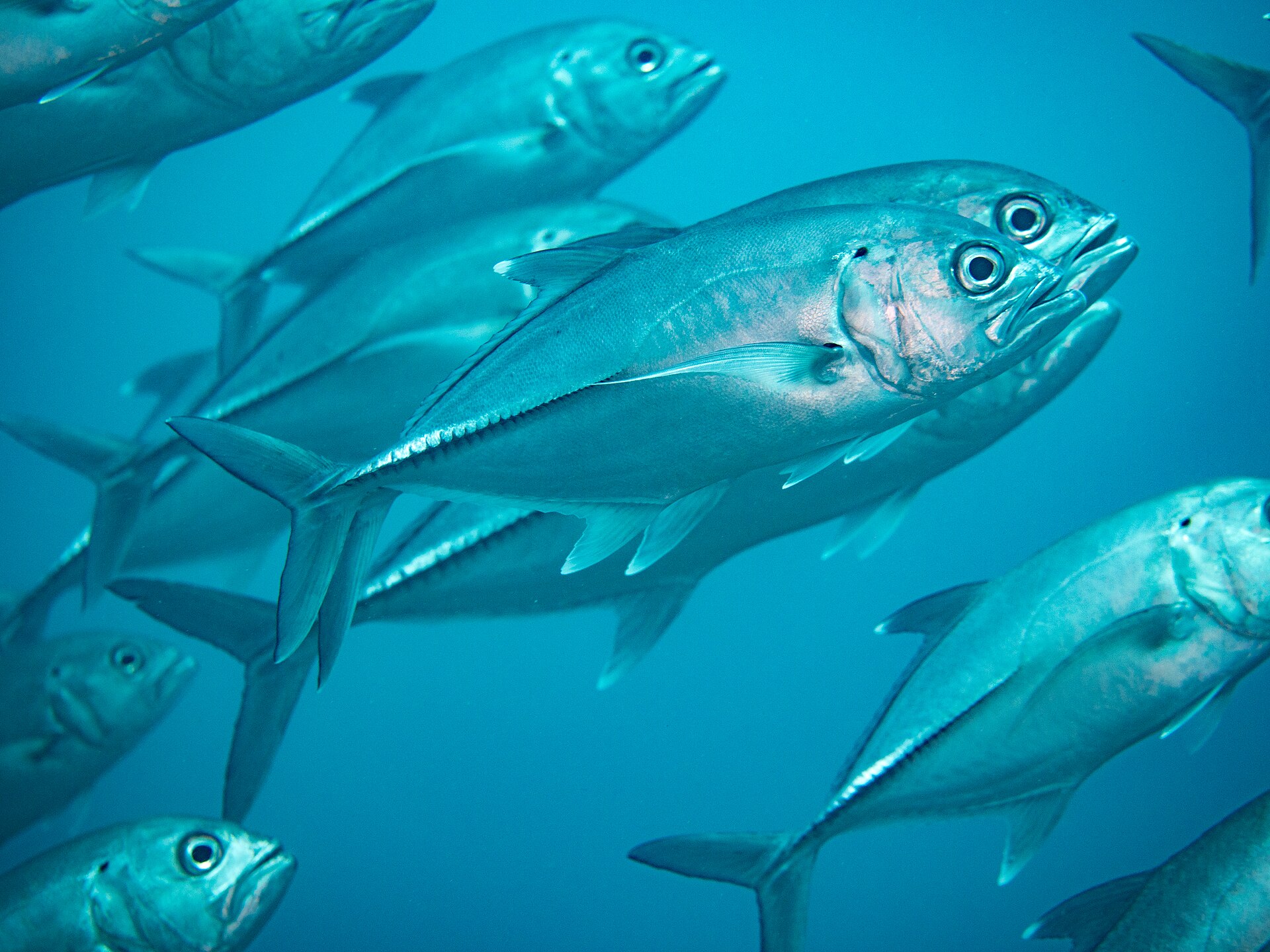
Carangue à gros yeux
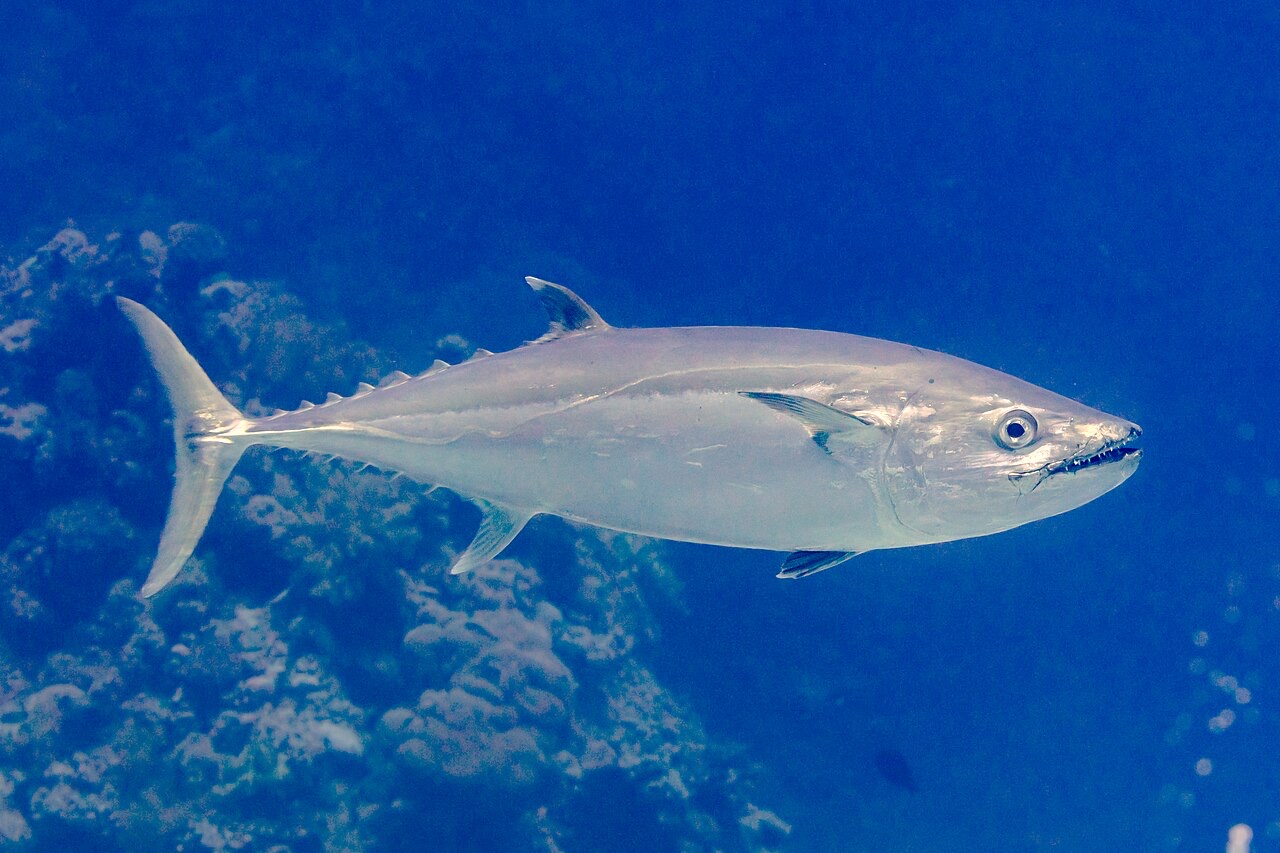
Thon dents de chien
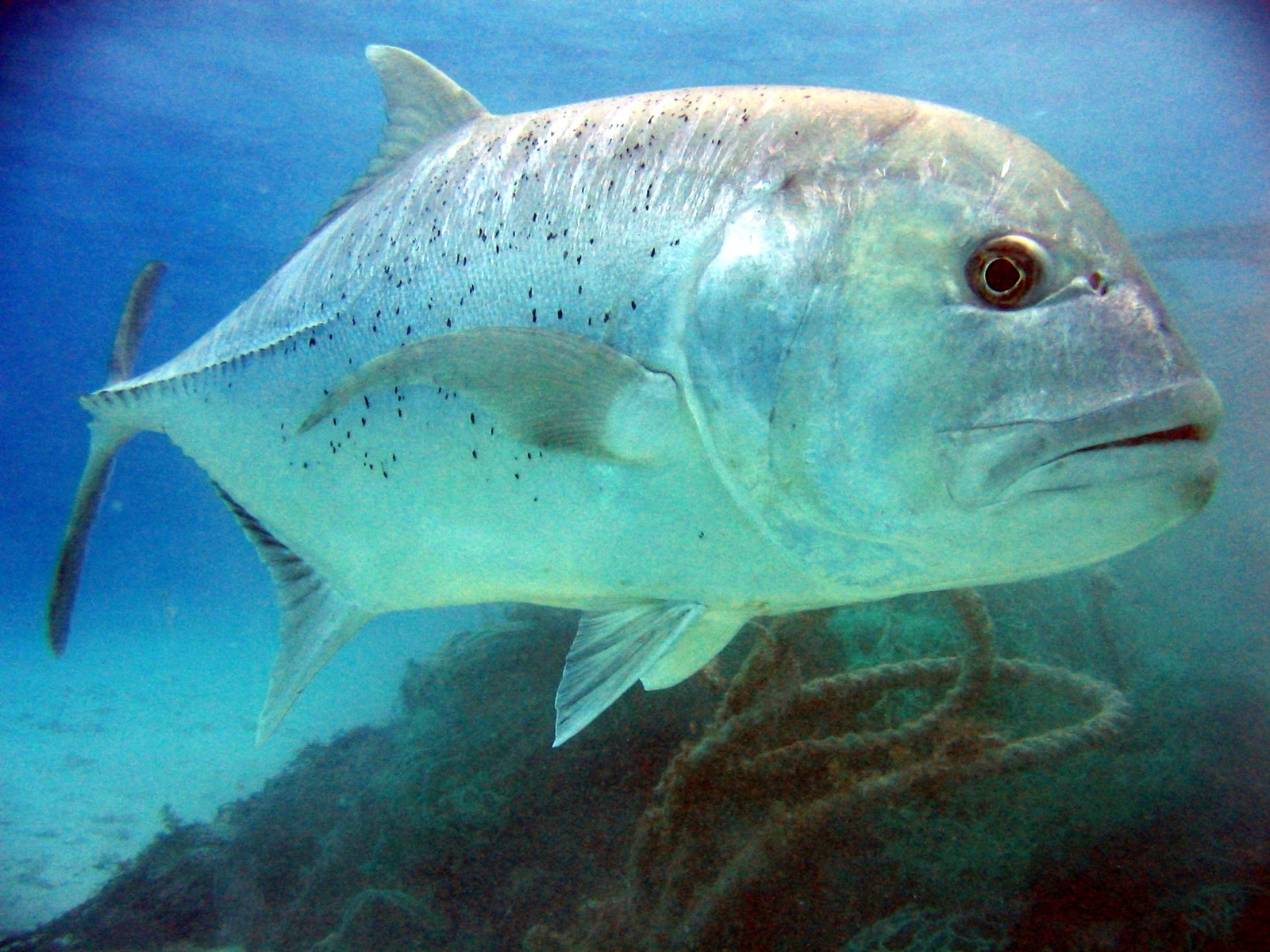
Carangue grosse tête
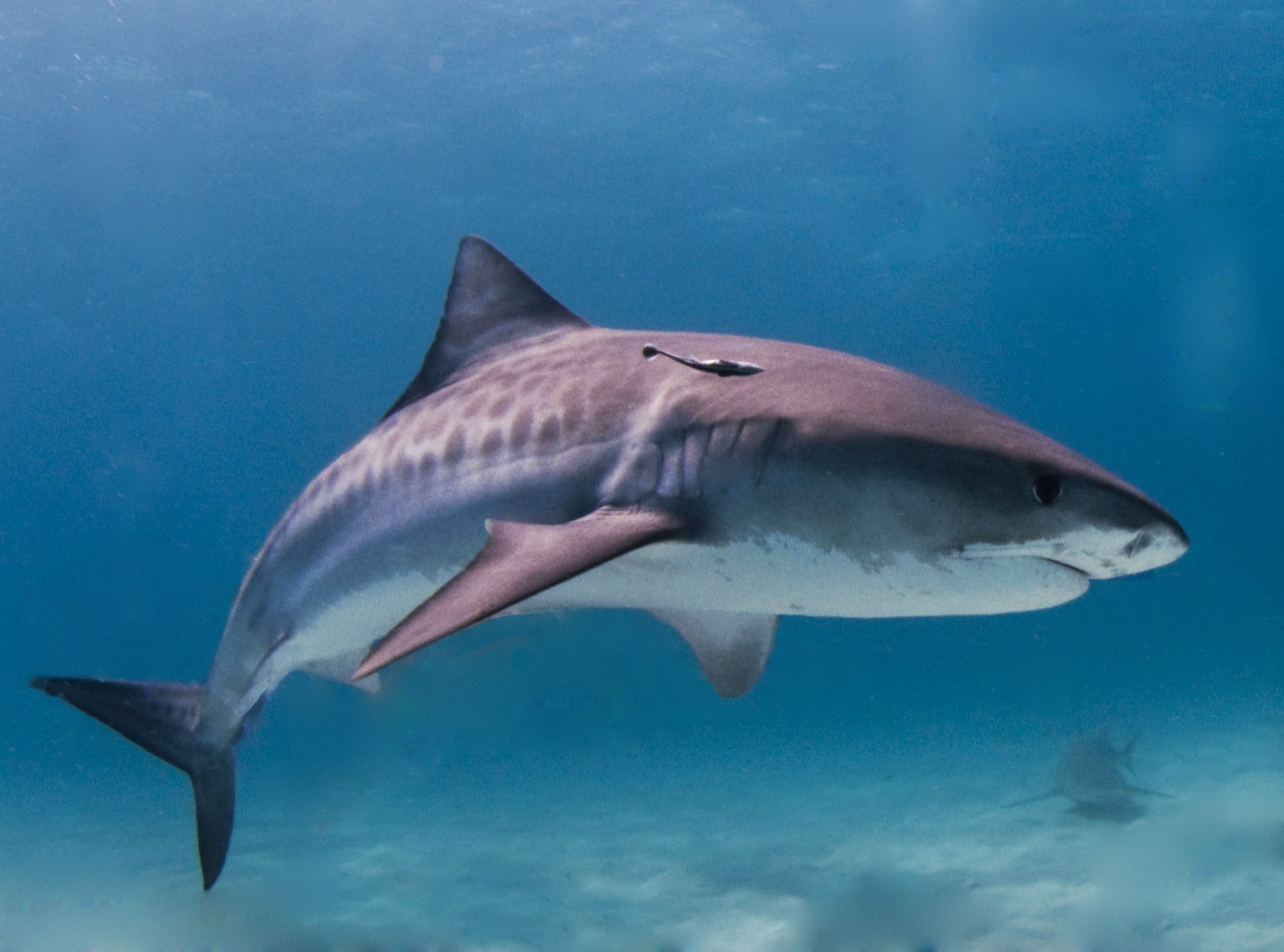
Requin-tigre
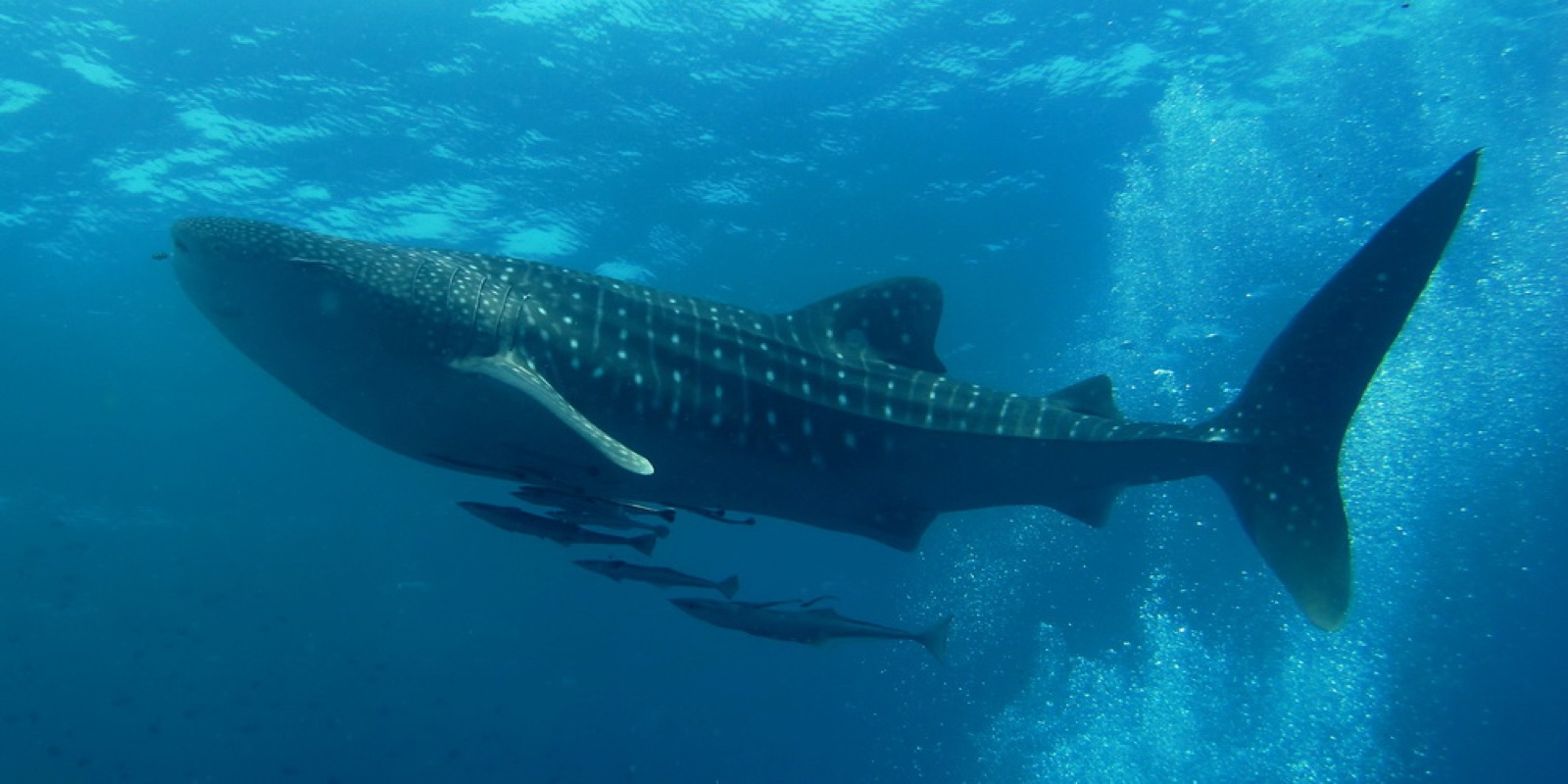
Requin-baleine
Les espèces « cartographiées ici » ont été répertoriées par nos éditeurs à partir des sources indiquées sur cette page. Les comptages correspondent aux occurrences GBIF : observations enregistrées dans un rayon d'environ 5 km autour de la position cartographiée depuis 1990, comparées uniquement aux espèces de notre catalogue. Ils indiquent ce qui a été observé à cet endroit, sans garantir ce que vous y verrez.