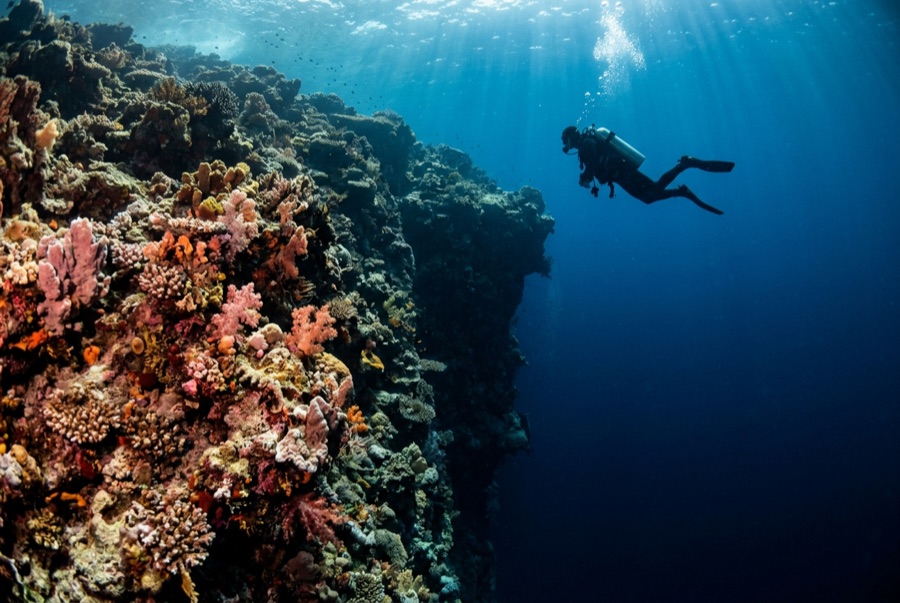
Cape Zanpa
Depth is the range from the top of the site to its usual maximum; "recommended cert" is the mainstream-agency level operators usually ask for, not a legal rule. Currents and visibility change daily, so treat everything here as planning ranges.
Cape Zanpa, the lighthouse headland that American divers on Okinawa call Bolo Point, falls away in big walls and drop-offs on the island's west coast. Boats reach it in about 20 minutes from Maeganeku, and there is also a shore approach that means a rough hike over jagged rock. A Japanese magazine profile gives a maximum dive depth of 24 m, but the terrain keeps going: a cave mouth sits near 27 m and the deepest ground lies far below 60 m. Dogtooth tuna may cruise past the walls, while pygmy seahorses and nudibranchs hide in the soft corals lower down. Lionfish, copper sweepers, grouper and large snapper are also recorded. Surf and current change quickly, and wartime artillery rounds have been found here.
The moment you come for: Big walls and drop-offs; dogtooth tuna passing; pygmy seahorses and nudibranchs in the soft corals
Topography: Walls, drop-offs and gorges with small caves and plate coral
Current: Sometimes strong; surf and current can change quickly.
Entry: Boat dive about 20 minutes from Maeganeku port; a shore approach at Bolo Point means a rough hike over jagged rock.
Know before you splash
Hazards: Surf and current that change quickly; very deep water off the walls; wartime ordnance has been found and diving near the main cave is discouraged; hard shore entry over sharp rock.
Who you'll meet
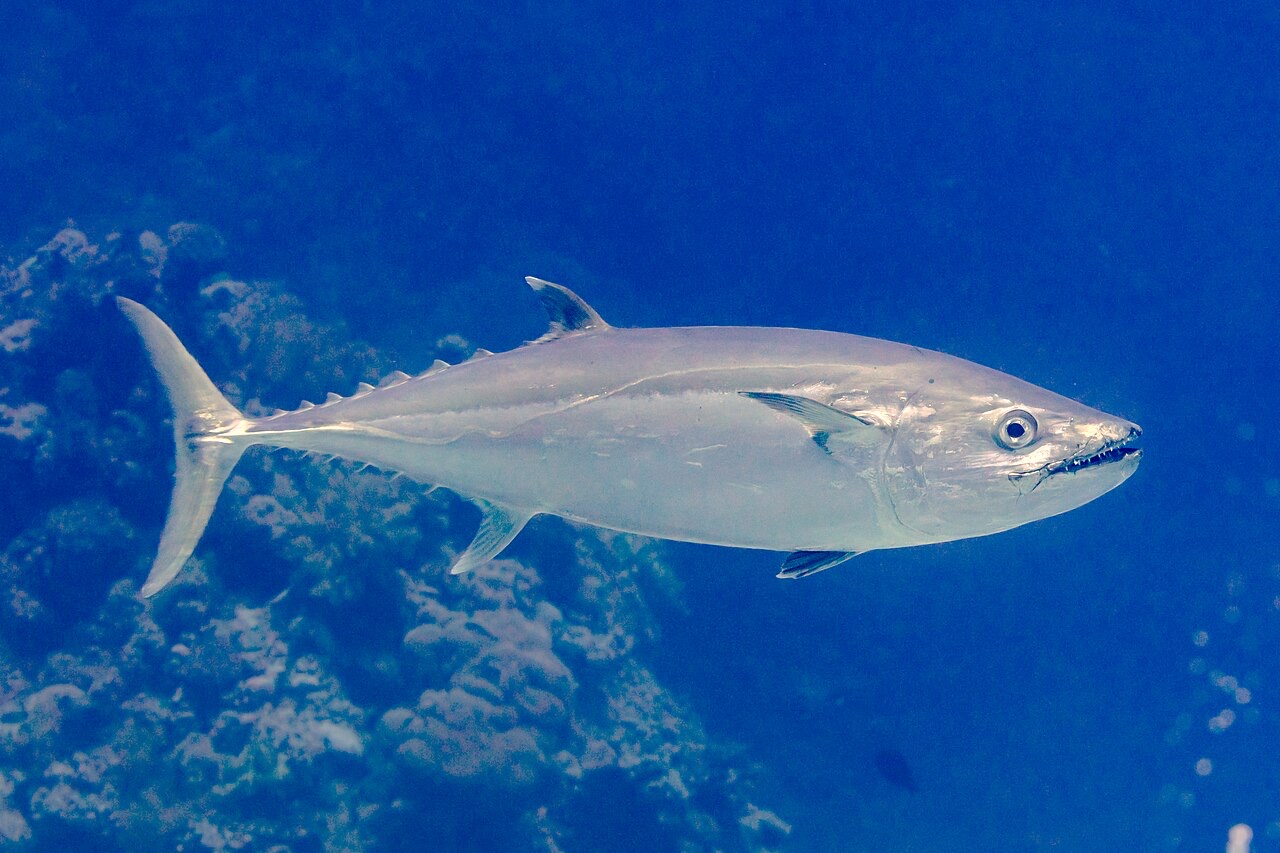
Dogtooth Tuna
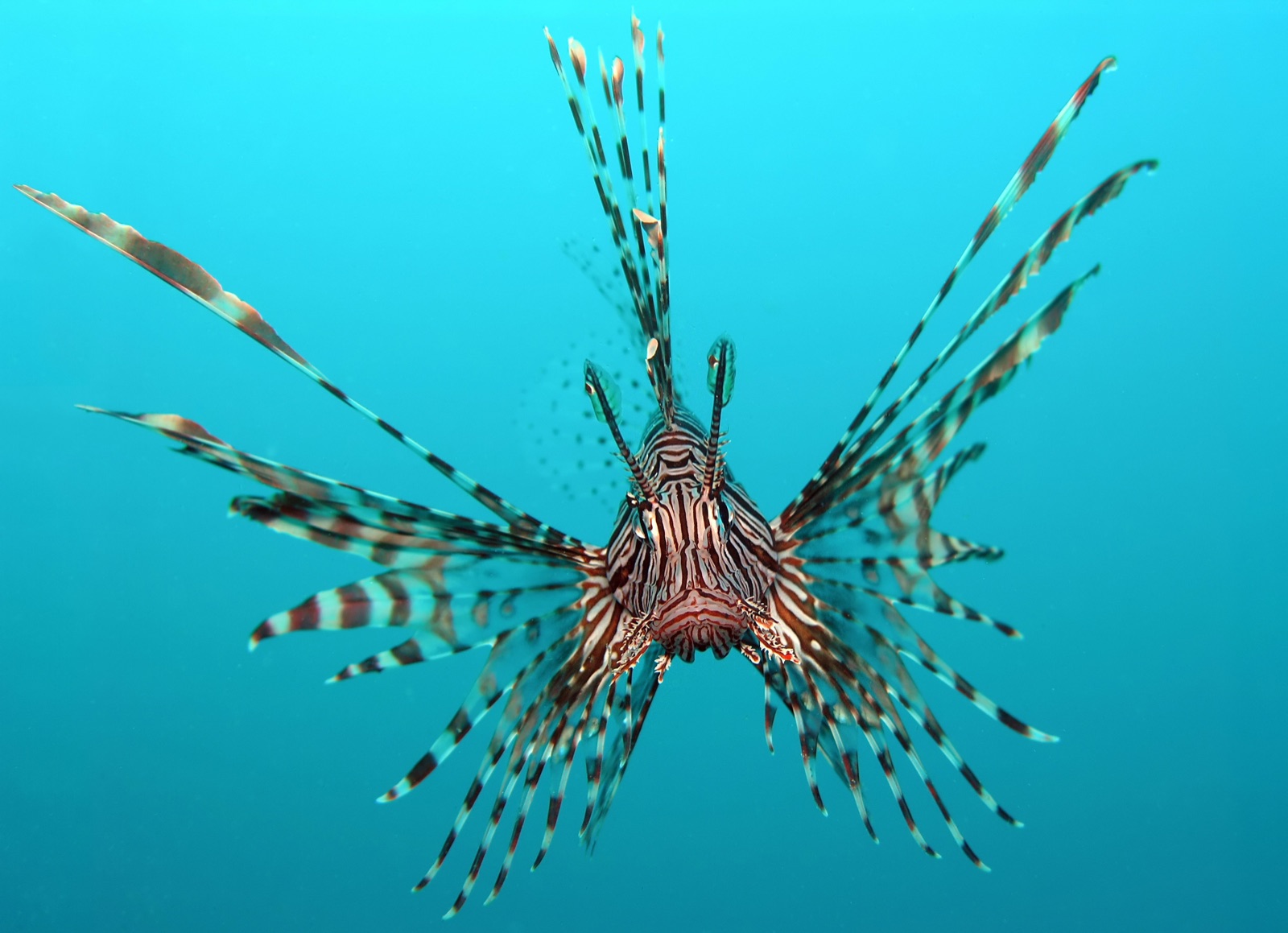
Lionfish
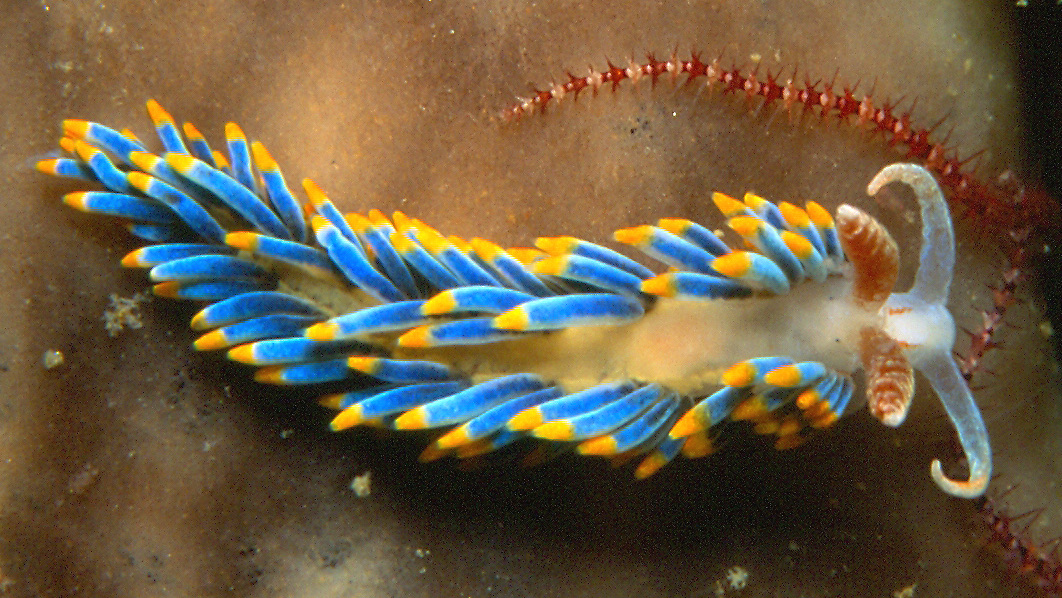
Nudibranchs
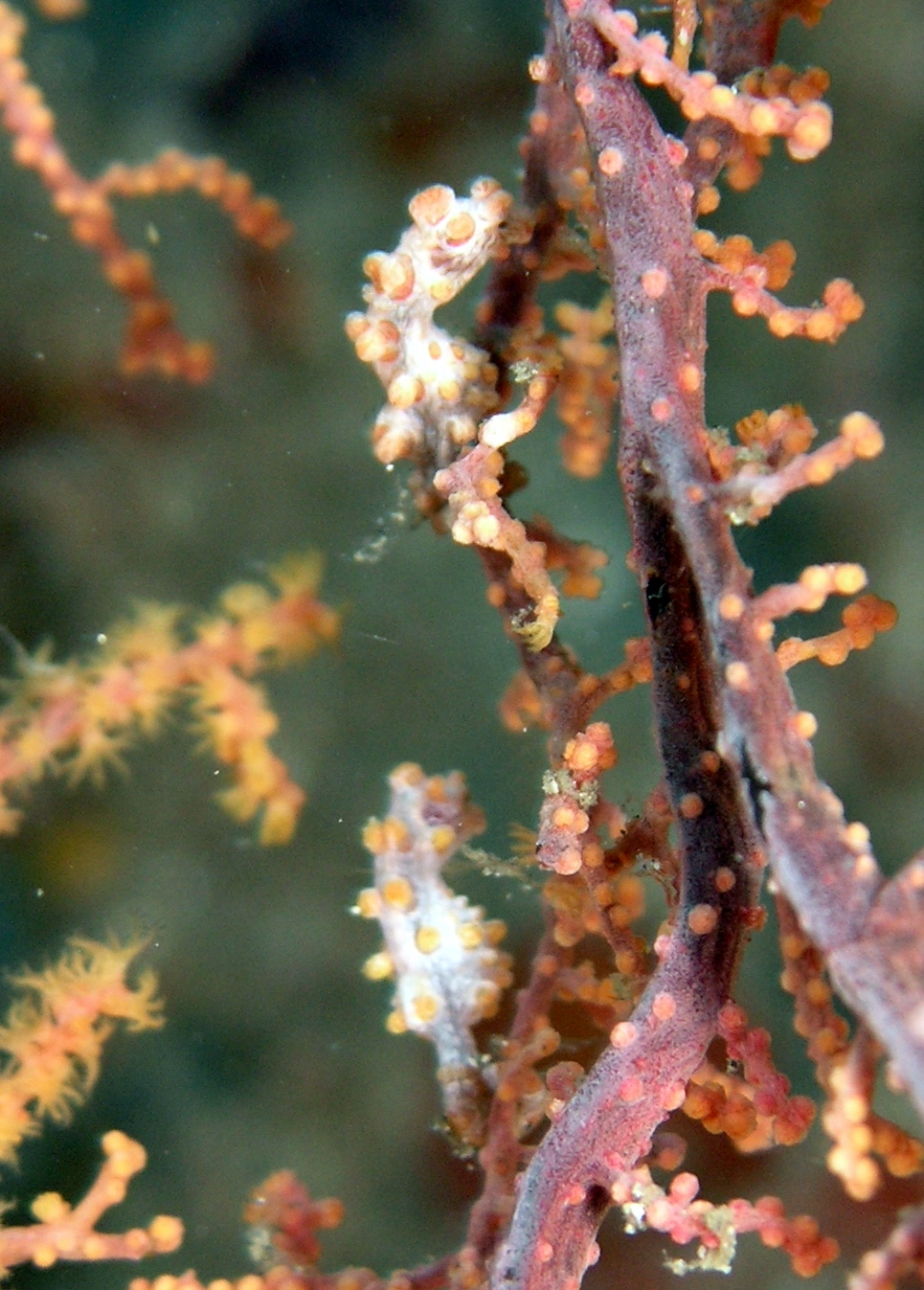
Pygmy Seahorse
"Charted here" species were listed by our editors from the sources on this page. Counts are GBIF occurrence records: observations logged within about 5 km of the charted position since 1990, matched only against the species in our catalogue. They show what has been seen there, not a promise of what you will see.