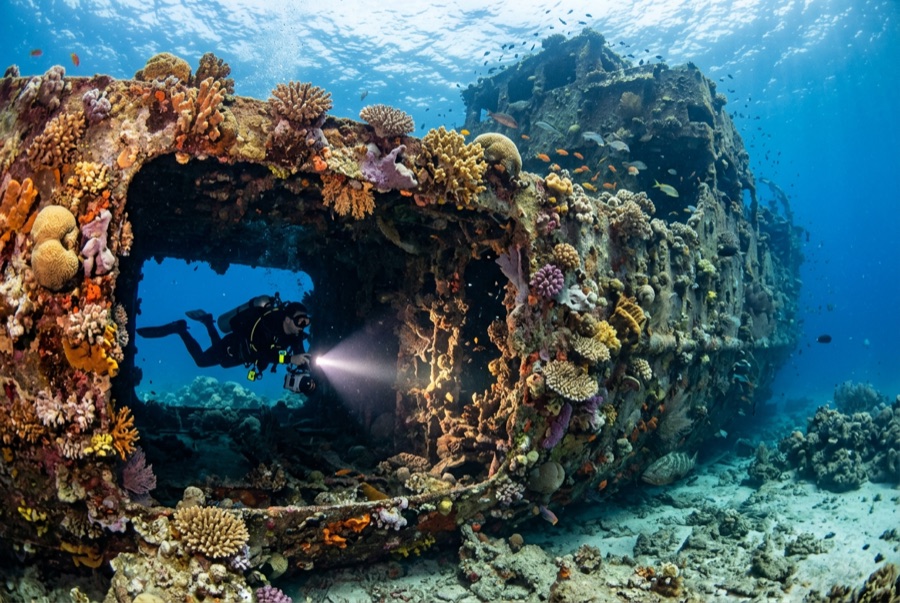
Chuyo Maru
Depth is the range from the top of the site to its usual maximum; "recommended cert" is the mainstream-agency level operators usually ask for, not a legal rule. Currents and visibility change daily, so treat everything here as planning ranges.
Built in 1943 for a Tokyo shipping line, the Chuyo Maru was a coastal freighter of about 1,940 tons and 89 m, bombed in the raids of 30 and 31 March 1944 and sunk on 1 April; she was found again in 1989. She sits upright on a sandy slope in the west Malakal anchorage, the top of her forward mast structure near 12 m, the deck around 30 m, and the seabed near 40 m. With no buoy, the guide anchors nearby and the dive usually works from the bow aft past the bridge and empty holds. A stern gun and sponge-covered ammunition boxes remain. Lionfish are so common that some guides call her the Lion Fish Wreck, and black coral, soft coral, and translucent shrimp dress the hull.
The moment you come for: Upright freighter with stern gun; black coral on ammunition boxes; lionfish everywhere; intact engine room
Topography: Upright freighter on a sandy slope
Entry: About five minutes by boat from Koror in the west Malakal anchorage; there is no marker buoy, so the guide anchors nearby and dives usually start at the bow.
Know before you splash
Hazards: Depth near 40 m with short bottom times; engine-room entry is dangerous and needs preparation; live ammunition may remain, so touch nothing.
Who you'll meet
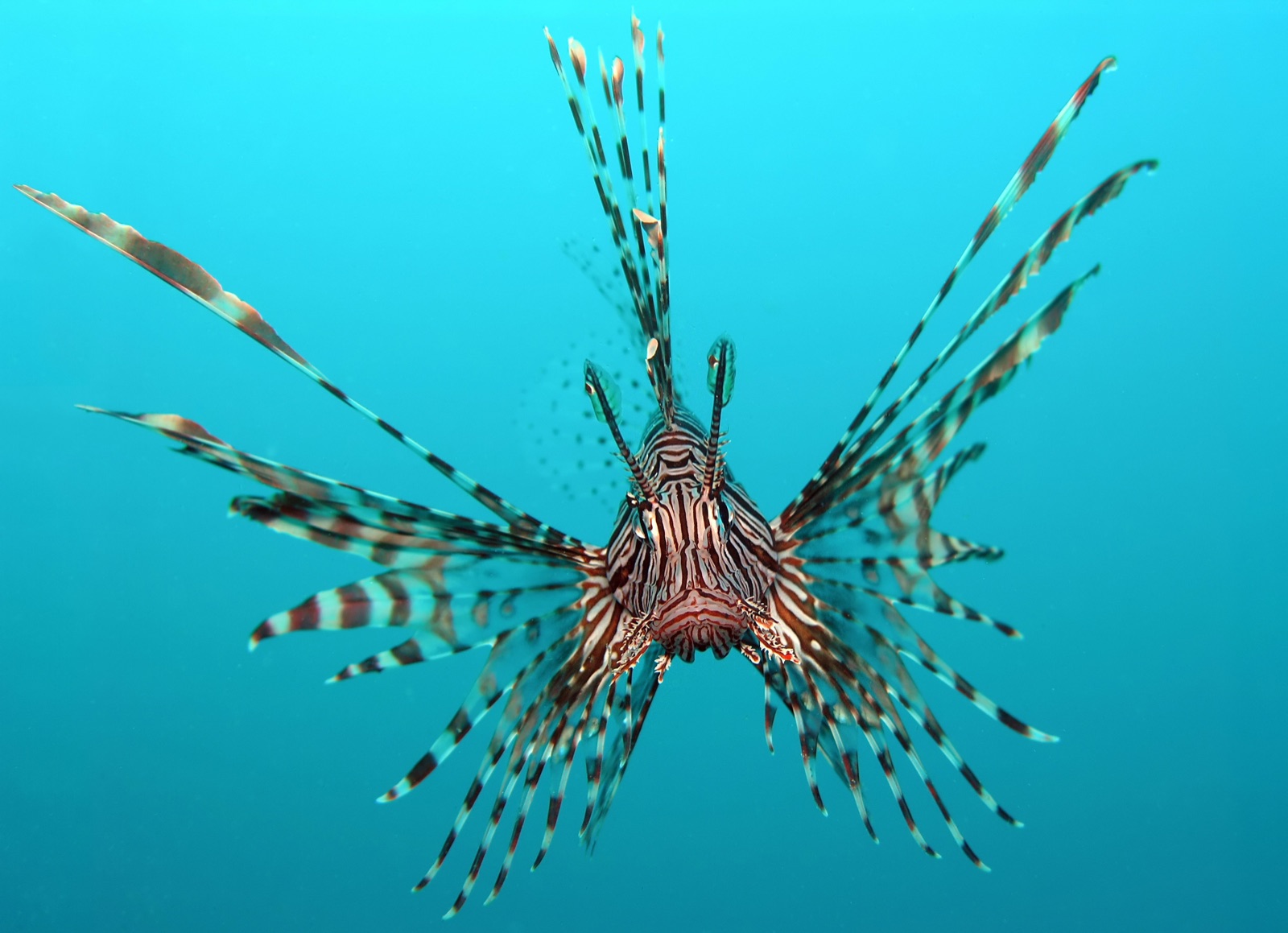
"Charted here" species were listed by our editors from the sources on this page. Counts are GBIF occurrence records: observations logged within about 5 km of the charted position since 1990, matched only against the species in our catalogue. They show what has been seen there, not a promise of what you will see.