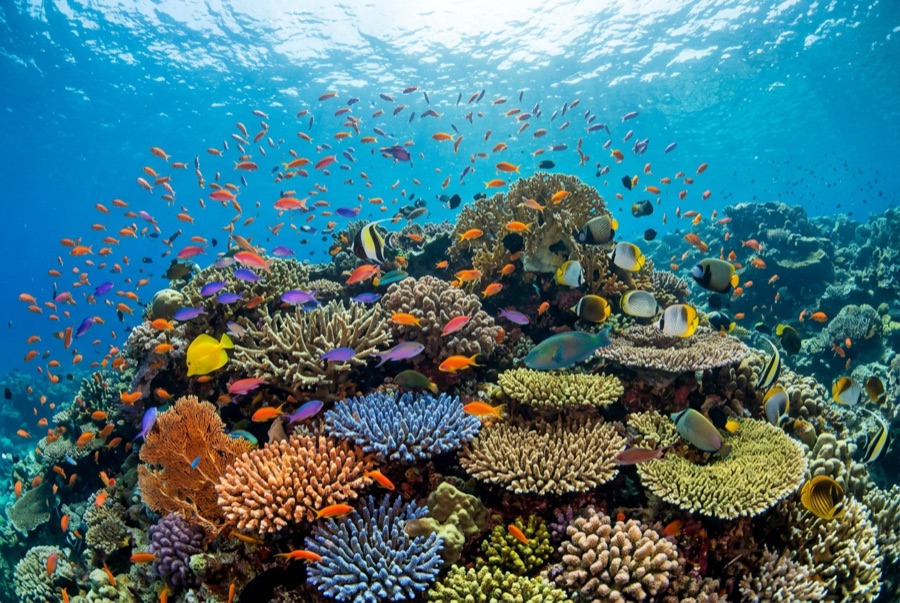
Peleliu Coral Garden
Depth is the range from the top of the site to its usual maximum; "recommended cert" is the mainstream-agency level operators usually ask for, not a legal rule. Currents and visibility change daily, so treat everything here as planning ranges.
West of Peleliu and north of its harbor, a hard-coral reef runs north from Peleliu Corner toward Ngedebus, sloping from the shallows to an edge at about 18 m and then onto a sand and rubble plateau with canyons near 23 m. This is the reef off Orange Beach, where United States Marines and Army troops came ashore on 15 September 1944, and the fighting left anchors, cable, shell casings, landing-craft parts, and aircraft fragments among the coral. Divers usually begin at the edge and work toward the shallows. Marbled rays, crocodilefish, cuttlefish, and bumphead parrotfish are regulars, whitetip reef sharks and turtles cruise through, and fusiliers school overhead. Some of the ordnance is still unstable, so everything stays untouched.
The moment you come for: 1944 landing debris among the coral; marbled rays and crocodilefish; bumphead parrotfish; gentle coral slope
Topography: Hard-coral slope to an edge at about 18 m, then a sand and rubble plateau with canyons, scattered with 1944 battle debris
Current: Usually no current.
Entry: West of Peleliu and north of its harbor, 55 to 70 minutes by speedboat from Koror; dives usually start at the reef edge and work back toward the shallows.
Know before you splash
Hazards: Unexploded ordnance from the 1944 battle lies on the reef: look but never touch; long open-water boat ride from Koror.
Who you'll meet
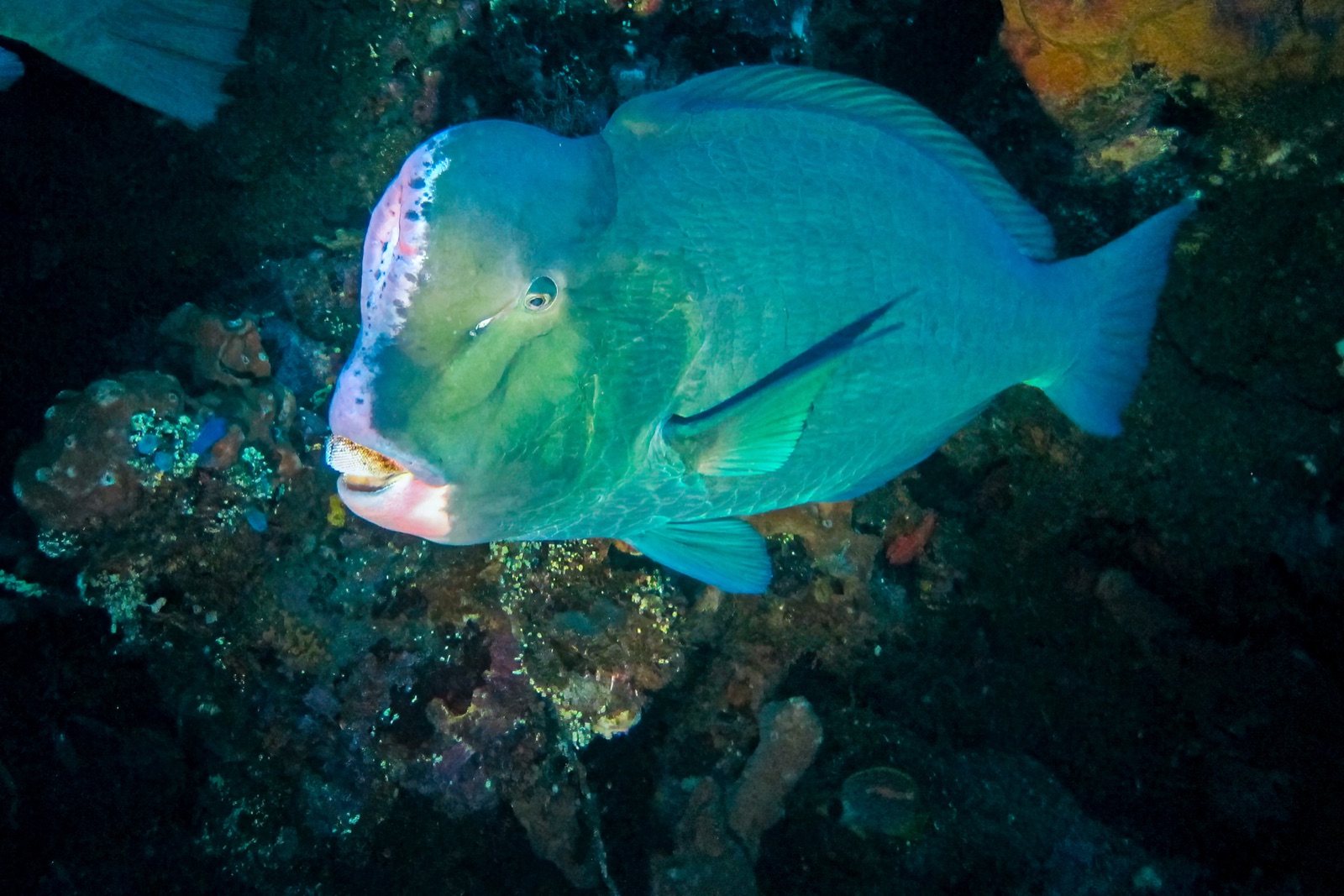
Bumphead Parrotfish
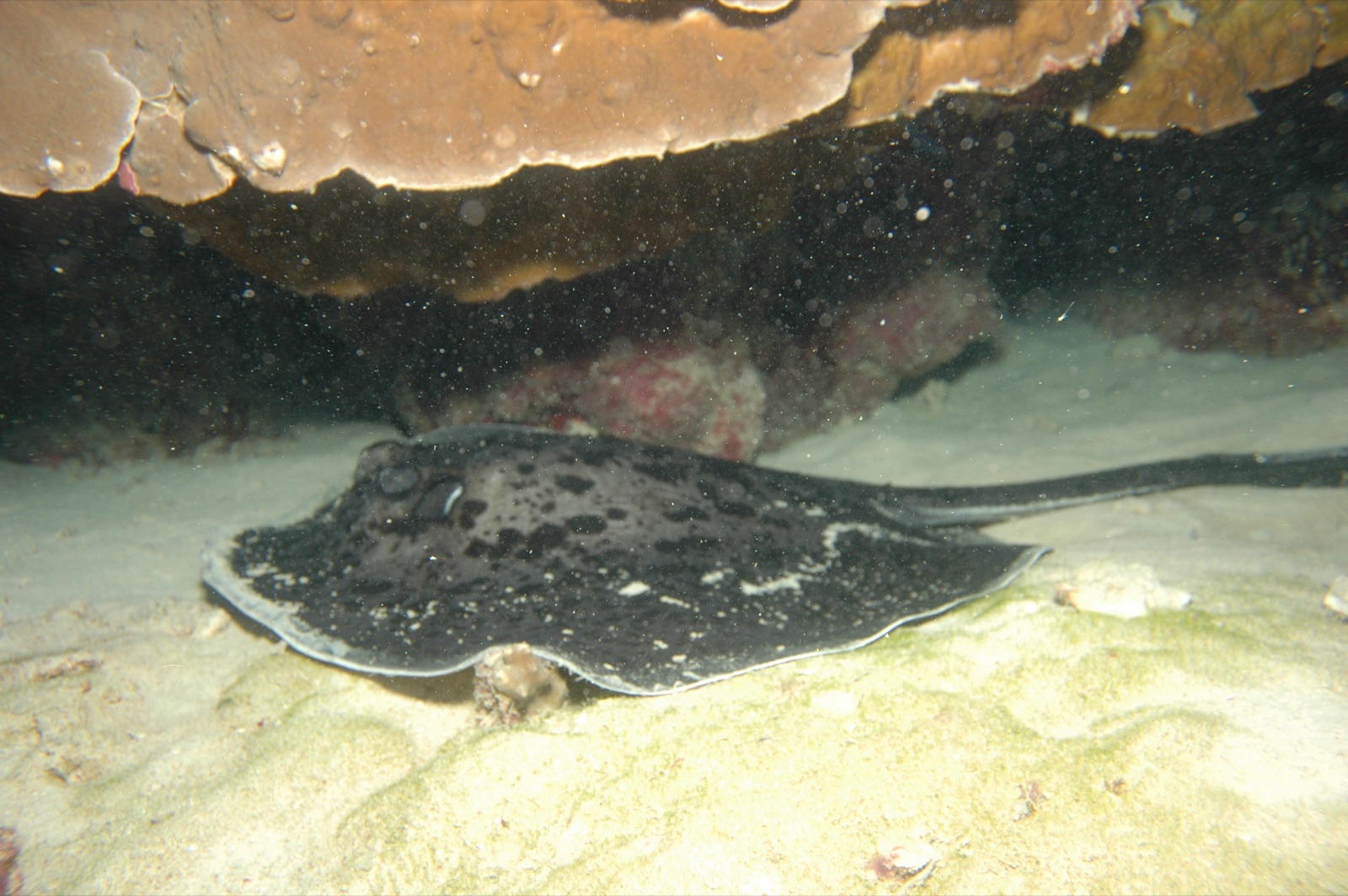
Marbled Ray
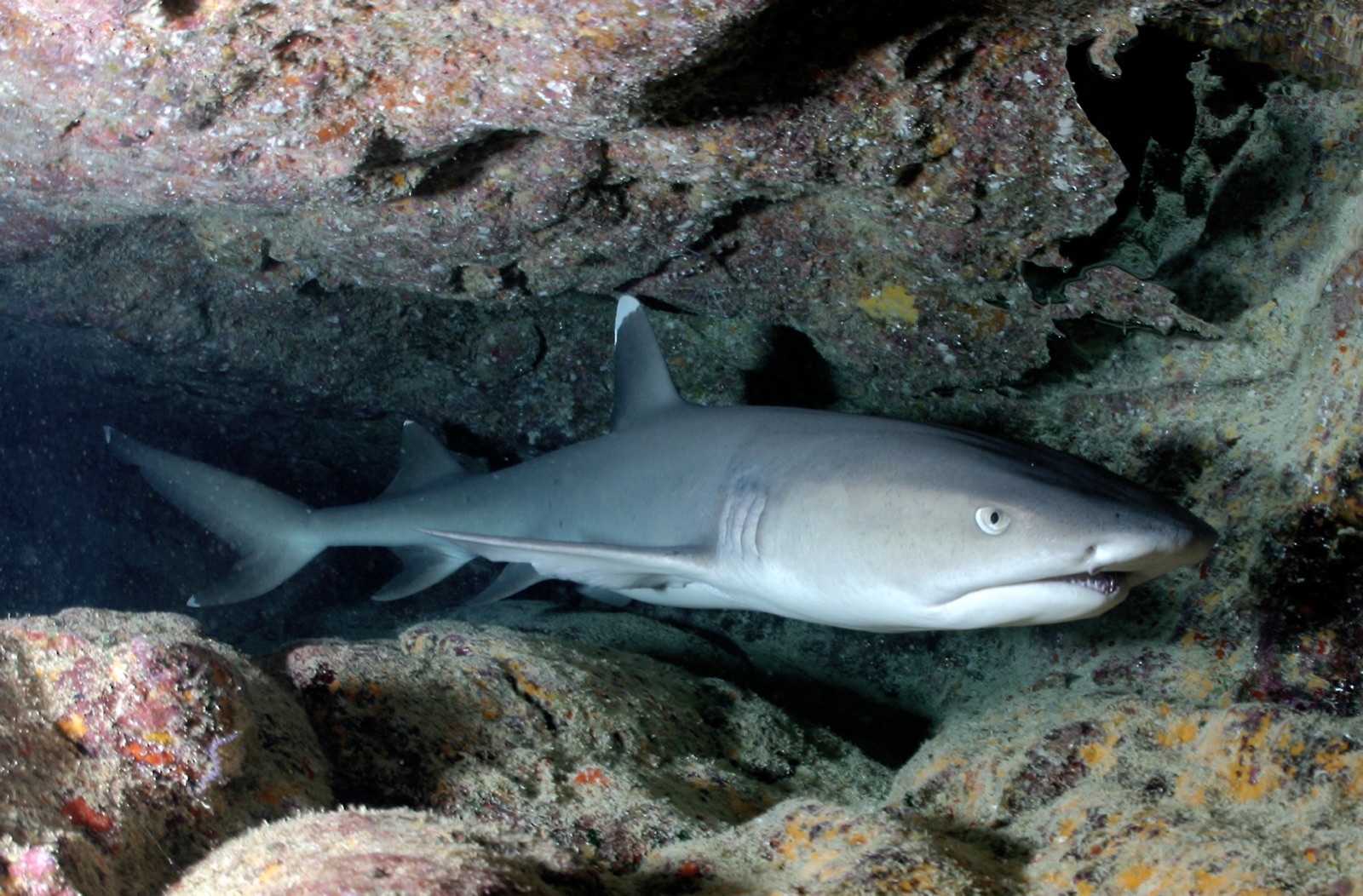
Whitetip Reef Shark
"Charted here" species were listed by our editors from the sources on this page. Counts are GBIF occurrence records: observations logged within about 5 km of the charted position since 1990, matched only against the species in our catalogue. They show what has been seen there, not a promise of what you will see.