Marine Mammals
Common Dolphin
Delphinus delphis · Mammal, family Delphinidae (oceanic dolphins); WoRMS treats the long-beaked form, once Delphinus capensis, as part of this species
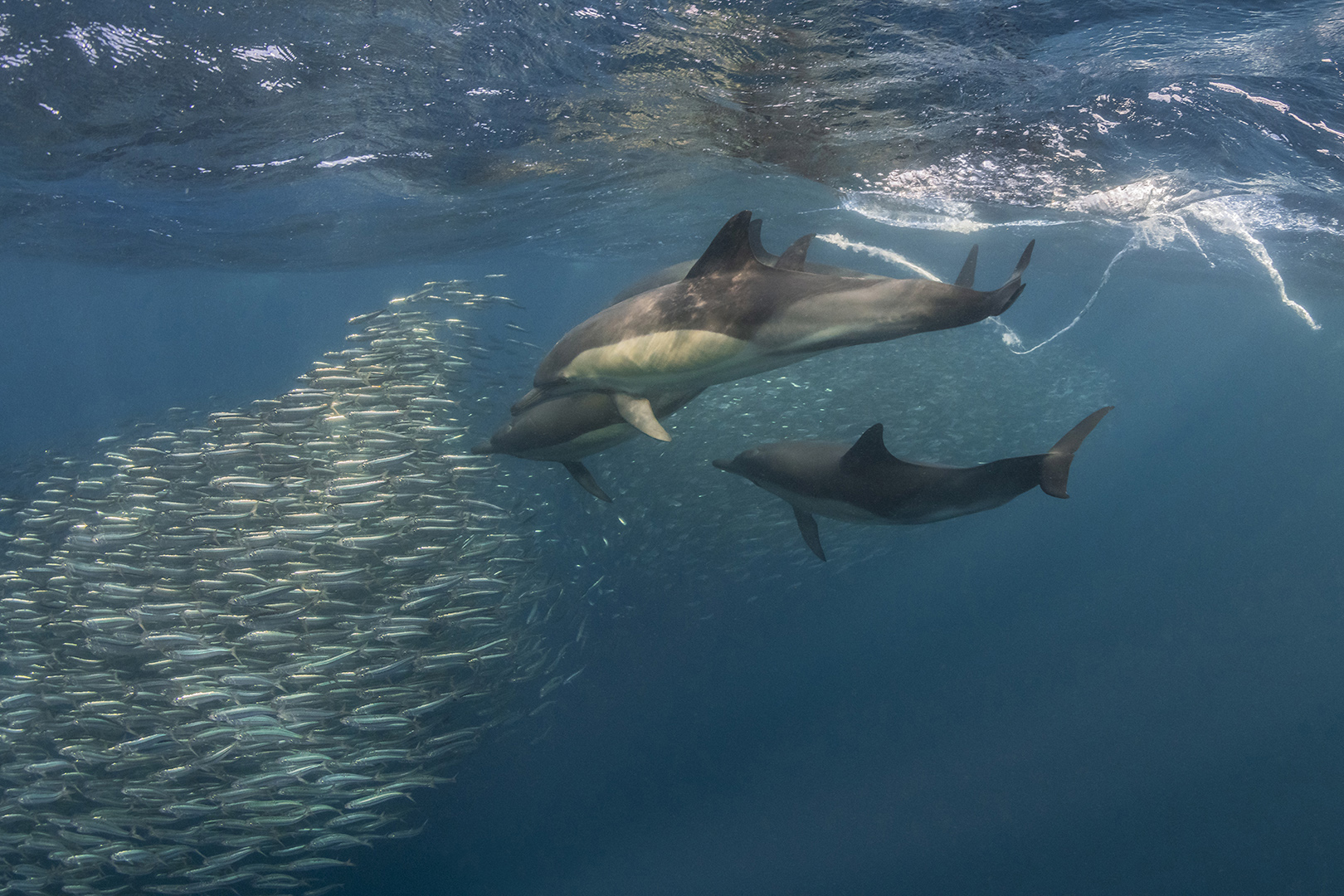
Common dolphins hunt in hundreds and sometimes thousands, and at South Africa's Sardine Run they are the engine of the whole spectacle. When survey scientists followed the run in June and July, they found common dolphins and Cape gannets to be the principal predators of the sardine shoals, working within about 4 km of shore. Elsewhere they are a fixture of offshore boat trips: the most frequently seen cetacean in the Azores, among the most common marine mammals at the Poor Knights in pods of up to 200, and gathered in large offshore aggregations around the Galápagos. Adults are about 2 m long and built for speed, bow-riding for long stretches, leaping and somersaulting, then feeding at night on schooling fish and squid at around 30 m. Taxonomists have folded the long-beaked form into this species. The rule is simple: never chase a pod, and let the dolphins decide.
Where and when to see one
"Resident" means most dives at that destination encounter them; "seasonal" means reliably present in the listed months; anything else is a bonus, not a plan.
| Destination | Reliability | Months | Notes |
|---|---|---|---|
| The AzoresPortugal | Resident: seen on most dives | Year-round | |
| California Channel IslandsUnited States | Resident: seen on most dives | Year-round | |
| The Sardine Run (Wild Coast)South Africa | Seasonal: reliable in season | Jun–Jul | |
| Galápagos IslandsEcuador | Occasional | Year-round | |
| Poor Knights IslandsNew Zealand | Occasional | Year-round | |
| Canary IslandsSpain | Occasional | Year-round | |
| MadeiraPortugal | Occasional | Year-round |
Best month, at a glance
Understanding them
Habitat: Mostly offshore waters of subtropical to temperate seas, coming close inshore where bait gathers. Rests by day and feeds at night, typically diving to about 30 m.
Range: Worldwide in subtropical and temperate seas; abundant year-round off the US West Coast and regular around the Azores, northern New Zealand, the Galápagos and South Africa's east coast.
Behavior: Fast, social and acrobatic: groups of hundreds leap, flip end over end and somersault, and bow-ride boats for long stretches. On South Africa's east coast during the sardine run they work the sardine shoals close inshore alongside Cape gannets.
Diet: Small schooling fish such as sardines, pilchard, anchovies and young herring, plus squid and octopus; an adult may eat 8–9 kg a day.
Size: typically around 2 m; documented up to 2.4 m (body length; adults run from about 1.5 m to a maximum of about 2.4 m (8 ft), averaging around 77 kg, with males slightly larger than females).
How to behave around one
Never chase, cut off or split a pod: let the dolphins choose whether to approach the boat or swimmers. NOAA advises viewing from at least 50 yards and for no more than 30 minutes. Join in-water swims only with established local operators, slip in quietly, stay near the surface and keep your arms in.
Conservation
Least Concern globally (2025 assessment) and probably among the most abundant dolphins, but bycatch in trawl, gillnet and drift-net fisheries is the main threat it faces.
Recently recorded near our dive sites
109 verified records within 5 to 10 km of 24 of our dive sites over the last 12 months (17 Nov 2025 to 16 Nov 2026), 4 of them in the last 30 days. Latest: 12 Nov 2026, near Northern Arch, by greghadley1 ↗ (iNaturalist, CC BY-NC).
Most records near
Research-grade iNaturalist observations shared under CC0, CC BY or CC BY-NC, plus human sightings from GBIF and OBIS datasets under the same licences, within 5 km of a site with a sourced position or 10 km of an approximate one. A record near two sites counts once in the total and once on each site. Each site page credits the observers and datasets behind its records. How these are collected →
Watch
From the official channels

Giant Pacific Octopus

Live African Penguin Cam After Hours | Monterey Bay Aquarium

African Penguin Cam After Hours | Monterey Bay Aquarium
Videos are embedded links to their creators' own channels. We host nothing and credit everything.