Invertebrates
Golden Jellyfish (Jellyfish Lake)
Mastigias papua etpisoni · Cnidarian, true jellyfish (Scyphozoa), family Mastigiidae; a subspecies described by Dawson (2005) as Mastigias cf. papua etpisoni, which WoRMS does not list separately from the lagoon species Mastigias papua
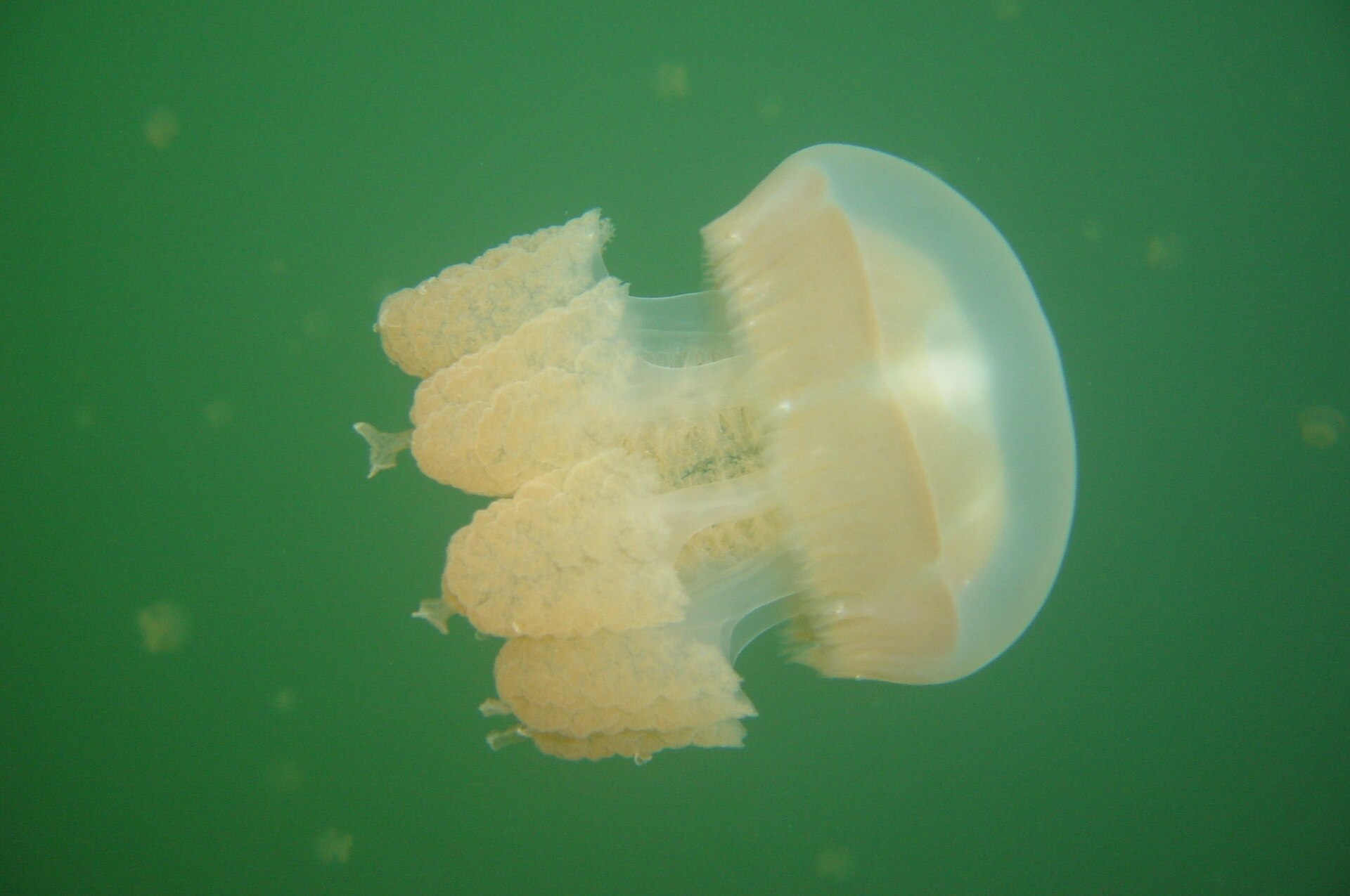
In one Palauan lake, golden jellyfish follow the sun across the water every day. Mastigias papua etpisoni lives only in Ongeim'l Tketau, Palau's Jellyfish Lake, a 30 m deep marine lake whose lower water is oxygen-free and laced with hydrogen sulfide, one reason scuba is banned and snorkelers must stay above 12 m. The jellies farm algae in their tissues and spend sunny days swimming east toward the morning sun and west in the afternoon, stopping at the shadow line that keeps them clear of a jelly-eating anemone on the shaded shore. They do sting, very mildly. The population is famously unstable: a lake that typically holds about 5 million emptied after the 2015–16 El Niño drought and closed to visitors for about two years, numbers crashed again in 2022, and operators reported only a few thousand in 2025. The Coral Reef Research Foundation posts monitored numbers and a three-month forecast for the lake; check it before you book.
Where and when to see one
"Resident" means most dives at that destination encounter them; "seasonal" means reliably present in the listed months; anything else is a bonus, not a plan.
| Destination | Reliability | Months | Notes |
|---|---|---|---|
| PalauPalau | Resident: seen on most dives | Year-round |
Best month, at a glance
| Month | Reliable destinations |
|---|---|
| January | Palau |
| February | Palau |
| March | Palau |
| April | Palau |
| May | Palau |
| June | Palau |
| July | Palau |
| August | Palau |
| September | Palau |
| October | Palau |
| November | Palau |
| December | Palau |
Understanding them
Habitat: The sunlit, oxygenated upper layer of Ongeim'l Tketau (Jellyfish Lake), a 400 m long, 30 m deep marine lake in Palau; below about 13–15 m the water has no oxygen and is laced with hydrogen sulfide.
Range: Found only in Jellyfish Lake, Palau; other Palauan marine lakes hold their own Mastigias subspecies.
Behavior: Swims a daily migration across the lake, heading east toward the morning sun and west in the afternoon and stopping at the shadow line, which keeps it away from a jelly-eating anemone on the shaded edges; it rotates as it swims so its algae get light.
Diet: Mostly products of the symbiotic algae (zooxanthellae) in its tissues, topped up with zooplankton caught by its mild stinging cells.
Size: typically around 10 cm; documented up to 14 cm (bell diameter; reaches about 14 cm, and in 2022 most adults in the lake measured over 12 cm).
How to behave around one
Snorkel only (scuba is prohibited) and stay above 12 m. Apply reef-safe sunscreen at least 30 minutes before entering, empty your pockets and bring nothing from the sea that could carry hitchhiking species, rinse gear in fresh water, and swim with slow, gentle fin strokes without touching or lifting the jellies.
Conservation
Not evaluated by the IUCN Red List. Confined to one lake, it is vulnerable to climate swings that heat the water (crashes followed the 2015–16 El Niño drought and La Niña warming in 2022) and to introduced species such as the invasive anemone Exaiptasia; entry requires a Jellyfish Lake permit.
Watch
From the official channels

Catch this wave 🌊 | #montereybayaquarium #reeflife

Giant Pacific Octopus

Live African Penguin Cam After Hours | Monterey Bay Aquarium
Videos are embedded links to their creators' own channels. We host nothing and credit everything.