Cold Water
Lion's Mane Jellyfish
Cyanea capillata · Cnidarian, true jellyfish (Scyphozoa), family Cyaneidae
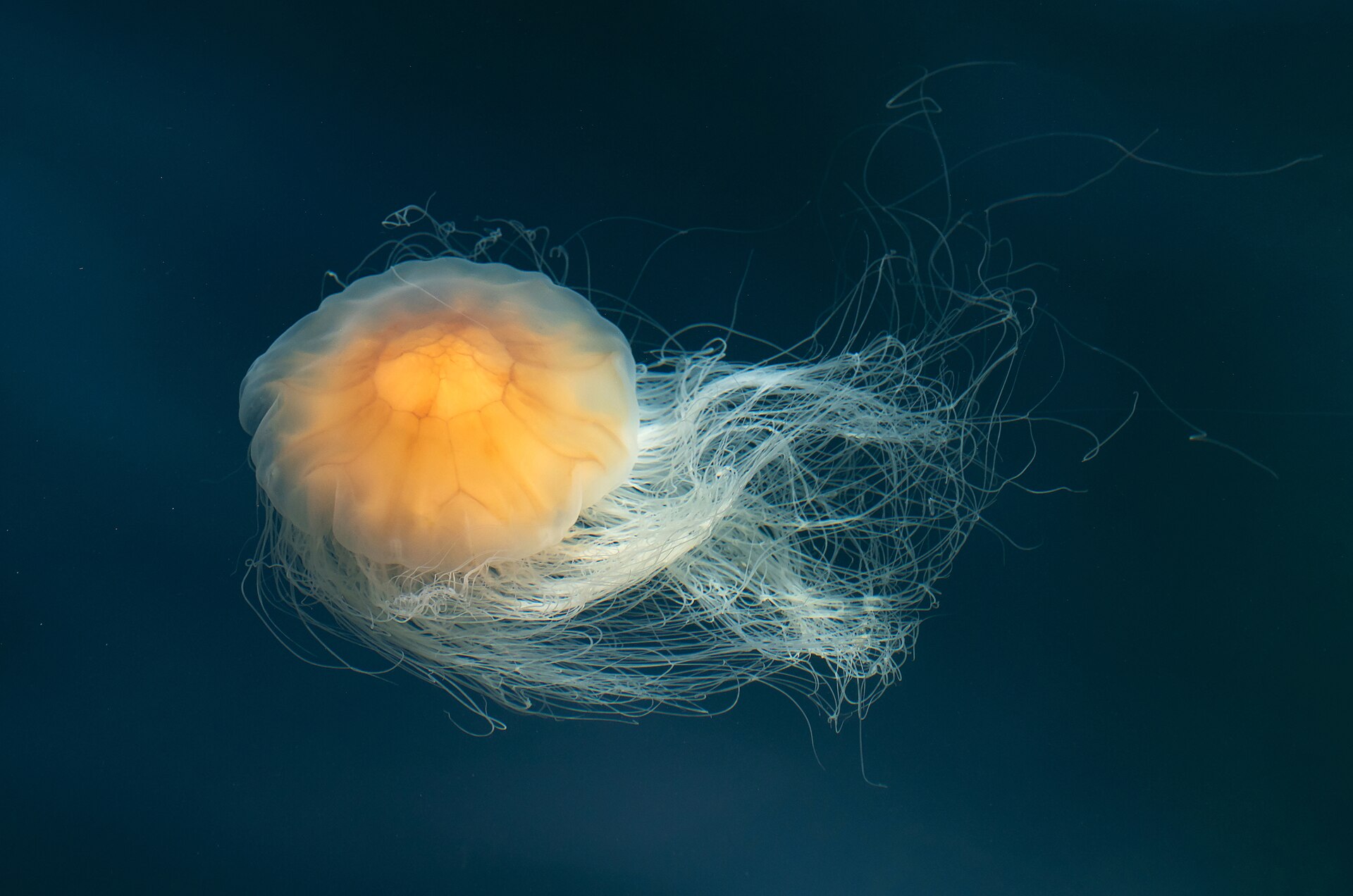
The lion's mane is one of the largest jellyfish known: a cold-water giant whose bell can reach 2 m across, trailing tentacles up to 30 m long. Most that divers meet are far smaller, 30 to 50 cm across in British waters, but even these drag a long curtain of fine tentacles beneath a red-brown to yellowish bell. In Norway it is the commonest stinging jellyfish along the whole coast and into the fjords, and in British waters larger animals peak from June to September. Seen from a few meters away it is one of the great sights of a northern dive. The sting is the catch. Most contacts leave a painful rash, but in Orkney's Scapa Flow divers regularly brush tentacles in midwater or on shot lines in summer, and a few have developed tingling and other symptoms first treated as possible decompression sickness. Severed tentacles keep stinging. Adults die off over winter, and the next summer's crop buds from polyps on the seabed.
Where and when to see one
"Resident" means most dives at that destination encounter them; "seasonal" means reliably present in the listed months; anything else is a bonus, not a plan.
| Destination | Reliability | Months | Notes |
|---|---|---|---|
| Scapa FlowUnited Kingdom | Seasonal: reliable in season | Jun–Sep | |
| British ColumbiaCanada | Occasional | Year-round | |
| Arctic NorwayNorway | Occasional | Year-round |
Best month, at a glance
| Month | Reliable destinations |
|---|---|
| January | British Columbia · Arctic Norway |
| February | British Columbia · Arctic Norway |
| March | British Columbia · Arctic Norway |
| April | British Columbia · Arctic Norway |
| May | British Columbia · Arctic Norway |
| June | Scapa Flow · British Columbia · Arctic Norway |
| July | Scapa Flow · British Columbia · Arctic Norway |
| August | Scapa Flow · British Columbia · Arctic Norway |
| September | Scapa Flow · British Columbia · Arctic Norway |
| October | British Columbia · Arctic Norway |
| November | British Columbia · Arctic Norway |
| December | British Columbia · Arctic Norway |
Understanding them
Habitat: Open coastal water from the surface to about 85 m, drifting with the current, including fjords and sounds. Young medusae bud in spring from small polyps that live on the seabed for years.
Range: Cold boreal waters of the Arctic and North Atlantic, from the British Isles, Norway and Iceland north to Svalbard; lion's mane jellyfish are also reported across the northern Pacific, where some populations are treated as separate forms.
Behavior: Pulses slowly through midwater trailing a mane of fine tentacles far behind the bell. Numbers peak in summer, and the adults die off over winter.
Diet: Crustacean plankton, other jellyfish, and larval and juvenile fish caught in its curtain of stinging tentacles.
Size: typically around 40 cm; documented up to 2 m (bell diameter; usually 30 to 50 cm in British waters, with giants to 2 m; the tentacles can trail up to 30 m).
How to behave around one
Give the bell several meters of clearance and remember the tentacles stream far behind it. In summer, cover exposed skin, check shot lines before grabbing them, and never touch one stranded on the shore.
Conservation
Not assessed by the IUCN. A natural summer feature of cold northern seas; in Norway its stings have killed farmed fish.
Charted sites known for them
Highlighted sites were charted for this species by our editors; numbers are GBIF occurrence records logged within about 5 km of a site since 1990.
Recently recorded near our dive sites
5 verified records within 5 to 10 km of 6 of our dive sites over the last 12 months (17 Nov 2025 to 16 Nov 2026), 1 of them in the last 30 days. Latest: 20 Oct 2026, near Framnesodden Destroyers, by Tom Mills ↗ (iNaturalist, CC BY-NC).
Most records near
Research-grade iNaturalist observations shared under CC0, CC BY or CC BY-NC, plus human sightings from GBIF and OBIS datasets under the same licences, within 5 km of a site with a sourced position or 10 km of an approximate one. A record near two sites counts once in the total and once on each site. Each site page credits the observers and datasets behind its records. How these are collected →
Watch
From the official channels

Catch this wave 🌊 | #montereybayaquarium #reeflife

Giant Pacific Octopus

Live African Penguin Cam After Hours | Monterey Bay Aquarium
Videos are embedded links to their creators' own channels. We host nothing and credit everything.