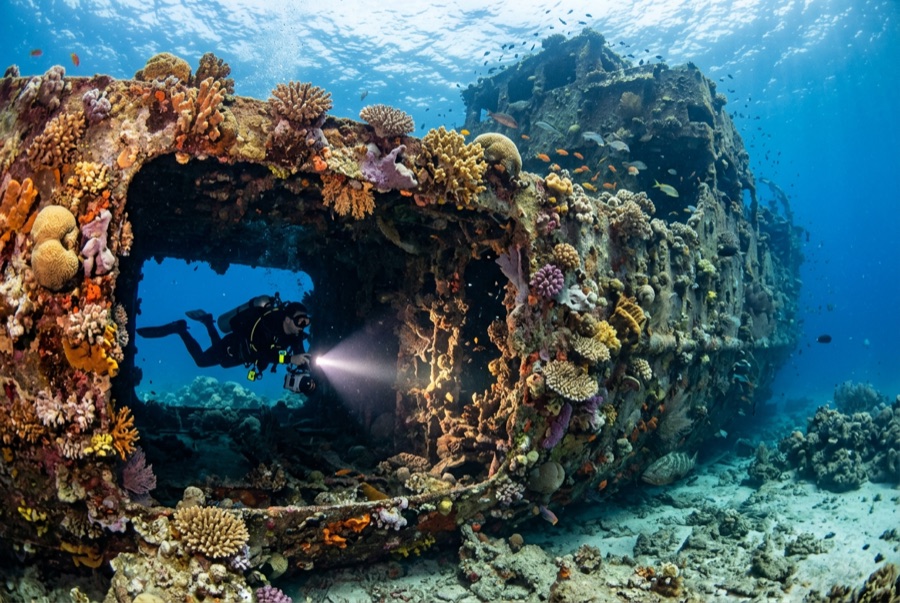
Eidsvold Wreck
Depth is the range from the top of the site to its usual maximum; "recommended cert" is the mainstream-agency level operators usually ask for, not a legal rule. Currents and visibility change daily, so treat everything here as planning ranges.
The Eidsvold was a Norwegian phosphate ship torpedoed by a Japanese submarine at Christmas Island during the Second World War. She was scuttled in Flying Fish Cove and later moved to the far side of Smith Point, where her remains now lie between about 5 and 18 m. Little of the hull holds together: expect a spread of metal pipes and plates with a few upright pieces, plus the anchor and its chain, and nothing to swim inside. Large, healthy hard corals have grown through the debris, and schools of yellow goatfish, surgeonfish and black triggerfish work across it. Octopus and batfish are regulars, and the site also makes a good night dive.
The moment you come for: Second World War phosphate ship; coral-covered wreckage with anchor and chain; good night dive
Topography: Scattered wreckage of pipes and plates among hard corals, anchor and chain
Know before you splash
Hazards: Sharp, broken metal in the debris field; no penetration possible; leave the wreck as you find it.