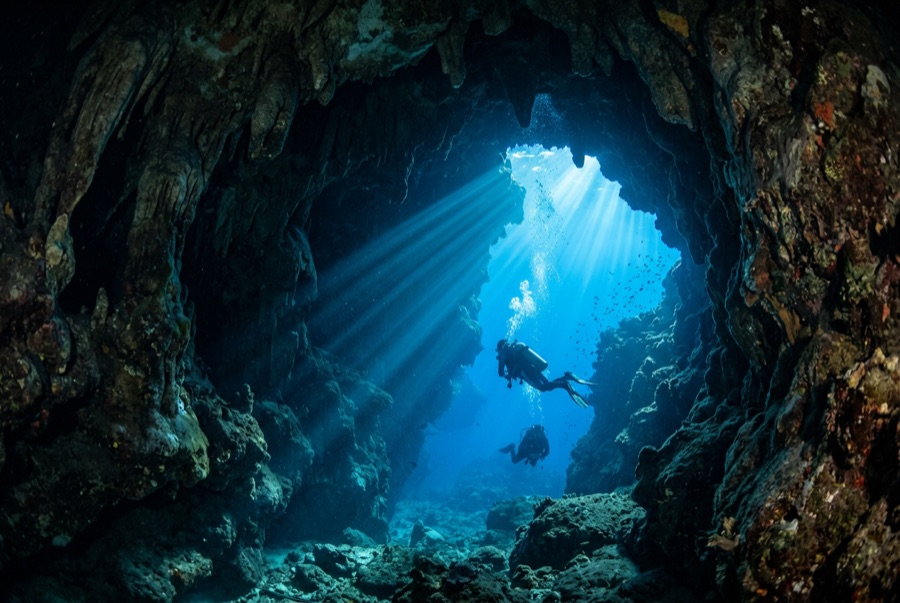
Elephant Cave
Depth is the range from the top of the site to its usual maximum; "recommended cert" is the mainstream-agency level operators usually ask for, not a legal rule. Currents and visibility change daily, so treat everything here as planning ranges.
Elephant Cave lies beneath Cape Drapano, outside Souda Bay, where boats nose into a small inlet and divers drop to an entrance at about 10 m. A tunnel of roughly 40 m leads into a system that runs for more than 100 m, with air chambers along much of its length and a sandy floor rising to about 5 m. The cave formed when it was above sea level, so it is decorated with stalactites, stalagmites and flowstone, some formations over 8 m tall, and spring water creates shimmering haloclines. Its name comes from fossil bones of at least three elephants, dated to 50,000 to 60,000 years ago and proposed as a new species, found here in 1999 along with dwarf deer remains.
The moment you come for: Stalactites and flowstone in a flooded cave; fossil elephant bones still in the rock; air chambers to surface in
Topography: Flooded limestone cave with stalactites, stalagmites, flowstone and a coarse white sand floor
Entry: Boats run east around the headland from Kalyves into a small inlet; divers enter with a guide after a briefing.
Know before you splash
Hazards: Overhead environment for the whole dive; haloclines blur visibility; fragile formations and fossils; enter only with a qualified guide.
Conservation: Fossils and formations must not be touched or removed; most of the finds are now held in a museum in Athens.
Who you'll meet
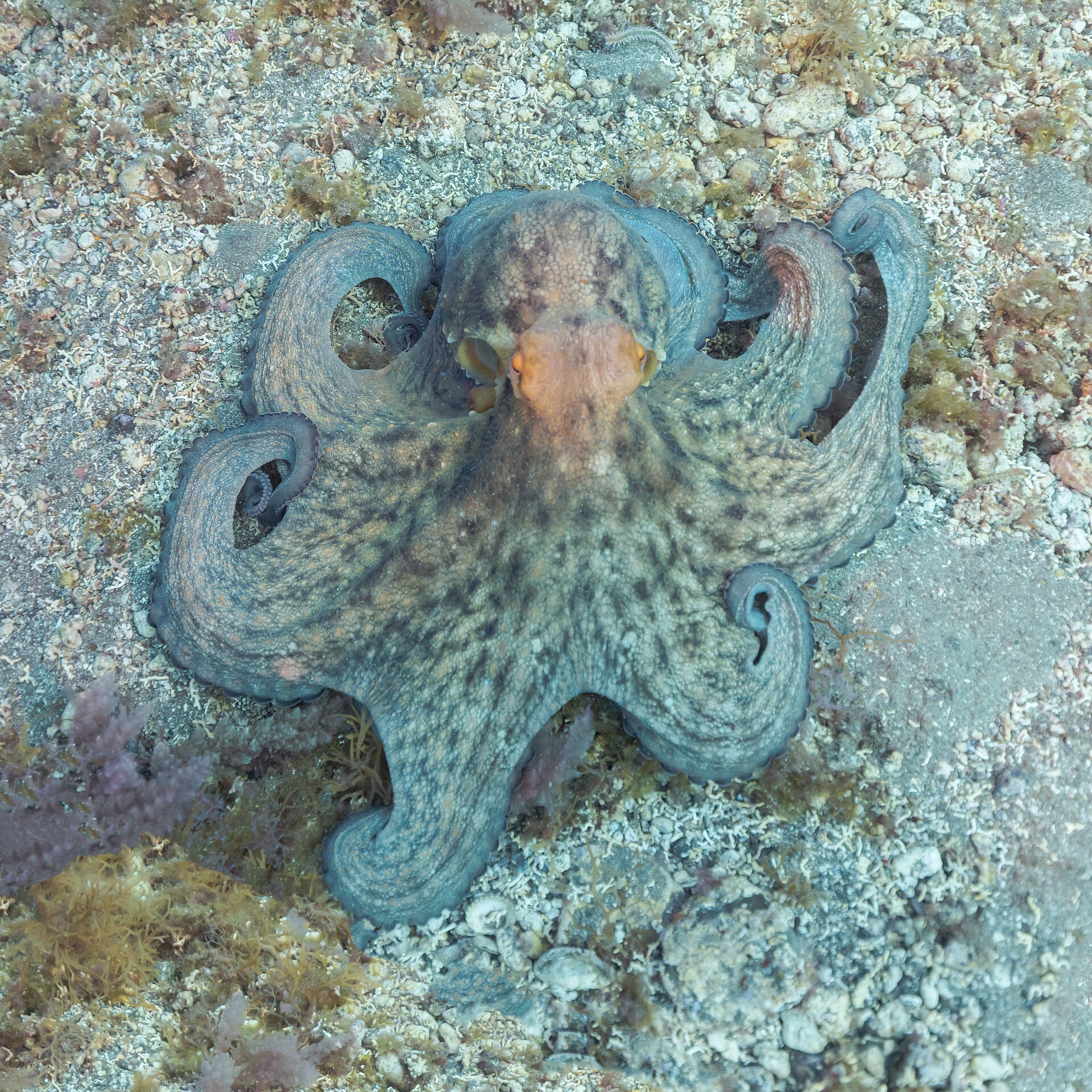
"Charted here" species were listed by our editors from the sources on this page. Counts are GBIF occurrence records: observations logged within about 5 km of the charted position since 1990, matched only against the species in our catalogue. They show what has been seen there, not a promise of what you will see.