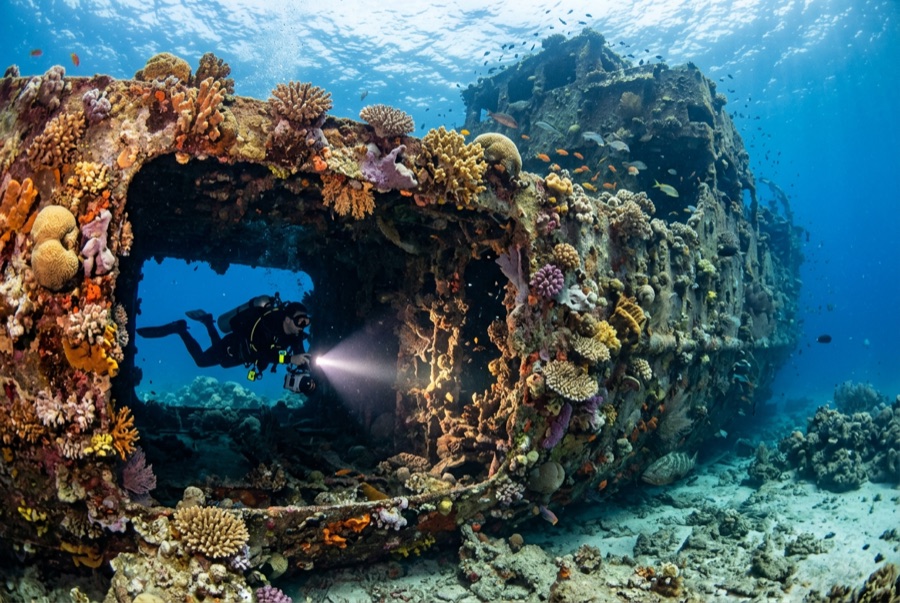
Knivestone
Depth is the range from the top of the site to its usual maximum; "recommended cert" is the mainstream-agency level operators usually ask for, not a legal rule. Currents and visibility change daily, so treat everything here as planning ranges.
The Knivestone is a reef that dries at low spring tides and lies under water at high tide, and more than 60 ships have come to grief in the area. Wreckage from several of them is mixed along its flanks, so this is a tour of steel rather than one hull. From a kelpy plateau at 3 to 5 m, where seals often join in, the route drops past a four-bladed propeller at about 14 m to a triple-expansion engine at 16 m and hull sections near 20 m, with two upright boilers forming a triangular swim-through. Local divers believe much of it is the Belgian steamer Jan Van Ryswyck, lost in 1924. The German Abessinia, the largest Farne wreck, struck the same reef in 1921, and her boilers, bow, anchor and chain lie on the western side.
The moment you come for: Wreckage of several steamers in one dive; boiler swim-through; seals on the shallow plateau
Topography: Kelp plateau and rock corridors with mixed wreckage from several steamers
Current: Very strong tides either side of slack; the north side gets some shelter on the ebb.
Entry: Boat dive on the exposed Knivestone reef at low-water slack, about 1 hour 30 minutes after low water at Seahouses; divers drop onto the shallow plateau close to the rocks.
Know before you splash
Hazards: Very exposed reef; very strong tides outside slack, and poor navigation on ascent can put divers into dangerous currents; entry is close to breaking rocks.
Who you'll meet
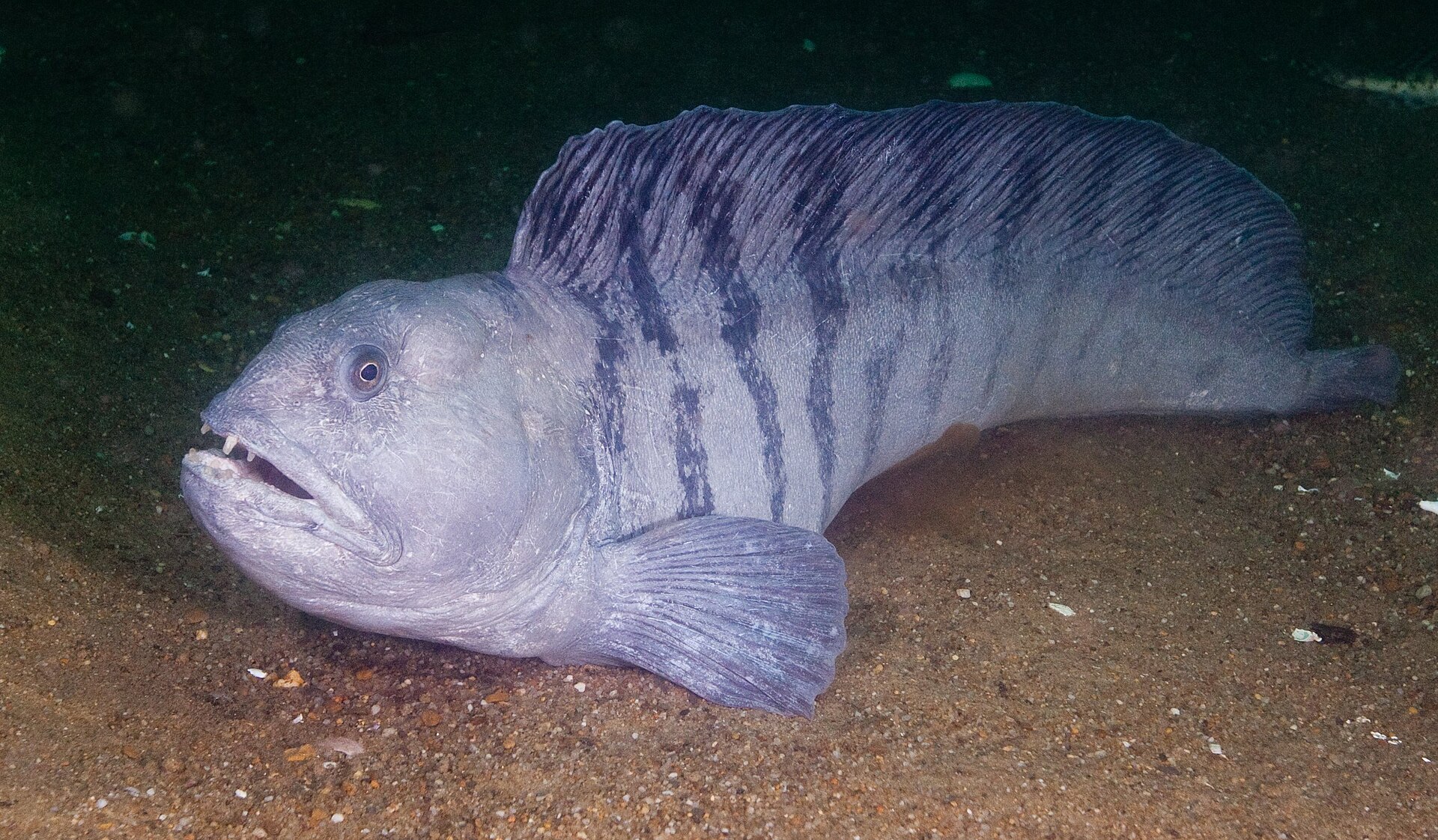
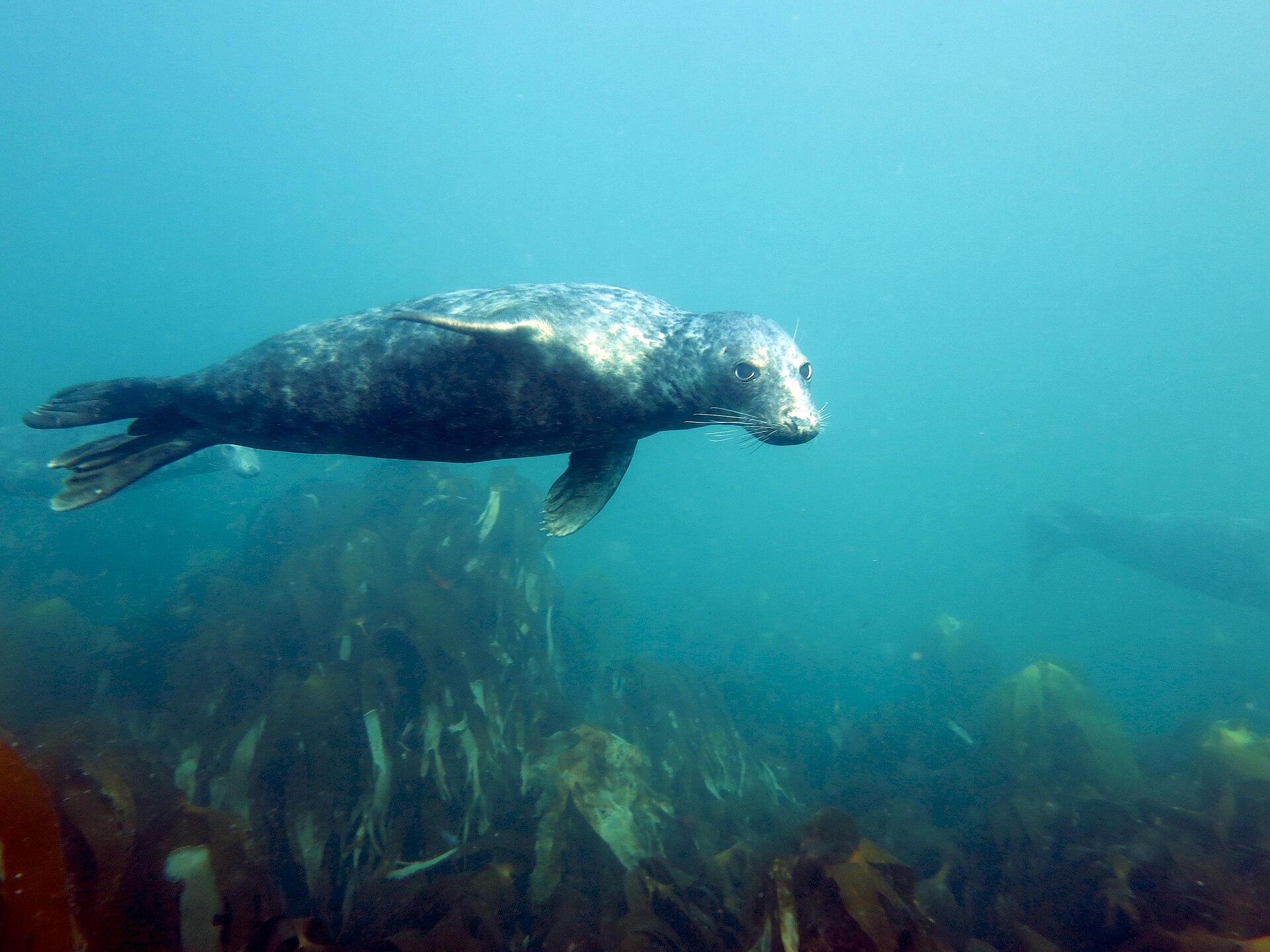
"Charted here" species were listed by our editors from the sources on this page. Counts are GBIF occurrence records: observations logged within about 5 km of the charted position since 1990, matched only against the species in our catalogue. They show what has been seen there, not a promise of what you will see.