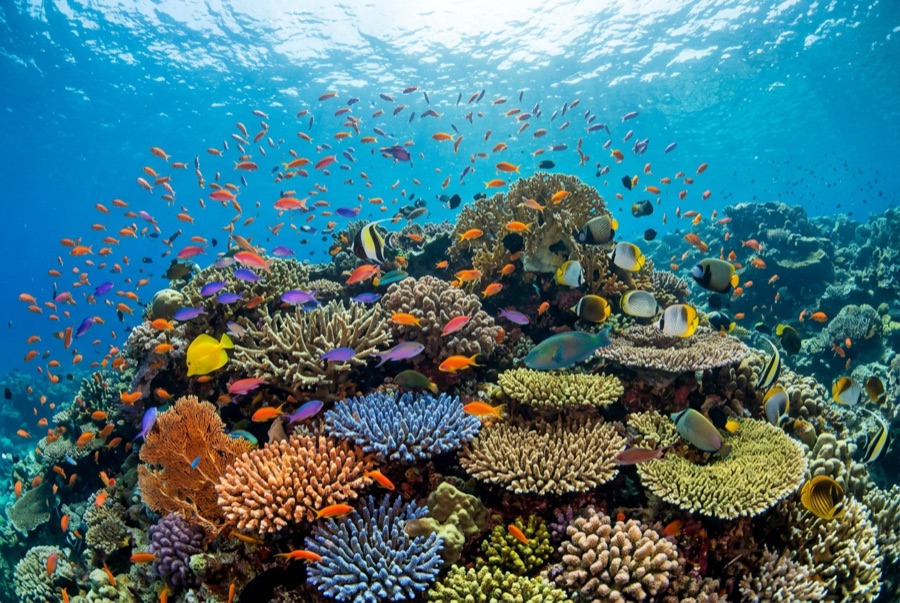
Farikede
Depth is the range from the top of the site to its usual maximum; "recommended cert" is the mainstream-agency level operators usually ask for, not a legal rule. Currents and visibility change daily, so treat everything here as planning ranges.
Farikede is a submerged reef off the southern tip of Fuvahmulah, inside a protected marine area, and it is the island's big-animal dive. The reef top sits at about 10 to 15 m, then the profile slopes to a plateau that begins near 35 m and runs past 60 m, so dives are drifts along the edge in strong current. Pelagic thresher sharks are regulars, and the same water can hold tiger, silvertip, grey reef and whitetip sharks with barracuda, skipjack and dogtooth tuna and giant trevally. Oceanic mantas, hammerheads, whale sharks, oceanic whitetips and mola mola are seasonal visitors, and one operator gives November to May as the best months. Advanced certification and drift experience are expected.
The moment you come for: Thresher, tiger and silvertip sharks on one reef; seasonal oceanic mantas and hammerheads; tuna and barracuda in the current
Topography: Submerged reef top stepping down to a deep plateau
Current: Open-ocean current sets the direction of every dive.
Entry: A 10 to 15 minute boat ride to the southern tip, then a drift along the reef edge in whichever direction the current is running.
Know before you splash
Hazards: Strong open-ocean current that can change during a dive; the plateau continues past 60 m, beyond recreational limits; blue-water exposure, so stay with the guide and the group.
Conservation: The reef lies within a protected marine area.
Nitrox: Worth it here: profiles sit in the range where enriched air meaningfully extends no-stop time (with the training to use it).
Who you'll meet
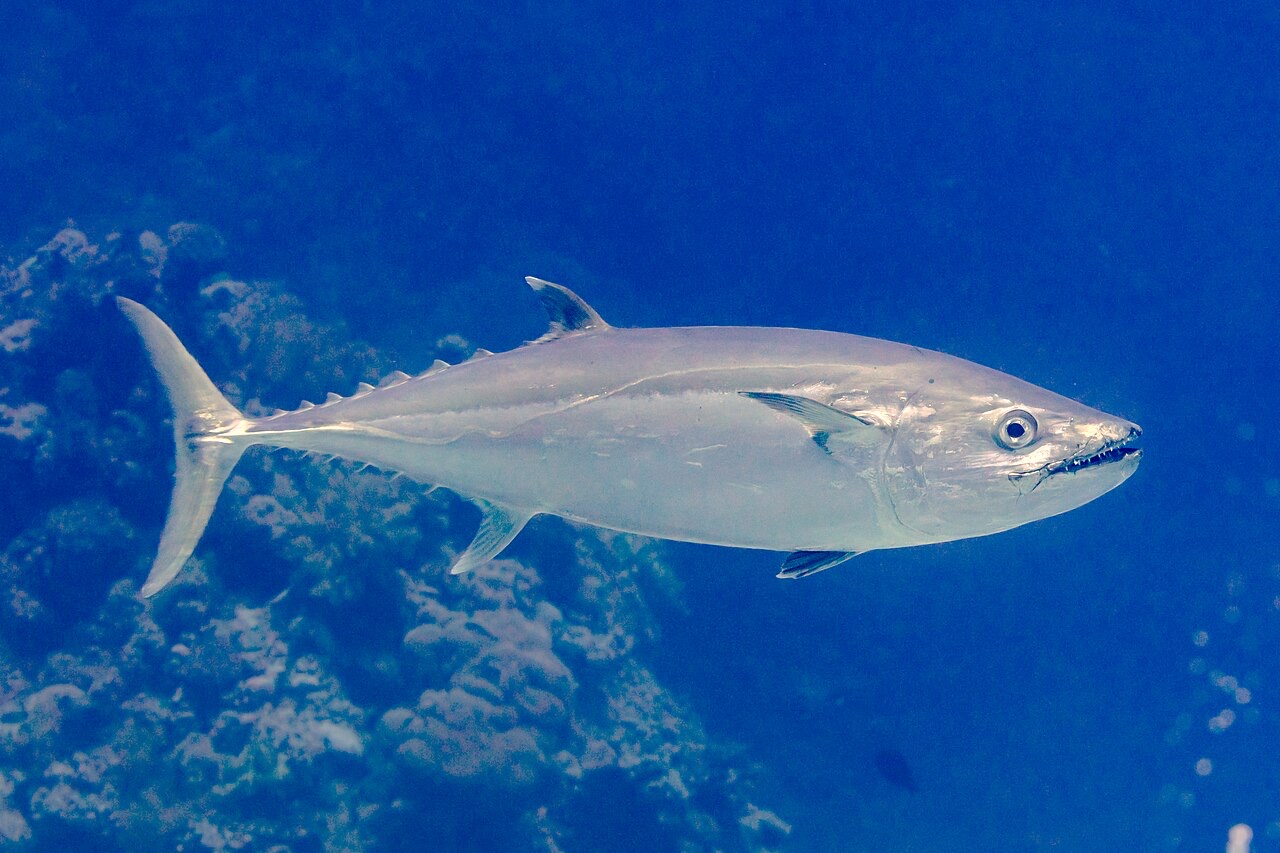
Dogtooth Tuna
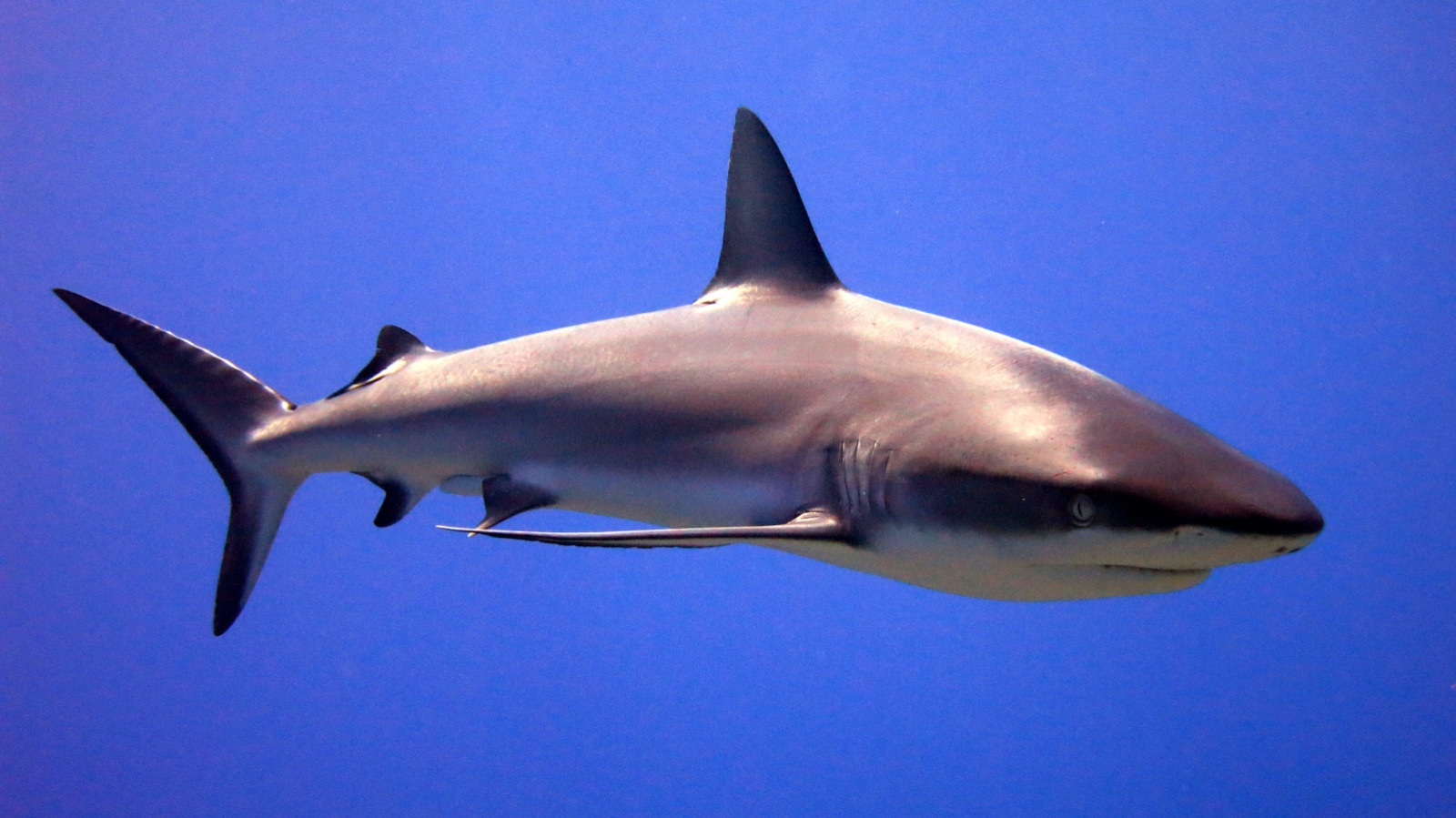
Grey Reef Shark
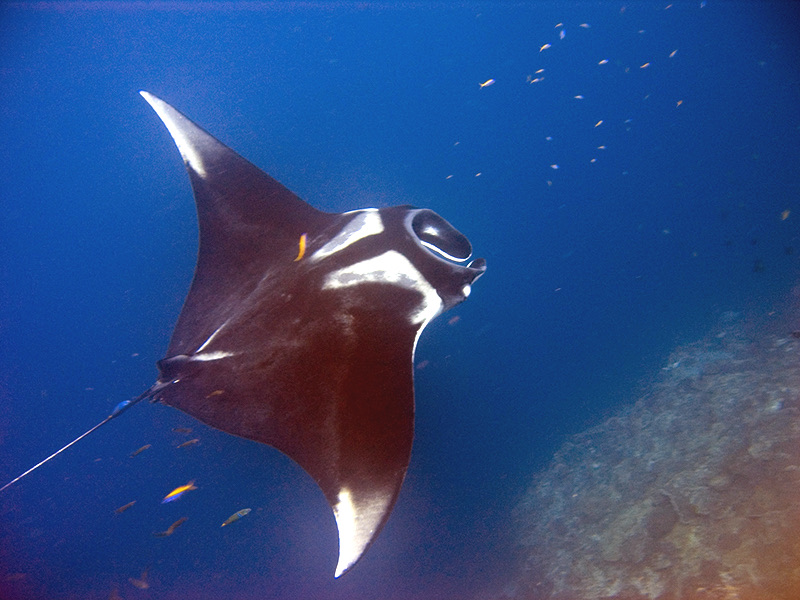
Oceanic Manta Ray
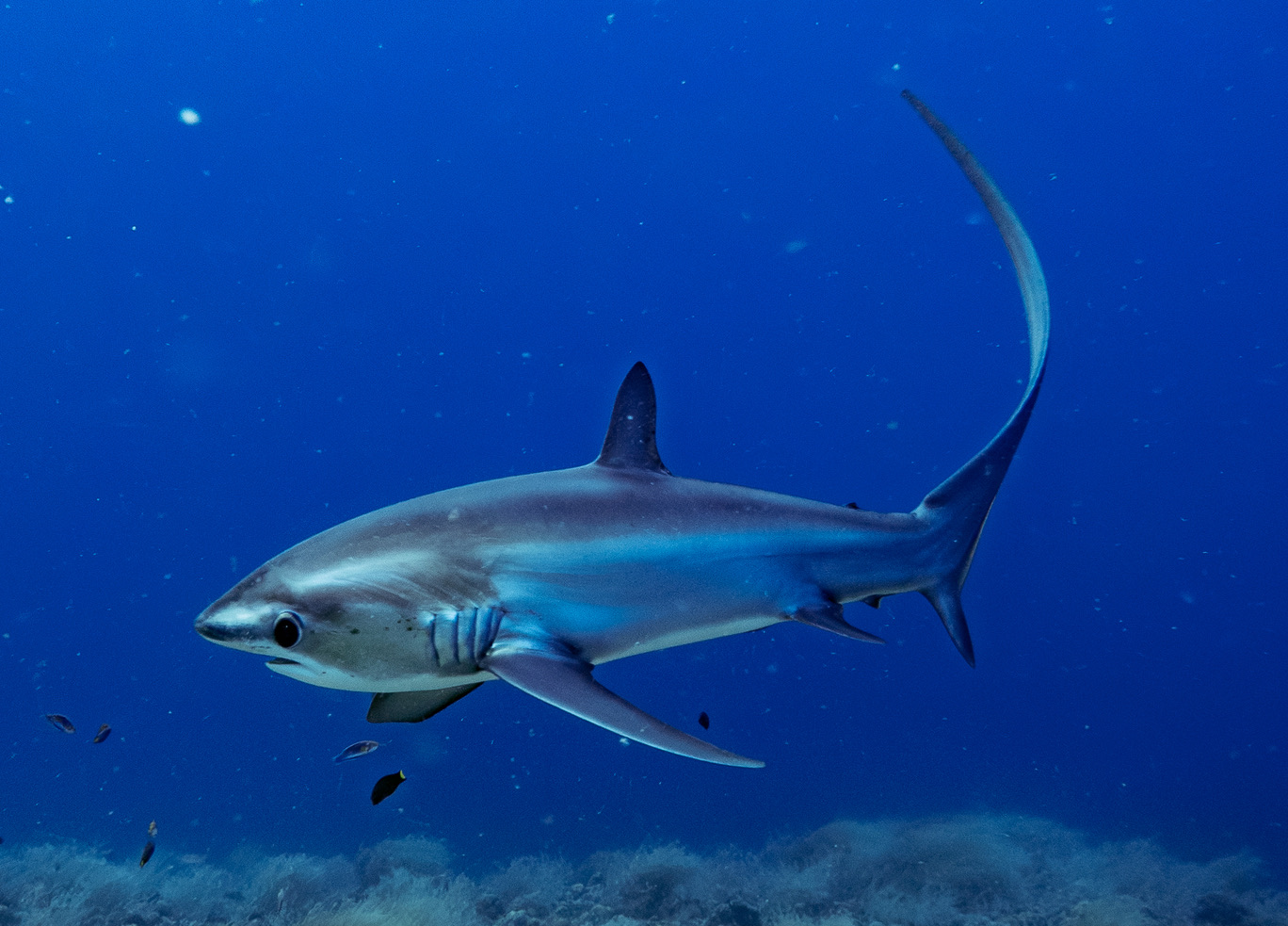
Pelagic Thresher Shark
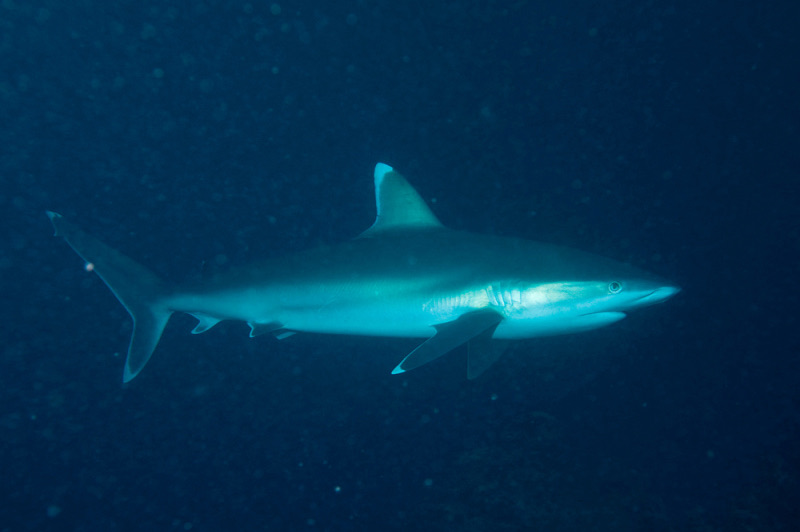
Silvertip Shark
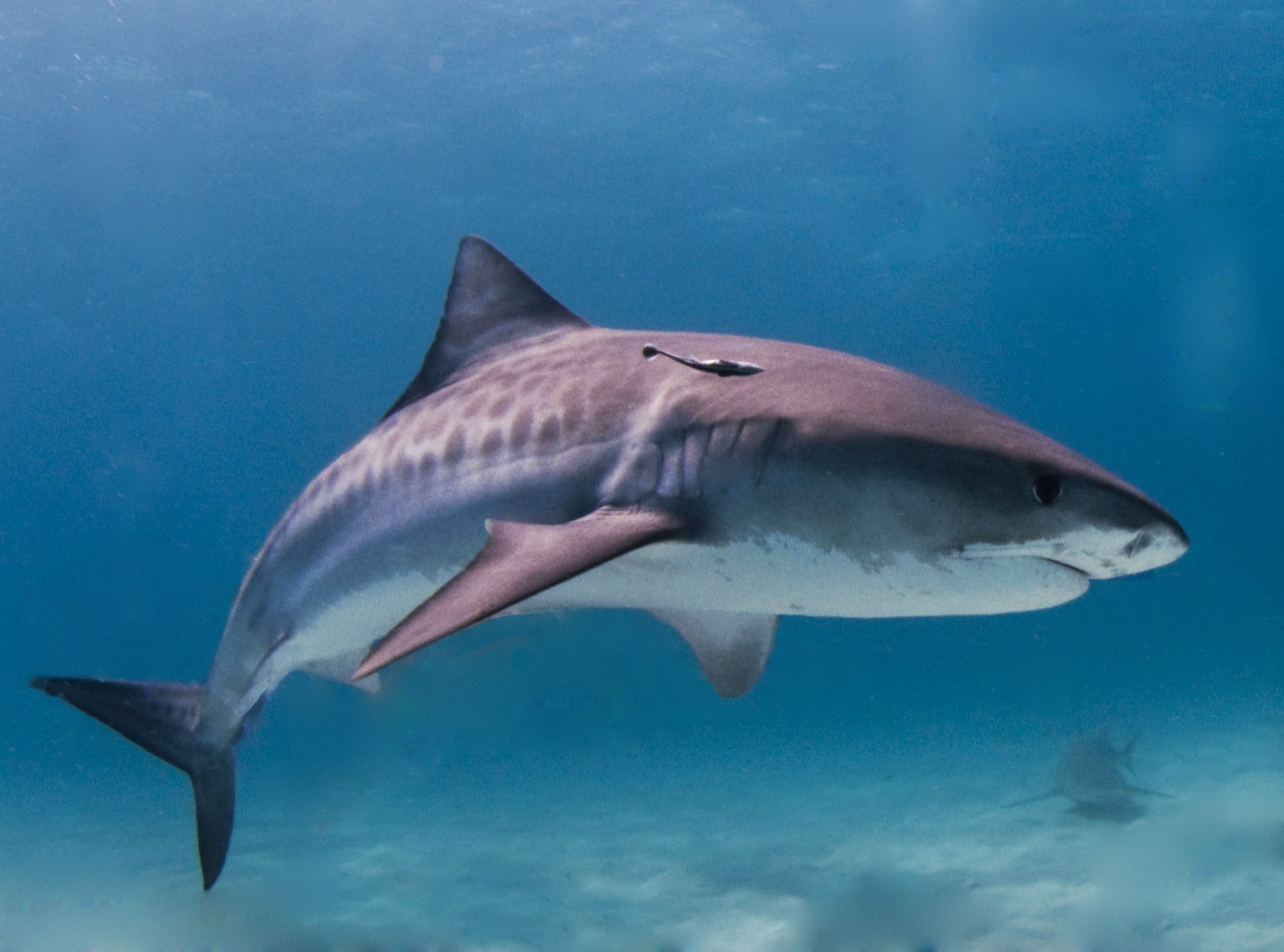
Tiger Shark
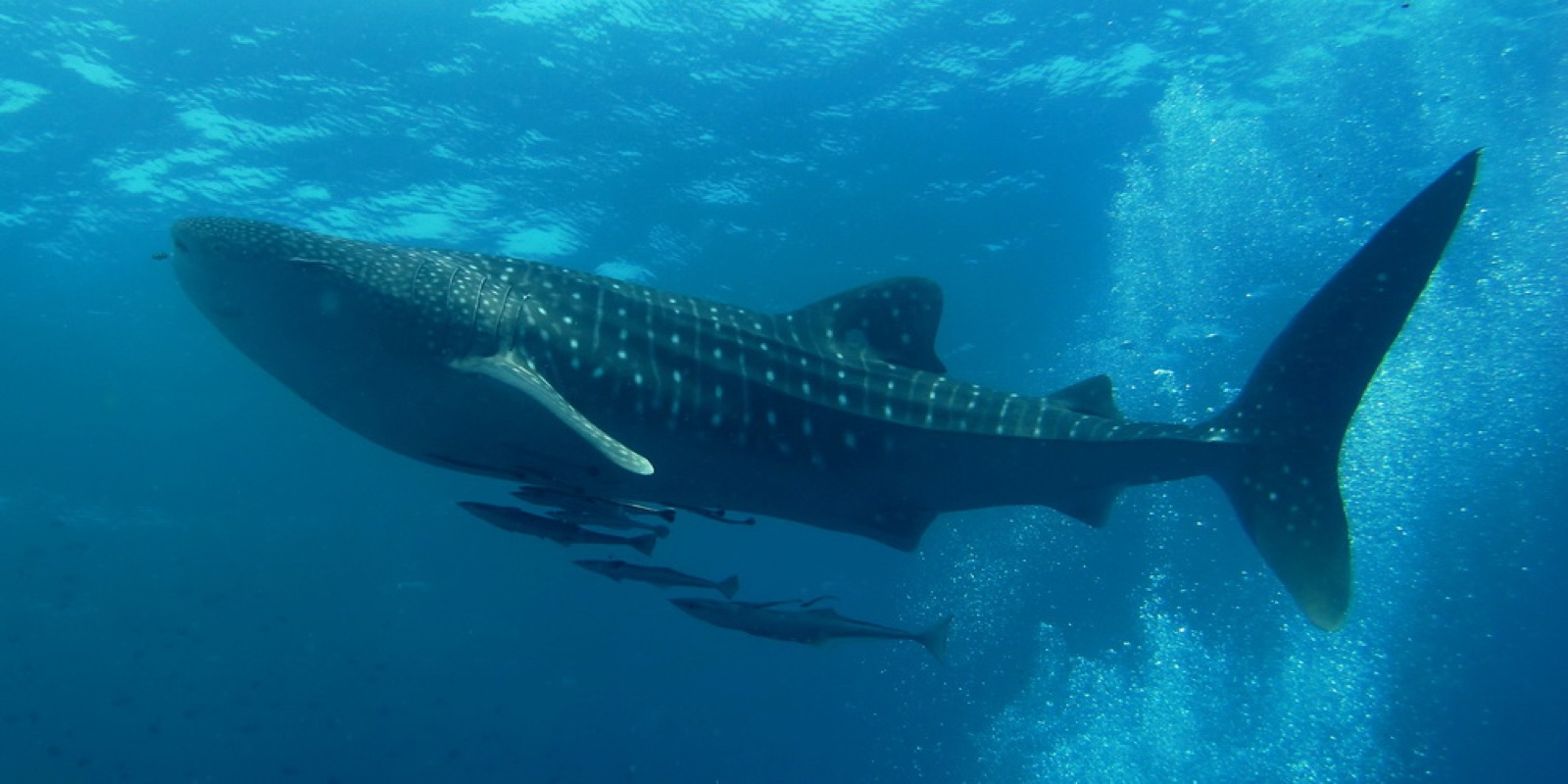
Whale Shark
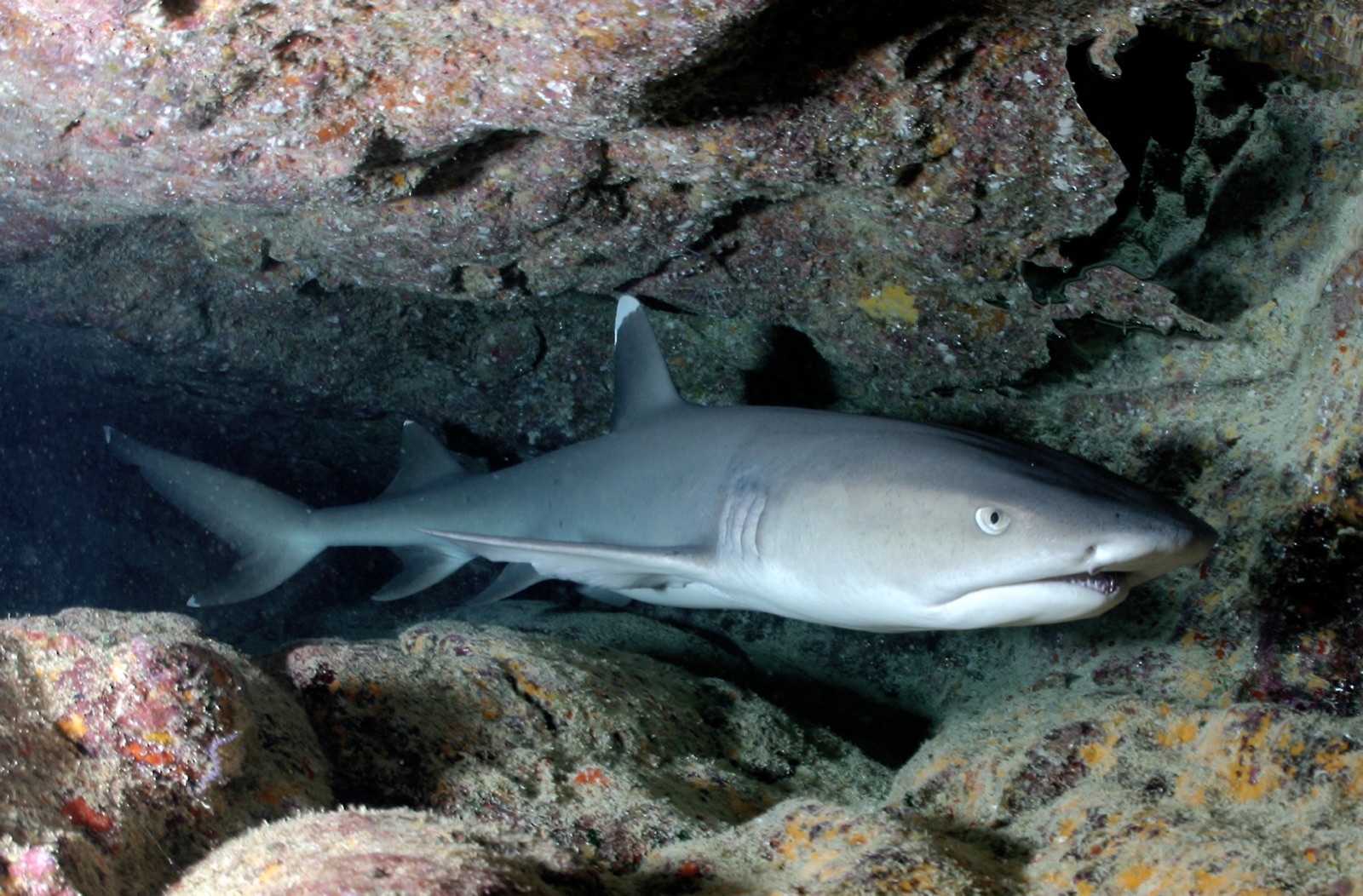
Whitetip Reef Shark
"Charted here" species were listed by our editors from the sources on this page. Counts are GBIF occurrence records: observations logged within about 5 km of the charted position since 1990, matched only against the species in our catalogue. They show what has been seen there, not a promise of what you will see.