Diamond Rock
Depth is the range from the top of the site to its usual maximum; "recommended cert" is the mainstream-agency level operators usually ask for, not a legal rule. Currents and visibility change daily, so treat everything here as planning ranges.
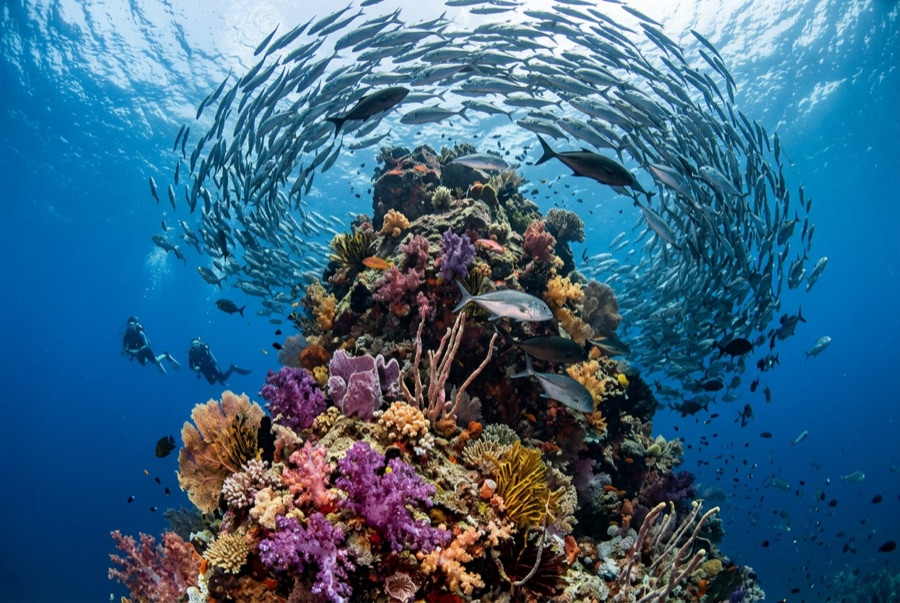
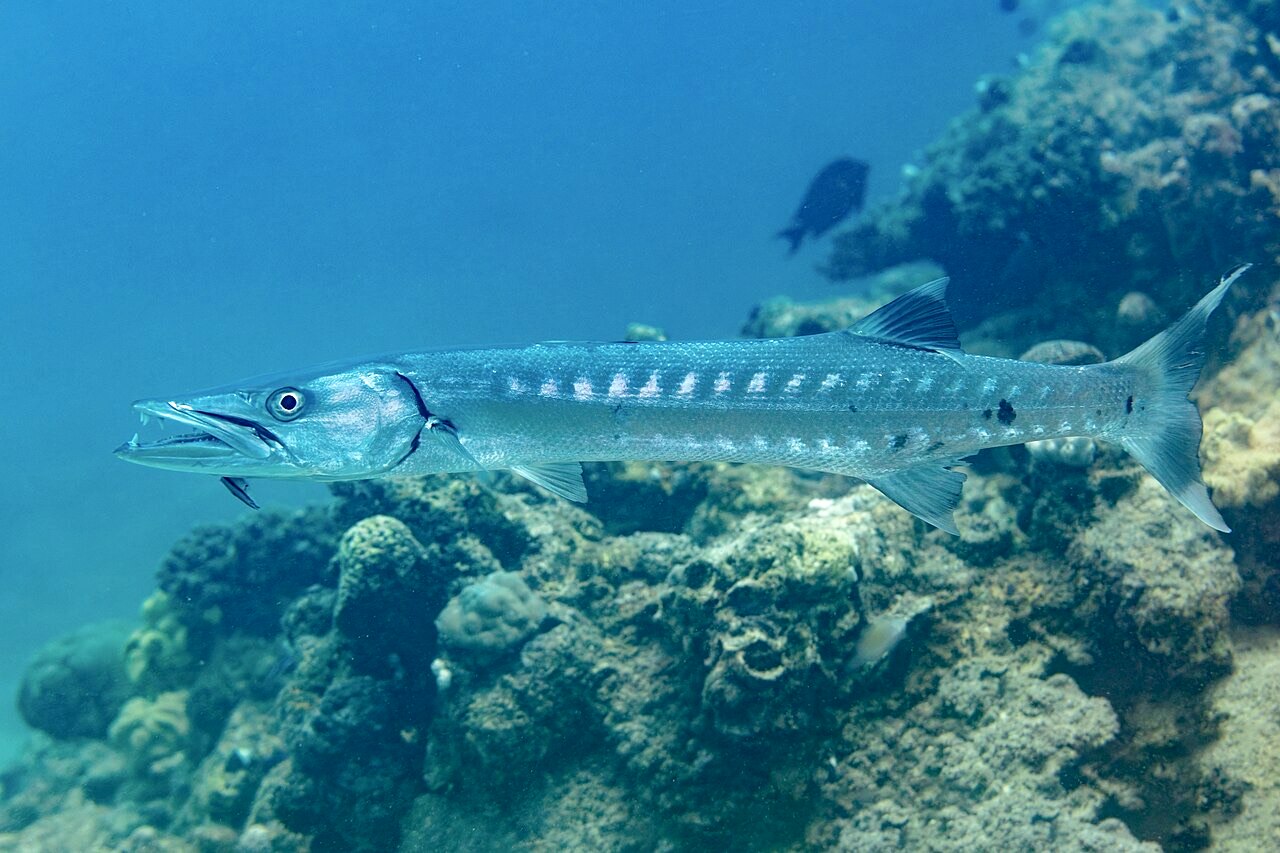
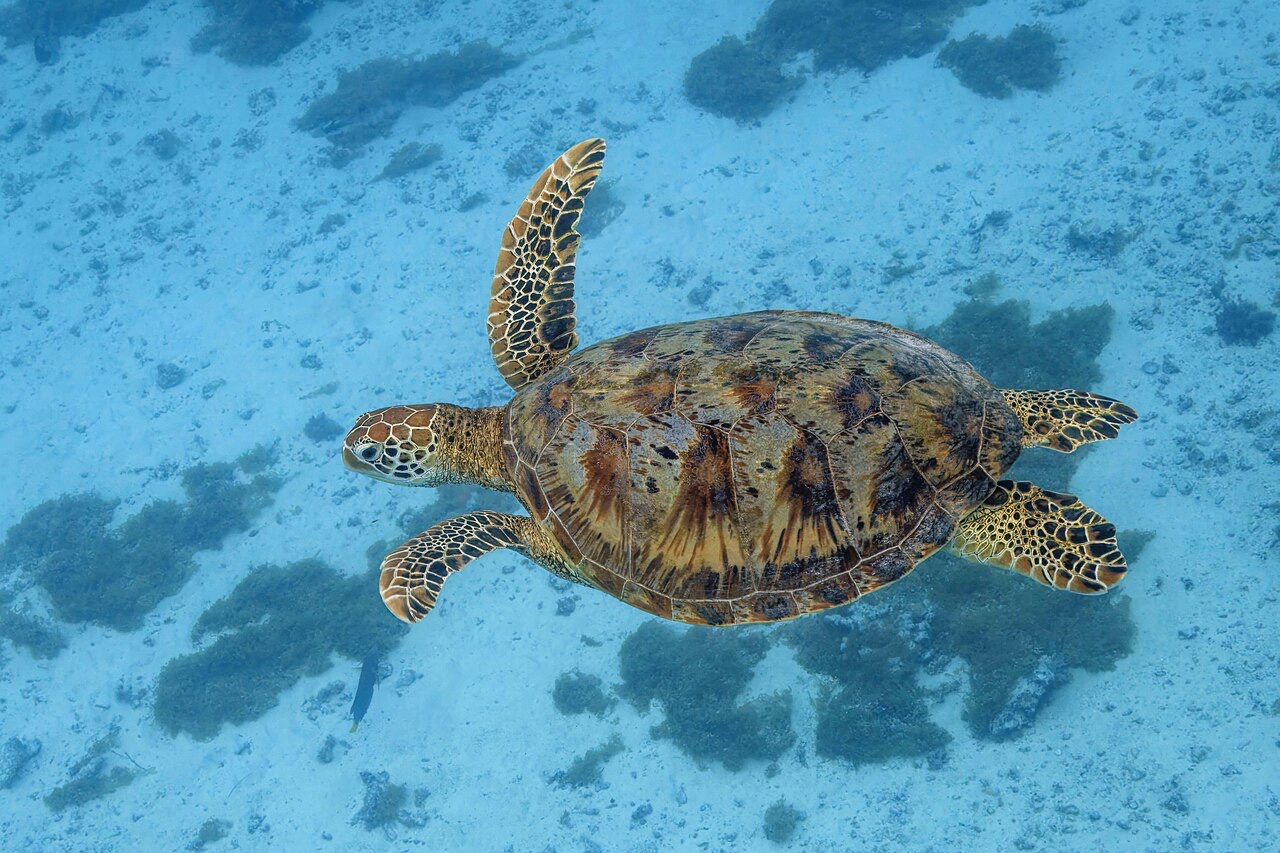
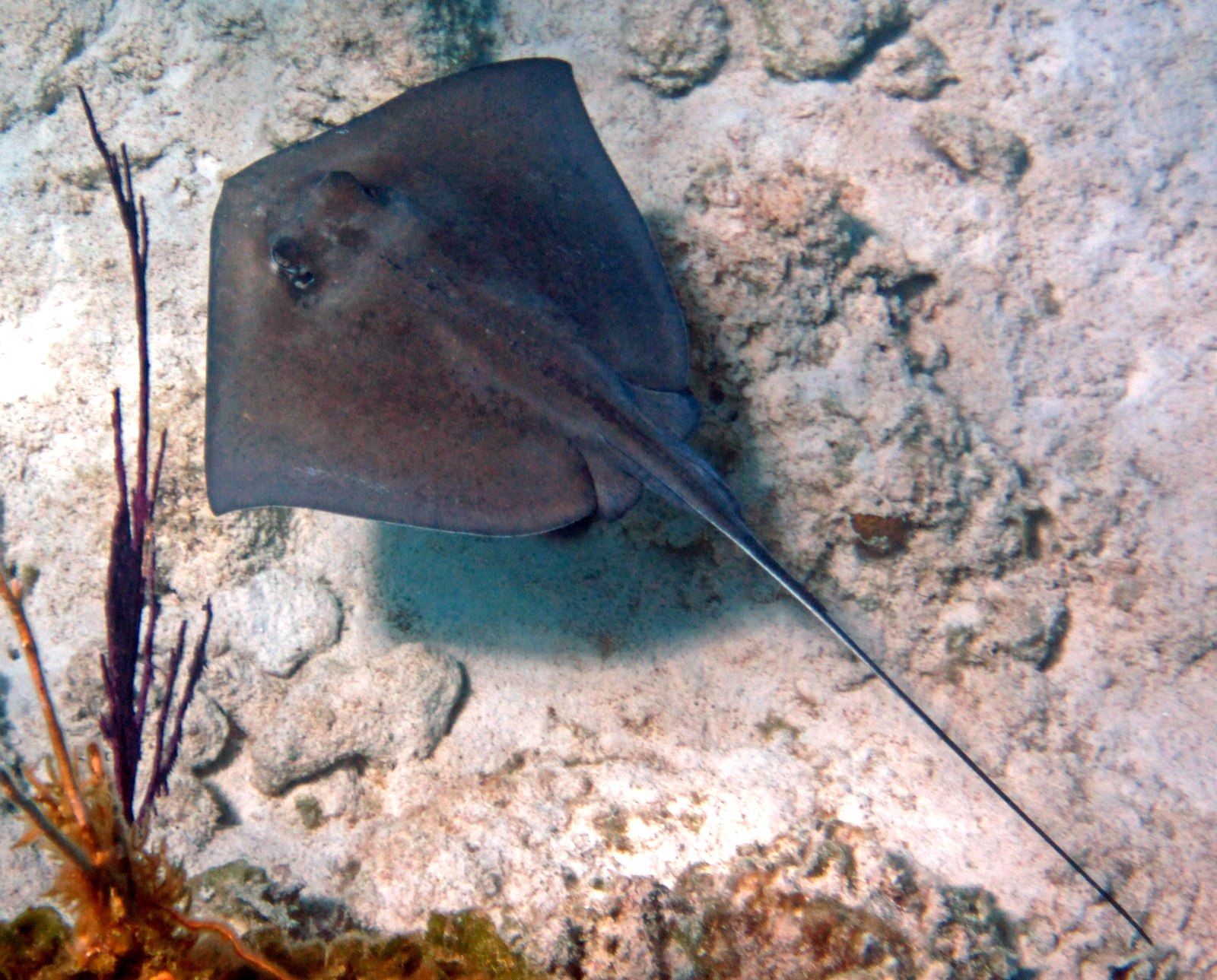
Diamond Rock is the sharp islet near Wells Bay, and underwater it widens into a broad pyramid that meets flat sand at about 24 m. Sponges and cup corals cover the rock, and a canyon cuts into its northeast face. Schooling jacks, horse-eye jacks among them, circle the walls along with a big barracuda or two, yellowfin grouper and chain morays shelter in the cracks, and juvenile angelfish flit along the base. Southern stingrays forage on the sand and green turtles pass by. The park cautions that currents here can be strong, and surge sometimes stops a group from making the full lap, so stay close to the guide and keep checking depth and air.
The moment you come for: Jacks and great barracuda around a sheer rock; southern stingrays on the sand; canyon on the northeast face
Topography: Pyramid-shaped rock on a flat sand bottom, with a canyon on its northeast side
Current: The park warns of strong currents, and surge can stop divers completing a full circuit.
Know before you splash
Hazards: Strong currents and surge around the rock; depth to about 25 m at the base; stay with the group in reduced visibility near the surge zone.
Who you'll meet
Great Barracuda
Green Sea Turtle
Southern Stingray
"Charted here" species were listed by our editors from the sources on this page. Counts are GBIF occurrence records: observations logged within about 5 km of the charted position since 1990, matched only against the species in our catalogue. They show what has been seen there, not a promise of what you will see.