Cabbage Patch
Depth is the range from the top of the site to its usual maximum; "recommended cert" is the mainstream-agency level operators usually ask for, not a legal rule. Currents and visibility change daily, so treat everything here as planning ranges.
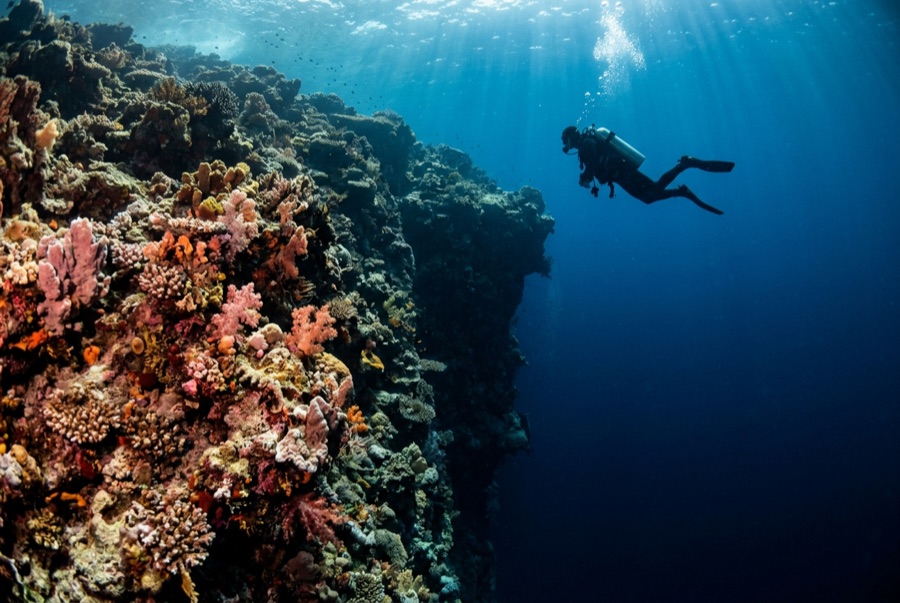
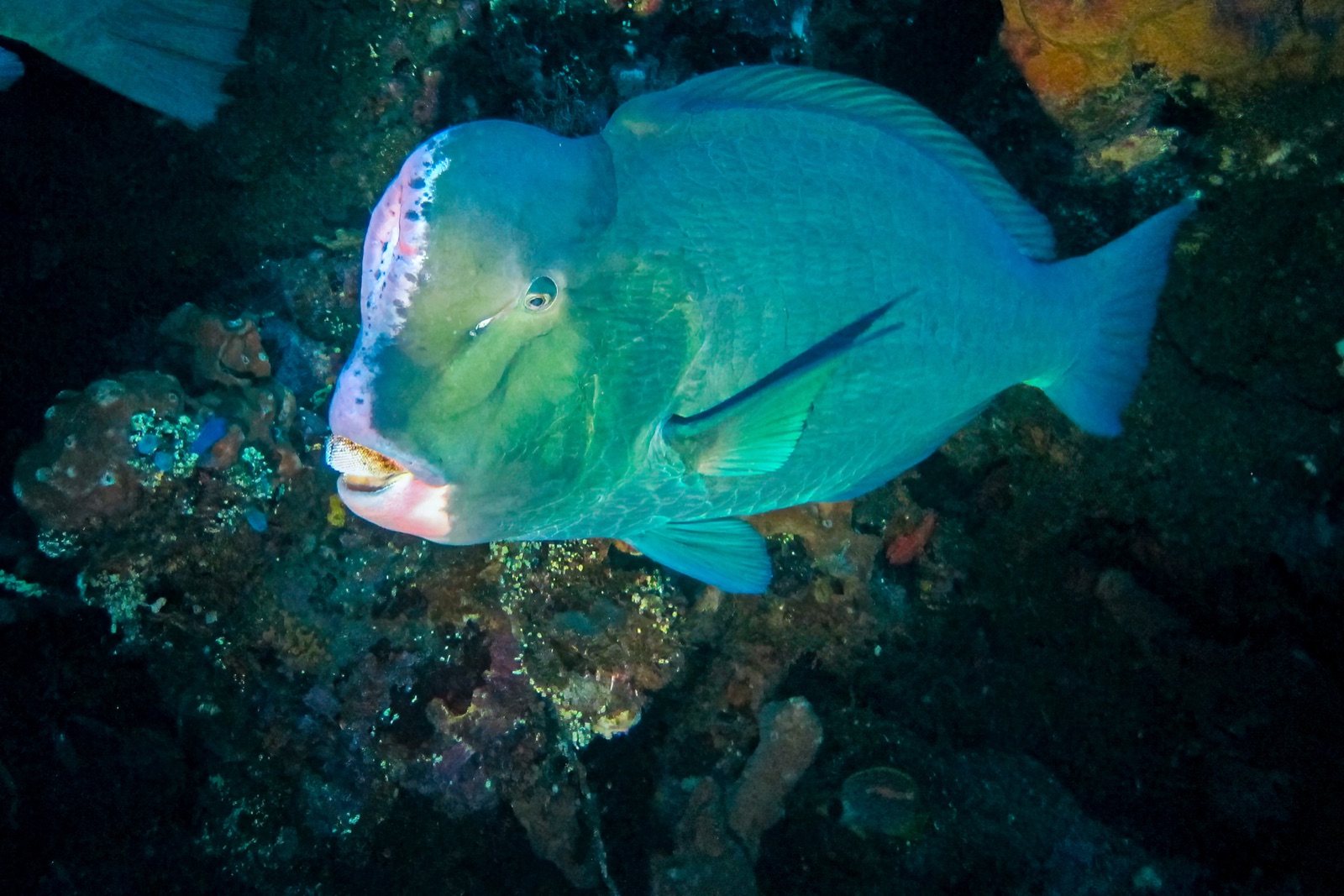
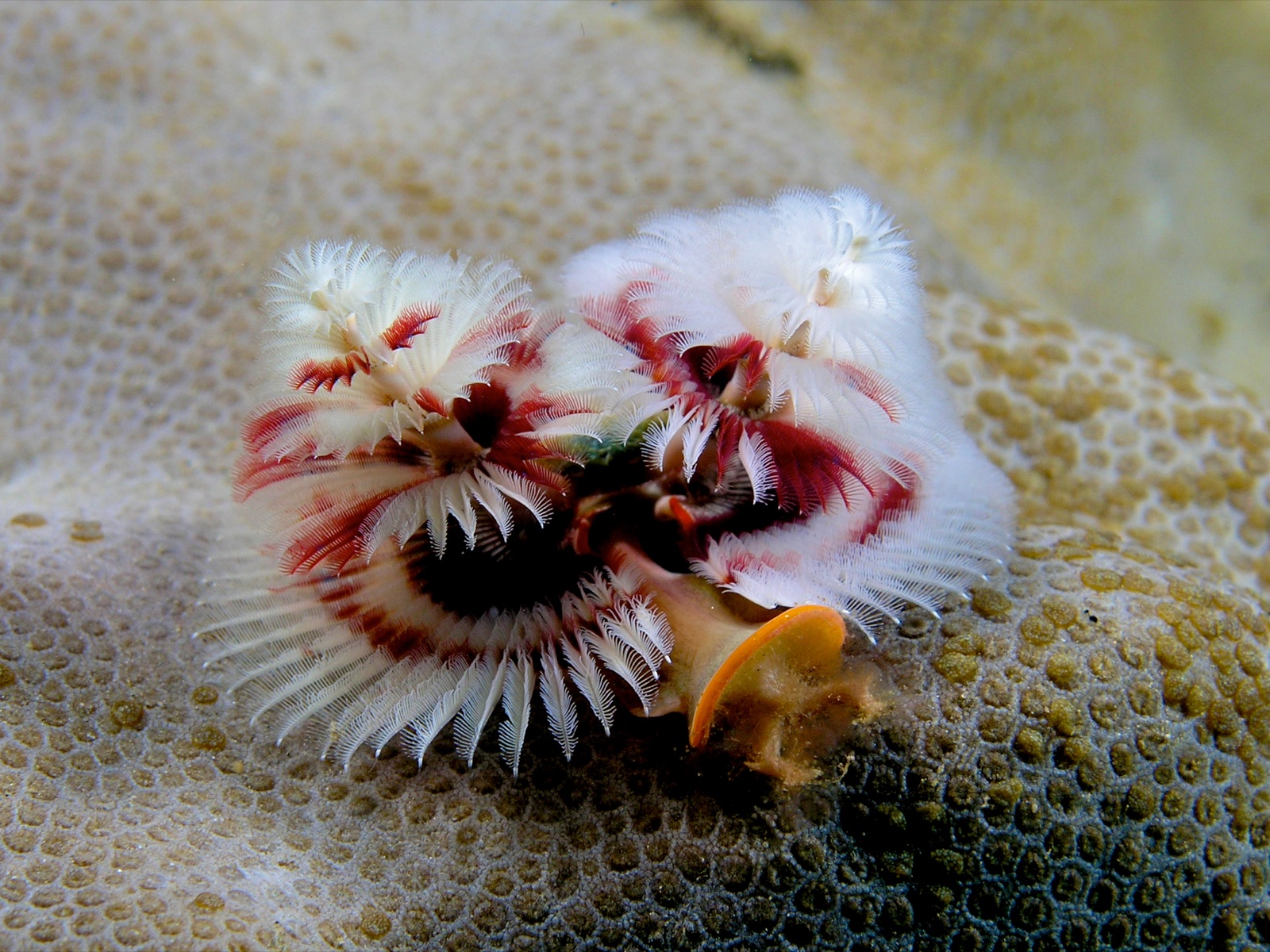
A vertical wall falls to about 25 m and then eases into a gentle slope, and big fissures split the face, their walls lined with soft leather corals. Most dives drift slowly south along it at around half a knot, though eddies can swirl near the larger cracks. The best color is in the top 9 m, where reef fish are thickest, and coral heads around 15 m carry many Christmas tree worms. Deeper down, bumphead parrotfish feed along the slope, and most groups meet a lone shark, turtles, and barracuda somewhere on the dive. The current often carries divers here from the neighboring site of Big Bend, so the two are frequently linked.
The moment you come for: Leather-coral fissures; Christmas tree worms on coral heads; bumphead parrotfish; easy southward drift
Topography: Vertical wall to about 25 m with large fissures, then a gentle slope
Current: Typically a southerly drift of about half a knot, with counter-currents near the large fissures.
Entry: Usually a gentle southward drift along the wall; neighboring Big Bend is often drifted into it.
Know before you splash
Hazards: Counter-currents near the big fissures; the slope continues below the wall, so keep depth in check.
Who you'll meet
"Charted here" species were listed by our editors from the sources on this page. Counts are GBIF occurrence records: observations logged within about 5 km of the charted position since 1990, matched only against the species in our catalogue. They show what has been seen there, not a promise of what you will see.