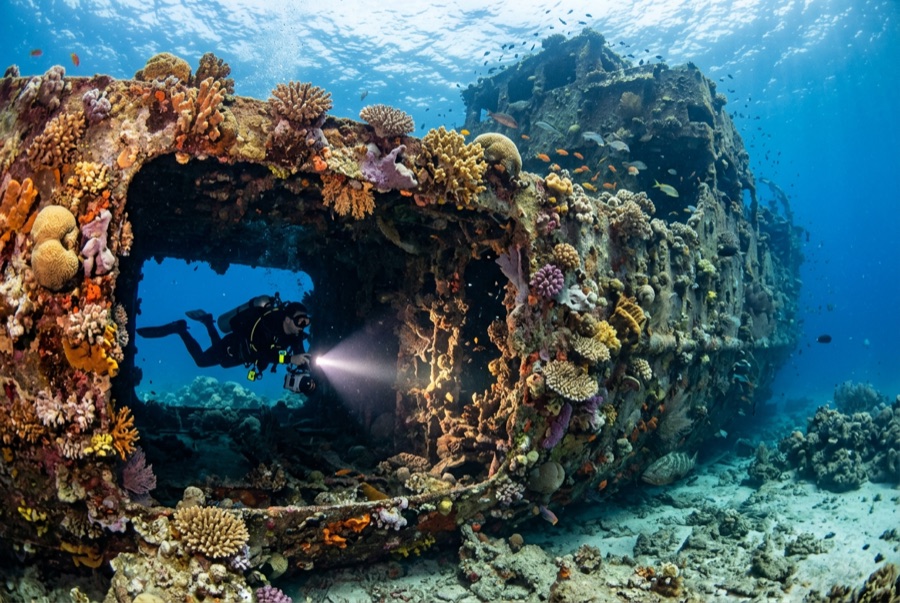
HMCS Cape Breton
A profundidade é o intervalo entre o topo do local e o seu máximo habitual; "certificação recomendada" é o nível das agências convencionais que os operadores normalmente exigem, não uma regra legal. As correntes e a visibilidade mudam diariamente, por isso trata tudo isto como intervalos de planeamento.
The Cape Breton started life at Burrard Drydock in North Vancouver in the 1940s as HMS Flamborough Head for the Royal Navy, then joined the Canadian navy in 1953 and later served as a maintenance and support vessel. On October 20, 2001 she went down off Snake Island near Nanaimo, a short way from the Saskatchewan, and at the time no larger ship had been sunk as an artificial reef. She sits upright with her main deck near 24 m and the seabed at about 43 m; the stern section and engine were taken out before the sinking, leaving an open cavity full of ledges. Giant plumose anemones, feather stars, cloud sponges, copper and quillback rockfish and lingcod crowd the outside, while the dark interior is mostly bare steel.
O momento pelo qual você vem: Once the largest ship ever sunk as a reef; open stern cavity; plumose anemones and cloud sponges
Topografia: Large upright hull on the seabed, stern section removed
Corrente: Slight at times; the plankton it carries feeds the wreck's life.
Entrada: Boat dive off Snake Island near Nanaimo; divers descend a mooring line from floats, and fixed ascent lines run from the bow, stern and amidships.
Sabe antes de entrar na água
Perigos: Seabed at about 43 m, past the usual recreational limit, so decompression obligations come quickly; the interior is dark and bare, an overhead environment for trained wreck divers only.
Nitrox: Vale a pena aqui: os perfis situam-se na gama em que o nitrox prolonga significativamente o tempo sem paragem de descompressão (com a formação para o usar).
Quem vai encontrar
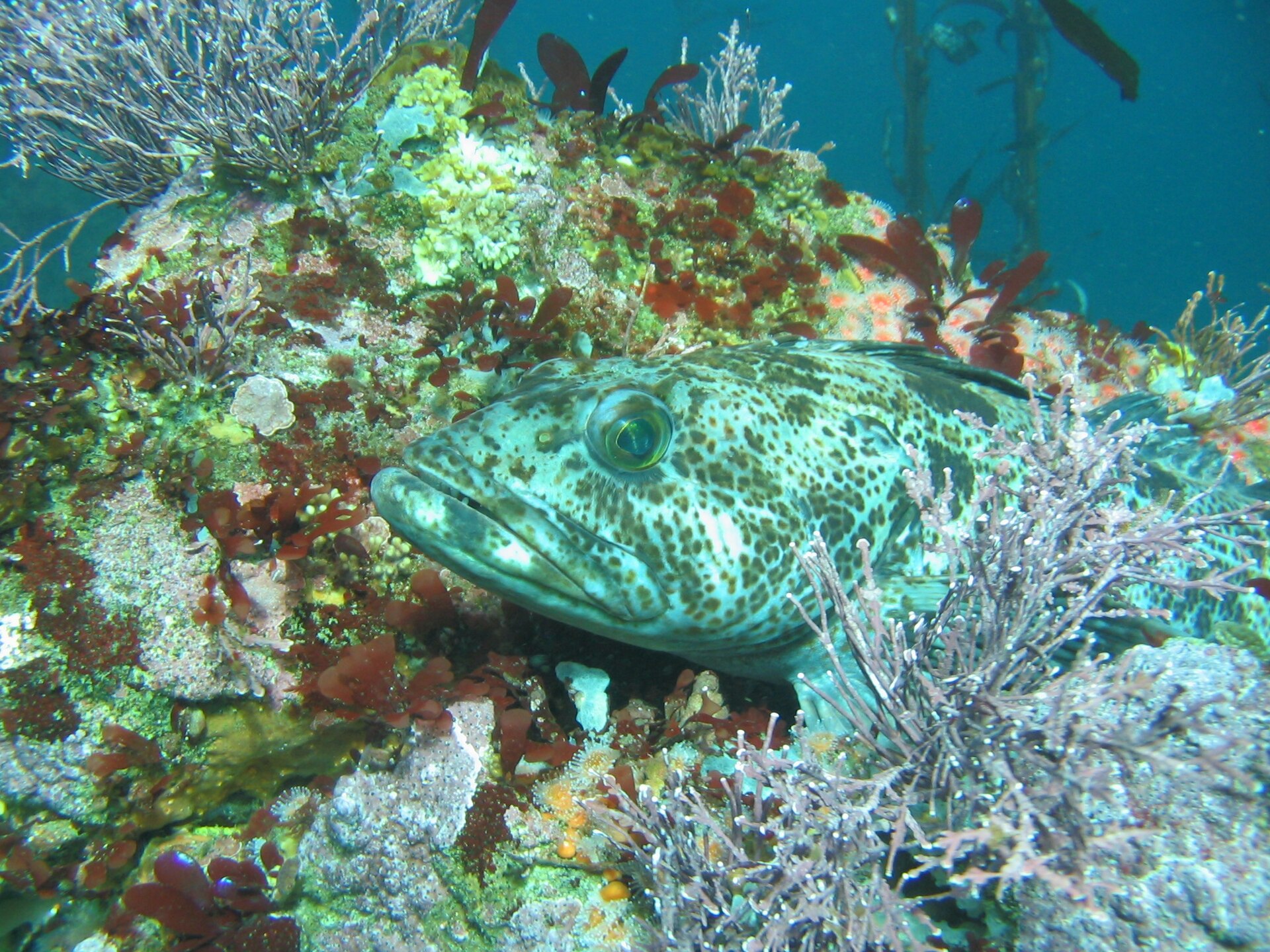
As espécies "registadas aqui" foram listadas pelos nossos editores a partir das fontes desta página. As contagens são registos de ocorrência do GBIF: observações registadas num raio de cerca de 5 km da posição indicada desde 1990, cruzadas apenas com as espécies do nosso catálogo. Mostram o que foi avistado no local, não uma garantia do que irá encontrar.