Dive sites, seasons and marine life — researched, mapped, planned.
Menu
Destinations Dive Sites Marine Life Wrecks News
Plan a trip Trip planner When to dive Cost calculator Comparisons Marine-life calendar Water temperature Liveaboards Operators & resorts Marine parks Hyperbaric chambers World map
Regions Australia, New Zealand & East AsiaCaribbean & Western AtlanticEurope, Atlantic & MediterraneanIndian Ocean & East AfricaPacific Islands & MicronesiaRed Sea & Middle EastSoutheast Asia & Coral TriangleThe Americas & Eastern Pacific Countries
Learn & Tools All guides Certifications Gear guides Videos Ask the Data AI Agents API
About About us Methodology Disclaimer Contact
Your view
★ Saved

Your starred destinations, sites and species — stored in this browser.

API GATEWAY

Free read-only JSON access to the atlas's cached data.

Dark mode

🧭 Guided View
New to diving — depths, currents, certification levels? We explain every term as you browse, in plain English. Same data, with the help built in.

⚡ Expert View
You already know the difference between a wall and a drift. Just the data — clean, fast and compact. This is the default view.

Interface language
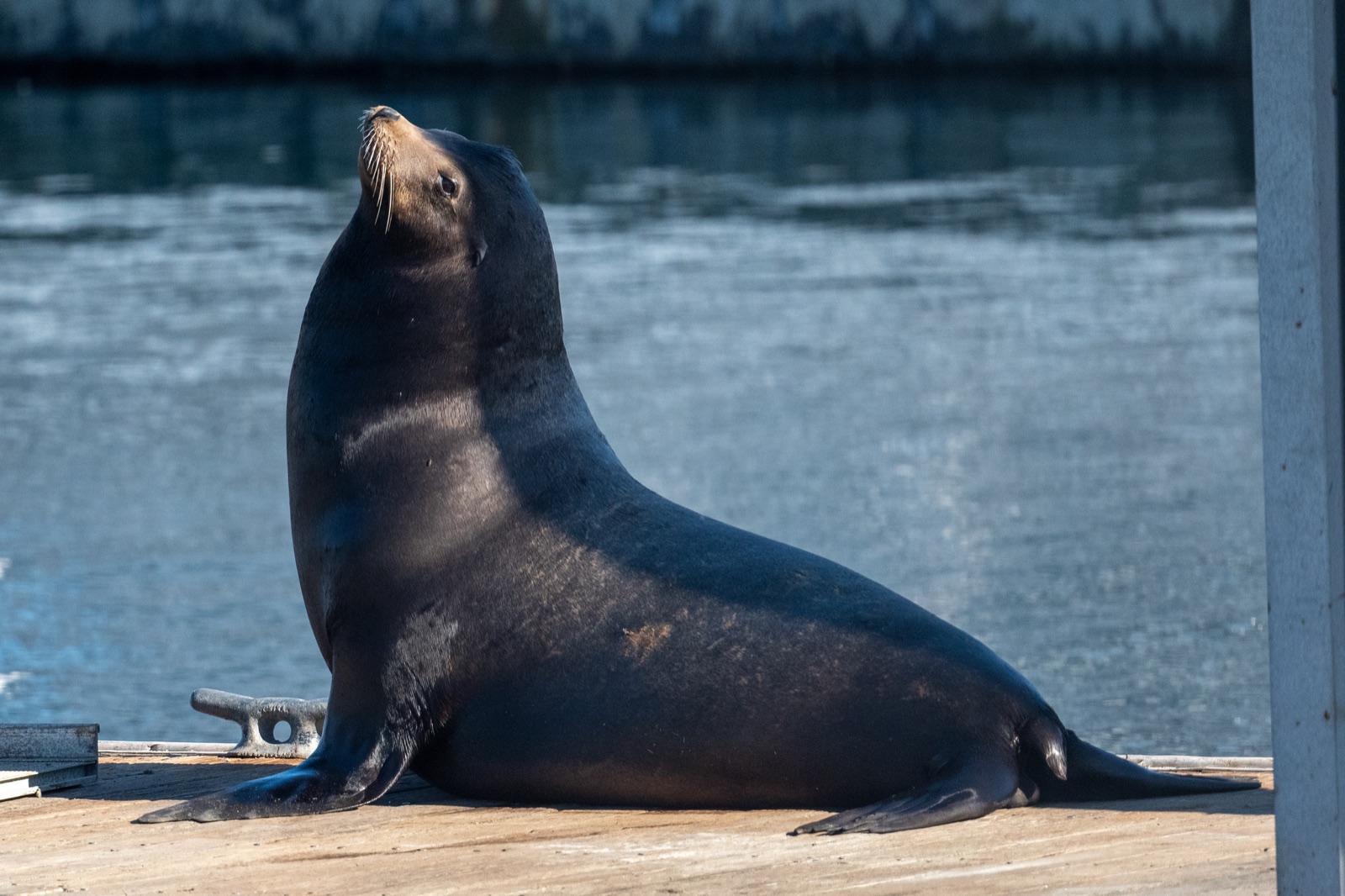
California Sea Lion — illustration
AI-generated illustration for The Scuba Atlas — illustrative, not a documentary photograph.

Marine Mammals

California Sea Lion

Zalophus californianus · Marine mammal — family Otariidae

IUCN: LC (increasing) ~2.0 m body length; males up to about 350 kg dwarf the 100 kg females 0–40 m depth band Well documented

Diving with California sea lions is the sport's best comedy. At Los Islotes, the pups hit you like a squadron of Labrador retrievers rebuilt for three dimensions — tugging fin tips, gnawing gently on strobe arms, hanging upside down an inch from your mask to see if you're worth further study. The adults are the real spectacle for anyone watching form: half a ton of muscle turning tighter than any fish, trailing bubbles like contrails through shafts of Baja light. Around the Channel Islands they ambush divers out of the kelp shadows in twos and tens. The colonies are loud, smelly, thriving — and pure joy from a body length away.

Respect factor: LowPlay bites from juveniles rarely break skin but happen; breeding-season bulls will charge perceived rivals, which is why Los Islotes closes each summer. Keep fingers curled and don't hold eye contact with a posturing male.

Where and when to see one

"Resident" means most dives at that destination encounter them; "seasonal" means reliably present in the listed months; anything else is a bonus, not a plan.

DestinationReliabilityMonthsNotes
Sea of Cortez & Cabo PulmoMexico Resident — seen on most dives Sep–May
California Channel IslandsUnited States Resident — seen on most dives Year-round
British ColumbiaCanada Seasonal — reliable in season Oct–Mar

Best month, at a glance

Understanding them

Habitat: Rocky haul-outs, kelp forests, and sandy coves along the eastern Pacific coast

Range: British Columbia to Mexico, including the Gulf of California; the classic dive encounters are at Baja's Los Islotes and California's Channel Islands

Behavior: The ocean's most committed extrovert. Juveniles treat divers as gymnasium equipment — barrel-rolling around heads, mouthing fins, blowing bubbles, mimicking postures — while females loop past in fluid arcs and territorial bulls patrol the perimeter barking. Underwater they fly; ashore they argue.

Diet: Squid, anchovies, sardines, and whatever schooling fish the season provides

Size: typically around 2.0 m; documented up to 2.4 m (body length; males up to about 350 kg dwarf the 100 kg females).

How to behave around one

Let pups initiate play and never grab back, keep clear of bulls and their harems, no feeding, and respect seasonal closures — Los Islotes shuts to visitors through the summer breeding months.

Conservation

Least Concern and abundant after decades of US protection; El Niño food crashes and toxic algal blooms drive periodic mass strandings.

Charted sites known for them

Watch

From the official channels

All videos →

Videos are embedded links to their creators' own channels — we host nothing and credit everything.

Sources: NOAA Fisheries ↗IUCN Red List ↗ · Facts verified against the sources above; fields without support are labeled not yet verified.

Australia, New Zealand & East Asia

Cairns & the Ribbon ReefsNingaloo ReefCoral Sea & Osprey ReefOkinawa & the Kerama IslandsPoor Knights IslandsTownsville & the YongalaGreen IslandIzu Peninsula

Caribbean & Western Atlantic

BonaireCozumelRiviera Maya & the CenotesBelize Barrier ReefGrand CaymanIsla Mujeres & CancúnRoatánTiger Beach & Grand Bahama

Europe, Atlantic & Mediterranean

Malta & GozoSilfra & IcelandThe AzoresCanary IslandsLarnaca & the ZenobiaScapa FlowArctic NorwayMadeira

Indian Ocean & East Africa

North & South Malé AtollsAri AtollBaa Atoll & Hanifaru BayAliwal Shoal & UmkomaasMafia IslandMauritiusSeychellesSodwana Bay

Pacific Islands & Micronesia

PalauChuuk (Truk) LagoonFakaravaKona, HawaiʻiRangiroaTaveuni & Rainbow ReefBeqa Lagoon & Pacific HarbourEspiritu Santo

Red Sea & Middle East

Sharm El Sheikh & Ras MohammedBrothers, Daedalus & St John'sDahabHurghada & El GounaMarsa Alam & the Deep SouthAqabaDaymaniyat IslandsMusandam Peninsula

Southeast Asia & Coral Triangle

Bali & Nusa PenidaKomodoRaja AmpatSipadan & MabulAnilaoCoronKoh TaoLembeh Strait

The Americas & Eastern Pacific

Galápagos IslandsCocos IslandFlorida KeysSea of Cortez & Cabo PulmoSocorro & the RevillagigedosBritish ColumbiaCalifornia Channel IslandsCosta Rica Pacific Coast