Marine Mammals
Galápagos Sea Lion
Zalophus wollebaeki · Marine mammal, family Otariidae
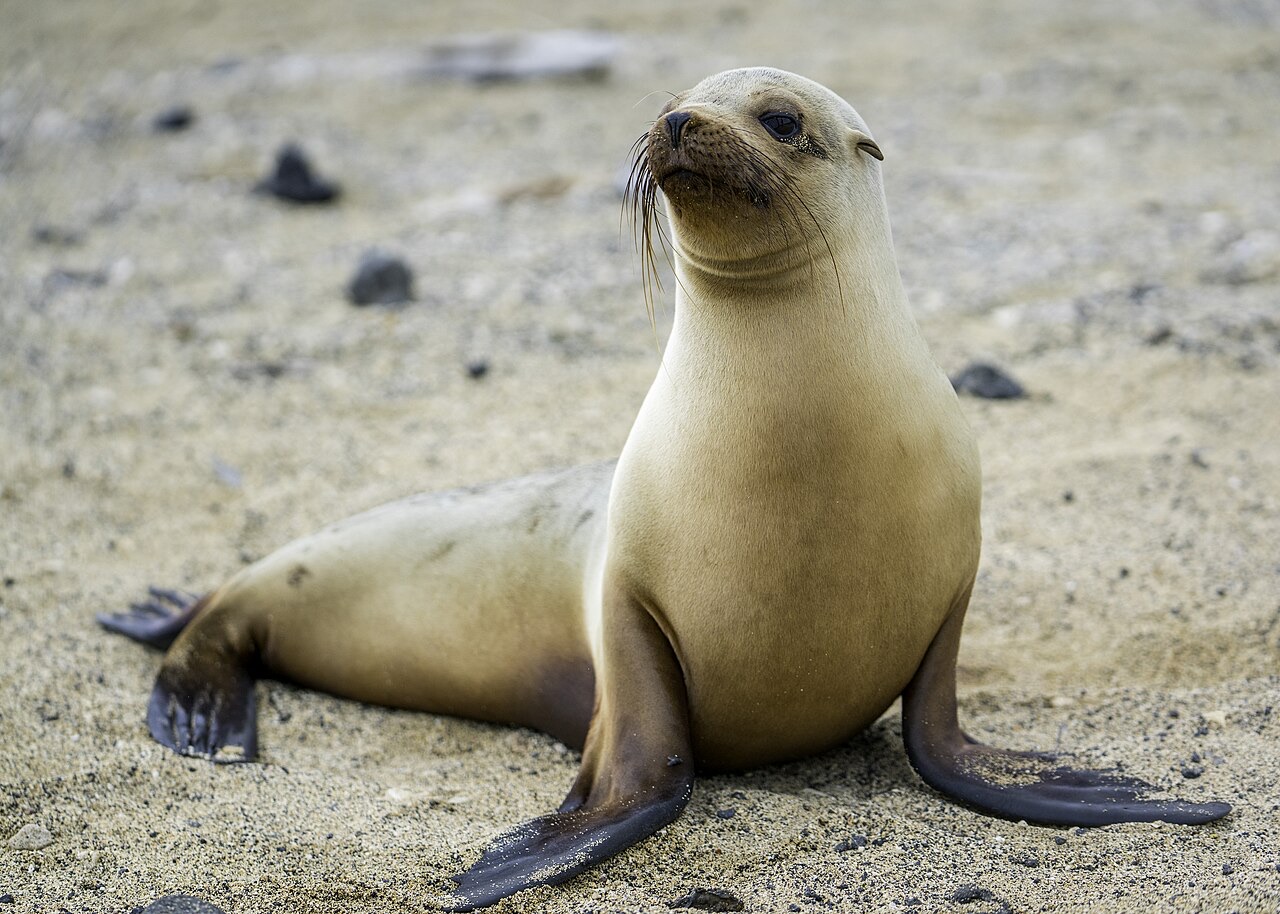
The Galápagos sea lion is the archipelago's official greeter, hauled across every beach and bench from the airport dock onward, and underwater it is the islands' resident circus. Snorkel any sheltered cove and pups arrive within minutes to loop, mouth fins, and mirror your clumsiest maneuvers with insulting ease; on scuba they strafe safety stops and pose for domes. It is also an Endangered endemic living on a knife-edge of ocean productivity (El Niño years starve colonies wholesale), so the comedy comes with stakes. No other animal so completely sets the tone of diving here: unafraid, curious, and convinced the ocean is mostly for fun.
Dónde y cuándo ver uno
"Residente" significa que la mayoría de las inmersiones en ese destino tienen encuentros con ellos; "estacional" significa que su presencia es fiable en los meses indicados; cualquier otra cosa es un extra, no algo con lo que contar.
| Destino | Fiabilidad | Meses | Notas |
|---|---|---|---|
| Galápagos IslandsEcuador | Resident: seen on most dives | Todo el año |
El mejor mes, de un vistazo
| Mes | Destinos fiables |
|---|---|
| January | Galápagos Islands |
| February | Galápagos Islands |
| March | Galápagos Islands |
| April | Galápagos Islands |
| May | Galápagos Islands |
| June | Galápagos Islands |
| July | Galápagos Islands |
| August | Galápagos Islands |
| September | Galápagos Islands |
| October | Galápagos Islands |
| November | Galápagos Islands |
| December | Galápagos Islands |
Comprendiéndolos
Hábitat: Beaches, rocky shores, and inshore waters throughout the Galápagos; feeds over upwelling-fed banks
Rango: Endemic to the Galápagos Islands, with occasional wanderers reaching the mainland coast
Comportamiento: Every bit as playful as its Californian ancestor-species, with the added surrealism of the setting: pups porpoise through snorkel groups, blow bubbles in masks, and yank fins while marine iguanas graze below. Colonies drape across town benches and dinghy docks with total indifference to people.
Dieta: Sardines and other schooling fish, squid, and small bottom fish; fortunes rise and fall with the upwellings
Tamaño: normalmente alrededor de 1.8 m; documentado hasta 2.5 m (body length; males much heavier than females).
Cómo comportarse cerca de uno
Galápagos National Park rules: two meters minimum on land, no touching in water even when pups initiate, no flash at close range, and always yield to a patrolling bull.
Conservación
Endangered: an endemic population of modest size whose numbers swing hard with El Niño events, compounded by disease risk from introduced animals and fishery interactions.
Puntos conocidos por avistamientos
Los puntos destacados fueron registrados para esta especie por nuestros editores; los números son registros de ocurrencia de GBIF anotados en un radio de unos 5 km de un punto desde 1990.
Ver
Desde los canales oficiales

Wildlife of Monterey | New film in our auditorium

Live Aviary Cam | Monterey Bay Aquarium

Live Aviary Cam | Monterey Bay Aquarium
Los vídeos son enlaces insertados a los canales de sus propios creadores. No alojamos nada y acreditamos todo.