Sharks
Galápagos Shark
Carcharhinus galapagensis · Cartilaginous fish, family Carcharhinidae
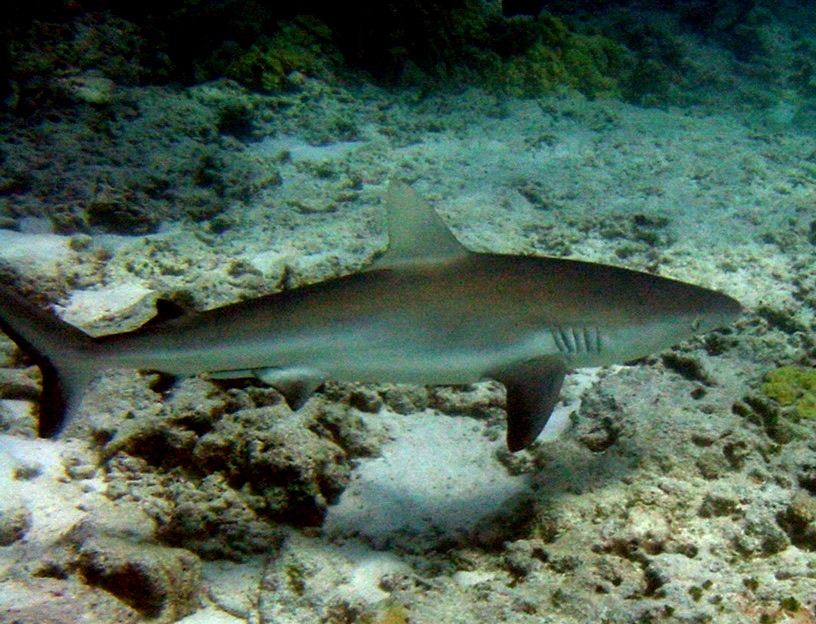
The Galápagos shark is what most people picture when they hear the word shark: three meters of gunmetal muscle, tall dorsal, blunt round snout, cruising a boulder slope in gin-clear island water. It belongs to the remote places: the same species patrols Wolf and Darwin, Bermuda's outer banks, and the Revillagigedo seamounts, one of the odd distributions in the shark world, stitched between far-flung islands with deep ocean in between. Encounters are steady rather than dramatic; the shark holds its line, takes your measure on a slow pass, and resumes its rounds as though you were furniture.
أين ومتى تراها
"مقيم" تعني أن معظم الغطسات في هذه الوجهة ستُمكّنك من مشاهدتها؛ "موسمي" تعني أنها متواجدة بشكل موثوق خلال الأشهر المذكورة؛ أي شيء آخر فهو مكسب غير متوقع، وليس شيئًا يُعتمد عليه في التخطيط.
| الوجهة | الموثوقية | الأشهر | ملاحظات |
|---|---|---|---|
| Galápagos IslandsEcuador | Resident: seen on most dives | طوال العام | |
| Socorro & the RevillagigedosMexico | Resident: seen on most dives | طوال العام | |
| BermudaBermuda | Occasional | طوال العام |
أفضل شهر، في لمحة
| الشهر | وجهات موثوقة |
|---|---|
| January | Galápagos Islands · Socorro & the Revillagigedos · Bermuda |
| February | Galápagos Islands · Socorro & the Revillagigedos · Bermuda |
| March | Galápagos Islands · Socorro & the Revillagigedos · Bermuda |
| April | Galápagos Islands · Socorro & the Revillagigedos · Bermuda |
| May | Galápagos Islands · Socorro & the Revillagigedos · Bermuda |
| June | Galápagos Islands · Socorro & the Revillagigedos · Bermuda |
| July | Galápagos Islands · Socorro & the Revillagigedos · Bermuda |
| August | Galápagos Islands · Socorro & the Revillagigedos · Bermuda |
| September | Galápagos Islands · Socorro & the Revillagigedos · Bermuda |
| October | Galápagos Islands · Socorro & the Revillagigedos · Bermuda |
| November | Galápagos Islands · Socorro & the Revillagigedos · Bermuda |
| December | Galápagos Islands · Socorro & the Revillagigedos · Bermuda |
فهمها
الموئل: Clear water around remote oceanic islands and seamounts: rocky drop-offs, boulder slopes, and adjacent blue water
النطاق: Scattered across the world's oceanic islands: the Galápagos and Revillagigedos, Hawaii, Bermuda, Lord Howe and the Kermadecs, Ascension, and similar isolated outposts
السلوك: A big, classically shark-shaped carcharhinid that patrols island walls in twos and threes, often shadowing divers with steady, wide circuits. Around bait or in packs it grows bold and pushy; on an ordinary wall dive it reads as confident but unhurried company.
النظام الغذائي: Bottom fish, octopus, and squid, with larger animals taking rays and small sharks
الحجم: عادةً حوالي 2.5 m; موثَّق حتى عمق 3.7 m (total length).
كيف تتصرف في حضوره
Stay off bait lines, keep the group together on blue-water exposures, and meet close passes with steady eye contact rather than retreat.
الحفاظ على البيئة البحرية
Assessed Least Concern in aggregate, but individual island populations are small, isolated, and quick to deplete. Several of its strongholds are large marine reserves for good reason.
المواقع المعروفة بها
المواقع المُبرزة رسَّمها محرّرونا لهذا النوع؛ والأرقام هي سجلات ظهور GBIF المُسجَّلة في نطاق نحو 5 كم من الموقع منذ عام 1990.
شاهد
من القنوات الرسمية

Wildlife of Monterey | New film in our auditorium

Live Aviary Cam | Monterey Bay Aquarium

Live Aviary Cam | Monterey Bay Aquarium
مقاطع الفيديو روابط مُضمَّنة لقنوات أصحابها. لا نستضيف شيئًا ونُشير إلى المصدر في كل الأحوال.