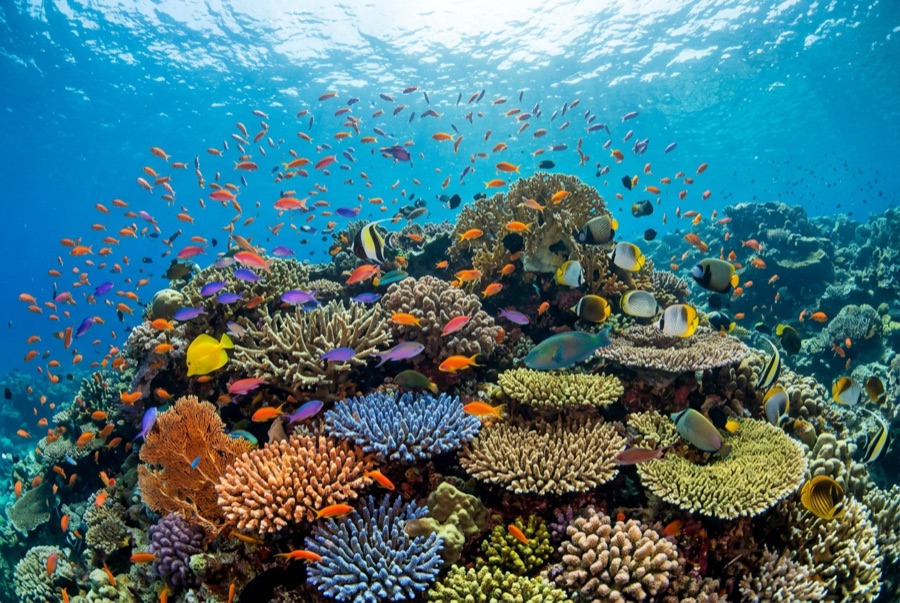
Opal Reef
Depth is the range from the top of the site to its usual maximum; "recommended cert" is the mainstream-agency level operators usually ask for, not a legal rule. Currents and visibility change daily, so treat everything here as planning ranges.
Opal Reef is a large, mostly shallow crescent near the edge of the continental shelf, about 60 km off Port Douglas. It is zoned for low-impact tourism, so only medium-sized boats use it, and its sites spread along three sections. Rayban, halfway up Middle Opal, is shallow and rich in coral and anemonefish. Mojo, near the gap between Middle and North Opal, mixes staghorn gullies with offlying bommies and strong flow. Bashful Bommie in South Opal, beside a channel to deep water, is home to a large resident Maori wrasse, with red bass, Spanish mackerel and Christmas tree worms. Long Bommie, a satellite reef in about 25 m on the western side, lost its plate corals to Cyclone Ita and is monitored under the Eye on the Reef program. Green and loggerhead turtles and giant clams are widespread.
The moment you come for: Resident Maori wrasse at Bashful Bommie; shallow coral and anemonefish at Rayban; low-impact zoning
Topography: Large crescent reef of shallow coral gardens, gullies, channels and satellite bommies
Know before you splash
Hazards: Sites near the gaps, such as Mojo and Plato, carry strong tidal flow and are dived only on suitable tides; the exposed outer side is reserved for calm days.
Conservation: Opal Reef is zoned for low-impact tourism, which keeps larger vessels away.
Who you'll meet
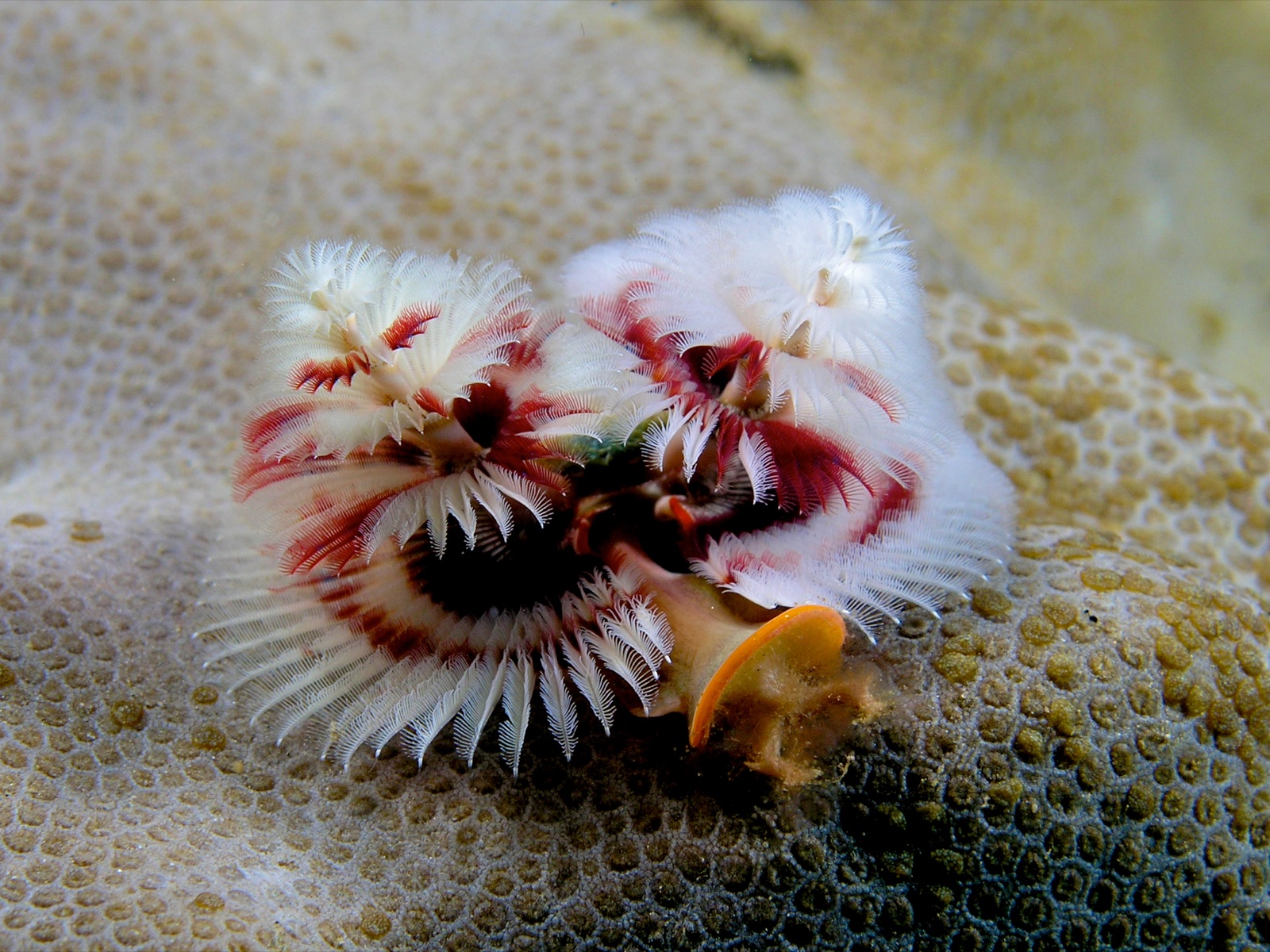
Christmas Tree Worm
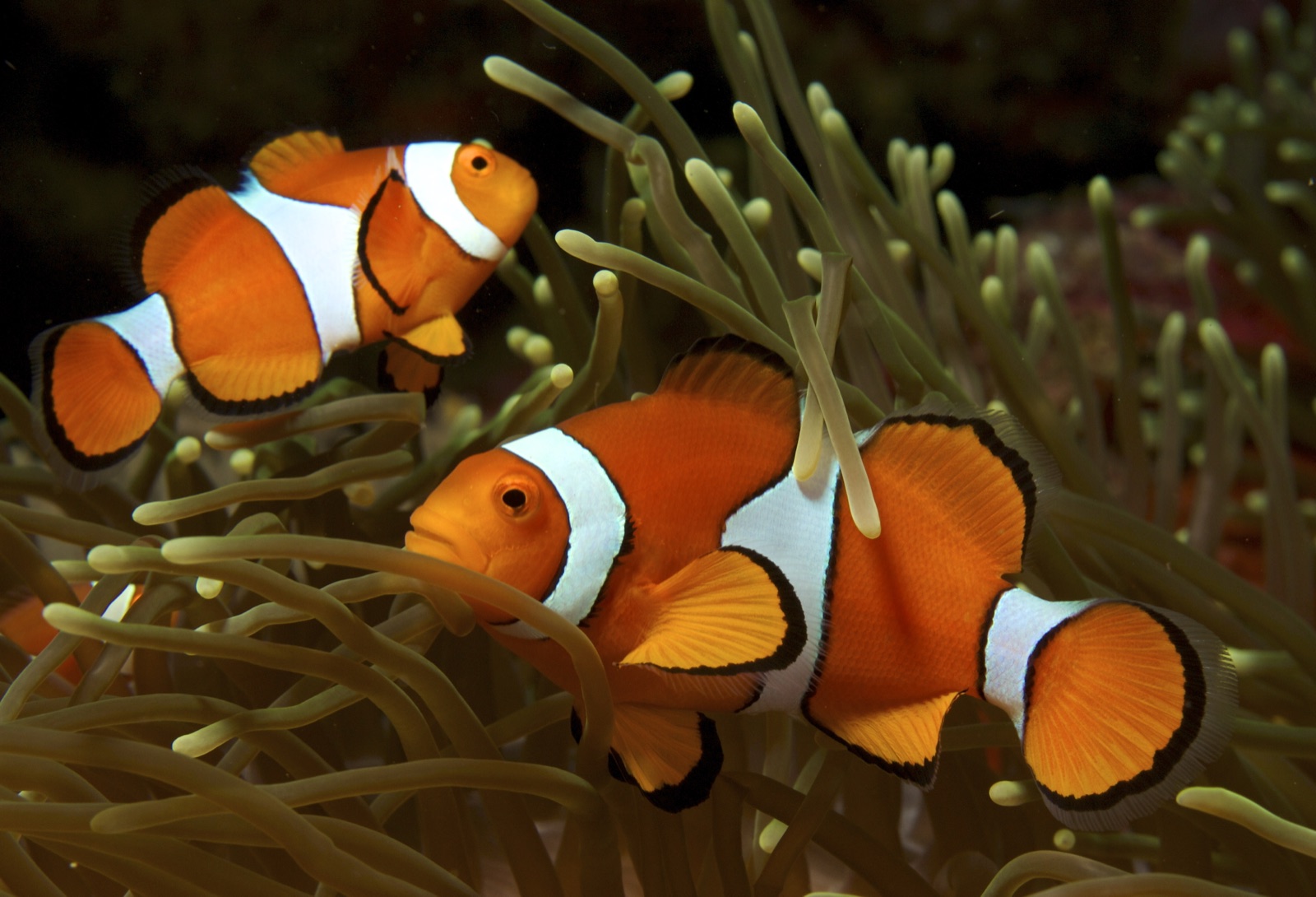
Clownfish & Anemonefish
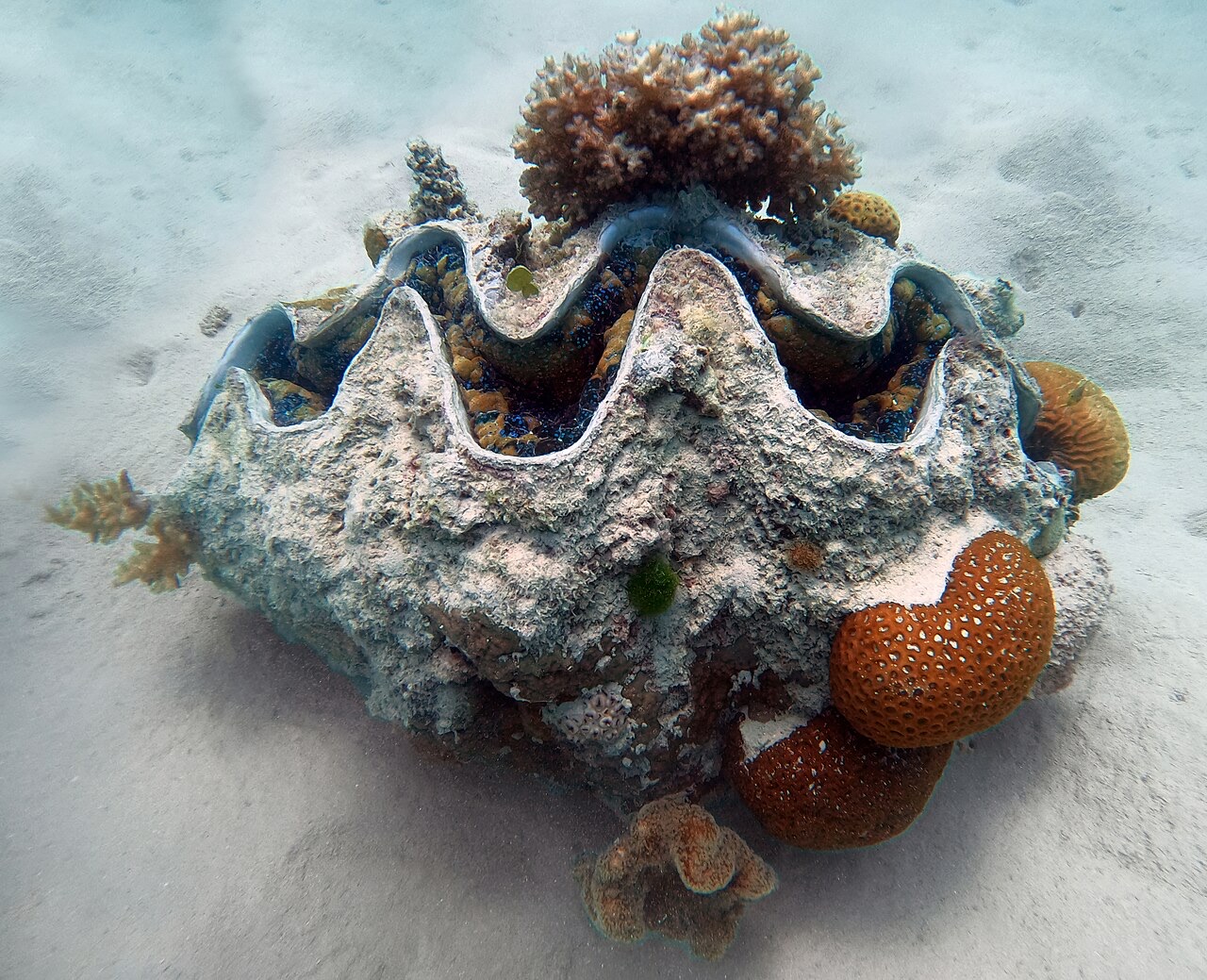
Giant Clam
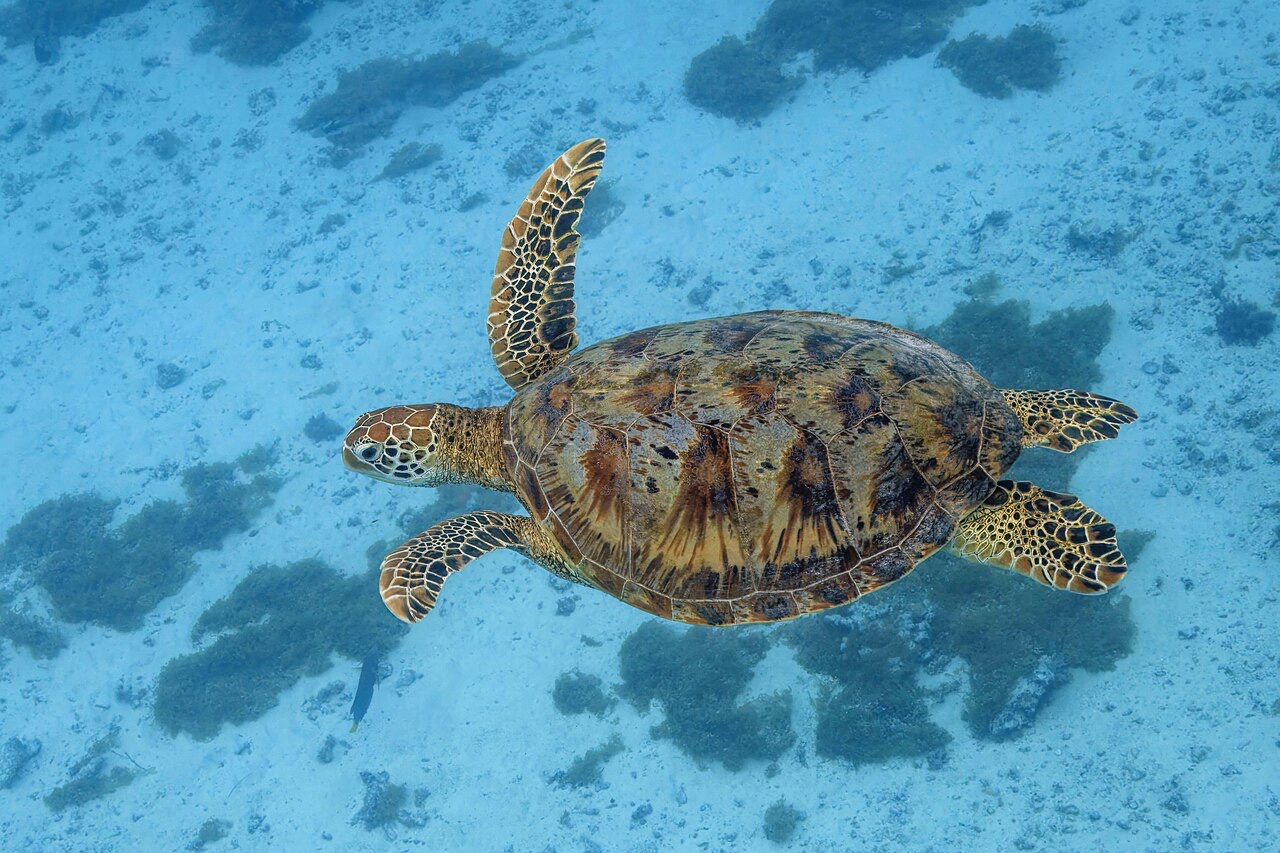
Green Sea Turtle
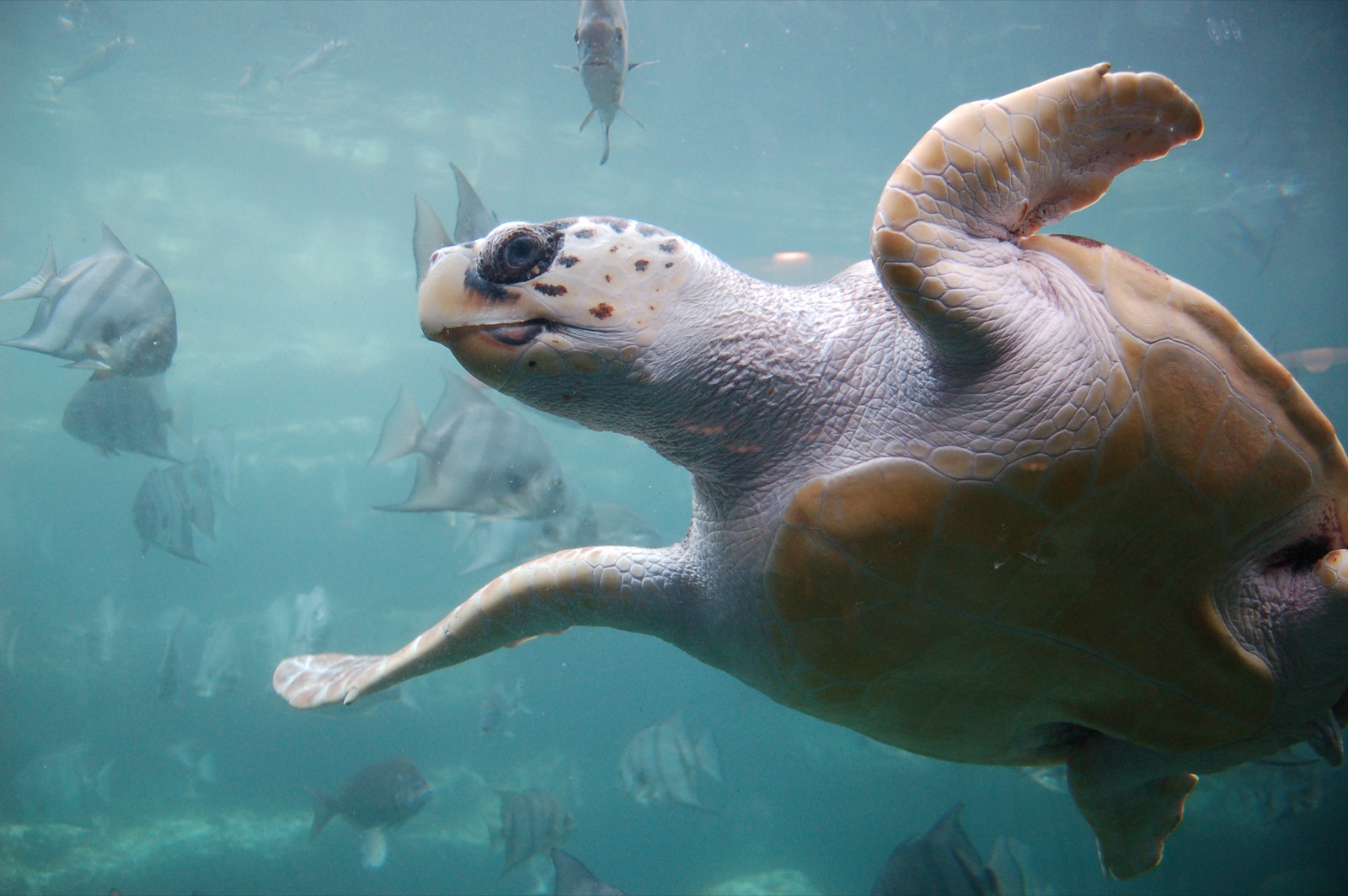
Loggerhead Turtle
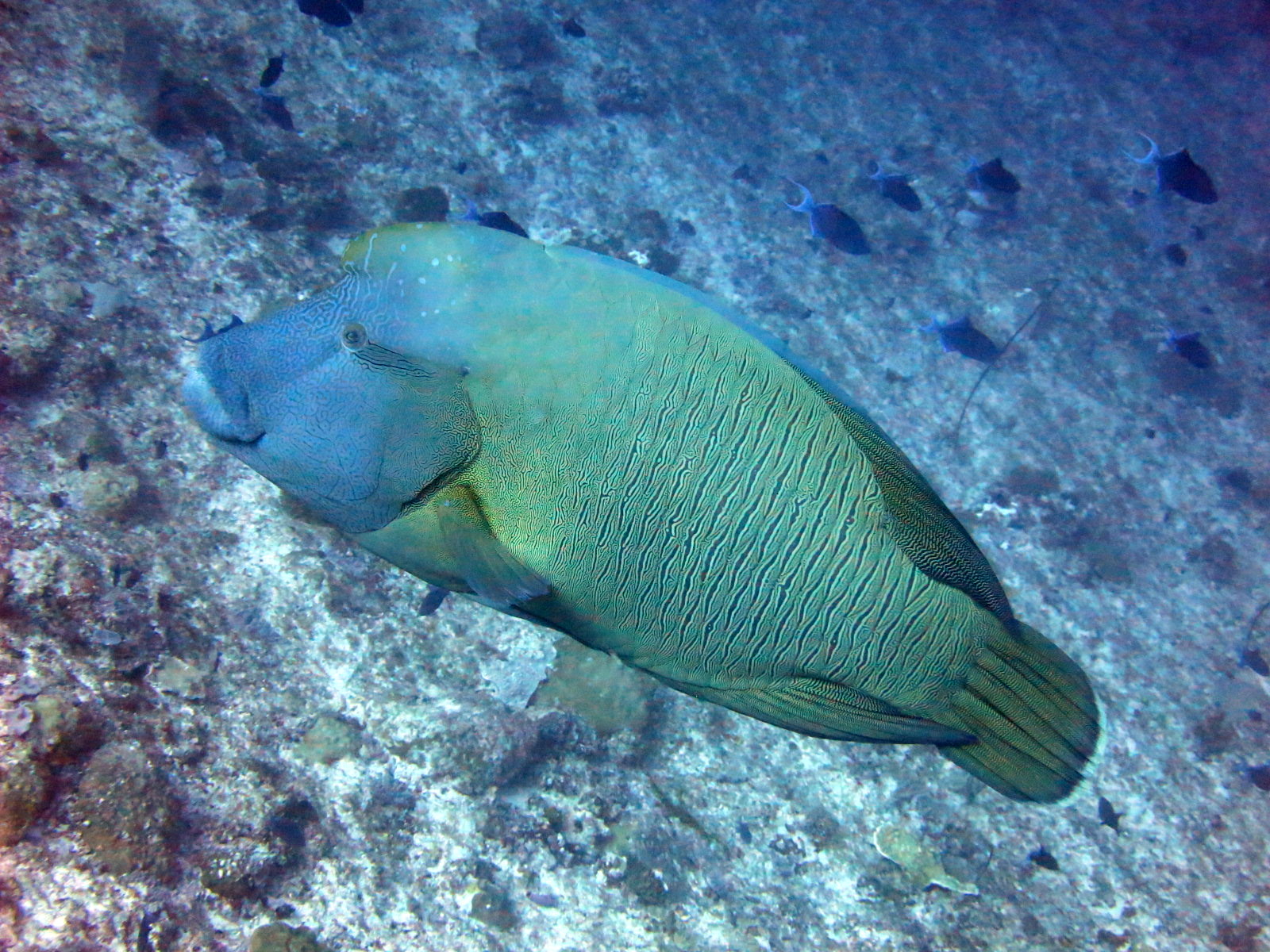
Napoleon (Humphead) Wrasse
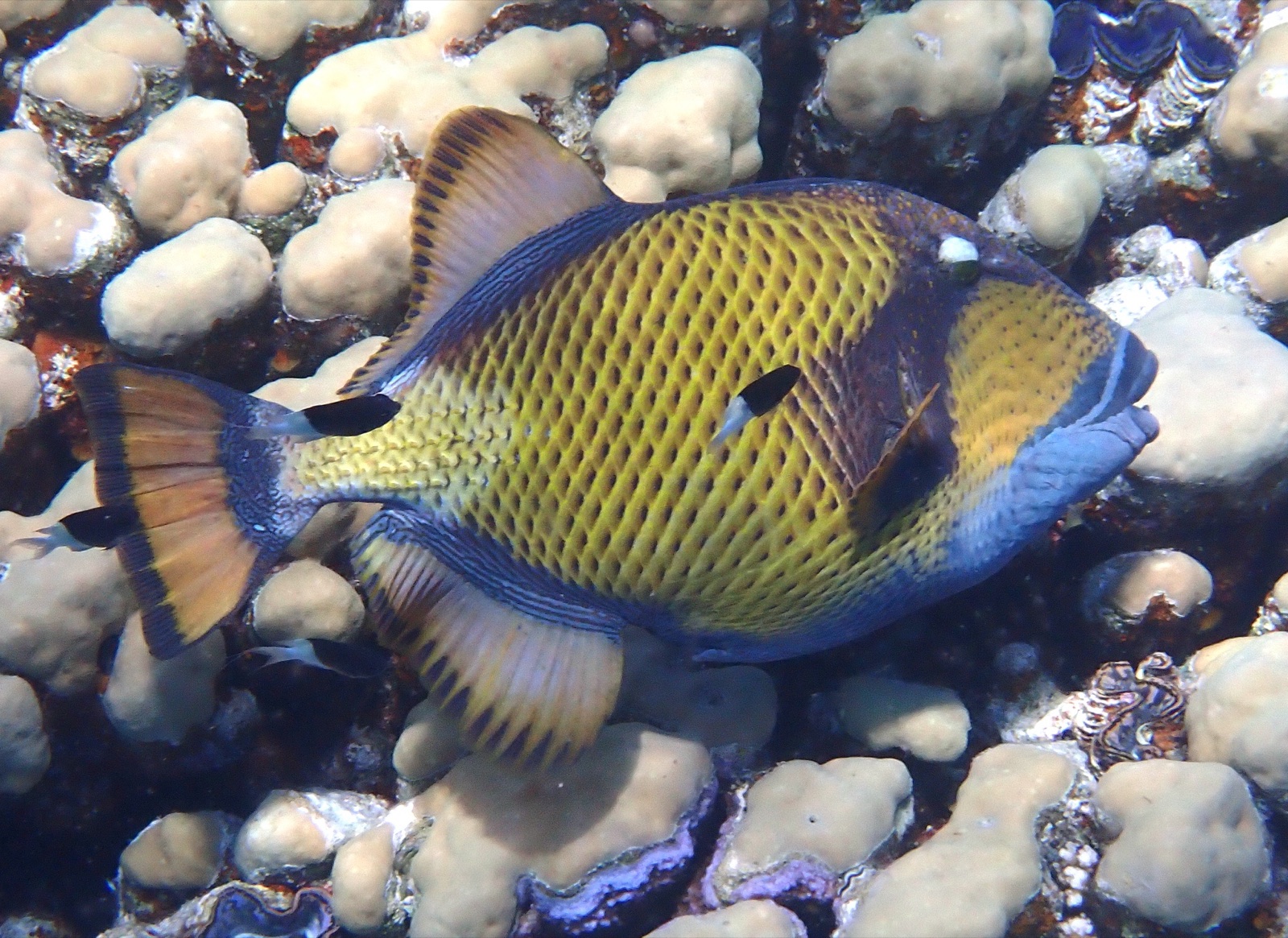
Titan Triggerfish
"Charted here" species were listed by our editors from the sources on this page. Counts are GBIF occurrence records: observations logged within about 5 km of the charted position since 1990, matched only against the species in our catalogue. They show what has been seen there, not a promise of what you will see.