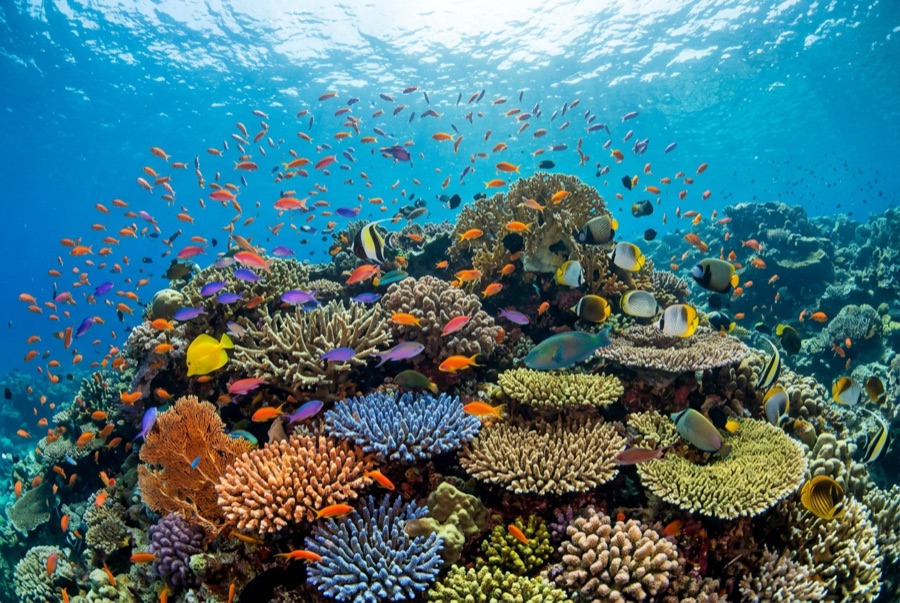
South Plaza
Depth is the range from the top of the site to its usual maximum; "recommended cert" is the mainstream-agency level operators usually ask for, not a legal rule. Currents and visibility change daily, so treat everything here as planning ranges.
North and South Plaza are a pair of islets near Gordon Rocks, divided by a narrow channel with a floor of sand and silt. While Gordon Rocks is kept for experienced divers, the Plazas are where novices dive in the same area. Along the south shore of South Plaza, patches of coral attract butterflyfish, damselfish, wrasses, Moorish idols, young barracuda and small sharks. The real attraction is the sea lion colony, whose members come down to play with divers; the big bull guards his stretch of shore and deserves a wide berth. Strong currents can run in the channel between the two islands.
The moment you come for: Playful sea lions; coral patches on the south shore; easy alternative to Gordon Rocks
Topography: Sand and silt with coral patches along the south shore
Know before you splash
Hazards: Territorial sea lion bull; strong currents possible in the channel between the islets.
Permits & rules: Scuba in the Galápagos Marine Reserve must be led by a park-licensed naturalist guide, one guide for every eight divers, and visits run between 06:00 and 17:00.
Marine forecast, next 6 days
Model forecast for the open sea near the site, for daytime hours (6 am to 6 pm local). It says nothing about visibility or marine life. Sea surface now: 29 °C / 84 °F (NOAA OISST satellite analysis, 18 Nov)
| Day | Surface | Waves (highest) | Swell | Wind |
|---|---|---|---|---|
| Tue 24 Nov | Slight | 0.8 m / 3 ft7 s · from SSE · slight | 0.7 m6 s · from SSE | 12 ktfrom S · moderate breeze (F4) |
| Wed 25 Nov | Slight | 0.9 m / 3 ft20 s · from SSW · slight | 0.7 m7 s · from SSE | 8–9 ktfrom S · gentle breeze (F3) |
| Thu 26 Nov | Slight | 1.0 m / 3 ft16 s · from SSW · slight | 0.7 m9 s · from SSE | 5–7 ktfrom SSE · gentle breeze (F3) |
| Fri 27 Nov | Slight | 1.0 m / 3 ft14 s · from SSW · slight | 0.7 m9 s · from S | 7 ktfrom SSE · gentle breeze (F3) |
| Sat 28 Nov | Slight | 1.2 m / 4 ft10 s · from NNW · slight | 0.7 m9 s · from SSE | 5–7 ktfrom SE · gentle breeze (F3) |
| Sun 29 Nov | Slight | 1.2 m / 4 ft19 s · from NW · slight | 0.6 m8 s · from SSE | 7–9 ktfrom SSE · gentle breeze (F3) |
Waves and swell: WAVEWATCH III global wave model (0.5°), run by the University of Hawaiʻi / PacIOOS with NOAA GFS winds; model cell 20.1 km from the site; heights are the highest daytime significant wave height, directions are where the waves come from. Wind: NOAA GFS (0.5°), 10 m wind, daytime average to highest, at a grid point 20.1 km from the site; gusts are stronger. Fetched 24 Nov 2026, 05:49 UTC from the latest model runs served by PacIOOS, refreshed daily. PacIOOS WW3 ↗ PacIOOS GFS ↗ How this is made →
Month by month at this site
Sea temperature, plankton and open-sea waves for each month, computed for this site from satellite and ocean-model data and averaged over recent years.
| Month | Sea surface | Plankton | Open-sea waves |
|---|---|---|---|
| January | 25 °C / 77 °F23–27 °C | 0.27 mg/m³ | 0.9–1.3 m3–4 ft · slight |
| February | 27 °C / 80 °F25–27 °C | 0.28 mg/m³ | 0.9–1.3 m3–4 ft · slight |
| March | 27 °C / 81 °F26–28 °C | 0.26 mg/m³ | 0.9–1.4 m3–5 ft · slight |
| April | 26 °C / 79 °F24–28 °C | 0.27 mg/m³ | 0.9–1.3 m3–4 ft · slight |
| May | 25 °C / 76 °F23–27 °C | 0.26 mg/m³ | 0.9–1.4 m3–4 ft · slight |
| JuneEditors' best month | 24 °C / 75 °F22–27 °C | 0.3 mg/m³ | 0.9–1.4 m3–5 ft · slight |
| JulyEditors' best month | 23 °C / 73 °F21–26 °C | 0.3 mg/m³ | 0.9–1.5 m3–5 ft · slight |
| AugustEditors' best month | 22 °C / 72 °F21–25 °C | 0.28 mg/m³ | 0.9–1.5 m3–5 ft · slight |
| SeptemberEditors' best month | 22 °C / 72 °F21–25 °C | 0.31 mg/m³ | 1.0–1.5 m3–5 ft · slight |
| OctoberEditors' best month | 22 °C / 72 °F20–24 °C | 0.29 mg/m³ | 0.9–1.4 m3–5 ft · slight |
| NovemberEditors' best month | 23 °C / 73 °F22–26 °C | 0.28 mg/m³ | 0.8–1.3 m3–4 ft · slight |
| December | 23 °C / 74 °F21–25 °C | 0.28 mg/m³ | 0.8–1.3 m3–4 ft · slight |
Sea surface temperature: NOAA OISST v2.1 monthly means, 2016–2025 (NOAA NCEI, served by NOAA PSL), from a 25 km grid cell 6.0 km from the site. Large figure: the ten-year average for that month; small figure: its coolest and warmest year. NOAA PSL ↗
Plankton: chlorophyll-a from the NOAA S-NPP VIIRS satellite, 4 km monthly, 2016–2025 (NOAA STAR / CoastWatch): the median of the years with a clear view, from a pixel 7.4 km away over water at least 30 m deep (depth from NOAA ETOPO1), because over shallow reef and sand the seabed makes the satellite read too high. More plankton usually means greener, less clear water; suspended sediment (near river mouths and shallow banks) can push the reading up too, so treat a high value as a sign of murkier water rather than a plankton count. Plankton changes little through the year here, so no month is flagged. NOAA CoastWatch ↗
Open-sea waves: significant wave height from the WAVEWATCH III global wave model (0.5°), run by the University of Hawaiʻi / PacIOOS with NOAA GFS winds, 2017–2025, at a model cell 20.1 km from the site. The range covers the middle 80% of days (10th to 90th percentile); the word is the WMO sea-state term for a typical day. PacIOOS ↗
A dash means too few years of data for that month (cloud, winter darkness or sea ice): we leave it empty rather than estimate it. How these are computed →
Coral heat stress this week
Risk of multi-species mortality. Degree Heating Weeks add up how far and how long the sea has run at least 1 °C above its usual warmest-month temperature over the past 12 weeks; NOAA Coral Reef Watch puts the risk of reef-wide bleaching at 4 °C-weeks and of heat-sensitive corals dying at 8. Reading from a 5 km satellite pixel 1.9 km from the site, refreshed weekly. Source: NOAA Coral Reef Watch, daily global 5 km product, version 3.1. NOAA Coral Reef Watch ↗
Who you'll meet
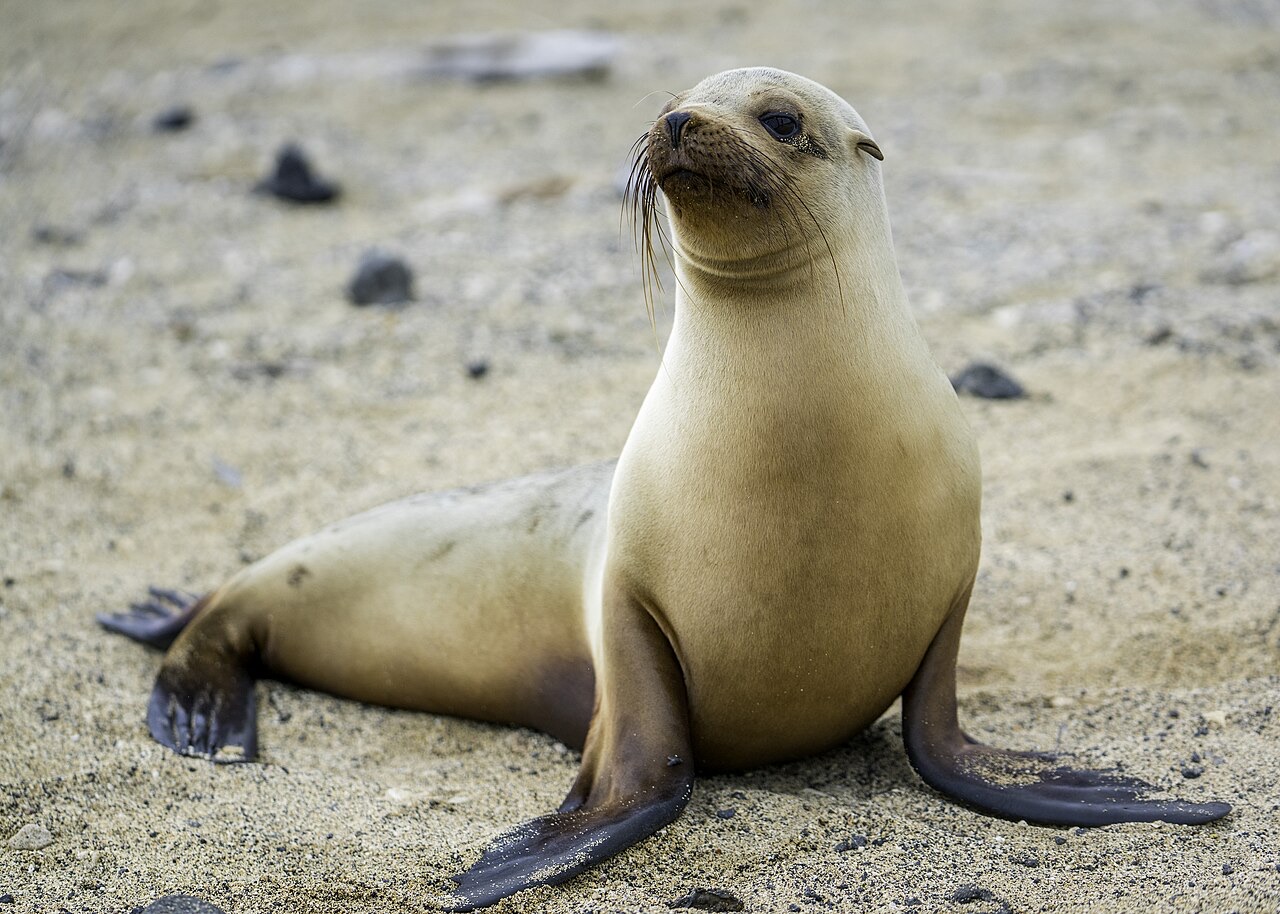
"Charted here" species were listed by our editors from the sources on this page. Counts are GBIF occurrence records: observations logged within about 5 km of the charted position since 1990, matched only against the species in our catalogue. They show what has been seen there, not a promise of what you will see.
Recently seen nearby
Verified public records of marine life within 5 km of this site over the last 12 months (17 Nov 2025 to 16 Nov 2026), from iNaturalist, GBIF and OBIS. They show what people recorded near the site, not a promise of what you will see on your dive.
| Species | Records | Latest record | Months recorded |
|---|---|---|---|
| Galápagos Sea LionZalophus wollebaekiOur species guide → | 284 in 30 days | 6 Nov 2026 by ren pedersen ↗ iNaturalist · CC0 |
J
F
M
A
M
J
J
A
S
O
N
D
|
| Sally Lightfoot CrabGrapsus grapsus | 81 in 30 days | 6 Nov 2026 by njfloot ↗ iNaturalist · CC BY-NC |
J
F
M
A
M
J
J
A
S
O
N
D
|
| Mexican HogfishBodianus diplotaenia | 6 | 26 Jun 2026 by orionsmcc ↗ iNaturalist · CC BY-NC |
J
F
M
A
M
J
J
A
S
O
N
D
|
| Whitetip Reef SharkTriaenodon obesusOur species guide → | 5 | 11 Oct 2026 by jkmarinovich ↗ iNaturalist · CC BY-NC |
J
F
M
A
M
J
J
A
S
O
N
D
|
| Yellowfin SurgeonfishAcanthurus xanthopterus | 5 | 3 May 2026 by Ingo Rogalla ↗ iNaturalist · CC BY-NC |
J
F
M
A
M
J
J
A
S
O
N
D
|
| King AngelfishHolacanthus passer | 4 | 26 Jun 2026 by orionsmcc ↗ iNaturalist · CC BY-NC |
J
F
M
A
M
J
J
A
S
O
N
D
|
| Razor SurgeonfishPrionurus laticlavius | 3 | 26 Jun 2026 by orionsmcc ↗ iNaturalist · CC BY-NC |
J
F
M
A
M
J
J
A
S
O
N
D
|
| Orange Cup CoralTubastraea coccinea | 3 | 26 Jun 2026 by orionsmcc ↗ iNaturalist · CC BY-NC |
J
F
M
A
M
J
J
A
S
O
N
D
|
| Galápagos Ringtail DamselfishStegastes beebei | 3 | 4 Jan 2026 by laelene ↗ iNaturalist · CC BY-NC |
J
F
M
A
M
J
J
A
S
O
N
D
|
| Antipathes galapagensis | 2 | 26 Jun 2026 by orionsmcc ↗ iNaturalist · CC BY-NC |
J
F
M
A
M
J
J
A
S
O
N
D
|
| Chocolate Chip Sea StarNidorellia armata | 2 | 26 Jun 2026 by orionsmcc ↗ iNaturalist · CC BY-NC |
J
F
M
A
M
J
J
A
S
O
N
D
|
| White-spotted Eagle RayAetobatus ocellatus | 2 | 21 Jan 2026 by tomdurkin ↗ iNaturalist · CC BY-NC |
J
F
M
A
M
J
J
A
S
O
N
D
|
Also recorded within 5 km
What counts: research-grade iNaturalist observations (the identification confirmed by other observers) that the observer shared under CC0, CC BY or CC BY-NC, and human sightings from GBIF and OBIS datasets under the same licences. Only marine and brackish-water species as flagged by the World Register of Marine Species (WoRMS), from the groups divers look for: fishes, sharks and rays, marine mammals, sea turtles, sea snakes, octopus and squid, sea slugs, crabs, shrimps and lobsters, sea stars and urchins, corals, anemones and jellyfish. Records whose own location is less certain than the radius are left out, and the same animal on the same day and spot in two databases counts once. Where we have a guide to the animal or its group, the row links to it. Refreshed weekly.
Records: iNaturalist research-grade observations ↗ (105, 27 observers; each under its observer's licence, shown per row) · Search these records on GBIF.org ↗
Retrieved through the iNaturalist, GBIF and OBIS APIs on 16 Nov 2026; marine status from WoRMS (CC BY 4.0). How these are collected →