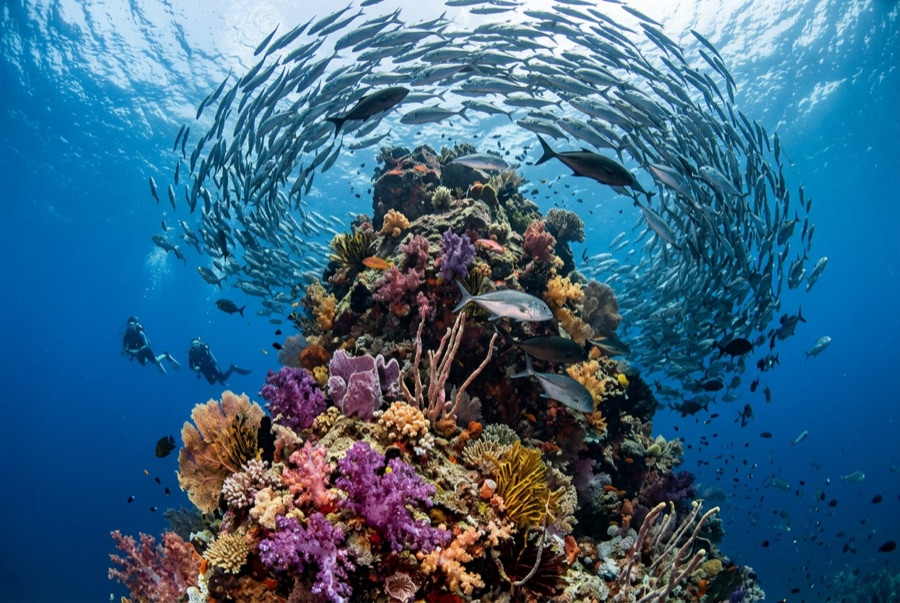
Aiguille de Prony
Depth is the range from the top of the site to its usual maximum; "recommended cert" is the mainstream-agency level operators usually ask for, not a legal rule. Currents and visibility change daily, so treat everything here as planning ranges.
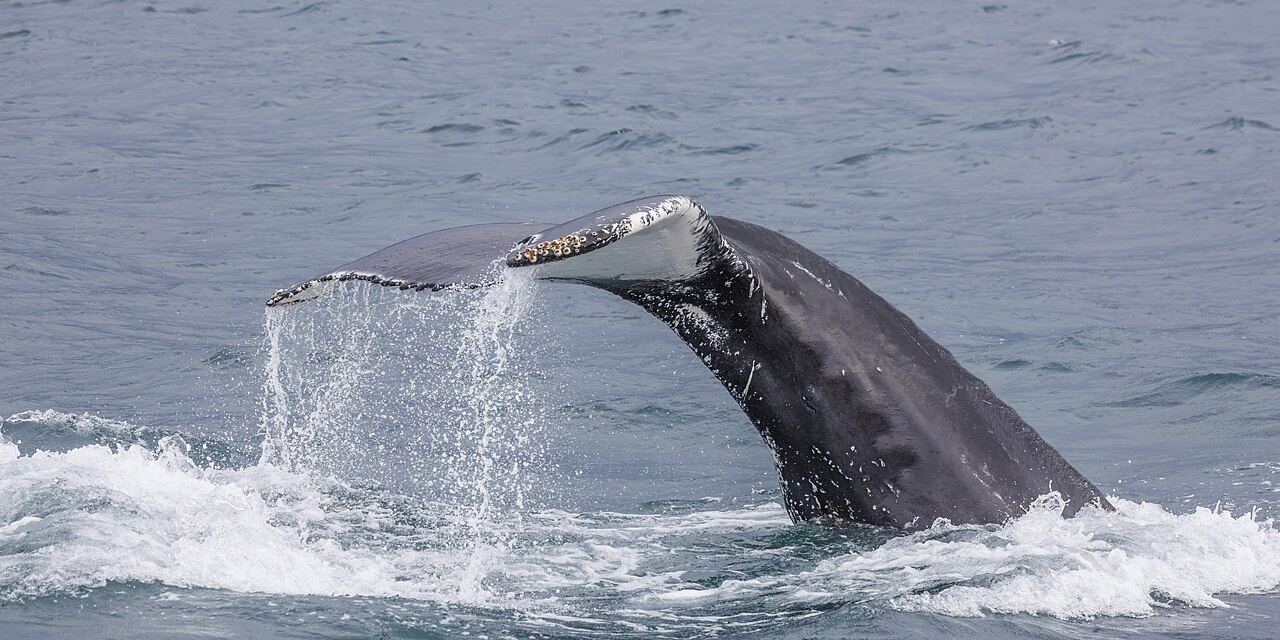
The Aiguille de Prony looks like a reef pinnacle but is a mineral chimney. Warm spring water seeps out of the floor of Prony Bay, reacts with seawater and has built a pale spire that climbs from about 38 m to a flat top roughly 2 m below the surface. Found in 1979 and long mistaken for coral, it was later sampled by geologists working in Nouméa, and warm water still trickles from vents in its sides. Bivalves, oysters and corals have colonized the walls, scorpionfish and small trevally hang around them, and groupers gather here to spawn in December. Between mid-July and mid-September humpback whales breed in the bay, so the boat ride can bring sightings too.
The moment you come for: Hydrothermal chimney found in 1979; climbs from 38 m to 2 m; humpback whales in the bay in winter
Topography: Pale mineral chimney rising from 38 m to a small flat top near the surface
Entry: A full-day outing to Prony Bay in the far south of Grande Terre, often paired with a drift dive along the Woodin Channel.
Know before you splash
Hazards: The base sits at 38 m, deeper than many recreational limits, so plan depth carefully; the top is only about 2 m down, so ascend with care near boats.
Who you'll meet
"Charted here" species were listed by our editors from the sources on this page. Counts are GBIF occurrence records: observations logged within about 5 km of the charted position since 1990, matched only against the species in our catalogue. They show what has been seen there, not a promise of what you will see.