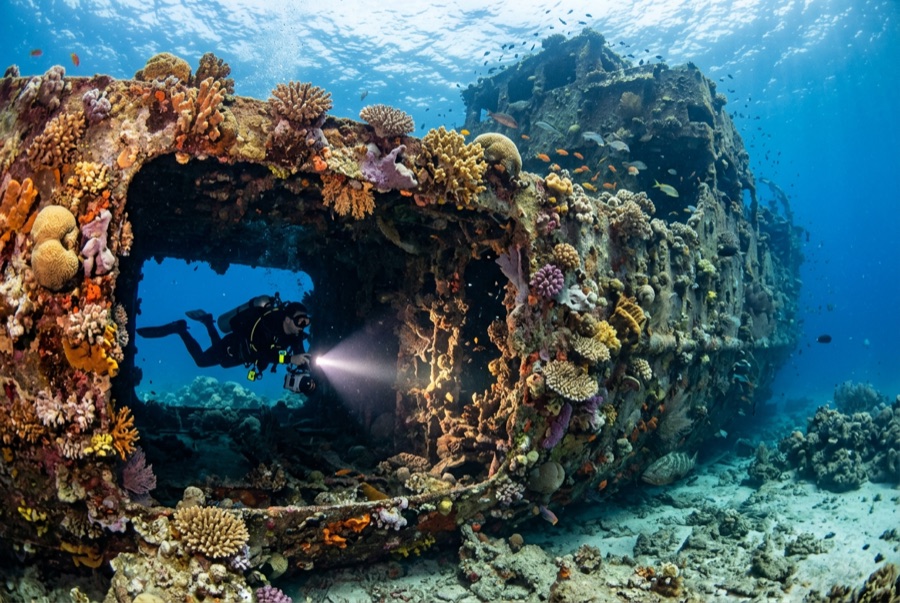
Double Wreck
Depth is the range from the top of the site to its usual maximum; "recommended cert" is the mainstream-agency level operators usually ask for, not a legal rule. Currents and visibility change daily, so treat everything here as planning ranges.
Two 18th century trading ships sank on this spot, and nearly 300 years later little is left of them except piles of ballast stone and a pair of huge anchors spread over sand and seagrass. Corals, sponges and gorgonians have grown over the ballast so thoroughly that the site now behaves like a small reef. Its compact size suits a slow search: a colony of tiny blennies lives in holes in one anchor, cleaner shrimp work their stations, and seahorses, frogfish, octopus and juvenile fish reward patient eyes. Large, unhurried southern stingrays feed in the sand, green turtles graze the seagrass, and lobsters crowd the rocks. A 2015 biodiversity survey logged 57 sponge species here, among the most of any site around the island.
The moment you come for: Coral-covered 18th century anchors; blennies, seahorses and frogfish; calm southern stingrays
Topography: Coral-grown ballast stones and two large anchors among sand patches and seagrass
Entry: About two minutes by boat from the harbor.
Know before you splash
Hazards: Shallow and sheltered. The historic remains are protected: do not touch or move anything.
Conservation: Historic artifacts are protected; nothing may be removed from the marine park except a found blue bead.
Who you'll meet
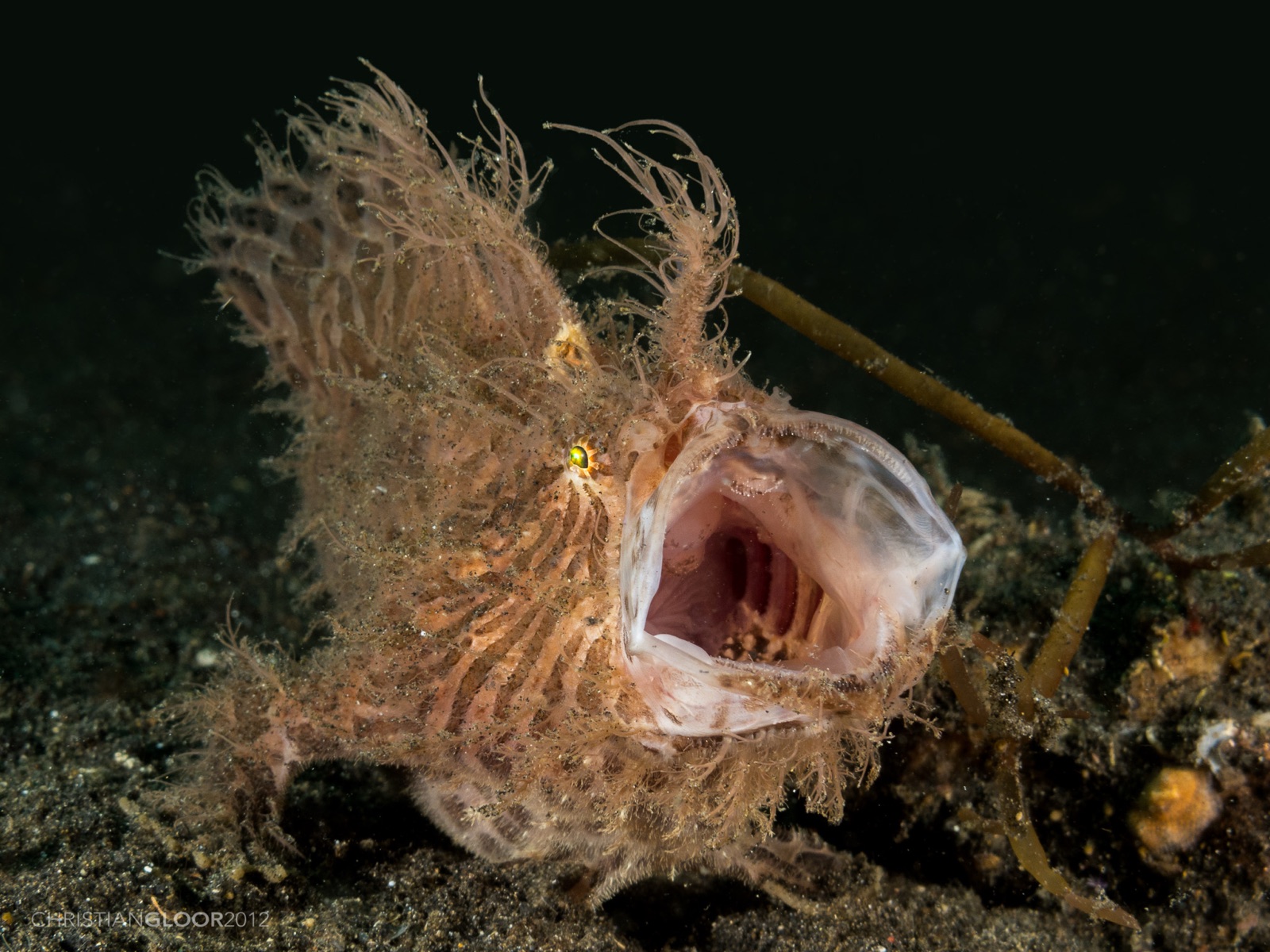
Frogfish
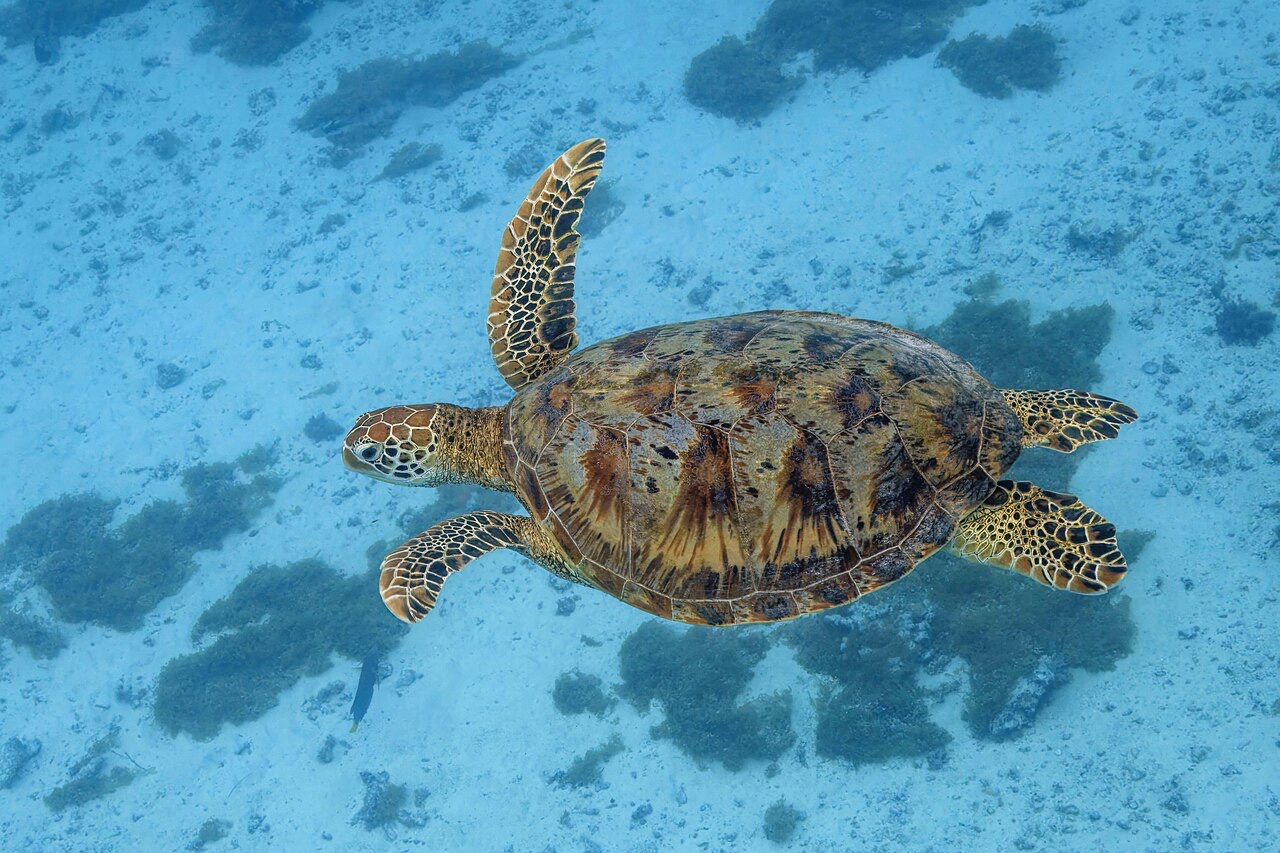
Green Sea Turtle
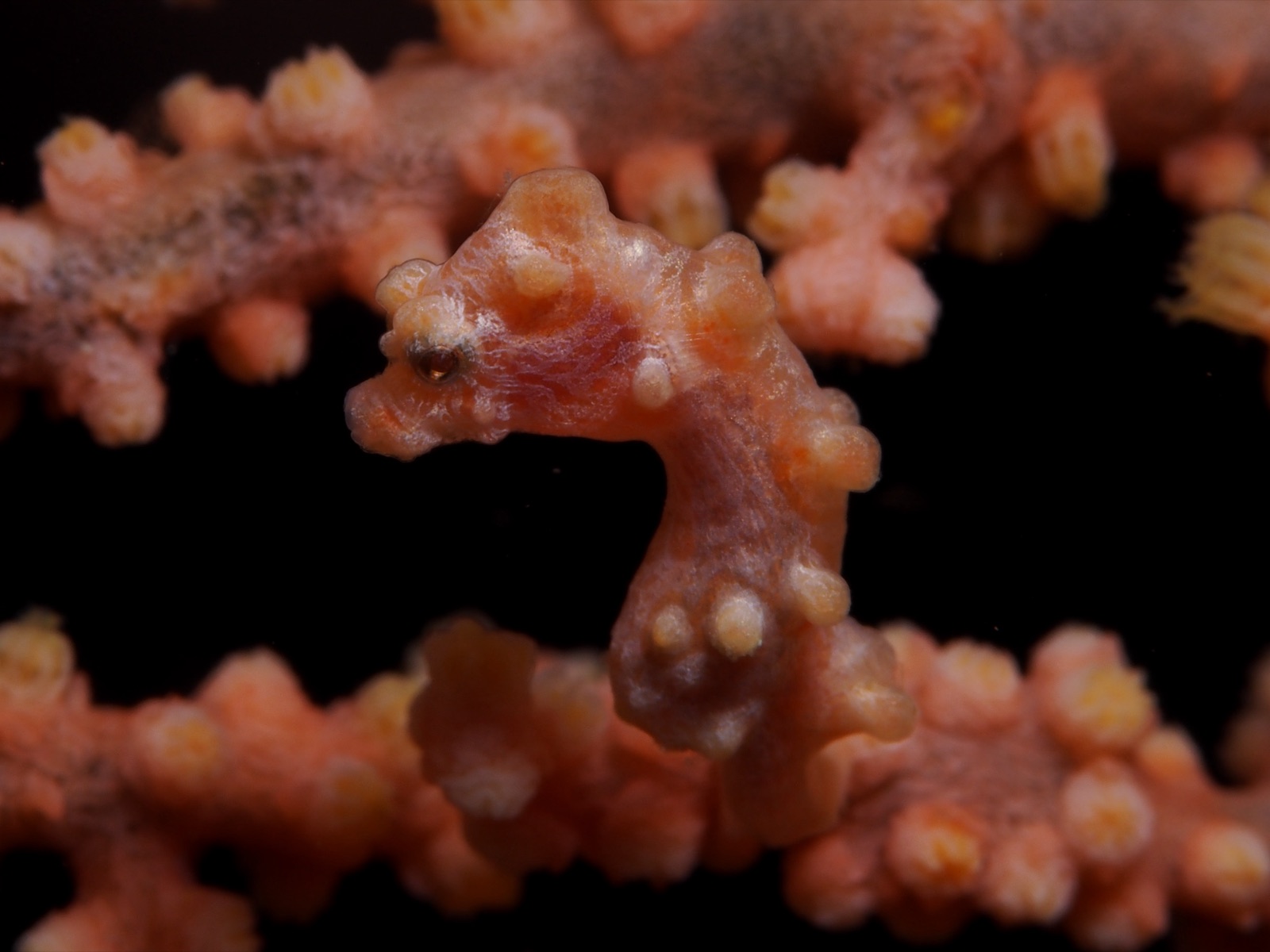
Seahorses
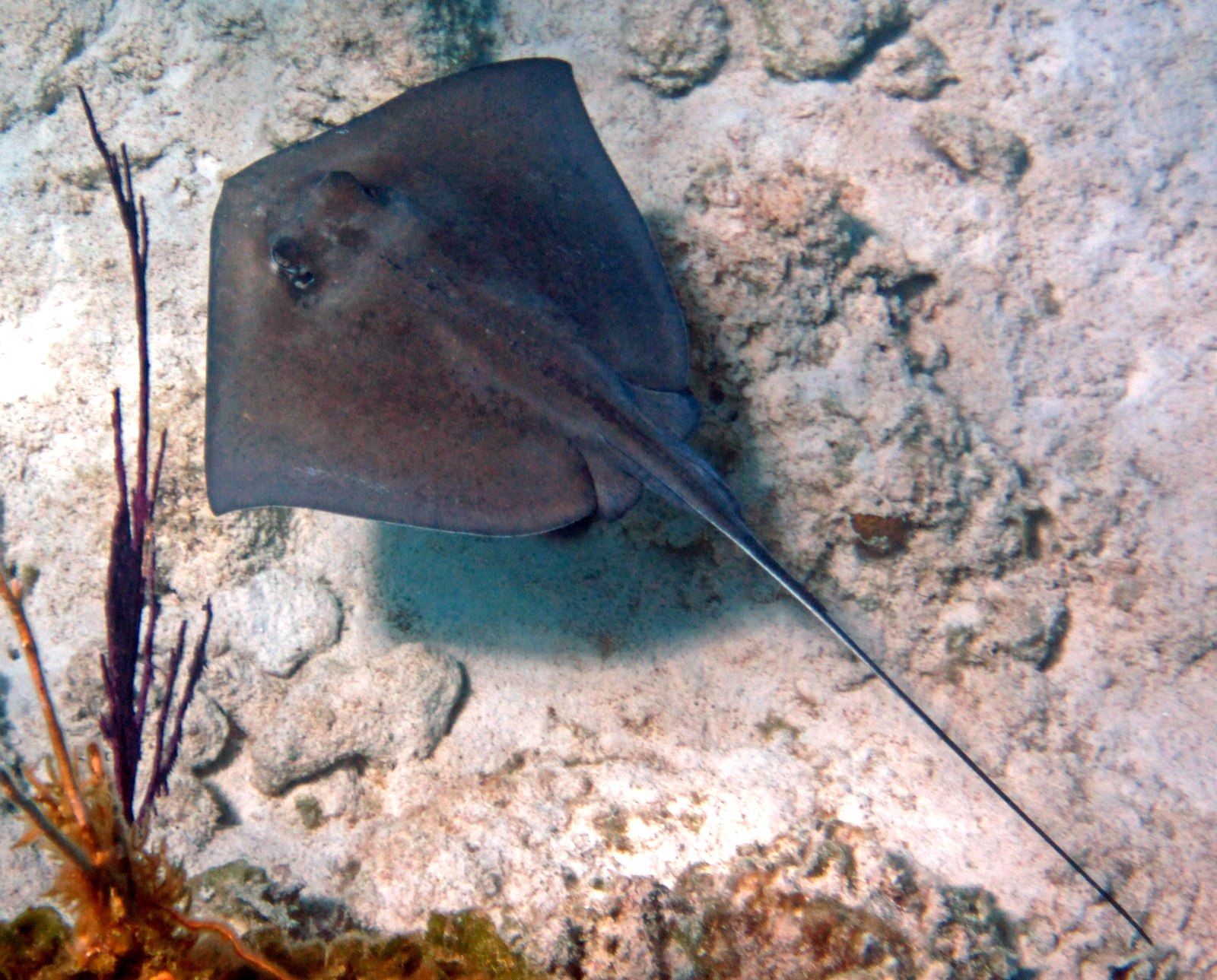
Southern Stingray
"Charted here" species were listed by our editors from the sources on this page. Counts are GBIF occurrence records: observations logged within about 5 km of the charted position since 1990, matched only against the species in our catalogue. They show what has been seen there, not a promise of what you will see.