
Big Rock
Depth is the range from the top of the site to its usual maximum; "recommended cert" is the mainstream-agency level operators usually ask for, not a legal rule. Currents and visibility change daily, so treat everything here as planning ranges.
Big Rock takes its name from the large lava rock outcrops on the nearby shore, along the south side of Utila toward its western end. The reef starts at about 3 to 5 m, with elkhorn and finger corals running parallel to the shoreline, and the bottom falls away fairly fast to sand between about 18 and 30 m. East of the mooring, red tube sponges and azure vase sponges line narrow channels that open onto sand and rubble, where sea slugs hide among drifting algae and mermaid's fans. To the west the reef breaks into rock and coral heads before giving way to sand colonized by garden eels and yellowhead jawfish. Critter hunters also find seahorses, pipefish, pipehorses, flounders and stingrays, and on lucky days stargazers or flying gurnards.
The moment you come for: Sand-slope critters such as seahorses, pipehorses and stargazers; garden eels and yellowhead jawfish; sponge-lined channels
Topography: Shallow elkhorn and finger coral reef over a steep sand slope
Current: Very light.
Know before you splash
Hazards: The sand slope drops quickly past 18 m while you search for critters; watch your depth and stay off the bottom.
Who you'll meet
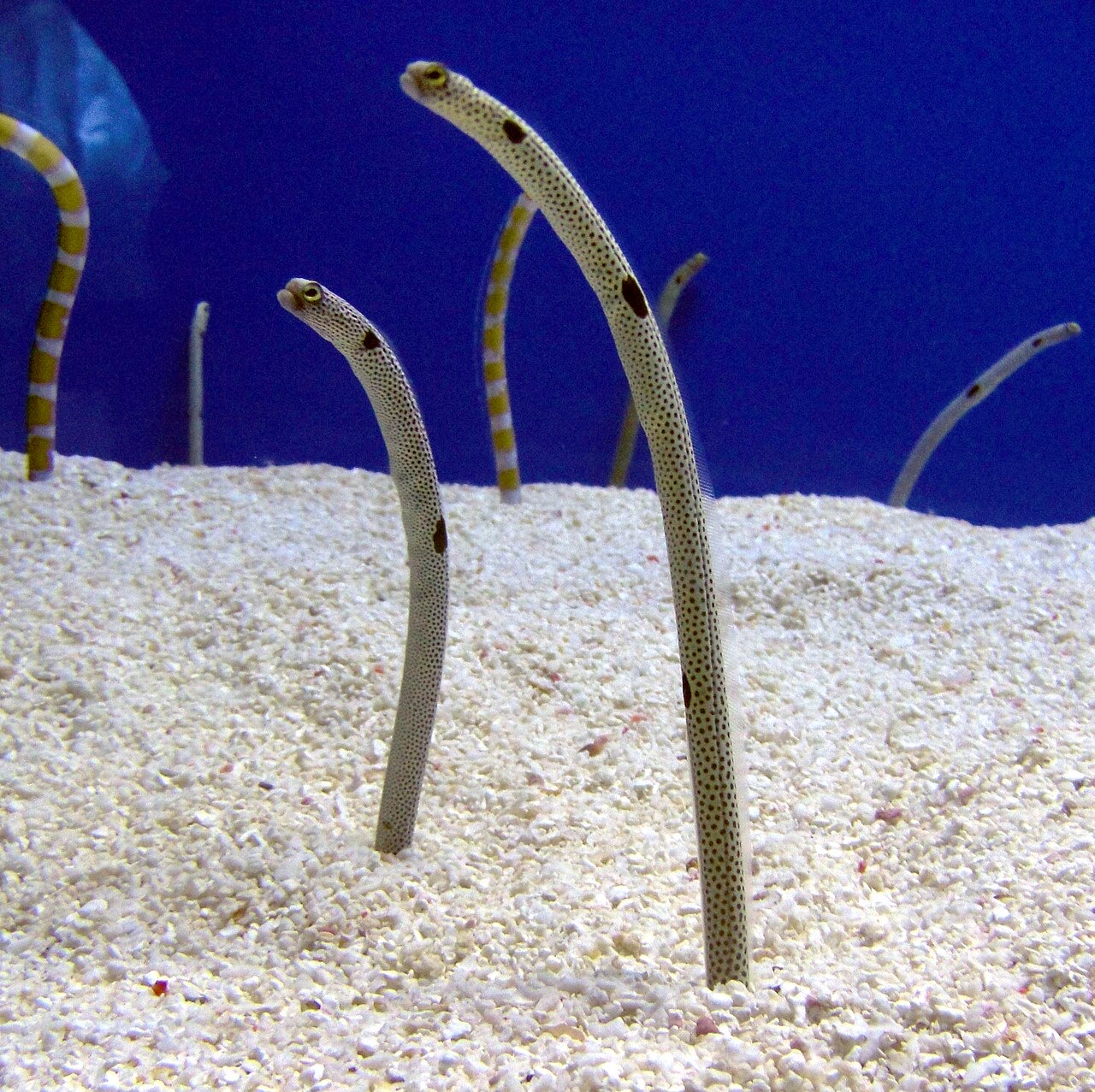
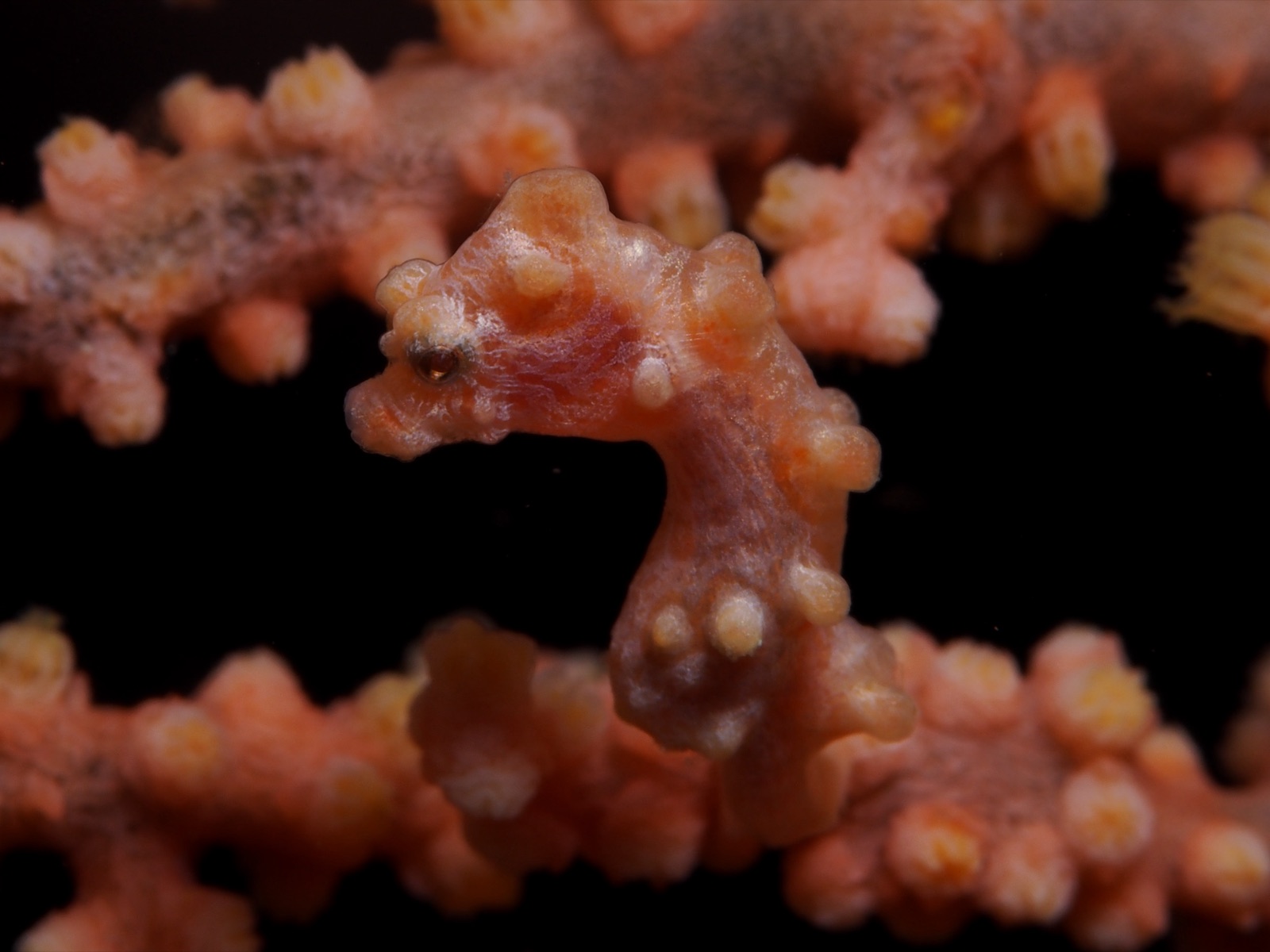
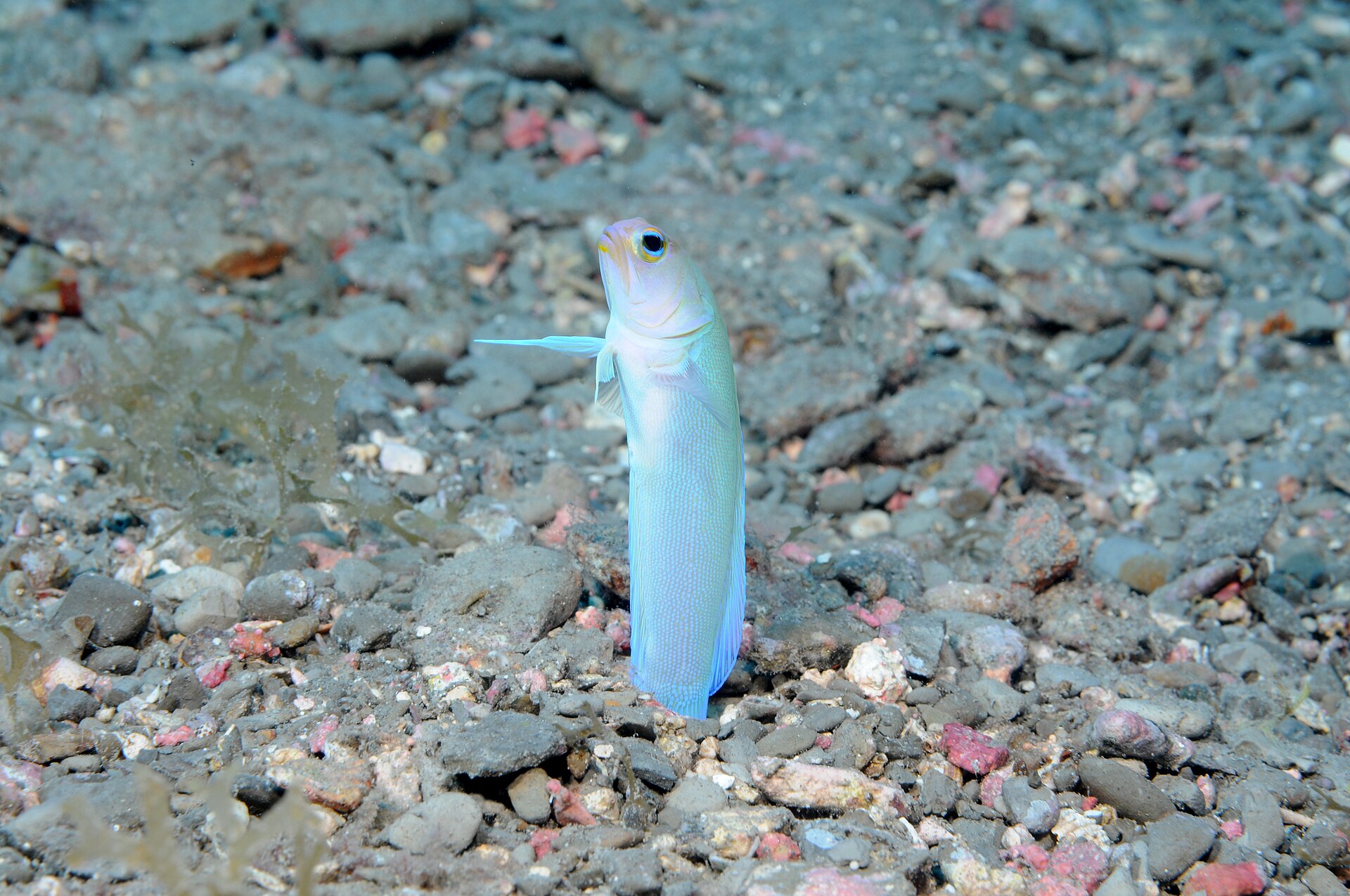
"Charted here" species were listed by our editors from the sources on this page. Counts are GBIF occurrence records: observations logged within about 5 km of the charted position since 1990, matched only against the species in our catalogue. They show what has been seen there, not a promise of what you will see.