Marine Mammals
Galápagos Fur Seal
Arctocephalus galapagoensis · Mammal, family Otariidae (eared seals)
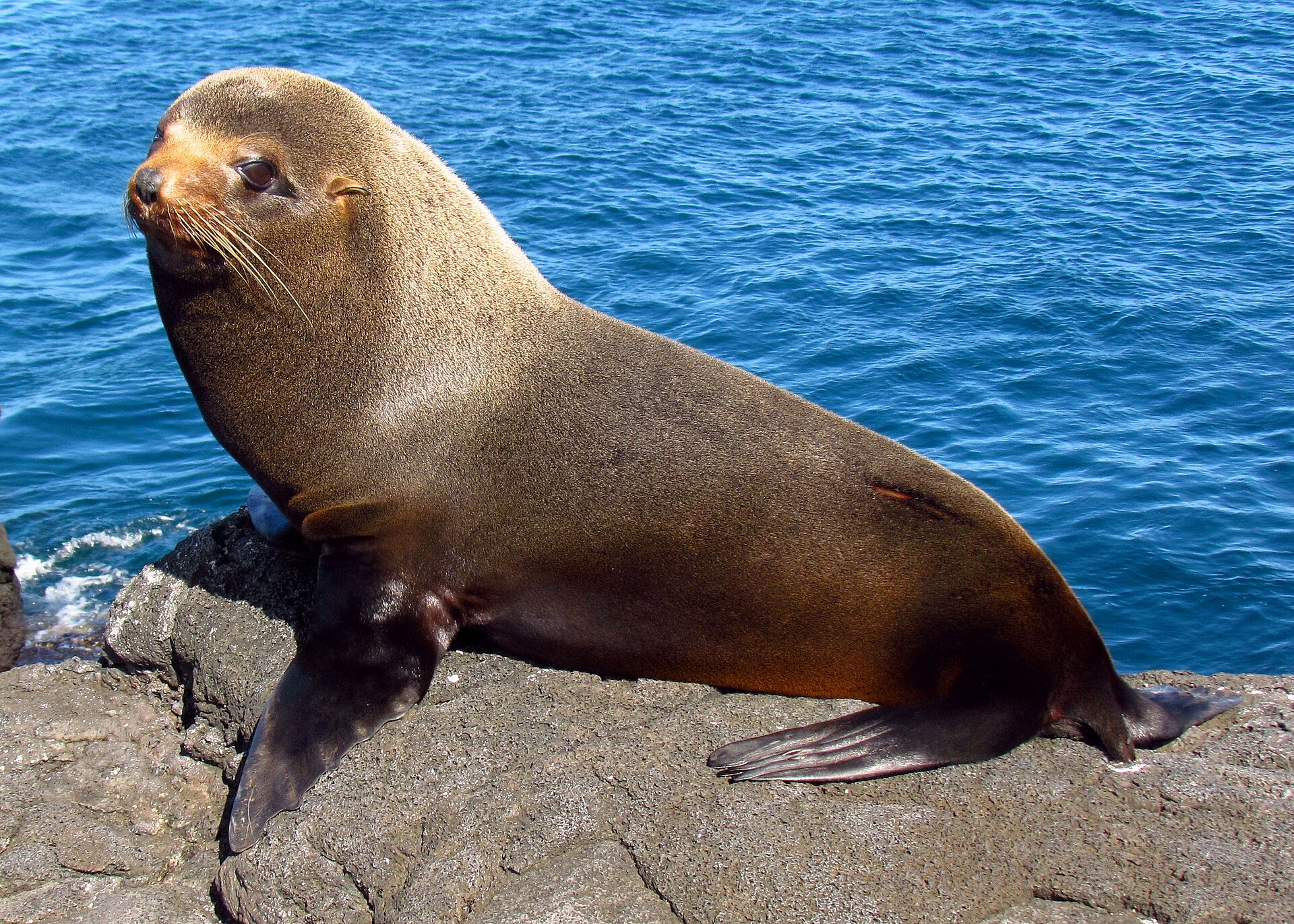
Galápagos fur seals wear a heavy fur coat on the equator, so they spend the day hiding from the sun in lava crevices and hunt in the dark. Compact and thick-furred, they are much smaller than the archipelago's sea lions: females average about 1.2 m and 27 kg, males about 1.5 m and 64 kg. Most breed in the western and northern islands, and at landing sites such as Puerto Egas on Santiago visitors find them resting among the lava and tide pools. Because they forage mostly at night, on trips that last around 16 hours, a fur seal slipping past a snorkeler is a real bonus rather than a given. They are endemic and Endangered, with roughly 10,000 mature animals, and their numbers swing hard from year to year with El Niño and La Niña. Park rules apply: two meters minimum, no flash, no feeding.
Where and when to see one
"Resident" means most dives at that destination encounter them; "seasonal" means reliably present in the listed months; anything else is a bonus, not a plan.
| Destination | Reliability | Months | Notes |
|---|---|---|---|
| Galápagos IslandsEcuador | Occasional | Year-round |
Best month, at a glance
| Month | Reliable destinations |
|---|---|
| January | Galápagos Islands |
| February | Galápagos Islands |
| March | Galápagos Islands |
| April | Galápagos Islands |
| May | Galápagos Islands |
| June | Galápagos Islands |
| July | Galápagos Islands |
| August | Galápagos Islands |
| September | Galápagos Islands |
| October | Galápagos Islands |
| November | Galápagos Islands |
| December | Galápagos Islands |
Understanding them
Habitat: Rocky volcanic shores, especially the shade of boulders, caves and lava ledges where the seals escape the equatorial heat. Feeding dives are usually 10–30 m deep.
Range: Endemic to the Galápagos Islands, breeding mostly in the western and northern parts of the archipelago; in unusual years a few haul out, or even breed briefly, outside the islands.
Behavior: Spends the hot day resting in shade and goes to sea at night, so most sightings are of seals dozing in lava crevices and tide pools; meeting one in the water is a bonus.
Diet: Small squid and schooling fish, caught mainly at night on foraging trips that typically last about 16 hours.
Size: typically around 1.2 m; documented up to 1.6 m (body length; females average about 1.2 m and 27 kg, males about 1.5 m and 64 kg, with a recorded maximum of 1.6 m).
How to behave around one
Galápagos National Park rules apply on land and in the water: visit only with a licensed naturalist guide, stay at least 2 m from wildlife even when animals approach you, never feed them, and no flash photography. In the water, keep still and let a curious seal come and go.
Conservation
Endangered (2015 assessment) and endemic, with an estimated 10,000 or so mature animals. Numbers fluctuate strongly between years with El Niño and La Niña events, though recent data suggest some increase.
Watch
From the official channels

Catch this wave 🌊 | #montereybayaquarium #reeflife

Giant Pacific Octopus

Live African Penguin Cam After Hours | Monterey Bay Aquarium
Videos are embedded links to their creators' own channels. We host nothing and credit everything.