Mosquera
Depth is the range from the top of the site to its usual maximum; "recommended cert" is the mainstream-agency level operators usually ask for, not a legal rule. Currents and visibility change daily, so treat everything here as planning ranges.
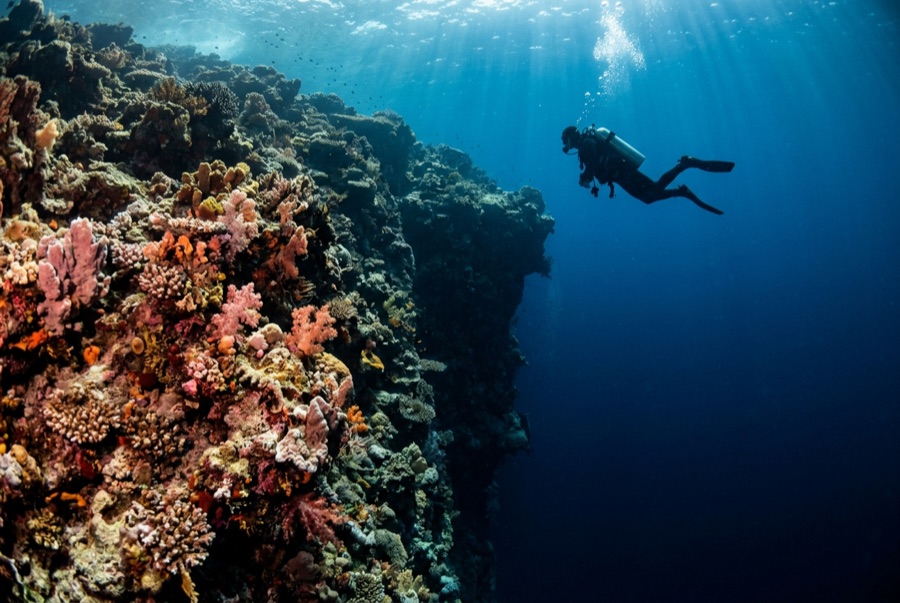
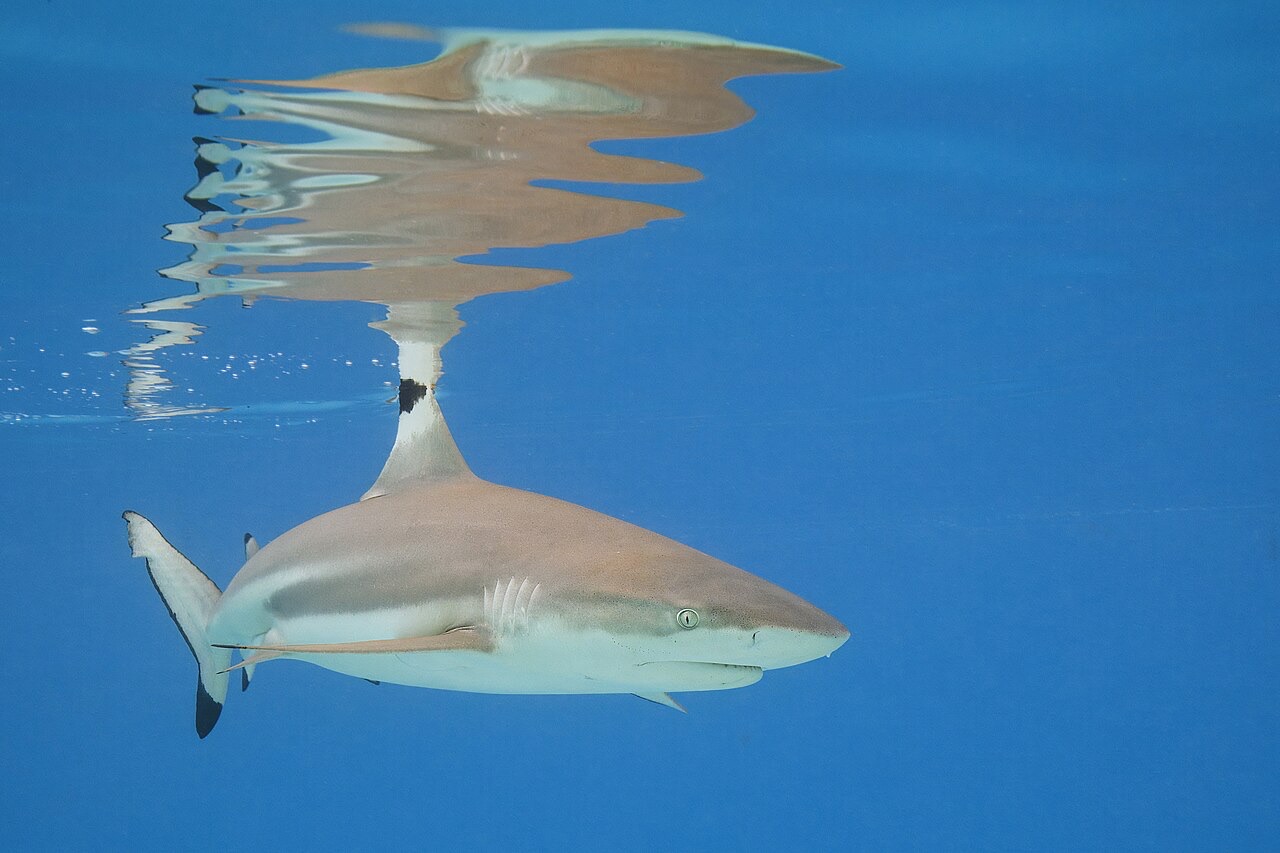
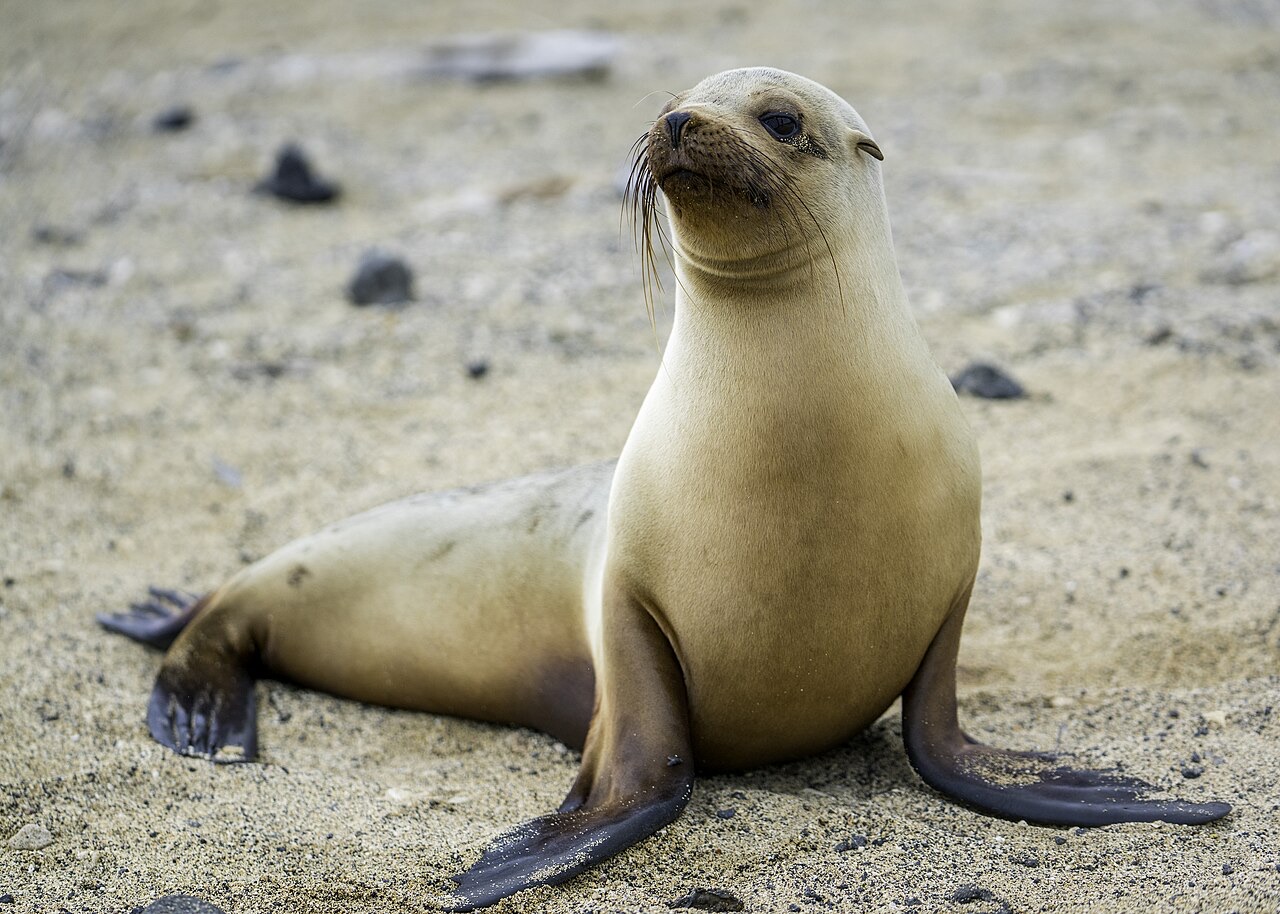
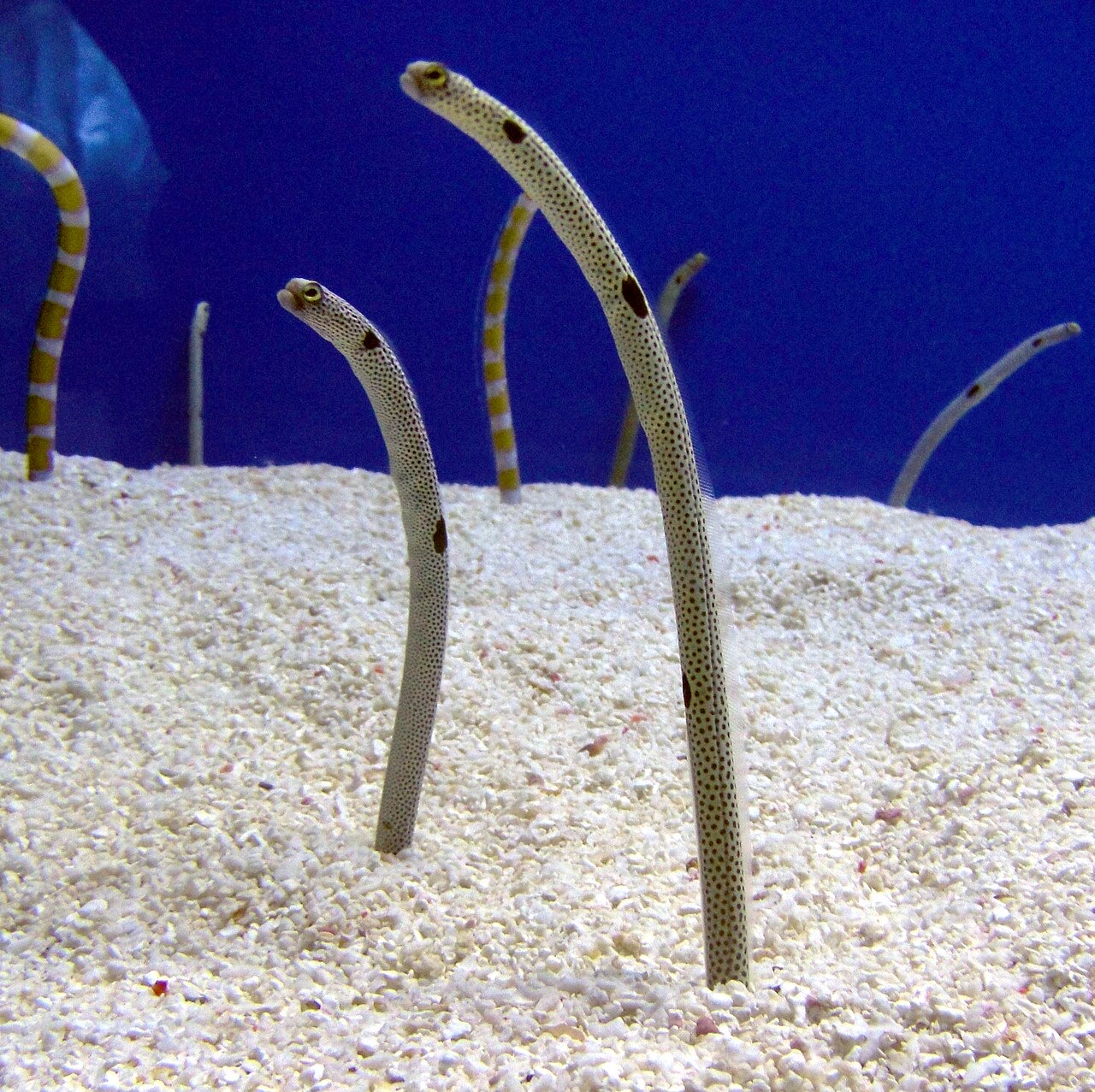
Mosquera is a low sandy islet off Baltra, and a large sea lion colony occupies the beach on its western side. Divers head for the east side, where a boulder slope and a short mini-wall lead to a vertical wall whose top lies at about 15 to 22 m, hung with black coral above a bottom of rock and sand. Galapagos garden eels cover the sandy stretches, grunts and snappers crowd the drop-off, and barracuda and bigeye jacks school in open water. Hammerheads, manta and mobula rays, and blacktip and whitetip reef sharks are all on the sightings list. The islet is close enough to Baltra that boats often use it for check dives.
The moment you come for: Black-coral wall from about 15 m; garden eels and schooling barracuda; sea lion colony on the beach
Topography: Boulder slope and mini-wall leading to a vertical wall over rock and sand
Current: Usually mild over the wall, mostly from the east, but strong in the channels north and south of the islet.
Know before you splash
Hazards: Strong current in the channels at either end of the islet; wall continues below the planned depth.
Permits & rules: Scuba in the Galápagos Marine Reserve must be led by a park-licensed naturalist guide, one guide for every eight divers, and visits run between 06:00 and 17:00.
Marine forecast, next 5 days
Model forecast for the open sea near the site, for daytime hours (6 am to 6 pm local). It says nothing about visibility or marine life. Sea surface now: 29 °C / 84 °F (NOAA OISST satellite analysis, 18 Nov)
| Day | Surface | Waves (highest) | Swell | Wind |
|---|---|---|---|---|
| Wed 25 Nov | Slight | 0.8 m / 3 ft19 s · from SSW · slight | 0.6 m7 s · from SSE | 6–8 ktfrom S · gentle breeze (F3) |
| Thu 26 Nov | Slight | 0.9 m / 3 ft16 s · from SSW · slight | 0.6 m8 s · from SSE | 3 ktfrom ESE · light breeze (F2) |
| Fri 27 Nov | Slight | 0.8 m / 3 ft14 s · from SSW · slight | 0.7 m9 s · from SSE | 4–5 ktfrom SE · light breeze (F2) |
| Sat 28 Nov | Slight | 0.9 m / 3 ft10 s · from NNW · slight | 0.6 m9 s · from S | 2–3 ktfrom SE · light air (F1) |
| Sun 29 Nov | Slight | 0.9 m / 3 ft19 s · from NW · slight | 0.6 m8 s · from SSE | 4–7 ktfrom S · gentle breeze (F3) |
Waves and swell: WAVEWATCH III global wave model (0.5°), run by the University of Hawaiʻi / PacIOOS with NOAA GFS winds; model cell 26.7 km from the site; heights are the highest daytime significant wave height, directions are where the waves come from. Wind: NOAA GFS (0.5°), 10 m wind, daytime average to highest, at a grid point 26.7 km from the site; gusts are stronger. Fetched 25 Nov 2026, 06:01 UTC from the latest model runs served by PacIOOS, refreshed daily. PacIOOS WW3 ↗ PacIOOS GFS ↗ How this is made →
Month by month at this site
Sea temperature, plankton and open-sea waves for each month, computed for this site from satellite and ocean-model data and averaged over recent years.
| Month | Sea surface | Plankton | Open-sea waves |
|---|---|---|---|
| January | 25 °C / 77 °F23–27 °C | 0.3 mg/m³ | 0.7–1.1 m2–3 ft · slight |
| February | 27 °C / 80 °F25–28 °C | 0.29 mg/m³Less plankton | 0.7–1.1 m2–3 ft · slight |
| March | 27 °C / 81 °F27–28 °C | 0.26 mg/m³Less plankton | 0.7–1.1 m2–4 ft · slight |
| April | 26 °C / 79 °F25–28 °C | 0.28 mg/m³Less plankton | 0.8–1.1 m3–3 ft · slight |
| May | 25 °C / 77 °F24–27 °C | 0.3 mg/m³ | 0.8–1.2 m3–4 ft · slight |
| JuneEditors' best month | 24 °C / 75 °F23–27 °C | 0.33 mg/m³ | 0.8–1.2 m3–4 ft · slight |
| JulyEditors' best month | 23 °C / 74 °F22–26 °C | 0.32 mg/m³ | 0.8–1.3 m3–4 ft · slight |
| AugustEditors' best month | 22 °C / 72 °F21–25 °C | 0.36 mg/m³More plankton | 0.8–1.3 m3–4 ft · slight |
| SeptemberEditors' best month | 22 °C / 72 °F21–25 °C | 0.41 mg/m³More plankton | 0.9–1.3 m3–4 ft · slight |
| OctoberEditors' best month | 23 °C / 73 °F21–25 °C | 0.33 mg/m³More plankton | 0.8–1.2 m3–4 ft · slight |
| NovemberEditors' best month | 23 °C / 73 °F22–26 °C | 0.3 mg/m³Less plankton | 0.8–1.1 m2–4 ft · slight |
| December | 23 °C / 74 °F22–26 °C | 0.34 mg/m³More plankton | 0.7–1.1 m2–3 ft · slight |
Sea surface temperature: NOAA OISST v2.1 monthly means, 2016–2025 (NOAA NCEI, served by NOAA PSL), from a 25 km grid cell 11.2 km from the site. Large figure: the ten-year average for that month; small figure: its coolest and warmest year. NOAA PSL ↗
Plankton: chlorophyll-a from the NOAA S-NPP VIIRS satellite, 4 km monthly, 2016–2025 (NOAA STAR / CoastWatch): the median of the years with a clear view, from a pixel 8.2 km away over water at least 30 m deep (depth from NOAA ETOPO1), because over shallow reef and sand the seabed makes the satellite read too high. More plankton usually means greener, less clear water; suspended sediment (near river mouths and shallow banks) can push the reading up too, so treat a high value as a sign of murkier water rather than a plankton count. "Less" and "more plankton" mark the third of months at either end of this site's own year; they appear only where the greenest month has at least 1.5 times the chlorophyll of the clearest. NOAA CoastWatch ↗
Open-sea waves: significant wave height from the WAVEWATCH III global wave model (0.5°), run by the University of Hawaiʻi / PacIOOS with NOAA GFS winds, 2017–2025, at a model cell 26.7 km from the site. The range covers the middle 80% of days (10th to 90th percentile); the word is the WMO sea-state term for a typical day. PacIOOS ↗
A dash means too few years of data for that month (cloud, winter darkness or sea ice): we leave it empty rather than estimate it. How these are computed →
Coral heat stress this week
Risk of multi-species mortality. Degree Heating Weeks add up how far and how long the sea has run at least 1 °C above its usual warmest-month temperature over the past 12 weeks; NOAA Coral Reef Watch puts the risk of reef-wide bleaching at 4 °C-weeks and of heat-sensitive corals dying at 8. Reading from a 5 km satellite pixel 2.3 km from the site, refreshed weekly. Source: NOAA Coral Reef Watch, daily global 5 km product, version 3.1. NOAA Coral Reef Watch ↗
Who you'll meet
Blacktip Reef Shark
Galápagos Sea Lion
Garden Eel
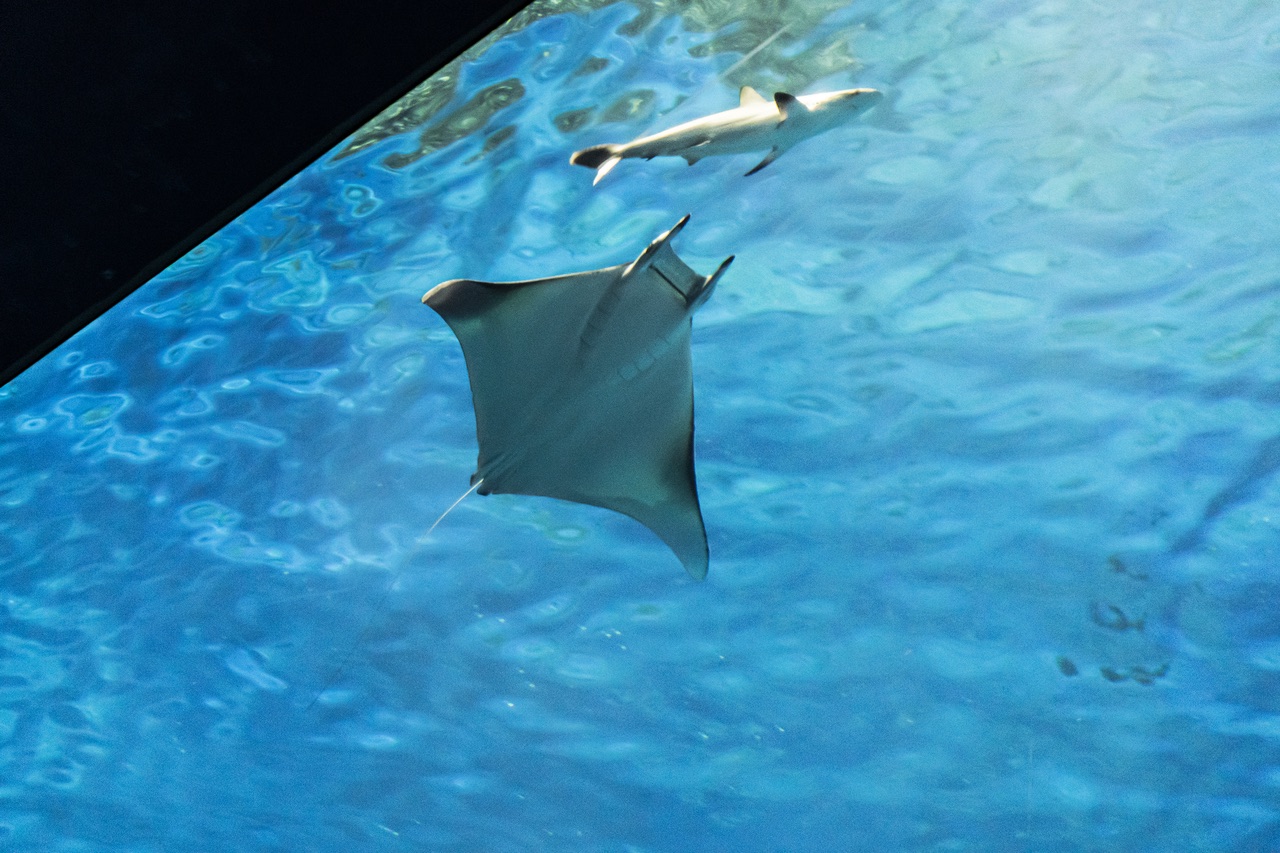
Mobula (Devil) Ray
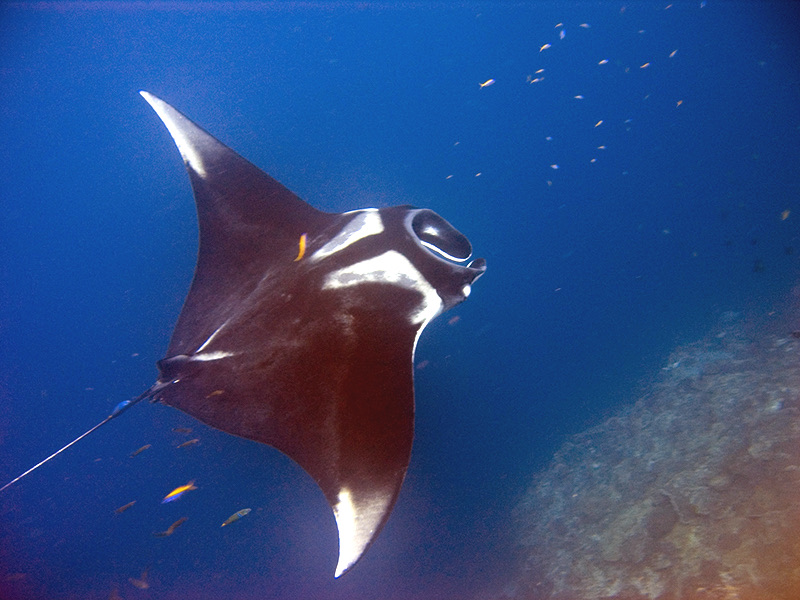
Oceanic Manta Ray
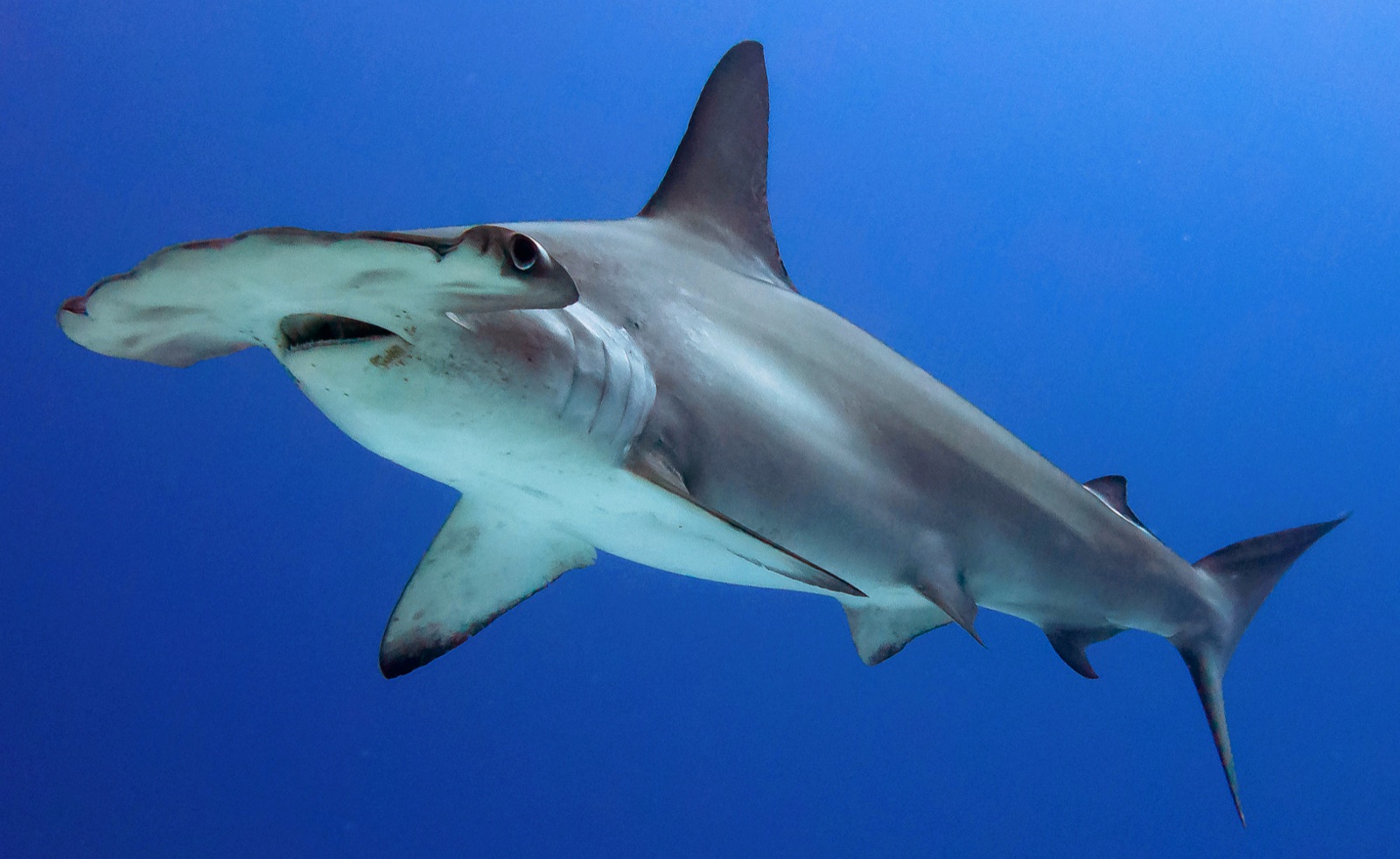
Scalloped Hammerhead
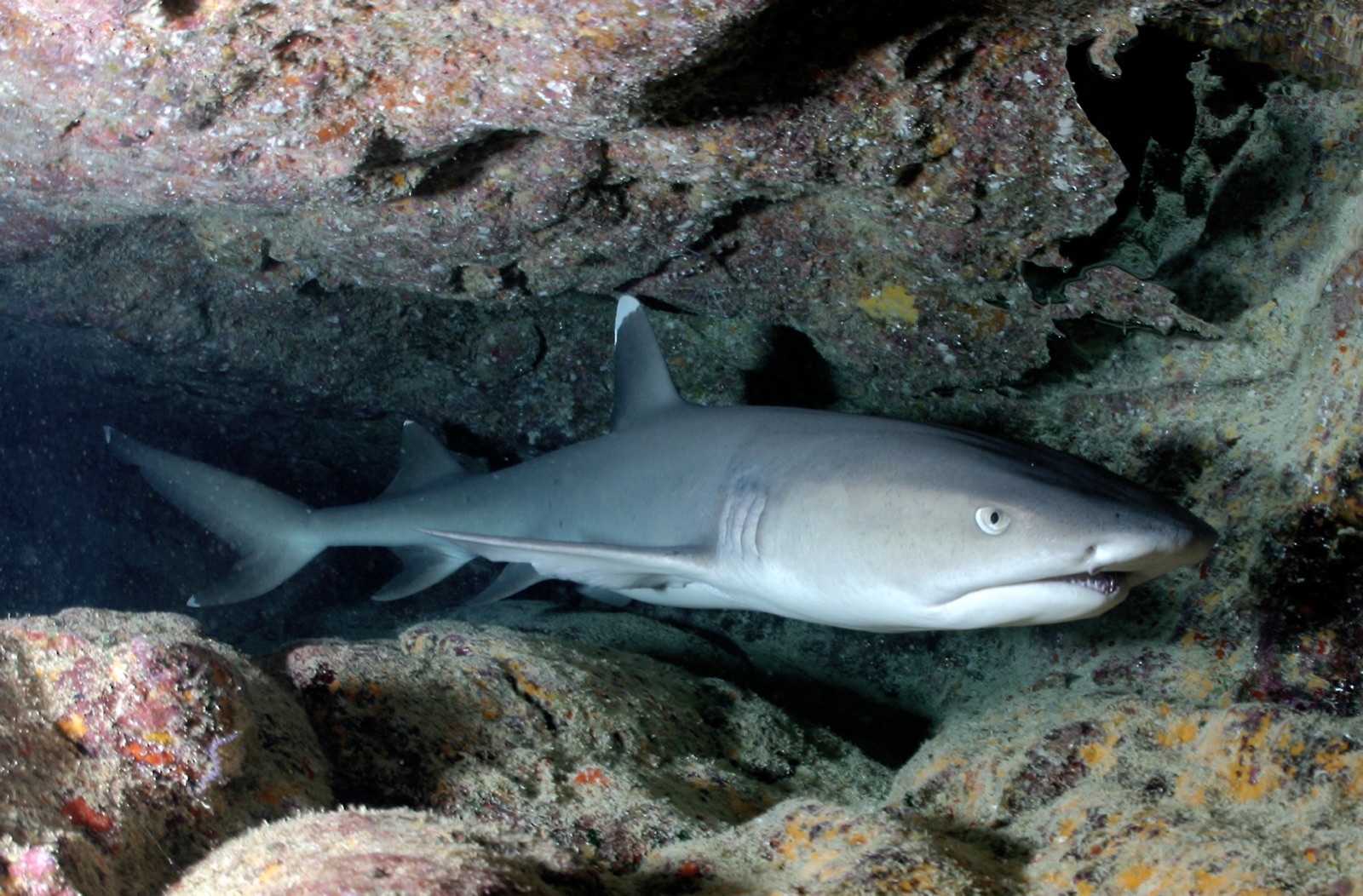
Whitetip Reef Shark
"Charted here" species were listed by our editors from the sources on this page. Counts are GBIF occurrence records: observations logged within about 5 km of the charted position since 1990, matched only against the species in our catalogue. They show what has been seen there, not a promise of what you will see.
Recently seen nearby
Verified public records of marine life within 5 km of this site over the last 12 months (17 Nov 2025 to 16 Nov 2026), from iNaturalist, GBIF and OBIS. They show what people recorded near the site, not a promise of what you will see on your dive.
| Species | Records | Latest record | Months recorded |
|---|---|---|---|
| Galápagos Sea LionZalophus wollebaekiOur species guide → | 601 in 30 days | 18 Oct 2026 by Jonathan Foise ↗ iNaturalist · CC BY |
J
F
M
A
M
J
J
A
S
O
N
D
|
| Sally Lightfoot CrabGrapsus grapsus | 23 | 8 Sep 2026 by Deborah E Barber ↗ iNaturalist · CC BY-NC |
J
F
M
A
M
J
J
A
S
O
N
D
|
| Razor SurgeonfishPrionurus laticlavius | 191 in 30 days | 23 Oct 2026 by Kaveer B ↗ iNaturalist · CC BY-NC |
J
F
M
A
M
J
J
A
S
O
N
D
|
| Blue-barred ParrotfishScarus ghobban | 191 in 30 days | 23 Oct 2026 by Kaveer B ↗ iNaturalist · CC BY-NC |
J
F
M
A
M
J
J
A
S
O
N
D
|
| Whitetip Reef SharkTriaenodon obesusOur species guide → | 182 in 30 days | 23 Oct 2026 by Kaveer B ↗ iNaturalist · CC BY-NC |
J
F
M
A
M
J
J
A
S
O
N
D
|
| King AngelfishHolacanthus passer | 171 in 30 days | 23 Oct 2026 by Kaveer B ↗ iNaturalist · CC BY-NC |
J
F
M
A
M
J
J
A
S
O
N
D
|
| Mexican HogfishBodianus diplotaenia | 161 in 30 days | 23 Oct 2026 by Kaveer B ↗ iNaturalist · CC BY-NC |
J
F
M
A
M
J
J
A
S
O
N
D
|
| Pacific CreolefishCephalopholis colonus | 132 in 30 days | 23 Oct 2026 by Kaveer B ↗ iNaturalist · CC BY-NC |
J
F
M
A
M
J
J
A
S
O
N
D
|
| Blue-and-gold SnapperLutjanus viridis | 132 in 30 days | 23 Oct 2026 by Kaveer B ↗ iNaturalist · CC BY-NC |
J
F
M
A
M
J
J
A
S
O
N
D
|
| Blue Sea StarPhataria unifascialis | 102 in 30 days | 23 Oct 2026 by Kaveer B ↗ iNaturalist · CC BY-NC |
J
F
M
A
M
J
J
A
S
O
N
D
|
| Barred SerranoSerranus psittacinus | 104 in 30 days | 23 Oct 2026 by Kaveer B ↗ iNaturalist · CC BY-NC |
J
F
M
A
M
J
J
A
S
O
N
D
|
| Bullseye PufferSphoeroides annulatus | 101 in 30 days | 23 Oct 2026 by Kaveer B ↗ iNaturalist · CC BY-NC |
J
F
M
A
M
J
J
A
S
O
N
D
|
Also recorded within 5 km
What counts: research-grade iNaturalist observations (the identification confirmed by other observers) that the observer shared under CC0, CC BY or CC BY-NC, and human sightings from GBIF and OBIS datasets under the same licences. Only marine and brackish-water species as flagged by the World Register of Marine Species (WoRMS), from the groups divers look for: fishes, sharks and rays, marine mammals, sea turtles, sea snakes, octopus and squid, sea slugs, crabs, shrimps and lobsters, sea stars and urchins, corals, anemones and jellyfish. Records whose own location is less certain than the radius are left out, and the same animal on the same day and spot in two databases counts once. Where we have a guide to the animal or its group, the row links to it. Refreshed weekly.
Records: iNaturalist research-grade observations ↗ (484, 61 observers; each under its observer's licence, shown per row) · Observation.org, Nature data from around the World ↗ (Observation.org, CC BY-NC, via GBIF.org; 1) · Search these records on GBIF.org ↗
Retrieved through the iNaturalist, GBIF and OBIS APIs on 16 Nov 2026; marine status from WoRMS (CC BY 4.0). How these are collected →