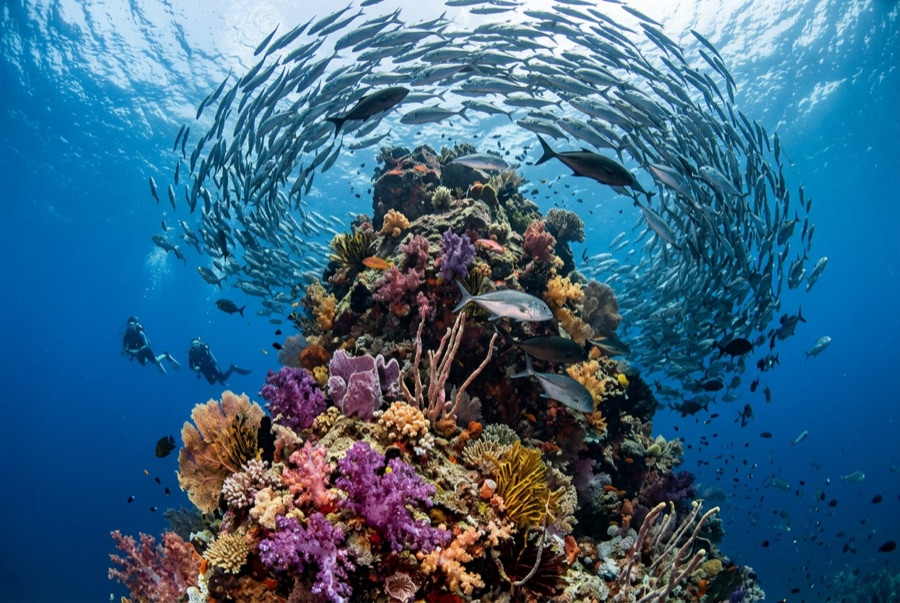
Boduhithi Thila
Depth is the range from the top of the site to its usual maximum; "recommended cert" is the mainstream-agency level operators usually ask for, not a legal rule. Currents and visibility change daily, so treat everything here as planning ranges.
Boduhithi Thila is a long, oval pinnacle sitting inside Hithi Kandu on North Malé's western side, and between December and April it becomes one of the atoll's busiest manta stations. The reef top lies at 8 to 10 meters, and three sandy bays cut into it between 15 and 25 meters; guides call this stretch the Manta Road, because reef mantas queue there for cleaning, sometimes ten or more at a time. Divers settle on the sand and let the animals circle. The southern end carries the best reef, with a large cave at about 17 meters where nurse sharks rest, yellow corals in the deeper overhangs, and lobsters tucked into cracks. Channel current can make it demanding. The Maldives declared the thila a protected area in 2024.
The moment you come for: Manta cleaning in the sandy bays from December to April; cave at 17 m with resting nurse sharks; channel pelagics on the outer edges
Topography: Large oval thila with a reef top at 8 to 10 m, sandy bays at 15 to 25 m and overhangs on the south side
Current: The thila sits inside a channel, so current can build and make the dive demanding.
Entry: A long boat ride to the thila inside Hithi Kandu on the atoll's western side; resort centers often make it a full-day trip in manta season.
Know before you splash
Hazards: Channel current that can strengthen during the dive; keep low and still on the sand so cleaning mantas are not chased off.
Conservation: Declared a protected area (Category 7, sustainable use) by the Maldives government in August 2024.
Who you'll meet
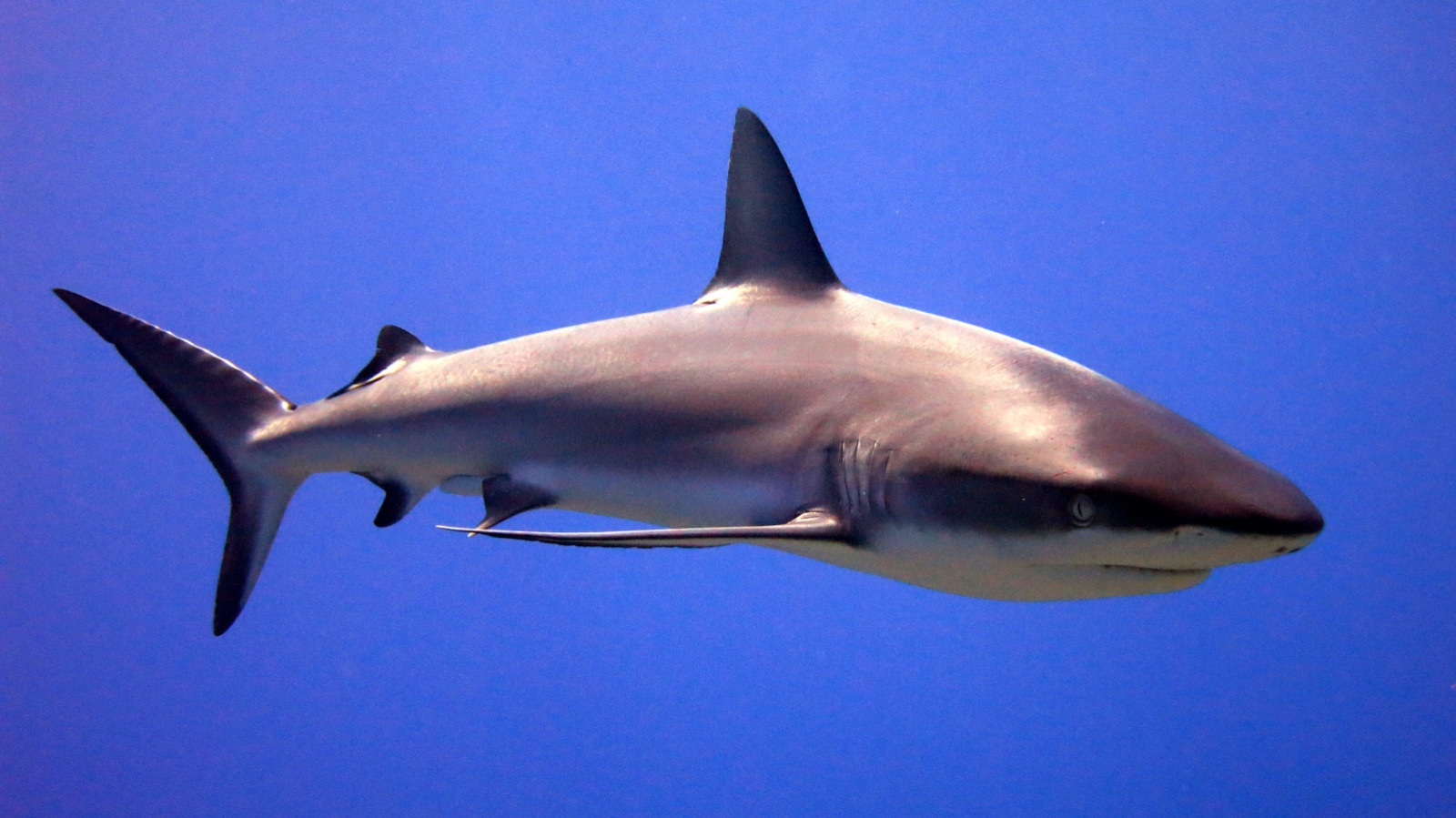
Grey Reef Shark
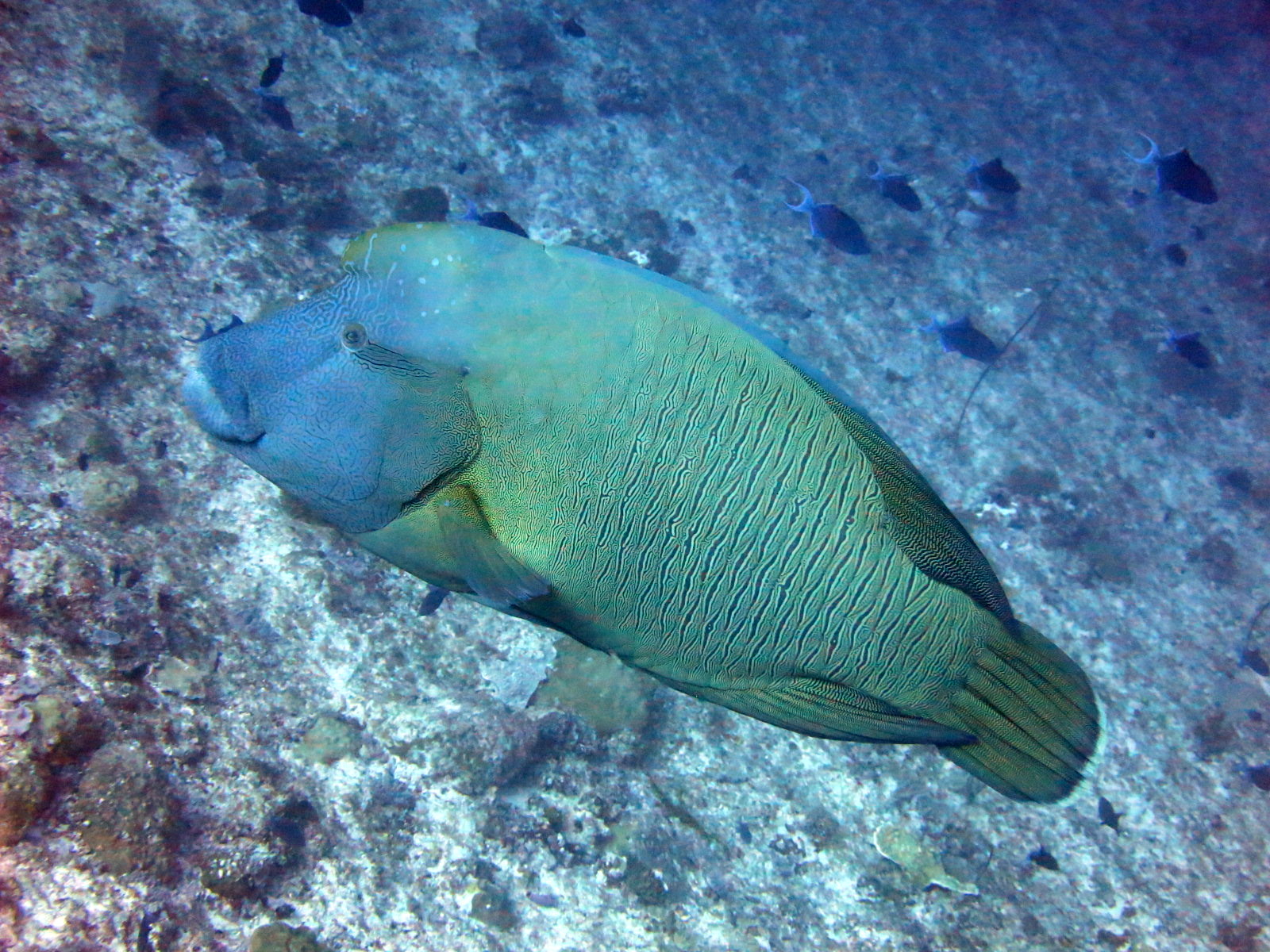
Napoleon (Humphead) Wrasse
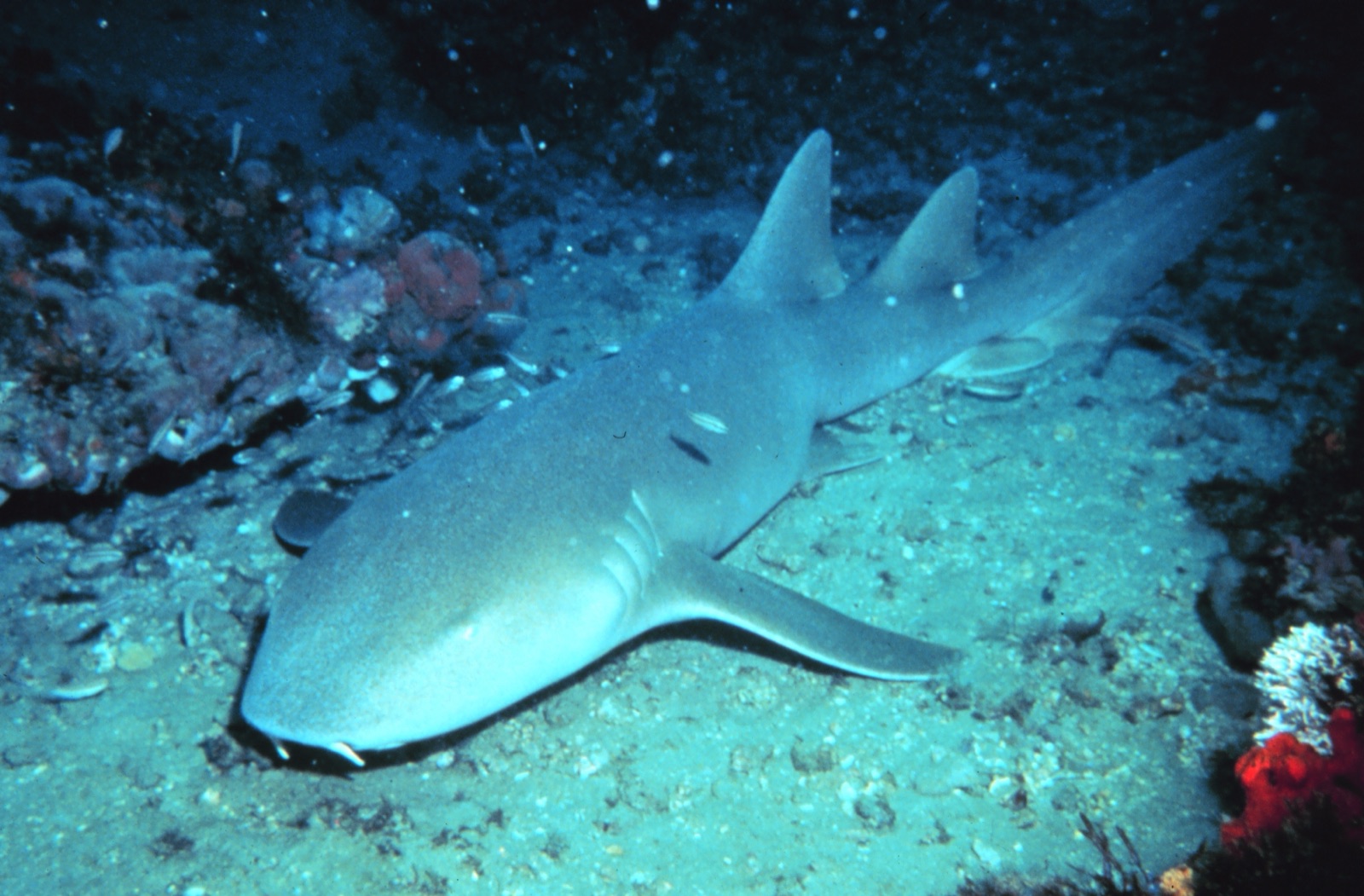
Nurse Shark
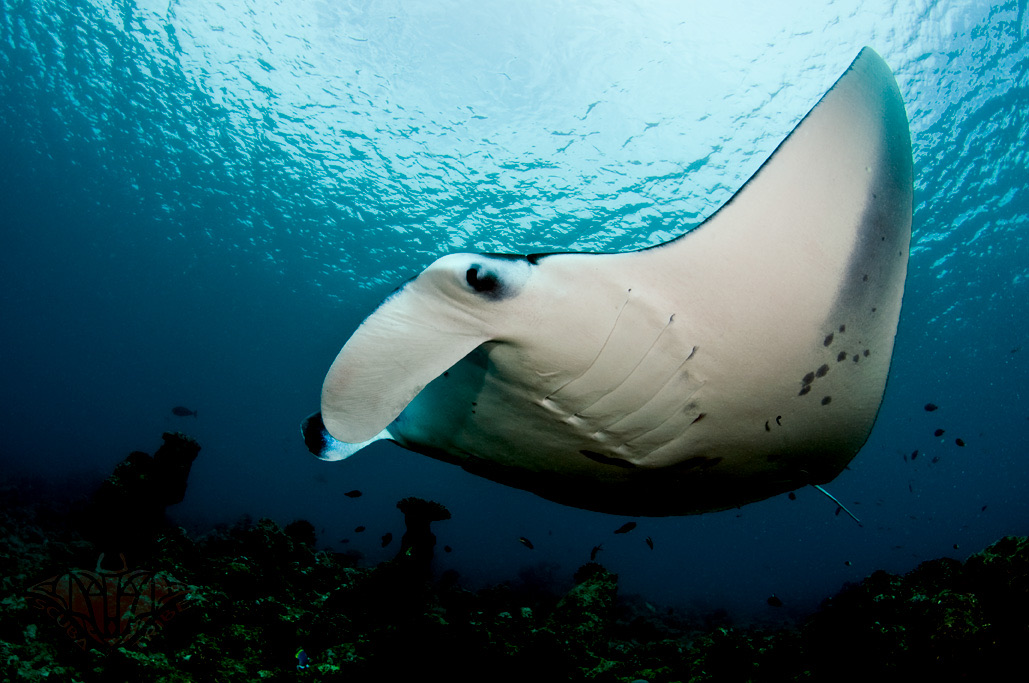
Reef Manta Ray
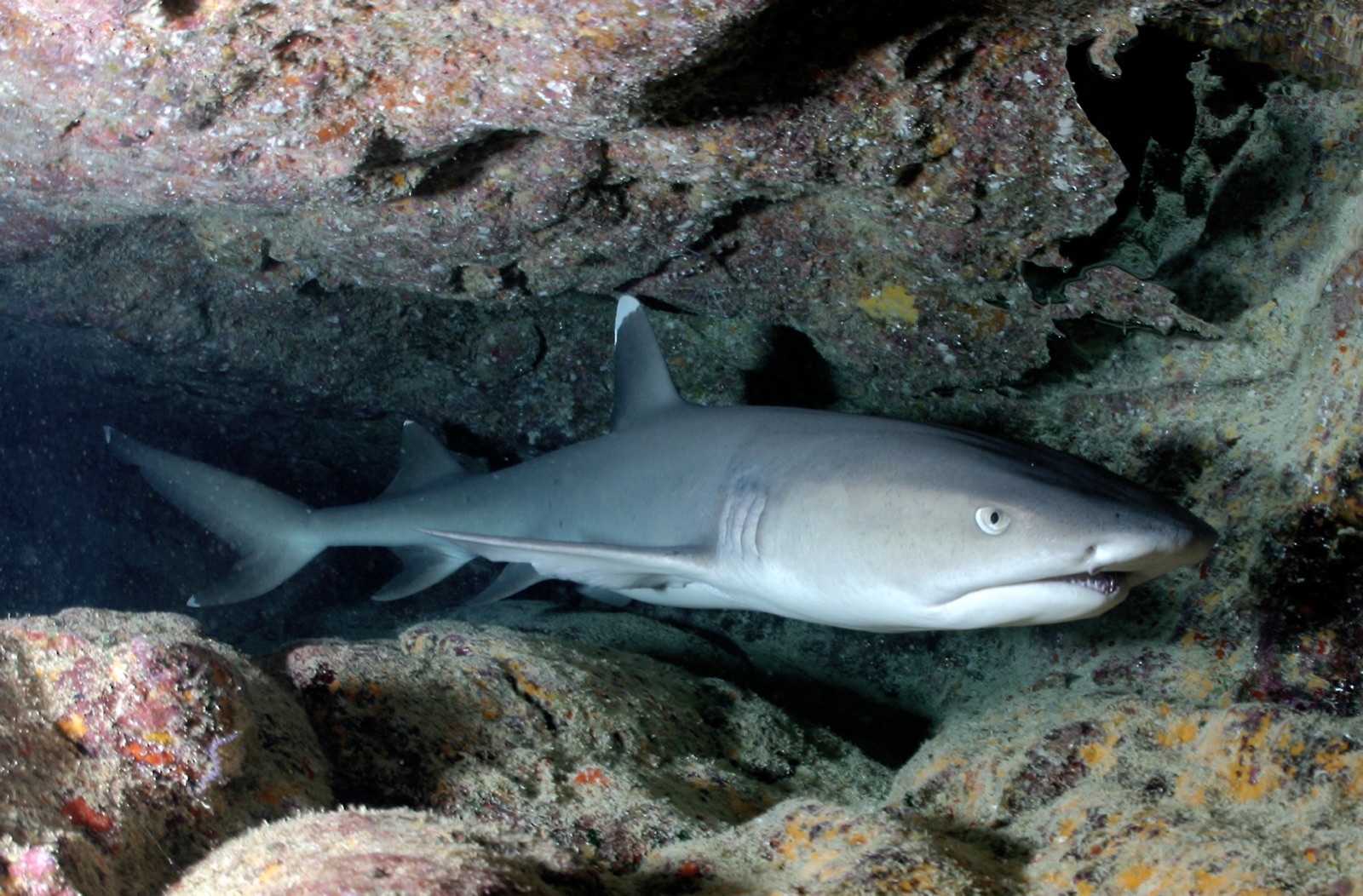
Whitetip Reef Shark
"Charted here" species were listed by our editors from the sources on this page. Counts are GBIF occurrence records: observations logged within about 5 km of the charted position since 1990, matched only against the species in our catalogue. They show what has been seen there, not a promise of what you will see.