Rays
Reef Manta Ray
Mobula alfredi · Cartilaginous fish, family Mobulidae
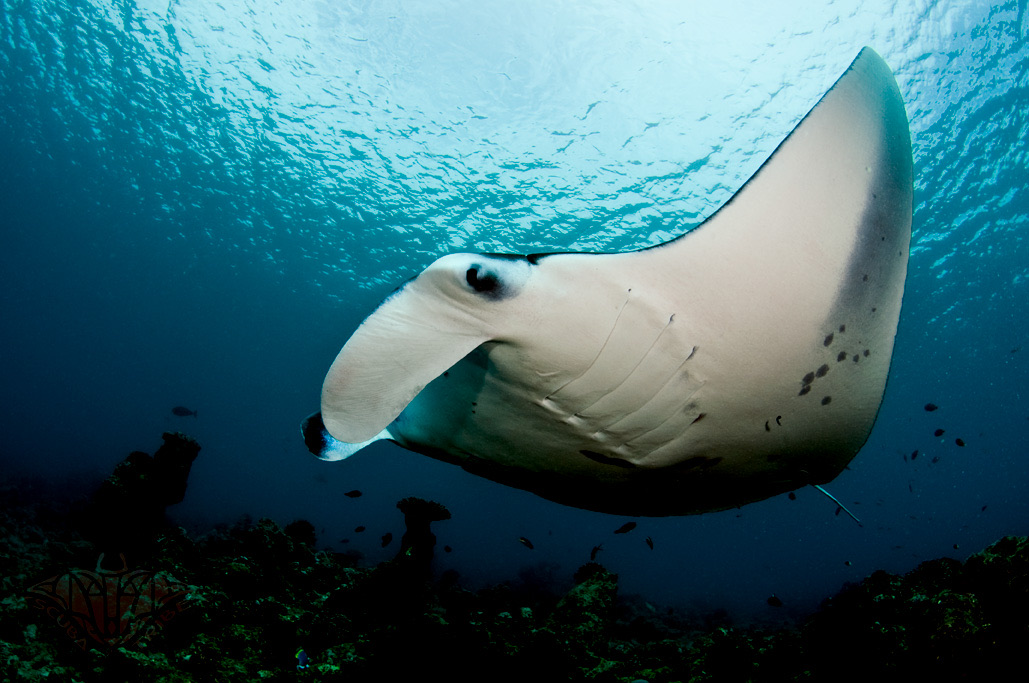
Reef mantas supply the dependable magic of the manta world. Because individuals are faithful to cleaning stations and seasonal feeding bays, a well-timed diver can be nearly promised the sight: black wings rising over a coral head, wrasses fussing at gills, the animal tilting to present its belly like a signature. In Hanifaru Bay's monsoon soup they gather by the dozen and sometimes the hundred, chain-feeding mouth-to-tail. Off Kona they somersault through plankton drawn to dive lights, close enough to feel displaced water. Researchers know many by name from belly-spot patterns, long acquaintance that has made this species the tested proof that a manta is worth far more alive than landed.
在哪里、什么时候能见到
"常驻"表示在该目的地潜水时大多数情况下都能遇见它们;"季节性"表示在所列月份内可靠出现;其他任何情况都是意外惊喜,而非计划中的保障。
| 目的地 | 可靠性 | 月份 | 备注 |
|---|---|---|---|
| KomodoIndonesia | Resident: seen on most dives | 全年皆宜 | |
| Ari AtollMaldives | Resident: seen on most dives | 全年皆宜 | |
| Ningaloo ReefAustralia | Resident: seen on most dives | 全年皆宜 | |
| Kona, HawaiʻiUnited States | Resident: seen on most dives | 全年皆宜 | |
| Tofo BeachMozambique | Resident: seen on most dives | 全年皆宜 | |
| YapFederated States of Micronesia | Resident: seen on most dives | 全年皆宜 | |
| Raja AmpatIndonesia | Seasonal: reliable in season | Oct–Apr | |
| Baa Atoll & Hanifaru BayMaldives | Seasonal: reliable in season | Jun–Nov |
最佳月份一览
| 月份 | 可靠目的地 |
|---|---|
| January | Komodo · Ari Atoll · Ningaloo Reef · Kona, Hawaiʻi · Tofo Beach · Yap |
| February | Komodo · Ari Atoll · Ningaloo Reef · Kona, Hawaiʻi · Tofo Beach · Yap |
| March | Komodo · Ari Atoll · Ningaloo Reef · Kona, Hawaiʻi · Tofo Beach · Yap |
| April | Komodo · Ari Atoll · Ningaloo Reef · Kona, Hawaiʻi · Tofo Beach · Yap |
| May | Komodo · Ari Atoll · Ningaloo Reef · Kona, Hawaiʻi · Tofo Beach · Yap |
| June | Komodo · Ari Atoll · Ningaloo Reef · Kona, Hawaiʻi · Tofo Beach · Yap |
| July | Komodo · Ari Atoll · Ningaloo Reef · Kona, Hawaiʻi · Tofo Beach · Yap |
| August | Komodo · Ari Atoll · Ningaloo Reef · Kona, Hawaiʻi · Tofo Beach · Yap |
| September | Komodo · Ari Atoll · Ningaloo Reef · Kona, Hawaiʻi · Tofo Beach · Yap |
| October | Komodo · Ari Atoll · Ningaloo Reef · Kona, Hawaiʻi · Tofo Beach · Yap |
| November | Komodo · Ari Atoll · Ningaloo Reef · Kona, Hawaiʻi · Tofo Beach · Yap |
| December | Komodo · Ari Atoll · Ningaloo Reef · Kona, Hawaiʻi · Tofo Beach · Yap |
深入了解
栖息地: Coastal reefs, lagoons, and channels; commutes between cleaning stations and plankton-rich feeding grounds on tide and season
分布范围: Tropical Indian and Pacific oceans: the Maldives hold the world's largest known population, with major aggregations in Hawaii, Indonesia, Australia, Mozambique, Fiji, and Micronesia
习性: A creature of routine: individuals visit the same cleaning stations for decades and follow monsoon-driven food around their home atolls. Feeding aggregations chain-feed in trains and spiraling barrel rolls; at cleaning stations they stack in patient holding patterns. Somersault-feeding at night under dive lights, as at Kona, is learned local culture.
食性: Zooplankton, filtered in looping barrel rolls where currents concentrate prey
体型: 通常约 3.5 m; 记录深度可达 5.0 m (disc width).
与它相处时的行为守则
Kneel or hover low beside cleaning stations rather than on them, keep the water column above a station clear, no touching or chasing, and follow site codes: Hanifaru Bay is snorkel-only with ranger-controlled numbers, and Kona's night sites brief lights-and-position rules.
保育
Vulnerable: slow-breeding (typically one pup every few years) and exposed to gill-plate fisheries and net bycatch outside protected atolls; Maldivian and Indonesian protections anchor the species' best strongholds.
以此著称的已标注潜点
高亮显示的潜点由编辑团队为该物种标注;数字为1990年以来潜点约5公里范围内的GBIF出现记录数。
观看
来自官方渠道

Wildlife of Monterey | New film in our auditorium

Live Aviary Cam | Monterey Bay Aquarium

Live Aviary Cam | Monterey Bay Aquarium
视频均为创作者自有频道的嵌入链接。我们不托管任何内容,所有来源均注明出处。