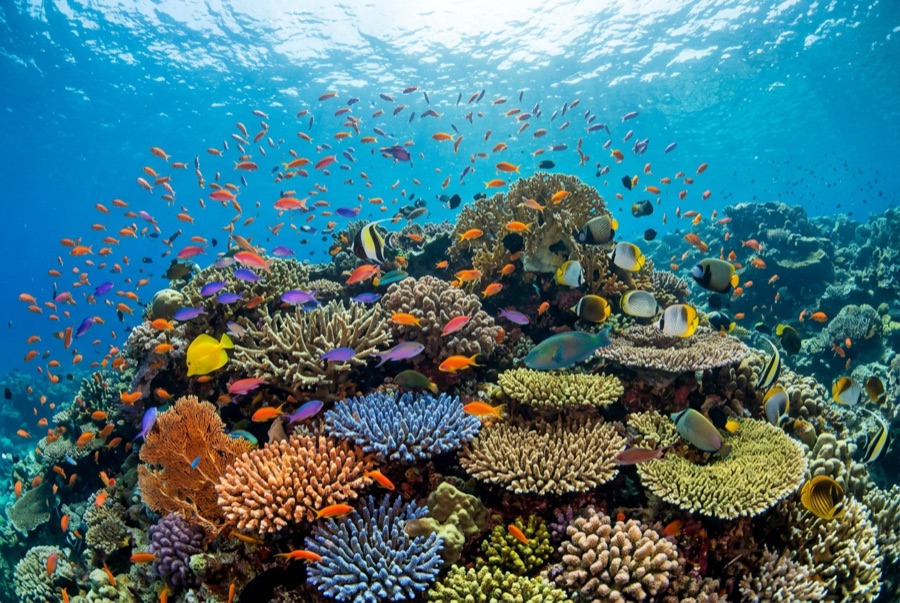
Alimatha Jetty
Depth is the range from the top of the site to its usual maximum; "recommended cert" is the mainstream-agency level operators usually ask for, not a legal rule. Currents and visibility change daily, so treat everything here as planning ranges.
Alimatha Jetty, on the house reef of the resort island in northeastern Vaavu, is among the most popular night dives in the Maldives. For years the resort kitchen cleaned fish on the jetty, and the local animals learned to gather there; sources differ on whether any feeding goes on today. Divers kneel on sand on a sloping reef between about 6 and 25 m as the light fades, and dozens of tawny nurse sharks, some close to 3 m long, soon circle and nose past them. Jenkins whiprays and other stingrays clamber over the sand and the divers, giant trevally and snappers race through, and whitetip and blacktip reef sharks drop in now and then. The jetty lights help photographers, though the sand stirs up fast.
The moment you come for: Dozens of tawny nurse sharks at dusk; stingrays and giant trevally at arm's length; lit jetty for night photography
Topography: Sloping house reef with coral heads and a sandy patch below the resort jetty
Entry: Run as a dusk or night dive beside the resort jetty: divers settle on the sand of the house reef and wait for the sharks and rays to arrive.
Know before you splash
Hazards: Busy night dive shared with many other groups; visibility drops quickly once the sand is churned up; large sharks and rays bump into divers, so keep hands in, never touch or feed them, and stay off the bottom where possible.
Conservation: The gathering grew from years of fish scraps thrown from the jetty; dive with an operator that does not feed or touch the animals.
Who you'll meet
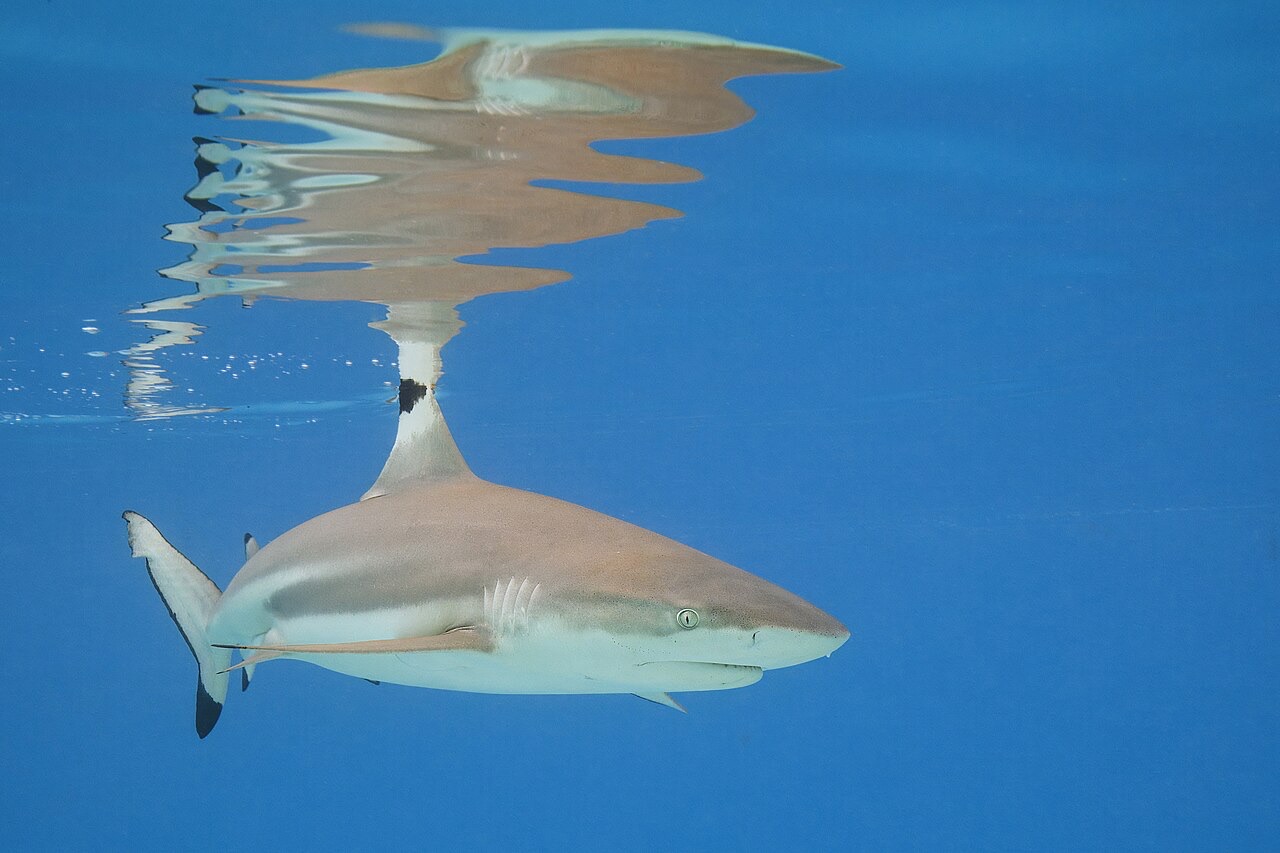
Blacktip Reef Shark
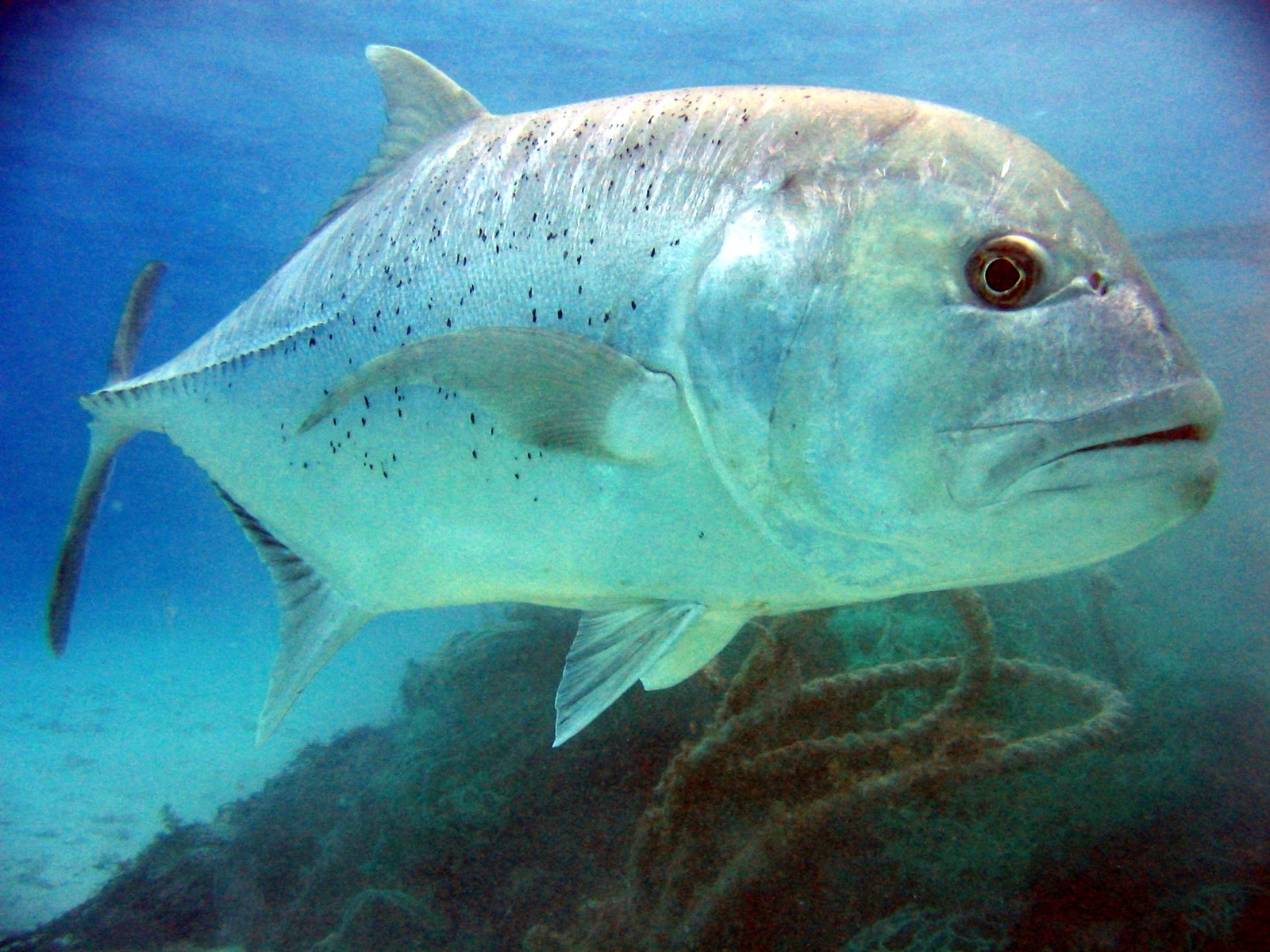
Giant Trevally
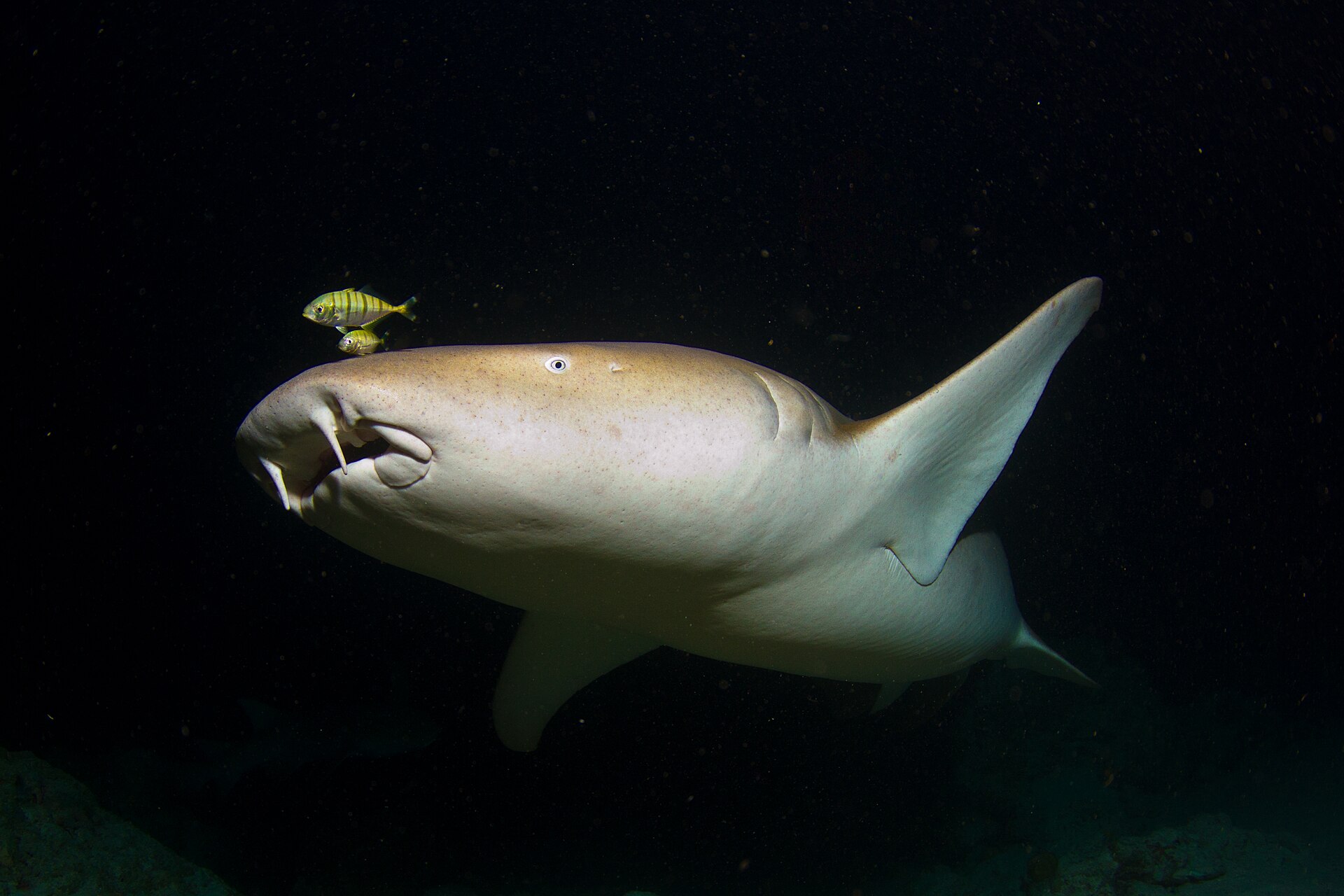
Tawny Nurse Shark
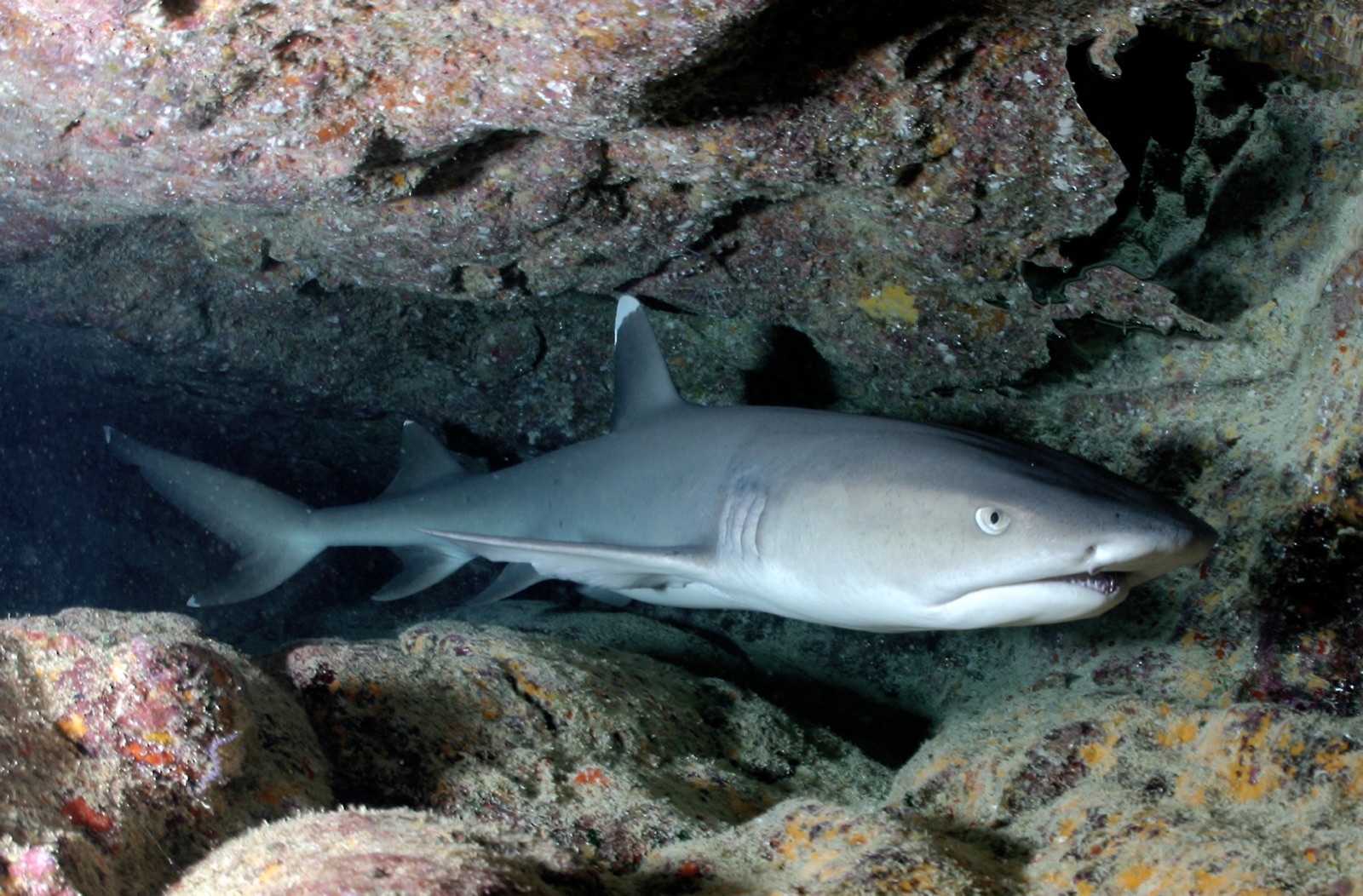
Whitetip Reef Shark
"Charted here" species were listed by our editors from the sources on this page. Counts are GBIF occurrence records: observations logged within about 5 km of the charted position since 1990, matched only against the species in our catalogue. They show what has been seen there, not a promise of what you will see.