Fotteyo Kandu
La profundidad es el rango desde la cima del punto de buceo hasta su máximo habitual; la "certificación recomendada" es el nivel que los operadores suelen pedir según las agencias principales, no una norma legal. Las corrientes y la visibilidad cambian a diario, así que trata todo esto como rangos de planificación.
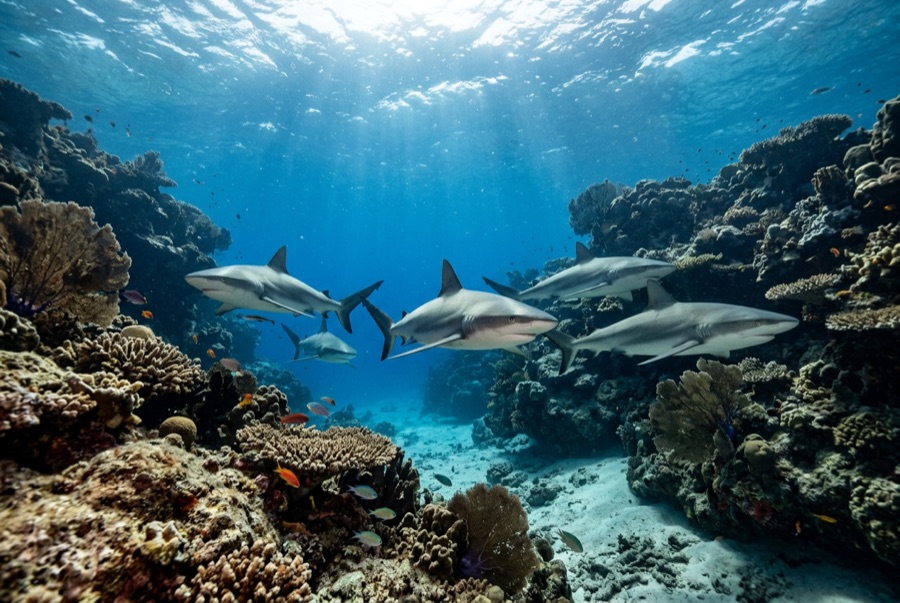
Fotteyo Kandu, on the remote eastern side of Vaavu, is a channel that many divers rate as the best dive in the Maldives. The classic plan drops onto the outer wall by a large cave near 30 m, then rounds a bend to a run of caves and arches between 25 and 40 m whose ceilings are thick with soft coral. A split in the reef at 22 m marks the outer mouth. Whitetip reef sharks rest on the sand plateau beyond, and the inner entrance at 14 m has hard coral and schooling sweetlips. Titan triggerfish nest in the valley just inside, while grey reef sharks, tuna, barracuda, eagle rays and potato groupers work the outside. Hammerheads sometimes appear for early starters.
El momento por el que vienes: Soft-coral caves and arches from 25 to 40 m; grey reef sharks, tuna and eagle rays on incoming current; chance of hammerheads at dawn
Topografía: Outer reef wall with soft-coral caves and arches, a sand plateau at the mouth and hard coral at the inner entrance
Corriente: Usually very strong at the mouth; in strong flow divers can cross a reef finger at about 10 m to the western wall and drift on from there.
Entrada: Usually started on the outer reef near a large cave at about 30 m, then taken round the corner past the soft-coral caves to the channel mouth and into the channel on an incoming current; reef hooks are recommended.
Lo que debes saber antes de tirarte al agua
Riesgos: Strong current that normally needs a reef hook; cave and arch sections run deeper than 30 m; nesting titan triggerfish turn aggressive around the full moon; agree the route and pickup with the boat crew before entry.
Nitrox: Vale la pena aquí: los perfiles están en el rango donde el nitrox amplía de forma significativa el tiempo sin parada (con la formación necesaria para usarlo).
A quién encontrarás
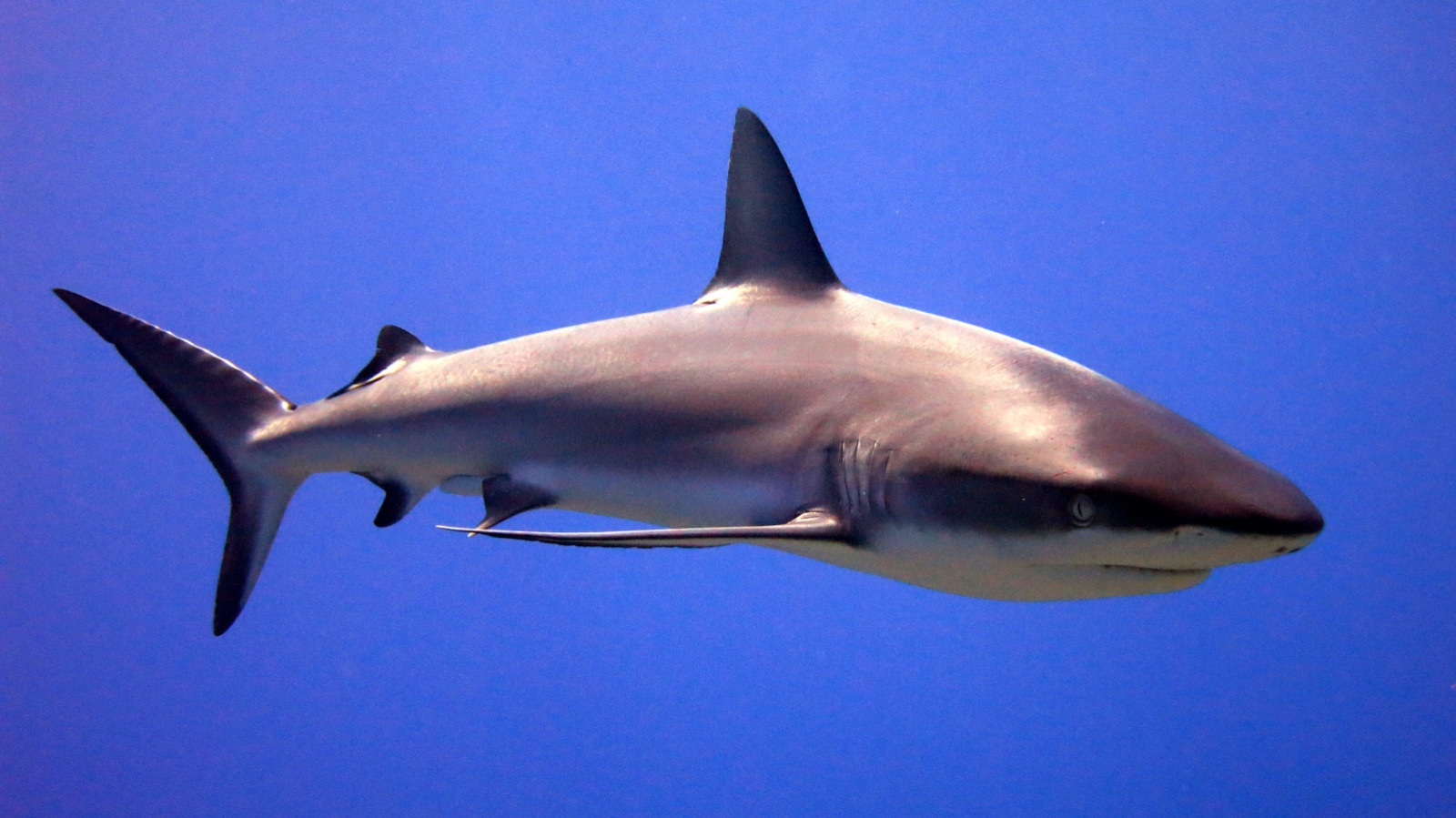
Tiburón gris de arrecife
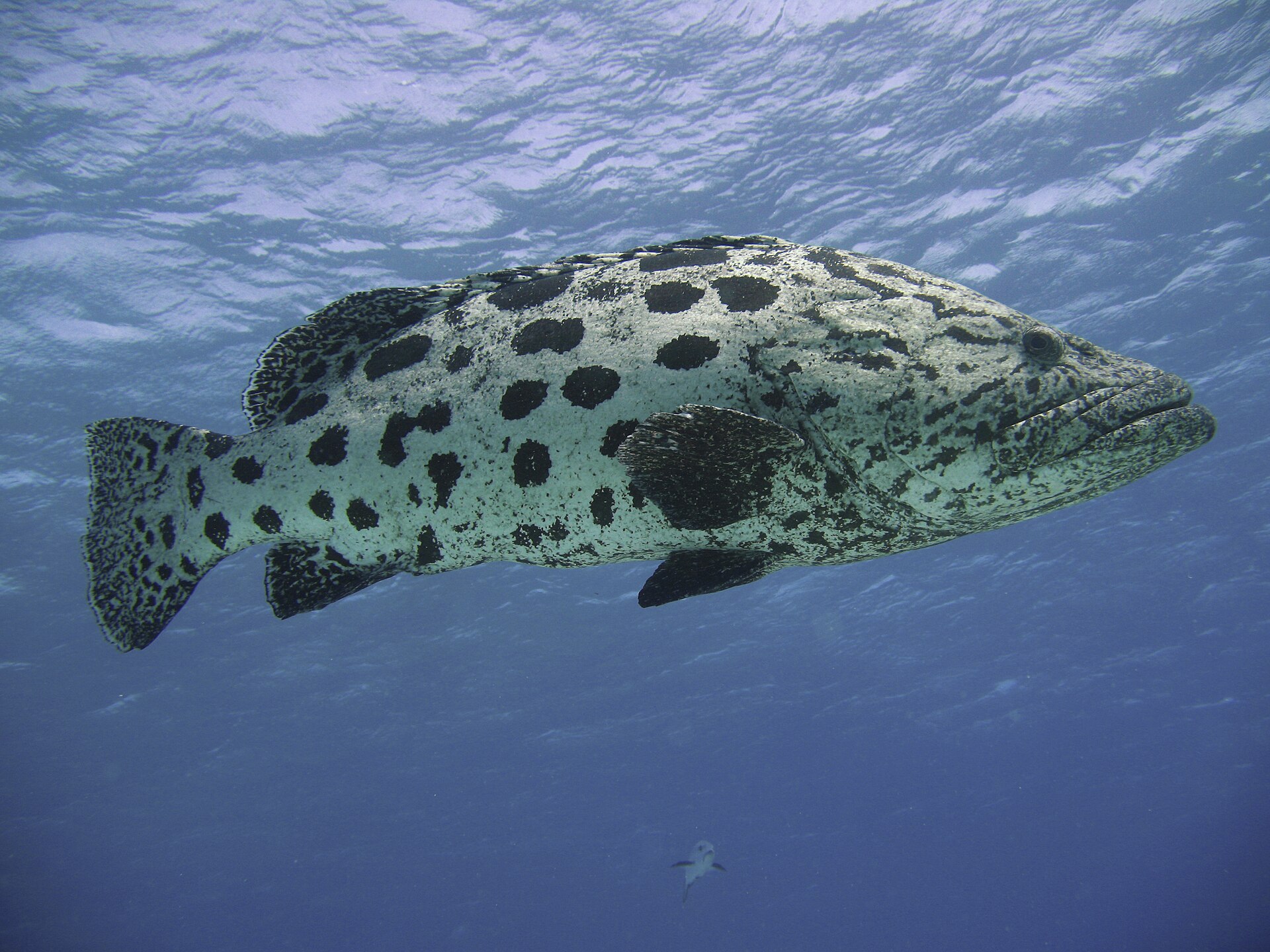
Mero papa (Potato Cod)
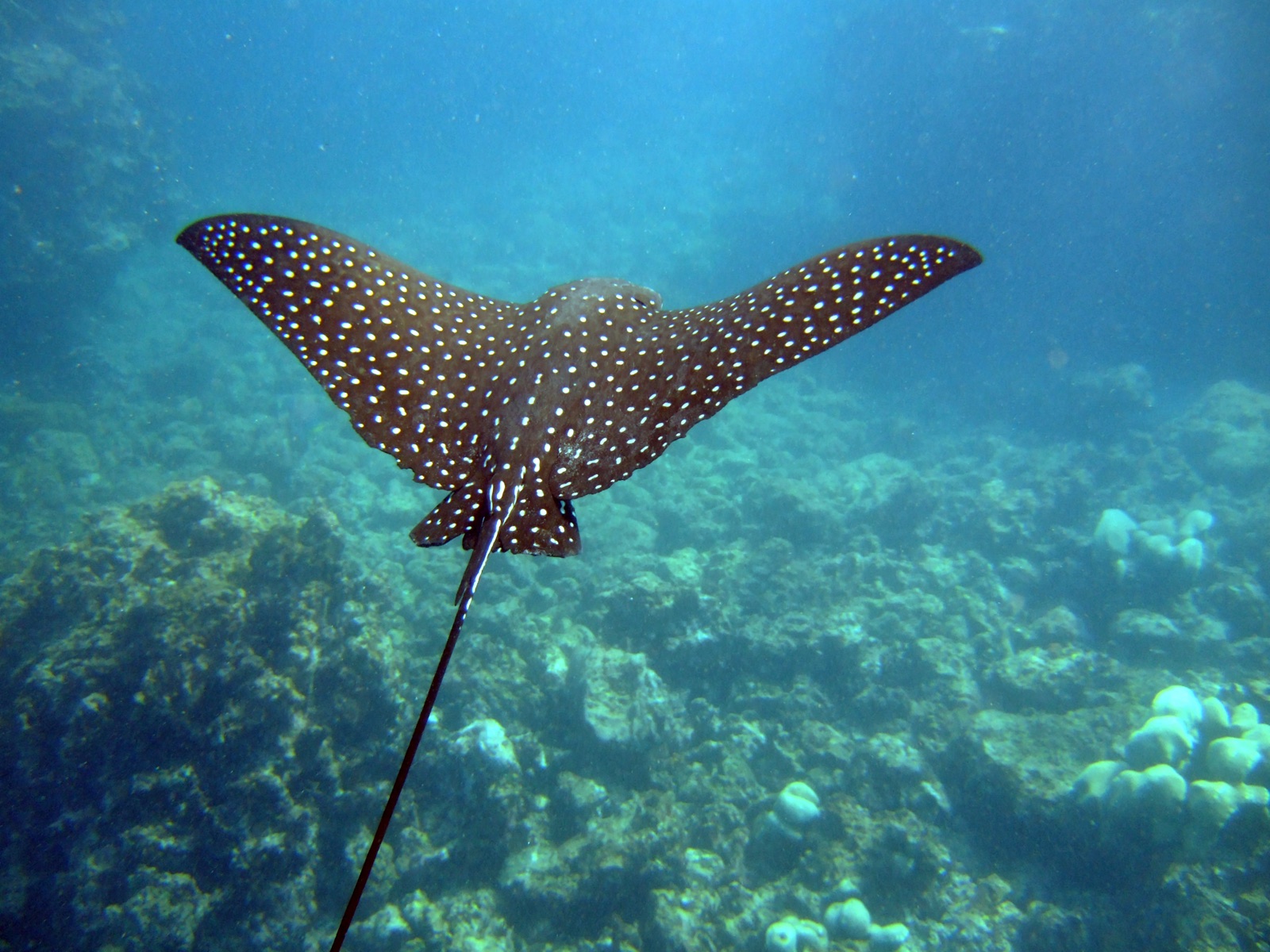
Raya águila moteada
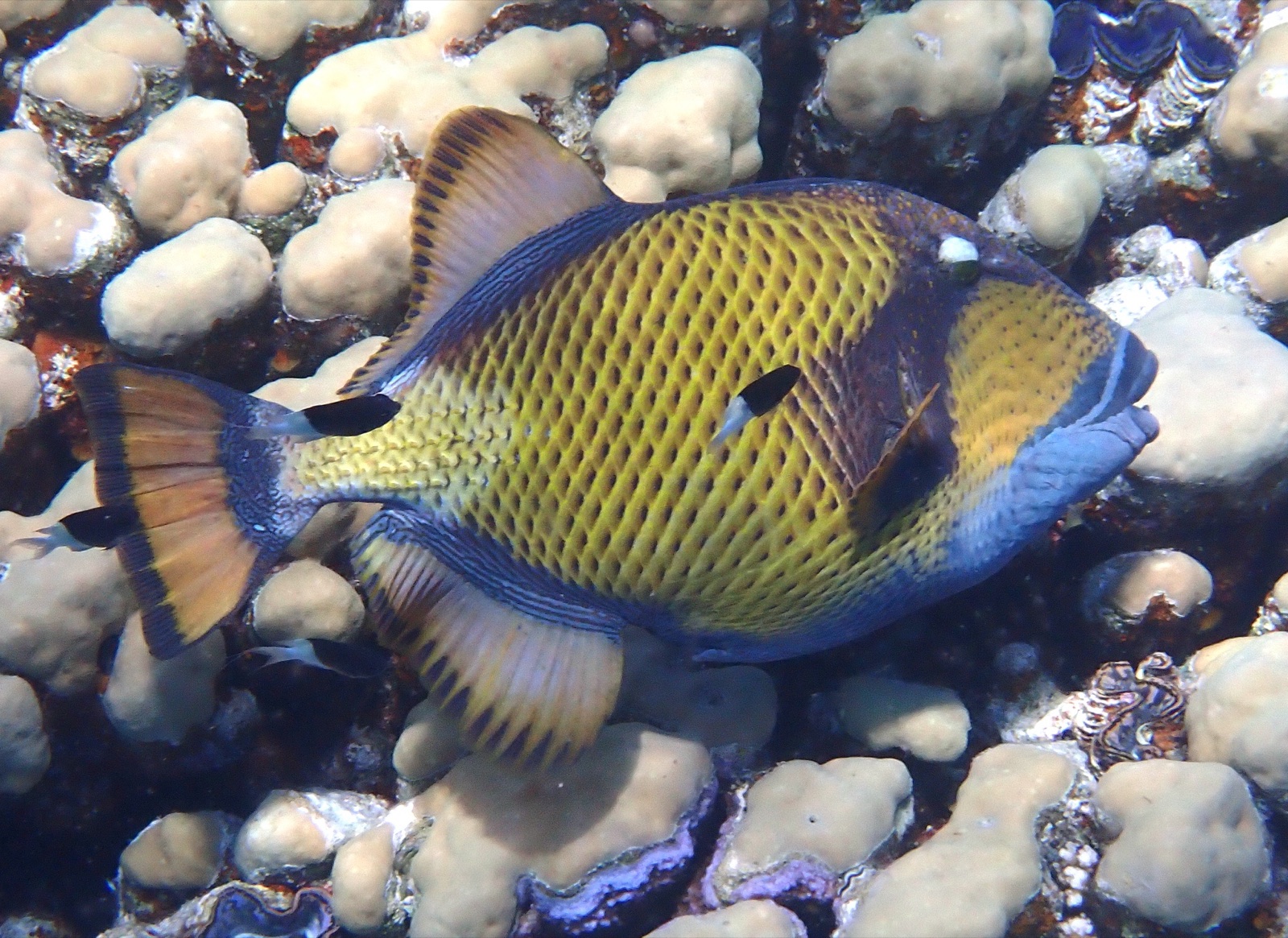
Pez ballesta titán
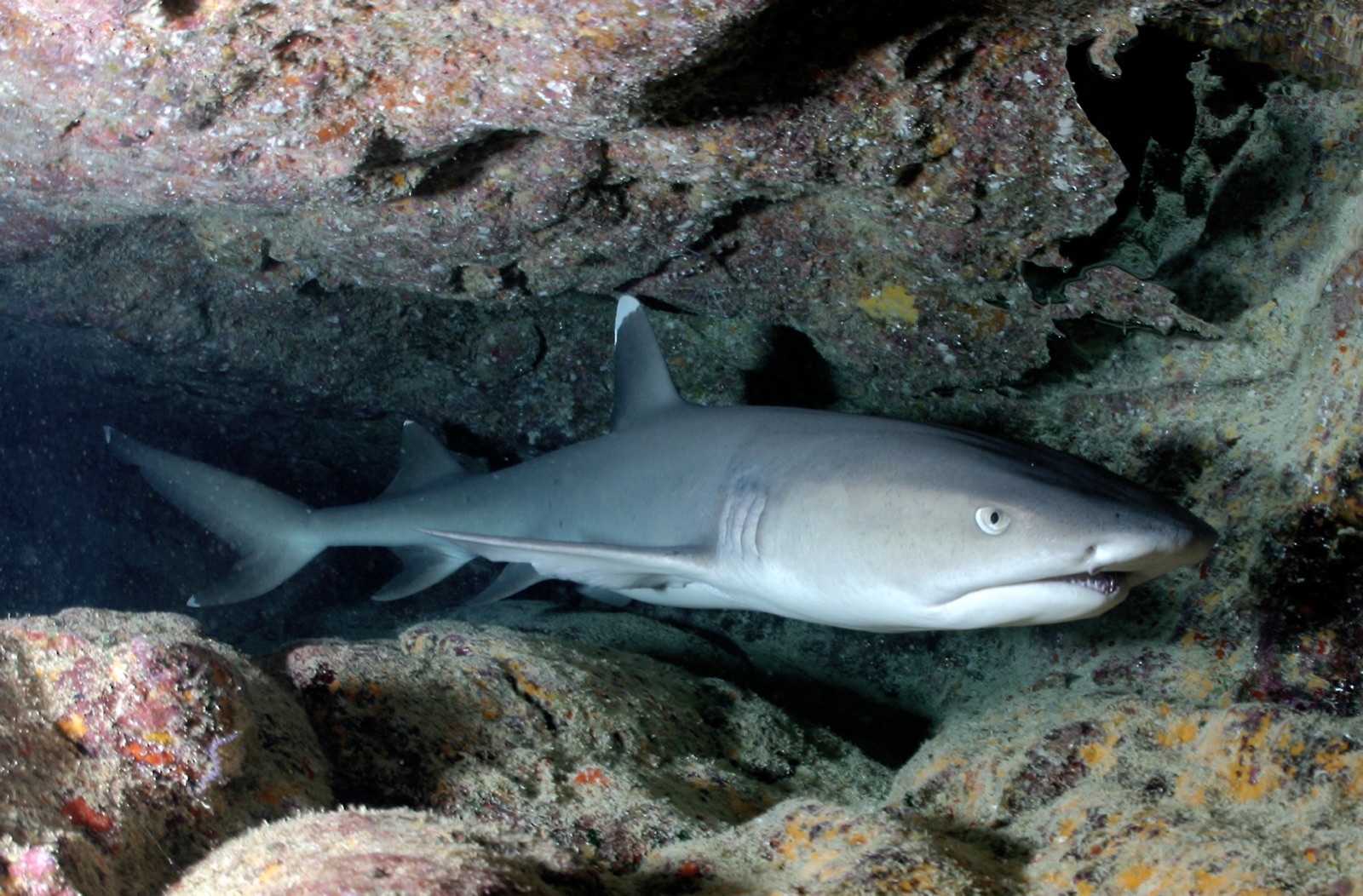
Tiburón de punta blanca de arrecife
Las especies "aquí registradas" fueron añadidas por nuestros editores a partir de las fuentes de esta página. Los recuentos son registros de ocurrencia de GBIF: observaciones anotadas en un radio de unos 5 km de la posición registrada desde 1990, cotejadas únicamente con las especies de nuestro catálogo. Muestran lo que se ha avistado allí, no una garantía de lo que verás.