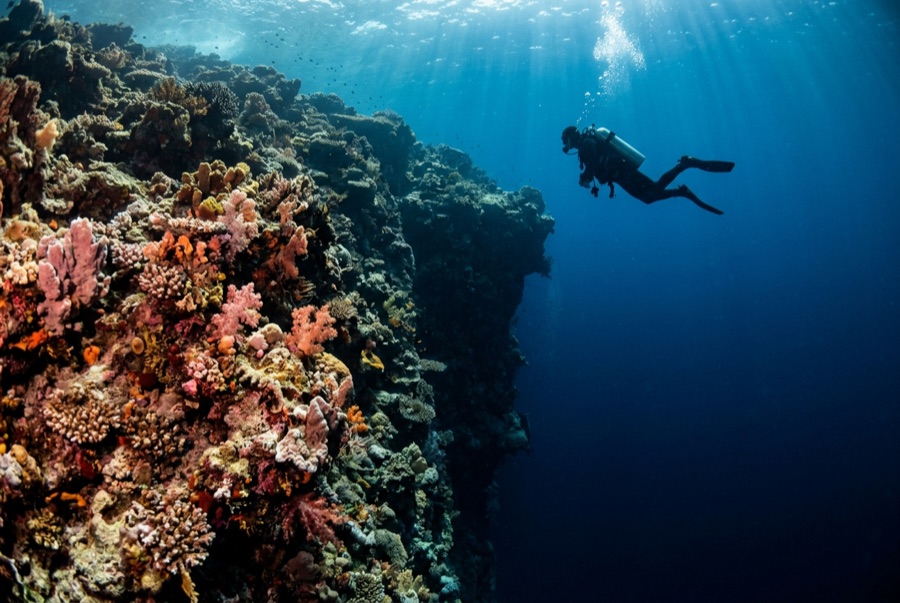
Golden Wall
La profundidad es el rango desde la cima del punto de buceo hasta su máximo habitual; la "certificación recomendada" es el nivel que los operadores suelen pedir según las agencias principales, no una norma legal. Las corrientes y la visibilidad cambian a diario, así que trata todo esto como rangos de planificación.
Golden Wall takes its name from a yellow soft coral that coats the reef wall on the edge of Kashavaru Falhu, the protected lagoon south of Keyodhoo. The dive opens on the outer atoll wall, where divers may hook in at the channel mouth to watch passing sharks and pelagic fish, but the real draw lies inside. Boulders across the channel floor are smothered in red, orange and golden soft corals among sea whips, sponges, gorgonians and black coral trees, and clouds of basslets feed above them. Shy Napoleon wrasse, snappers, butterflyfish and bannerfish move between the rocks, while oriental sweetlips shelter behind them out of the flow. Ledges cutting into the shallower wall hold squirrelfish, sea turtles are frequent, and a school of batfish may circle the safety stop.
El momento por el que vienes: Walls and boulders draped in golden soft coral; oriental sweetlips and basslets; hook-in point at the channel mouth
Topografía: Outer atoll wall, a channel floor of boulders covered in soft coral, and a ledged inner wall
Entrada: Starts on the outer atoll wall with a hook-in at the channel mouth, then continues inside the channel over boulders and along the ledged wall.
Lo que debes saber antes de tirarte al agua
Riesgos: Channel current at the mouth, where a reef hook is used; the floor reaches about 30 m; keep well clear of the fragile soft coral on the boulders.
Conservación: Part of the V. Kashavaru Falhu Region, protected since 1 November 2023 as a Category 7 area (protected area with sustainable use).
A quién encontrarás
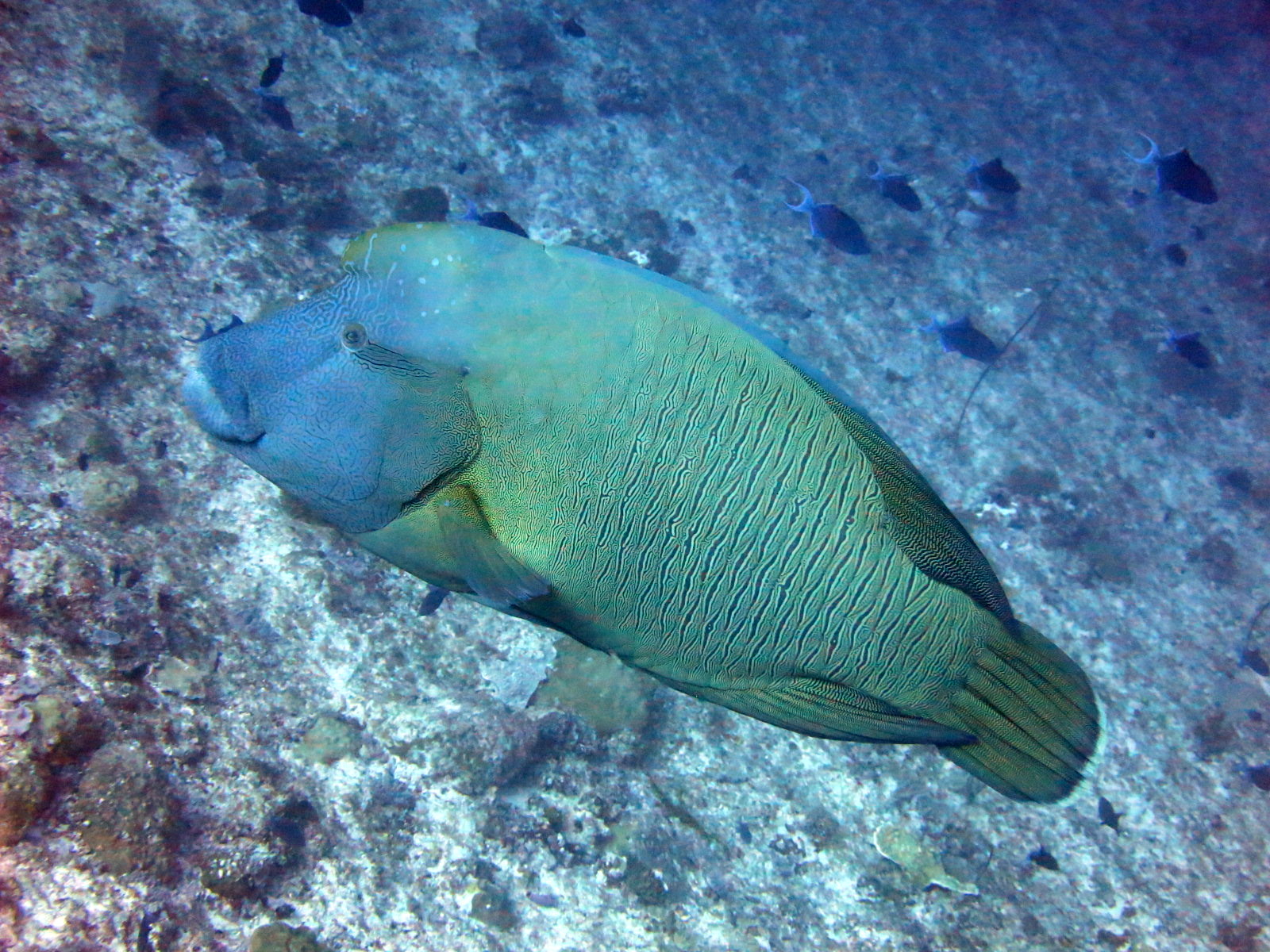
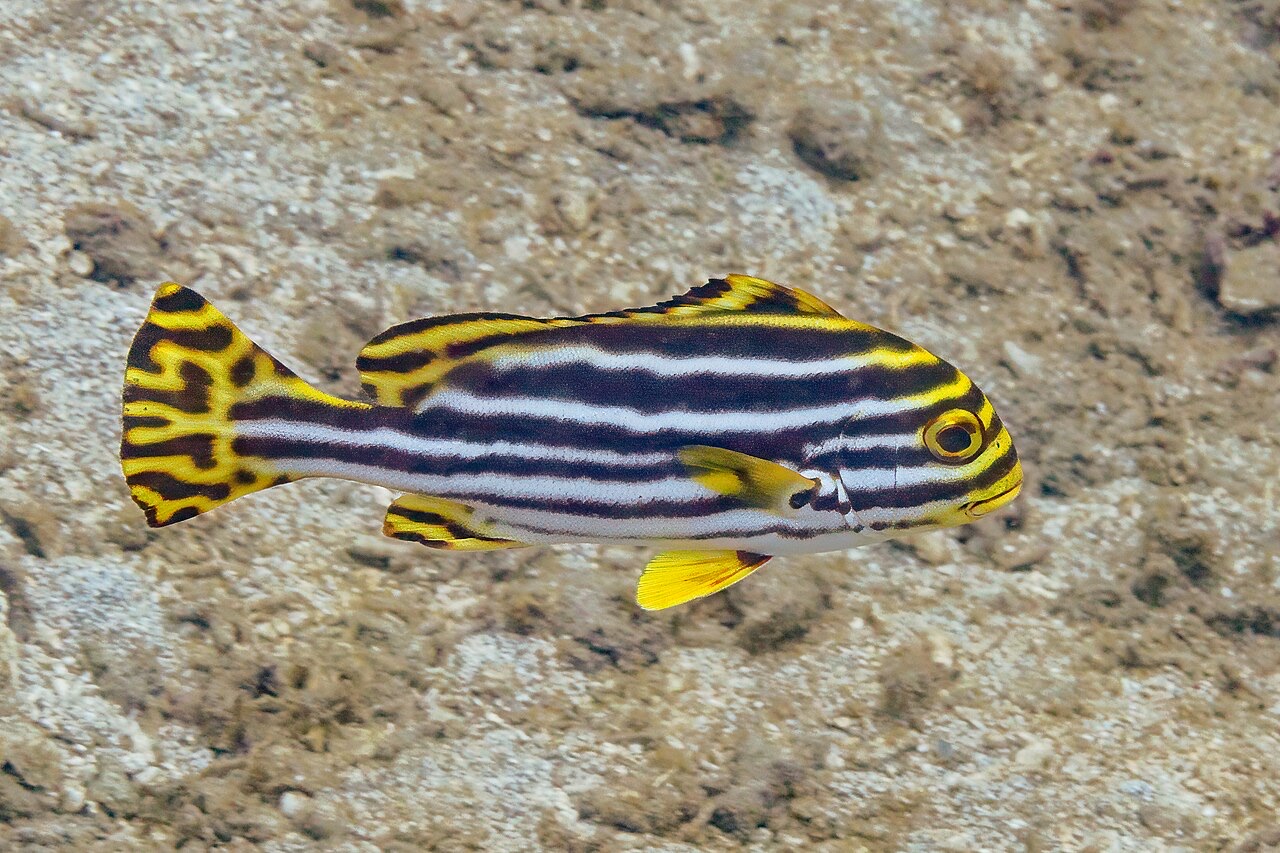
Las especies "aquí registradas" fueron añadidas por nuestros editores a partir de las fuentes de esta página. Los recuentos son registros de ocurrencia de GBIF: observaciones anotadas en un radio de unos 5 km de la posición registrada desde 1990, cotejadas únicamente con las especies de nuestro catálogo. Muestran lo que se ha avistado allí, no una garantía de lo que verás.