Discover where to dive, when to go, and what you could see.

Discover where to dive, when to go, and what you could see.
★
Menu
Destinations Dive Sites Marine Life Wrecks News
Plan a trip Trip planner When to dive Top dive sites Bucket-list encounters Reef health this week Cost calculator Comparisons Marine-life calendar Water temperature Liveaboards Operators & resorts Marine parks Hyperbaric chambers World map
Your diving Dive log Life list ★ Saved
Cave Diving All cave diving Destinations & Dive Sites Cave Systems & Maps Training & Qualifications Dive Centers & Guides Equipment & Technology Safety & Incident Research Science, History & Conservation Resources & Updates
Regions Australia, New Zealand & East AsiaCaribbean & Western AtlanticEurope, Atlantic & MediterraneanIndian Ocean & East AfricaPacific Islands & MicronesiaRed Sea & Middle EastSoutheast Asia & Coral TriangleThe Americas & Eastern Pacific Countries
Learn & Tools All guides Certifications Gear guides Videos Ask the Data AI Agents API
About About us Methodology Disclaimer Contact
Your view
★ Saved

Your starred destinations, sites and species, stored in this browser.

Dive log

Log your dives and import them from a dive computer. Kept on this device.

Life list

Every species you have seen, with where and when.

API GATEWAY

Free read-only JSON access to the atlas's cached data.

Dark mode

Guided View
New to diving? Depths, currents, certification levels? We explain every term as you browse, in plain English. Same data, with the help built in.

Expert View
You already know the difference between a wall and a drift. Just the data: clean, fast and compact. This is the default view.

Interface language
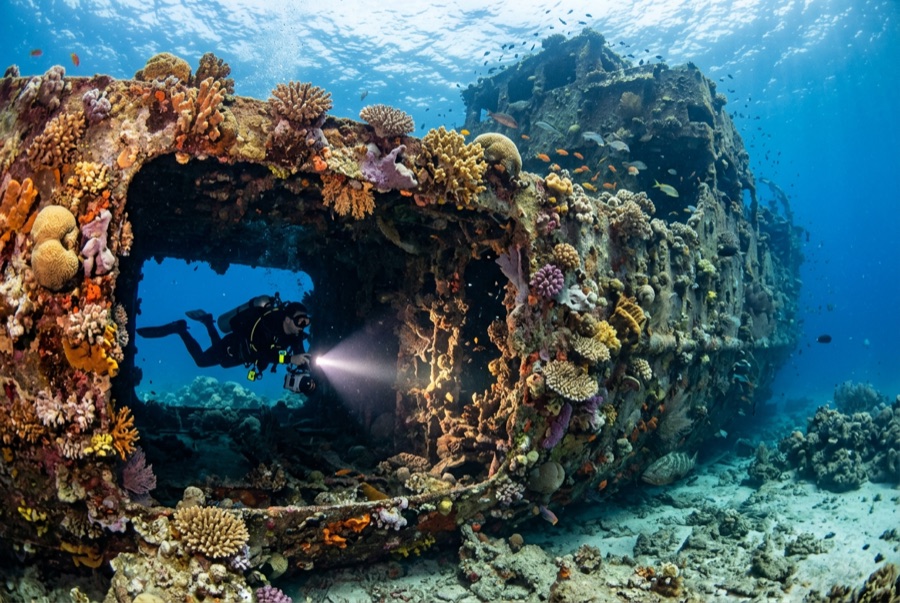
HMCS Mackenzie, illustrative image

HMCS Mackenzie

Wreck · Artificial reef 9–30 m Intermediate British Columbia, Canada
AI-generated illustration
✎ Log a dive here Documented Also known as: Mackenzie, Former HMCS Mackenzie
Depth
9–30 m / 30–98 ft
Water
7–16 °C / 45–61 °F
Access
Boat
Best months
Oct–Mar
Recommended cert
Advanced Open Water

Depth is the range from the top of the site to its usual maximum; "recommended cert" is the mainstream-agency level operators usually ask for, not a legal rule. Currents and visibility change daily, so treat everything here as planning ranges.

HMCS Mackenzie, lead ship of her class, was built in Montreal and commissioned in 1962, then spent the next 23 years in the Pacific, where her crew once boarded and seized a ship carrying drugs. By the time she was paid off in 1993 she had called at 96 foreign ports. Shortly before the Artificial Reef Society of BC scuttled her off Sidney, near Rum and Gooch islands, on September 16, 1995, she was repainted in U.S. Navy colors for an episode of The X-Files. The wreck can be reached from about 9 m and the seabed lies at 30 m. Large access holes lead into a well-preserved interior where a desk and chair remain, and lingcod, cabezon, decorator crabs, brittle stars and plumose anemones cover the hull.

The moment you come for: Former X-Files film set; intact interior with a desk and chair; lingcod and plumose anemones

Topography: Destroyer hull with large access holes on the seabed

Entry: Boat dive off Sidney, near Rum and Gooch islands.

Know before you splash

Hazards: Seabed at 30 m; interior spaces are overhead environments; boat traffic in the channels off Sidney.

Nitrox: Worth it here: profiles sit in the range where enriched air meaningfully extends no-stop time (with the training to use it).

Who you'll meet
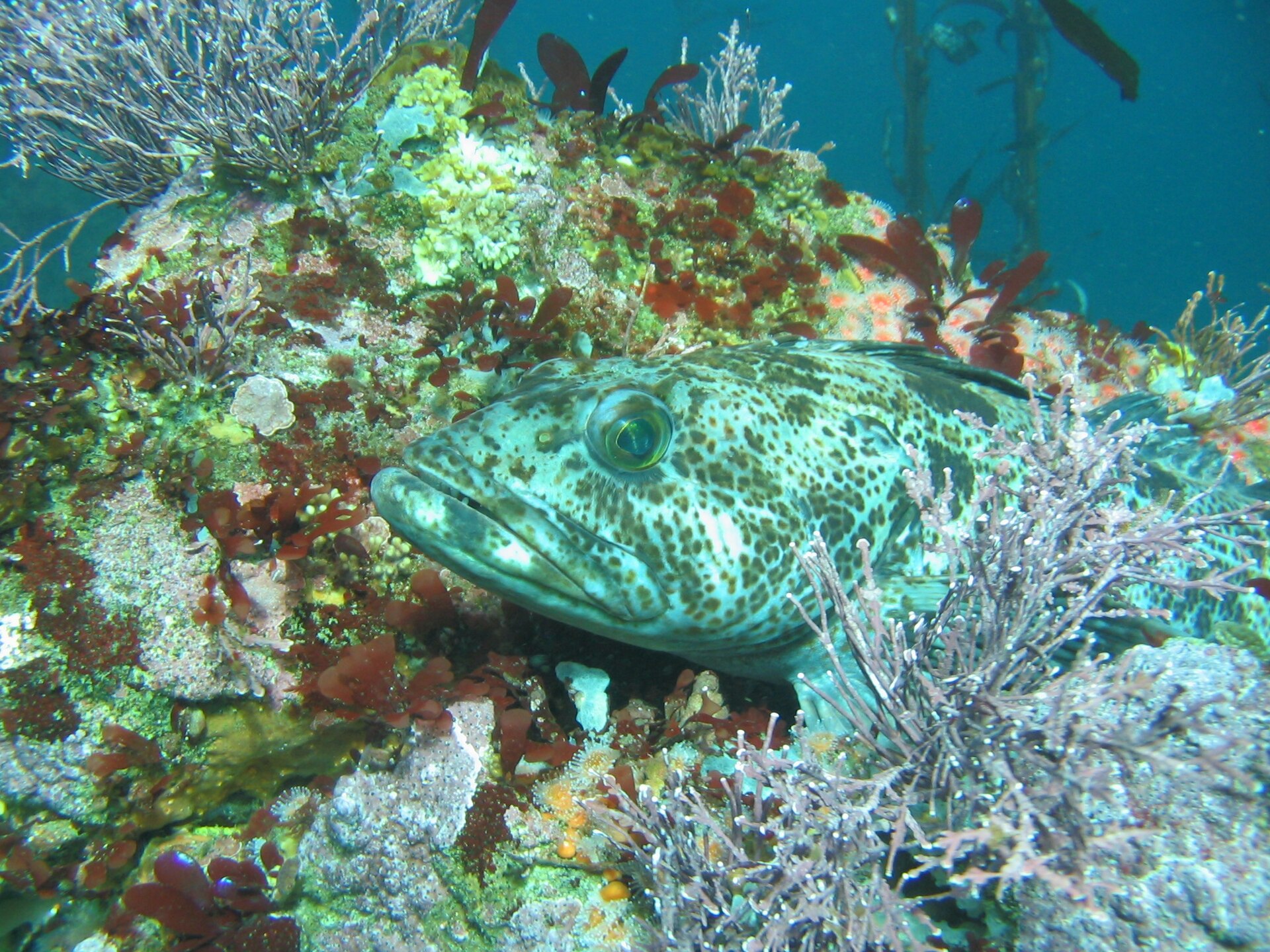
"Charted here" species were listed by our editors from the sources on this page. Counts are GBIF occurrence records: observations logged within about 5 km of the charted position since 1990, matched only against the species in our catalogue. They show what has been seen there, not a promise of what you will see.

In season now at British Columbia Steller Sea Lion (Nov–Apr, season opens this month) · California Sea Lion (Oct–Mar)
Seasons come from our destination guide, written from the sources cited there. They describe when the animals are usually present at the destination, not at this exact site.
Sources: Artificial Reef Society of British Columbia ↗X-Ray Mag ↗ · Facts verified against the sources above; fields without support are labeled not yet verified.

Australia, New Zealand & East Asia

Cairns & the Ribbon ReefsNingaloo ReefBrisbane, Moreton Bay and the Sunshine CoastCoral Sea & Osprey ReefIshigaki & the Yaeyama IslandsOkinawa & the Kerama IslandsPoor Knights IslandsSouthern Great Barrier Reef: Lady Elliot, Lady Musgrave & Heron Islands

Caribbean & Western Atlantic

BonaireCozumelRiviera Maya & the CenotesBelize Barrier ReefGrand CaymanIsla Mujeres & CancúnRoatánTiger Beach & Grand Bahama

Europe, Atlantic & Mediterranean

Malta & GozoSilfra & IcelandThe AzoresBalearic IslandsCabo de Palos & Islas Hormigas Marine ReserveCanary IslandsLarnaca & the ZenobiaScapa Flow

Indian Ocean & East Africa

North & South Malé AtollsAri AtollBaa Atoll & Hanifaru BayFuvahmulahAliwal Shoal & UmkomaasAndaman IslandsMafia IslandMauritius

Pacific Islands & Micronesia

PalauChuuk (Truk) LagoonFakaravaKona, HawaiʻiRangiroaTaveuni & Rainbow ReefBeqa Lagoon & Pacific HarbourEspiritu Santo

Red Sea & Middle East

Sharm El Sheikh & Ras MohammedBrothers, Daedalus & St John'sDahabHurghada & El GounaMarsa Alam & the Deep SouthAqabaDaymaniyat IslandsEilat

Southeast Asia & Coral Triangle

Bali & Nusa PenidaKomodoRaja AmpatSipadan & MabulAnilaoCoronGili Islands & LombokKoh Tao

The Americas & Eastern Pacific

Galápagos IslandsCocos IslandFlorida KeysSea of Cortez & Cabo PulmoSocorro & the RevillagigedosBritish ColumbiaCalifornia Channel IslandsCosta Rica Pacific Coast