Descubre dónde bucear, cuándo ir y qué podrías ver.

Descubre dónde bucear, cuándo ir y qué podrías ver.
★
Menú
Destinos Puntos de buceo Vida marina Pecios Noticias
Planifica un viaje Planificador de viajes Cuándo bucear Calculadora de costes Comparativas Calendario de fauna marina Temperatura del agua Liveaboards Operadores y resorts Parques marinos Cámaras hiperbáricas Mapa mundial
Buceo en cuevas Todo sobre el buceo en cueva Destinos y sitios de buceo Sistemas de Cuevas y Mapas Formación y titulaciones Centros de buceo y guías Equipamiento y tecnología Seguridad e investigación de incidentes Ciencia, historia y conservación Recursos y actualizaciones
Regiones Australia, Nueva Zelanda y Asia OrientalCaribe y Atlántico occidentalEuropa, Atlántico y MediterráneoOcéano Índico y África OrientalIslas del Pacífico y MicronesiaMar Rojo y Oriente MedioSudeste Asiático y el Triángulo del CoralLas Américas y el Pacífico Oriental Países
Aprender y herramientas Todas las guías Certificaciones Guías de equipo Vídeos Consulta los datos Agentes de IA API
Acerca de Quiénes somos Metodología Aviso legal Contacto
Tu vista
★ Guardado

Tus destinos, puntos de buceo y especies marcados como favoritos, guardados en este navegador.

API GATEWAY

Acceso JSON gratuito de solo lectura a los datos en caché del atlas.

Modo oscuro

Vista guiada
¿Nuevo en el buceo? ¿Profundidades, corrientes, niveles de certificación? Explicamos cada término mientras navegas, en un lenguaje claro. Los mismos datos, con la ayuda integrada.

Vista experta
Ya conoces la diferencia entre una pared y un drift dive. Solo los datos: claros, rápidos y concisos. Esta es la vista predeterminada.

Idioma de la interfaz
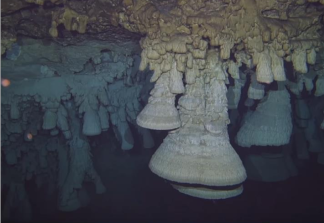
The Hells Bells formations in Cenote El Zapote

Cenote El Zapote (Hells Bells)

Sumideroa 51.8 mMexico
Foto: Simon Michael Ritter, Margot Isenbeck-Schröter, Christian Scholz, Frank Keppler, Johannes Gescher, Lukas Klose, Nils Schorndorf, Jerónimo Avilés Olguín, Arturo González-González and Wolfgang Stinnesbe · CC BY 4.0
Abierto a buceadores cualificados, con condiciones · tal como está publicado 2026-10-14 CREER listed cavern diving as open. Las normas de acceso cambian: confírmalo con el propietario del terreno o la autoridad gestora antes de viajar.
Documentado También conocido como: Cenote Zapote, El Zapote, Zapote, Hells Bells, Hell's Bells, Cenote Hells Bells
Profundidad de la entrada
No publicado
Zonas de buceo habituales
No publicado
Profundidad máxima aquí
51.8 m (170 ft)
Categoría publicada
Level 4 - Expert

Level 4 - Expert: CREER cenote level (guided cavern diving) [1] [2] (CREER describes Level 4 as beyond Level 3, dark and for experienced divers only; maximum 3 divers per guide.). Estas categorías pertenecen al esquema indicado; describen la formación que requiere cada sitio.

A deep, stratified sinkhole about 52 m deep, known for bell-shaped calcite formations ('Hells Bells') hanging in and above a turbid layer; CREER rates it Level 4 (Expert).

Cenote El Zapote is a deep sinkhole whose walls carry large bell-shaped calcite formations, nicknamed Hells Bells, that partly extend into a white, cloudy layer in the water. A 2022 study in Geobiology links that turbid layer to a pelagic redoxcline, a boundary where oxygen-poor, sulphide-rich water meets the water above, and argues that microbes there promote calcite precipitation that may help the bells grow.

QRSS lists 'Cenote Zapote (Cenote Hells Bells)' among the deep underwater caves of Quintana Roo at 51.8 m, with 301 m of surveyed length. CREER rates it Level 4 (Expert), its most demanding regular category for guided cavern tours, limited to experienced divers at no more than three per guide. Under the Jungle describes the sinkhole sites on the Ruta de los Cenotes outside Puerto Morelos as advanced.

The Hells Bells are fragile and scientifically important; divers are expected to keep clear of them.

El entorno

Deep, dark sinkhole with stratified water, a turbid redoxcline layer and hanging calcite bells.

Condiciones

Stratified water with a cloudy turbid layer at depth; light is limited. Typical conditions only.

Rangos típicos de fuentes publicadas, no condiciones actuales.

Fuentes: [1] CREER (Comité Regional de Espeleobuceo, Ecología y Regulación) ↗[2] CREER ↗[3] Quintana Roo Speleological Survey ↗[4] Geobiology / PubMed record ↗[5] Under the Jungle ↗[6] Under the Jungle ↗ · comprobado 2026-10-14
Cada dato de esta página, con su fuente (6)
DatoEstadoFuente
QRSS lists Cenote Zapote (Cenote Hells Bells) at a depth of 51.8 m and a surveyed length of 301 m (Bertoni/Harris, 11/2013).Survey figure from 2013. Puede estar desactualizado [3]
Large bell-shaped calcite formations called Hells Bells were found underwater in the stratified cenote El Zapote, together with a white turbid layer that overlaps the pelagic redoxcline; the study proposes microbially induced calcite precipitation as a contributor to their growth.Abstract read via the PubMed record (doi:10.1111/gbi.12492). Verificado [4]
CREER rates Zapote as Level 4 (Expert), with cavern diving listed as open.Identification of CREER's 'Zapote' with the Hells Bells cenote is based on the shared name; QRSS also lists a separate Sistema Zapote-Camilo. Verificado [1] [2]
CREER Level 4 requires the Level 3 requirements plus a previous Level 3 cenote dive and advanced open-water certification, with at most 3 divers per guide. Verificado [2]
Under the Jungle describes the sinkholes of the Ruta de los Cenotes just outside Puerto Morelos as advanced sites that are sinkholes rather than caverns.The sources used do not state El Zapote's exact location, so no area is given. Reportado [6]
Under the Jungle adds a 50 USD surcharge for Zapote and groups it with sites requiring previous cavern experience and advanced open-water certification.January 2026 price list. Reportado [5]

Verificado: declarado por una fuente oficial o primaria que consultamos directamente. Reportado: basado únicamente en una fuente secundaria. Fuentes en conflicto: la nota recoge ambas versiones. Puede estar desactualizado: la fuente más reciente que encontramos es antigua.

Redactado con nuestras propias palabras a partir de las fuentes anteriores. Reportar una corrección

Australia, Nueva Zelanda y Asia Oriental

Cairns & the Ribbon ReefsNingaloo ReefCoral Sea & Osprey ReefOkinawa & the Kerama IslandsPoor Knights IslandsTownsville & the YongalaGreen IslandIzu Peninsula

Caribe y Atlántico occidental

BonaireCozumelRiviera Maya & the CenotesBelize Barrier ReefGrand CaymanIsla Mujeres & CancúnRoatánTiger Beach & Grand Bahama

Europa, Atlántico y Mediterráneo

Malta & GozoSilfra & IcelandThe AzoresCanary IslandsLarnaca & the ZenobiaScapa FlowArctic NorwayMadeira

Océano Índico y África Oriental

North & South Malé AtollsAri AtollBaa Atoll & Hanifaru BayAliwal Shoal & UmkomaasMafia IslandMauritiusSeychellesSodwana Bay

Islas del Pacífico y Micronesia

PalauChuuk (Truk) LagoonFakaravaKona, HawaiʻiRangiroaTaveuni & Rainbow ReefBeqa Lagoon & Pacific HarbourEspiritu Santo

Mar Rojo y Oriente Medio

Sharm El Sheikh & Ras MohammedBrothers, Daedalus & St John'sDahabHurghada & El GounaMarsa Alam & the Deep SouthAqabaDaymaniyat IslandsMusandam Peninsula

Sudeste Asiático y el Triángulo del Coral

Bali & Nusa PenidaKomodoRaja AmpatSipadan & MabulAnilaoCoronKoh TaoLembeh Strait

Las Américas y el Pacífico Oriental

Galápagos IslandsCocos IslandFlorida KeysSea of Cortez & Cabo PulmoSocorro & the RevillagigedosBritish ColumbiaCalifornia Channel IslandsCosta Rica Pacific Coast