Découvrez où plonger, quand partir et ce que vous pourriez voir.

Découvrez où plonger, quand partir et ce que vous pourriez voir.
★
Menu
Destinations Sites de plongée Vie marine Épaves Actualités
Planifier un voyage Planificateur de séjour Quand plonger Calculateur de coût Comparaisons Calendrier de la faune marine Température de l'eau Liveaboards Opérateurs & resorts Parcs marins Caissons hyperbares Carte du monde
Plongée souterraine Toute la plongée souterraine Destinations et sites de plongée Systèmes de grottes et cartes Formation et qualifications Centres de plongée et guides Équipement et technologie Sécurité et recherche sur les incidents Sciences, histoire et conservation Ressources et mises à jour
Régions Australie, Nouvelle-Zélande & Asie de l'EstCaraïbes & Atlantique occidentalEurope, Atlantique & MéditerranéeOcéan Indien & Afrique de l'EstÎles du Pacifique & MicronésieMer Rouge & Moyen-OrientAsie du Sud-Est et Triangle de CorailLes Amériques et Pacifique Est Pays
Apprendre & Outils Tous les guides Certifications Guides d'équipement Vidéos Interroger les données Agents IA API
À propos À propos de nous Méthodologie Avertissement Contact
Votre vue
★ Enregistré

Vos destinations, sites et espèces favoris, enregistrés dans ce navigateur.

API GATEWAY

Accès JSON gratuit en lecture seule aux données en cache de l'atlas.

Mode sombre

Vue Guidée
Nouveau en plongée ? Profondeurs, courants, niveaux de certification ? Nous expliquons chaque terme au fil de votre navigation, en langage clair. Les mêmes données, avec l'aide intégrée.

Vue Expert
Vous connaissez déjà la différence entre un tombant et un drift dive. Juste les données : claires, rapides et compactes. C'est la vue par défaut.

Langue de l'interface
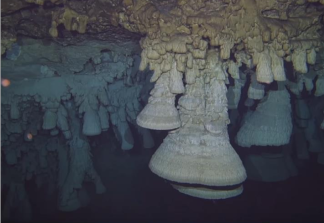
The Hells Bells formations in Cenote El Zapote

Cenote El Zapote (Hells Bells)

Gouffreà 51.8 mMexico
Photo: Simon Michael Ritter, Margot Isenbeck-Schröter, Christian Scholz, Frank Keppler, Johannes Gescher, Lukas Klose, Nils Schorndorf, Jerónimo Avilés Olguín, Arturo González-González and Wolfgang Stinnesbe · CC BY 4.0
Ouvert aux plongeurs qualifiés, sous conditions · tel que publié 2026-10-14 CREER listed cavern diving as open. Les règles d'accès changent : confirmez auprès du propriétaire ou de l'autorité gestionnaire avant de partir.
Documenté Aussi connu sous le nom de: Cenote Zapote, El Zapote, Zapote, Hells Bells, Hell's Bells, Cenote Hells Bells
Profondeur de l'entrée
Non publié
Zones fréquemment plongées
Non publié
Profondeur maximale ici
51.8 m (170 ft)
Catégorie publiée
Level 4 - Expert

Level 4 - Expert: CREER cenote level (guided cavern diving) [1] [2] (CREER describes Level 4 as beyond Level 3, dark and for experienced divers only; maximum 3 divers per guide.). Ces catégories sont propres au système de certification mentionné ; elles décrivent la formation requise pour le site.

A deep, stratified sinkhole about 52 m deep, known for bell-shaped calcite formations ('Hells Bells') hanging in and above a turbid layer; CREER rates it Level 4 (Expert).

Cenote El Zapote is a deep sinkhole whose walls carry large bell-shaped calcite formations, nicknamed Hells Bells, that partly extend into a white, cloudy layer in the water. A 2022 study in Geobiology links that turbid layer to a pelagic redoxcline, a boundary where oxygen-poor, sulphide-rich water meets the water above, and argues that microbes there promote calcite precipitation that may help the bells grow.

QRSS lists 'Cenote Zapote (Cenote Hells Bells)' among the deep underwater caves of Quintana Roo at 51.8 m, with 301 m of surveyed length. CREER rates it Level 4 (Expert), its most demanding regular category for guided cavern tours, limited to experienced divers at no more than three per guide. Under the Jungle describes the sinkhole sites on the Ruta de los Cenotes outside Puerto Morelos as advanced.

The Hells Bells are fragile and scientifically important; divers are expected to keep clear of them.

L'environnement

Deep, dark sinkhole with stratified water, a turbid redoxcline layer and hanging calcite bells.

Conditions

Stratified water with a cloudy turbid layer at depth; light is limited. Typical conditions only.

Fourchettes indicatives issues de sources publiées, pas les conditions actuelles.

Sources: [1] CREER (Comité Regional de Espeleobuceo, Ecología y Regulación) ↗[2] CREER ↗[3] Quintana Roo Speleological Survey ↗[4] Geobiology / PubMed record ↗[5] Under the Jungle ↗[6] Under the Jungle ↗ · vérifié 2026-10-14
Chaque information de cette page, avec sa source (6)
InformationStatutSource
QRSS lists Cenote Zapote (Cenote Hells Bells) at a depth of 51.8 m and a surveyed length of 301 m (Bertoni/Harris, 11/2013).Survey figure from 2013. Peut être obsolète [3]
Large bell-shaped calcite formations called Hells Bells were found underwater in the stratified cenote El Zapote, together with a white turbid layer that overlaps the pelagic redoxcline; the study proposes microbially induced calcite precipitation as a contributor to their growth.Abstract read via the PubMed record (doi:10.1111/gbi.12492). Vérifié [4]
CREER rates Zapote as Level 4 (Expert), with cavern diving listed as open.Identification of CREER's 'Zapote' with the Hells Bells cenote is based on the shared name; QRSS also lists a separate Sistema Zapote-Camilo. Vérifié [1] [2]
CREER Level 4 requires the Level 3 requirements plus a previous Level 3 cenote dive and advanced open-water certification, with at most 3 divers per guide. Vérifié [2]
Under the Jungle describes the sinkholes of the Ruta de los Cenotes just outside Puerto Morelos as advanced sites that are sinkholes rather than caverns.The sources used do not state El Zapote's exact location, so no area is given. Signalé [6]
Under the Jungle adds a 50 USD surcharge for Zapote and groups it with sites requiring previous cavern experience and advanced open-water certification.January 2026 price list. Signalé [5]

Vérifié : indiqué par une source officielle ou primaire que nous avons consultée. Signalé : issu d'une source secondaire uniquement. Sources contradictoires : la note présente les deux versions. Peut être obsolète : la source la plus récente que nous avons trouvée est ancienne.

Rédigé dans nos propres mots à partir des sources ci-dessus. Signaler une correction

Australie, Nouvelle-Zélande & Asie de l'Est

Cairns & the Ribbon ReefsNingaloo ReefCoral Sea & Osprey ReefOkinawa & the Kerama IslandsPoor Knights IslandsTownsville & the YongalaGreen IslandIzu Peninsula

Caraïbes & Atlantique occidental

BonaireCozumelRiviera Maya & the CenotesBelize Barrier ReefGrand CaymanIsla Mujeres & CancúnRoatánTiger Beach & Grand Bahama

Europe, Atlantique & Méditerranée

Malta & GozoSilfra & IcelandThe AzoresCanary IslandsLarnaca & the ZenobiaScapa FlowArctic NorwayMadeira

Océan Indien & Afrique de l'Est

North & South Malé AtollsAri AtollBaa Atoll & Hanifaru BayAliwal Shoal & UmkomaasMafia IslandMauritiusSeychellesSodwana Bay

Îles du Pacifique & Micronésie

PalauChuuk (Truk) LagoonFakaravaKona, HawaiʻiRangiroaTaveuni & Rainbow ReefBeqa Lagoon & Pacific HarbourEspiritu Santo

Mer Rouge & Moyen-Orient

Sharm El Sheikh & Ras MohammedBrothers, Daedalus & St John'sDahabHurghada & El GounaMarsa Alam & the Deep SouthAqabaDaymaniyat IslandsMusandam Peninsula

Asie du Sud-Est et Triangle de Corail

Bali & Nusa PenidaKomodoRaja AmpatSipadan & MabulAnilaoCoronKoh TaoLembeh Strait

Les Amériques et Pacifique Est

Galápagos IslandsCocos IslandFlorida KeysSea of Cortez & Cabo PulmoSocorro & the RevillagigedosBritish ColumbiaCalifornia Channel IslandsCosta Rica Pacific Coast