Scopri dove immergerti, quando andare e cosa potresti vedere.

Scopri dove immergerti, quando andare e cosa potresti vedere.
★
Menu
Destinazioni Siti di immersione Vita marina Relitti Notizie
Pianifica un viaggio Pianificatore di viaggi Quando immergersi Calcolatore dei costi Confronti Calendario della fauna marina Temperatura dell'acqua Liveaboard Operatori & resort Parchi marini Camere iperbariche Mappa del mondo
Immersioni in grotta Tutta la speleologia subacquea Destinazioni e siti di immersione Sistemi di grotte e mappe Formazione e qualifiche Diving center e guide Attrezzatura e tecnologia Sicurezza e ricerca sugli incidenti Scienza, storia e conservazione Risorse e aggiornamenti
Regioni Australia, Nuova Zelanda e Asia OrientaleCaraibi e Atlantico occidentaleEuropa, Atlantico e MediterraneoOceano Indiano e Africa OrientaleIsole del Pacifico & MicronesiaMar Rosso & Medio OrienteAsia meridionale e Triangolo dei CoralliLe Americhe e il Pacifico orientale Paesi
Impara e strumenti Tutte le guide Brevetti Guide all'attrezzatura Video Interroga i dati AI Agent API
Informazioni Chi siamo Metodologia Disclaimer Contatti
La tua vista
★ Salvato

Le tue destinazioni, siti e specie preferiti, salvati in questo browser.

API GATEWAY

Accesso JSON gratuito in sola lettura ai dati in cache dell'atlante.

Modalità scura

Visualizzazione Guidata
Sei alle prime armi con le immersioni? Profondità, correnti, livelli di certificazione? Spieghiamo ogni termine mentre navighi, in modo semplice e chiaro. Gli stessi dati, con tutto il supporto integrato.

Visualizzazione Esperta
Conosci già la differenza tra una parete e una drift dive. Solo i dati: chiari, rapidi e sintetici. Questa è la visualizzazione predefinita.

Lingua dell'interfaccia
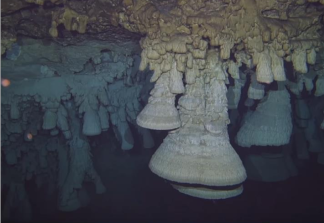
The Hells Bells formations in Cenote El Zapote

Cenote El Zapote (Hells Bells)

Inghiottitoioa 51.8 mMexico
Foto: Simon Michael Ritter, Margot Isenbeck-Schröter, Christian Scholz, Frank Keppler, Johannes Gescher, Lukas Klose, Nils Schorndorf, Jerónimo Avilés Olguín, Arturo González-González and Wolfgang Stinnesbe · CC BY 4.0
Aperto a subacquei qualificati, con condizioni · come pubblicato 2026-10-14 CREER listed cavern diving as open. Le regole di accesso cambiano: conferma con il proprietario del terreno o l'autorità di gestione prima di partire.
Documentato Conosciuto anche come: Cenote Zapote, El Zapote, Zapote, Hells Bells, Hell's Bells, Cenote Hells Bells
Profondità dell'accesso
Non pubblicato
Aree comunemente immerse
Non pubblicato
Profondità massima qui
51.8 m (170 ft)
Categoria pubblicata
Level 4 - Expert

Level 4 - Expert: CREER cenote level (guided cavern diving) [1] [2] (CREER describes Level 4 as beyond Level 3, dark and for experienced divers only; maximum 3 divers per guide.). Queste categorie appartengono allo schema citato; descrivono la formazione richiesta da un sito.

A deep, stratified sinkhole about 52 m deep, known for bell-shaped calcite formations ('Hells Bells') hanging in and above a turbid layer; CREER rates it Level 4 (Expert).

Cenote El Zapote is a deep sinkhole whose walls carry large bell-shaped calcite formations, nicknamed Hells Bells, that partly extend into a white, cloudy layer in the water. A 2022 study in Geobiology links that turbid layer to a pelagic redoxcline, a boundary where oxygen-poor, sulphide-rich water meets the water above, and argues that microbes there promote calcite precipitation that may help the bells grow.

QRSS lists 'Cenote Zapote (Cenote Hells Bells)' among the deep underwater caves of Quintana Roo at 51.8 m, with 301 m of surveyed length. CREER rates it Level 4 (Expert), its most demanding regular category for guided cavern tours, limited to experienced divers at no more than three per guide. Under the Jungle describes the sinkhole sites on the Ruta de los Cenotes outside Puerto Morelos as advanced.

The Hells Bells are fragile and scientifically important; divers are expected to keep clear of them.

L'ambiente

Deep, dark sinkhole with stratified water, a turbid redoxcline layer and hanging calcite bells.

Condizioni

Stratified water with a cloudy turbid layer at depth; light is limited. Typical conditions only.

Intervalli tipici da fonti pubblicate, non condizioni attuali.

Fonti: [1] CREER (Comité Regional de Espeleobuceo, Ecología y Regulación) ↗[2] CREER ↗[3] Quintana Roo Speleological Survey ↗[4] Geobiology / PubMed record ↗[5] Under the Jungle ↗[6] Under the Jungle ↗ · verificato 2026-10-14
Ogni informazione in questa pagina, con la relativa fonte (6)
InformazioneStatoFonte
QRSS lists Cenote Zapote (Cenote Hells Bells) at a depth of 51.8 m and a surveyed length of 301 m (Bertoni/Harris, 11/2013).Survey figure from 2013. Potrebbe essere non aggiornato [3]
Large bell-shaped calcite formations called Hells Bells were found underwater in the stratified cenote El Zapote, together with a white turbid layer that overlaps the pelagic redoxcline; the study proposes microbially induced calcite precipitation as a contributor to their growth.Abstract read via the PubMed record (doi:10.1111/gbi.12492). Verificato [4]
CREER rates Zapote as Level 4 (Expert), with cavern diving listed as open.Identification of CREER's 'Zapote' with the Hells Bells cenote is based on the shared name; QRSS also lists a separate Sistema Zapote-Camilo. Verificato [1] [2]
CREER Level 4 requires the Level 3 requirements plus a previous Level 3 cenote dive and advanced open-water certification, with at most 3 divers per guide. Verificato [2]
Under the Jungle describes the sinkholes of the Ruta de los Cenotes just outside Puerto Morelos as advanced sites that are sinkholes rather than caverns.The sources used do not state El Zapote's exact location, so no area is given. Segnalato [6]
Under the Jungle adds a 50 USD surcharge for Zapote and groups it with sites requiring previous cavern experience and advanced open-water certification.January 2026 price list. Segnalato [5]

Verificato: dichiarato da una fonte ufficiale o primaria che abbiamo consultato. Segnalato: da una fonte secondaria soltanto. Le fonti sono in contrasto: la nota riporta entrambe le versioni. Potrebbe essere non aggiornato: la fonte più recente che abbiamo trovato è datata.

Scritto con parole nostre dalle fonti indicate sopra. Segnala una correzione

Australia, Nuova Zelanda e Asia Orientale

Cairns & the Ribbon ReefsNingaloo ReefCoral Sea & Osprey ReefOkinawa & the Kerama IslandsPoor Knights IslandsTownsville & the YongalaGreen IslandIzu Peninsula

Caraibi e Atlantico occidentale

BonaireCozumelRiviera Maya & the CenotesBelize Barrier ReefGrand CaymanIsla Mujeres & CancúnRoatánTiger Beach & Grand Bahama

Europa, Atlantico e Mediterraneo

Malta & GozoSilfra & IcelandThe AzoresCanary IslandsLarnaca & the ZenobiaScapa FlowArctic NorwayMadeira

Oceano Indiano e Africa Orientale

North & South Malé AtollsAri AtollBaa Atoll & Hanifaru BayAliwal Shoal & UmkomaasMafia IslandMauritiusSeychellesSodwana Bay

Isole del Pacifico & Micronesia

PalauChuuk (Truk) LagoonFakaravaKona, HawaiʻiRangiroaTaveuni & Rainbow ReefBeqa Lagoon & Pacific HarbourEspiritu Santo

Mar Rosso & Medio Oriente

Sharm El Sheikh & Ras MohammedBrothers, Daedalus & St John'sDahabHurghada & El GounaMarsa Alam & the Deep SouthAqabaDaymaniyat IslandsMusandam Peninsula

Asia meridionale e Triangolo dei Coralli

Bali & Nusa PenidaKomodoRaja AmpatSipadan & MabulAnilaoCoronKoh TaoLembeh Strait

Le Americhe e il Pacifico orientale

Galápagos IslandsCocos IslandFlorida KeysSea of Cortez & Cabo PulmoSocorro & the RevillagigedosBritish ColumbiaCalifornia Channel IslandsCosta Rica Pacific Coast