Ontdek waar je kunt duiken, wanneer je moet gaan en wat je zou kunnen zien.

Ontdek waar je kunt duiken, wanneer je moet gaan en wat je zou kunnen zien.
★
Menu
Bestemmingen Duiklocaties Zeeleven Wrakken Nieuws
Plan een reis Reisplanner Wanneer duiken Kostencalculator Vergelijkingen Zeeleven-kalender Watertemperatuur Liveaboards Operators & resorts Mariene parken Hyperbare kamers Wereldkaart
Grotduiken Alle grotduiken Bestemmingen & duiklocaties Grottenstelsels en kaarten Training & Kwalificaties Duikcentra & gidsen Uitrusting & technologie Veiligheid & incidentonderzoek Wetenschap, geschiedenis & natuurbehoud Bronnen & updates
Regio's Australië, Nieuw-Zeeland & Oost-AziëCaribisch gebied & westelijke Atlantische OceaanEuropa, Atlantische Oceaan & Middellandse ZeeIndische Oceaan & Oost-AfrikaPacifische eilanden & MicronesiëRode Zee & Midden-OostenZuidoost-Azië & Coral TriangleDe Amerika's & Oost-Stille Oceaan Landen
Leren & Tools Alle gidsen Brevetten Uitrustingsgidsen Video's Vraag de data AI-agents API
Over Over ons Methodologie Disclaimer Contact
Jouw weergave
★ Opgeslagen

Je favoriete bestemmingen, duikplekken en soorten, opgeslagen in deze browser.

API GATEWAY

Gratis alleen-lezen JSON-toegang tot de gecachede data van de atlas.

Donkere modus

Begeleide weergave
Nieuw met duiken? Dieptes, stromingen, brevetniveaus? We leggen elke term uit terwijl je bladert, in gewone taal. Dezelfde gegevens, met ingebouwde uitleg.

Expertweergave
Je kent het verschil tussen een wall en een drift dive al. Alleen de data: overzichtelijk, snel en compact. Dit is de standaardweergave.

Interfacetaal
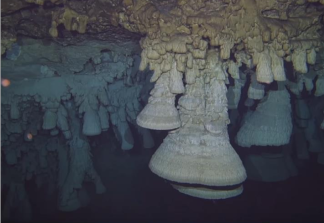
The Hells Bells formations in Cenote El Zapote

Cenote El Zapote (Hells Bells)

Verzakkingtot 51.8 mMexico
Foto: Simon Michael Ritter, Margot Isenbeck-Schröter, Christian Scholz, Frank Keppler, Johannes Gescher, Lukas Klose, Nils Schorndorf, Jerónimo Avilés Olguín, Arturo González-González and Wolfgang Stinnesbe · CC BY 4.0
Toegankelijk voor gekwalificeerde duikers, onder voorwaarden · zoals gepubliceerd 2026-10-14 CREER listed cavern diving as open. Toegangsregels kunnen veranderen: bevestig dit bij de grondeigenaar of beherende instantie voordat je reist.
Gedocumenteerd Ook bekend als: Cenote Zapote, El Zapote, Zapote, Hells Bells, Hell's Bells, Cenote Hells Bells
Diepte van de ingang
Niet gepubliceerd
Veelbeduikte gebieden
Niet gepubliceerd
Maximale diepte hier
51.8 m (170 ft)
Gepubliceerde categorie
Level 4 - Expert

Level 4 - Expert: CREER cenote level (guided cavern diving) [1] [2] (CREER describes Level 4 as beyond Level 3, dark and for experienced divers only; maximum 3 divers per guide.). Deze categorieën komen uit het genoemde systeem zelf; ze beschrijven de opleiding die een locatie vereist.

A deep, stratified sinkhole about 52 m deep, known for bell-shaped calcite formations ('Hells Bells') hanging in and above a turbid layer; CREER rates it Level 4 (Expert).

Cenote El Zapote is a deep sinkhole whose walls carry large bell-shaped calcite formations, nicknamed Hells Bells, that partly extend into a white, cloudy layer in the water. A 2022 study in Geobiology links that turbid layer to a pelagic redoxcline, a boundary where oxygen-poor, sulphide-rich water meets the water above, and argues that microbes there promote calcite precipitation that may help the bells grow.

QRSS lists 'Cenote Zapote (Cenote Hells Bells)' among the deep underwater caves of Quintana Roo at 51.8 m, with 301 m of surveyed length. CREER rates it Level 4 (Expert), its most demanding regular category for guided cavern tours, limited to experienced divers at no more than three per guide. Under the Jungle describes the sinkhole sites on the Ruta de los Cenotes outside Puerto Morelos as advanced.

The Hells Bells are fragile and scientifically important; divers are expected to keep clear of them.

De omgeving

Deep, dark sinkhole with stratified water, a turbid redoxcline layer and hanging calcite bells.

Omstandigheden

Stratified water with a cloudy turbid layer at depth; light is limited. Typical conditions only.

Gebruikelijke ranges uit gepubliceerde bronnen, geen actuele omstandigheden.

Bronnen: [1] CREER (Comité Regional de Espeleobuceo, Ecología y Regulación) ↗[2] CREER ↗[3] Quintana Roo Speleological Survey ↗[4] Geobiology / PubMed record ↗[5] Under the Jungle ↗[6] Under the Jungle ↗ · gecontroleerd 2026-10-14
Elk gegeven op deze pagina, met zijn bron (6)
GegevenStatusBron
QRSS lists Cenote Zapote (Cenote Hells Bells) at a depth of 51.8 m and a surveyed length of 301 m (Bertoni/Harris, 11/2013).Survey figure from 2013. Mogelijk verouderd [3]
Large bell-shaped calcite formations called Hells Bells were found underwater in the stratified cenote El Zapote, together with a white turbid layer that overlaps the pelagic redoxcline; the study proposes microbially induced calcite precipitation as a contributor to their growth.Abstract read via the PubMed record (doi:10.1111/gbi.12492). Geverifieerd [4]
CREER rates Zapote as Level 4 (Expert), with cavern diving listed as open.Identification of CREER's 'Zapote' with the Hells Bells cenote is based on the shared name; QRSS also lists a separate Sistema Zapote-Camilo. Geverifieerd [1] [2]
CREER Level 4 requires the Level 3 requirements plus a previous Level 3 cenote dive and advanced open-water certification, with at most 3 divers per guide. Geverifieerd [2]
Under the Jungle describes the sinkholes of the Ruta de los Cenotes just outside Puerto Morelos as advanced sites that are sinkholes rather than caverns.The sources used do not state El Zapote's exact location, so no area is given. Gemeld [6]
Under the Jungle adds a 50 USD surcharge for Zapote and groups it with sites requiring previous cavern experience and advanced open-water certification.January 2026 price list. Gemeld [5]

Geverifieerd: vermeld door een officiële of primaire bron die we hebben geraadpleegd. Gemeld: alleen afkomstig van een secundaire bron. Bronnen spreken elkaar tegen: de noot geeft beide versies. Mogelijk verouderd: de nieuwste bron die we hebben gevonden is oud.

In eigen woorden geschreven op basis van bovenstaande bronnen. Een correctie melden

Australië, Nieuw-Zeeland & Oost-Azië

Cairns & the Ribbon ReefsNingaloo ReefCoral Sea & Osprey ReefOkinawa & the Kerama IslandsPoor Knights IslandsTownsville & the YongalaGreen IslandIzu Peninsula

Caribisch gebied & westelijke Atlantische Oceaan

BonaireCozumelRiviera Maya & the CenotesBelize Barrier ReefGrand CaymanIsla Mujeres & CancúnRoatánTiger Beach & Grand Bahama

Europa, Atlantische Oceaan & Middellandse Zee

Malta & GozoSilfra & IcelandThe AzoresCanary IslandsLarnaca & the ZenobiaScapa FlowArctic NorwayMadeira

Indische Oceaan & Oost-Afrika

North & South Malé AtollsAri AtollBaa Atoll & Hanifaru BayAliwal Shoal & UmkomaasMafia IslandMauritiusSeychellesSodwana Bay

Pacifische eilanden & Micronesië

PalauChuuk (Truk) LagoonFakaravaKona, HawaiʻiRangiroaTaveuni & Rainbow ReefBeqa Lagoon & Pacific HarbourEspiritu Santo

Rode Zee & Midden-Oosten

Sharm El Sheikh & Ras MohammedBrothers, Daedalus & St John'sDahabHurghada & El GounaMarsa Alam & the Deep SouthAqabaDaymaniyat IslandsMusandam Peninsula

Zuidoost-Azië & Coral Triangle

Bali & Nusa PenidaKomodoRaja AmpatSipadan & MabulAnilaoCoronKoh TaoLembeh Strait

De Amerika's & Oost-Stille Oceaan

Galápagos IslandsCocos IslandFlorida KeysSea of Cortez & Cabo PulmoSocorro & the RevillagigedosBritish ColumbiaCalifornia Channel IslandsCosta Rica Pacific Coast