Plongée en Dominica
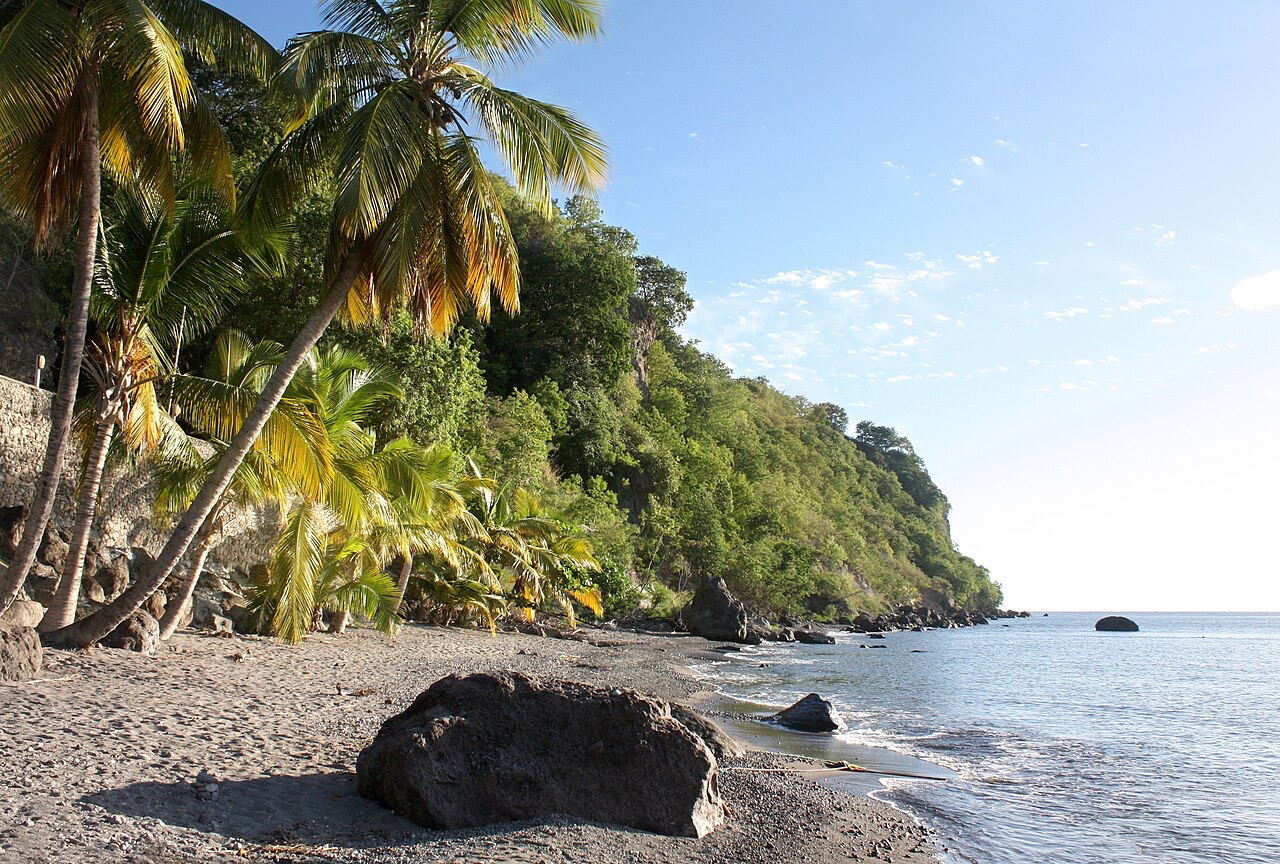
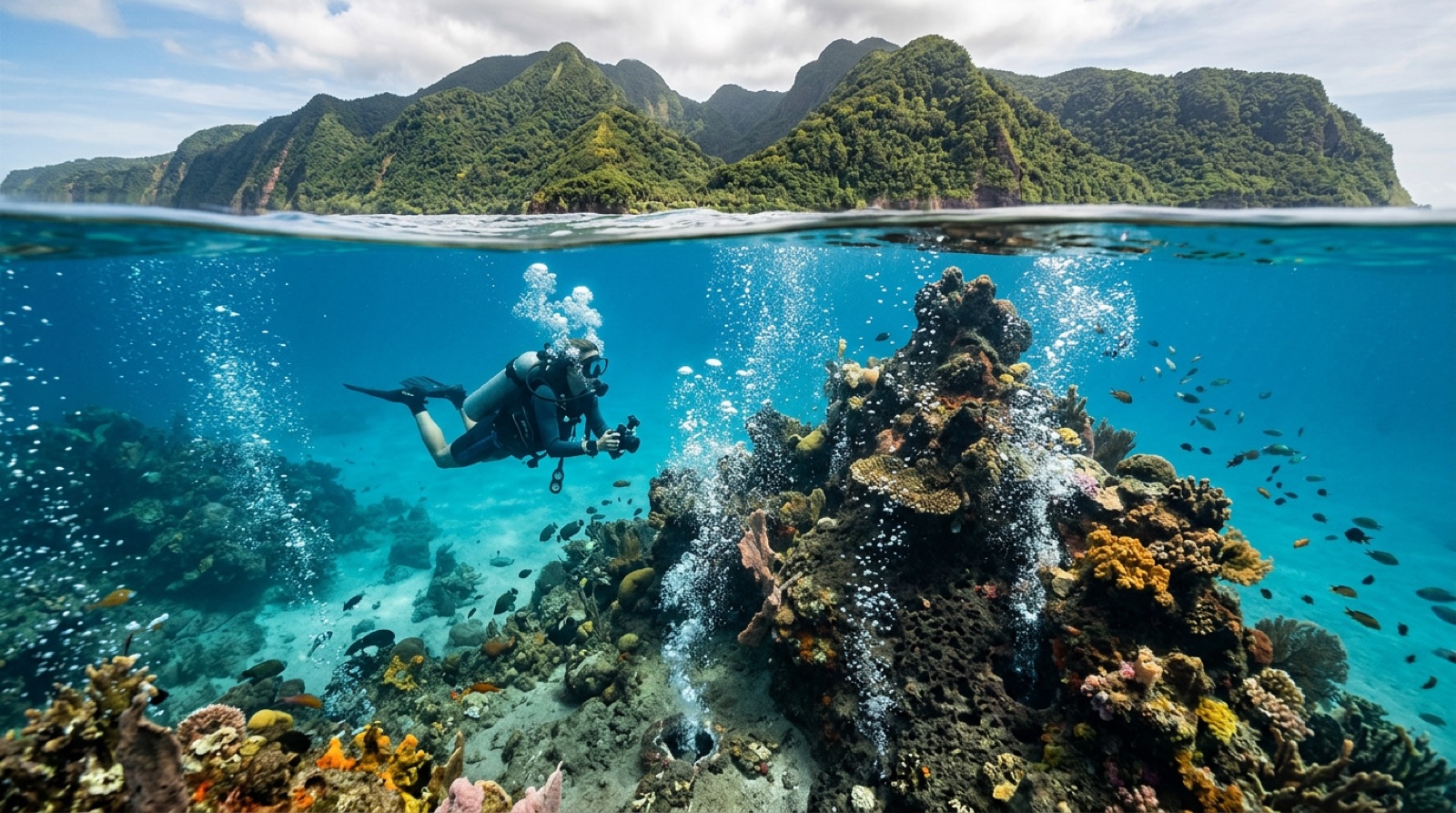
Dominica is the Caribbean without the flattening: a young volcanic island, all rainforest and ridgelines, whose slopes continue straight down underwater. Diving here means volcanic architecture: pinnacles, craters, and walls dropping close to shore, dusted with crinoids, barrel sponges, and black coral rather than broad hard-coral gardens. At Champagne Reef, geothermal vents stream columns of warm bubbles through the shallows, an honest-to-goodness volcanic jacuzzi. The island's calm western lee holds nearly all the sites, many inside marine reserves. Above and beyond the diving, Dominica hosts a resident population of sperm whales, and a tightly permitted industry allows in-water encounters for a lucky few. Nature tourism, not beach tourism, is the island's identity, and divers who like their topside green and vertical fit right in.
Dominica is one destination with two main clusters: the Soufriere-Scotts Head Marine Reserve in the southwest, where the flooded rim of a volcanic crater gives sites like the pinnacles and Champagne's bubble streams, and the central-west coast around Salisbury and the Cabrits in the north, with walls and sloping reefs out of small jetties. Everything dives from short boat runs in the island's lee.
Expériences emblématiques: Swimming through champagne-warm bubble columns at Champagne Reef; the current-brushed pinnacles off Scotts Head; frogfish and seahorse hunting on volcanic sand; permitted sperm-whale encounters in season for those who secure spots; river-and-rainforest days between dives.
Saisons: The drier, calmer window runs roughly November through May, which also matches the most reliable sperm-whale season. Summer and early autumn are greener and wetter, with hurricane risk peaking August through October; the lee coast often remains divable when weather allows.
Les destinations
Sites de plongée incontournables
| Site | Destination | Type | Profondeur | Niveau |
|---|---|---|---|---|
| Champagne Reef | Dominica | Reef | 3–15 m | Beginner |
| Dangleben's Pinnacles | Dominica | Pinnacle | 9–35 m | Intermediate |
| L'Abym | Dominica | Wall | 10–40 m | Advanced |
| Scott's Head Pinnacle | Dominica | Pinnacle | 3–35 m | Intermediate |
| Toucari Caves | Dominica | Cave | 4–18 m | Beginner |
Chaque site répertorié en Dominica →
Vie marine
Le dossier pratique
Comment s'y rendre: Douglas-Charles (DOM) connects through regional hubs like Antigua, Barbados, St. Lucia, and Sint Maarten; there are also ferry links with the neighboring French islands. Airport-to-southwest transfers cross the island's mountainous spine, so plan an hour or more by road.
Entrée & visas: Many nationalities, including US, Canadian, UK, and EU citizens, typically enter visa-free for short tourist stays. Verify current requirements before travel.
Le coût de la plongée: Two-tank boat dives typically run about USD 100-140; whale-encounter permits and trips are a separate, limited, and much pricier product. Marine reserve fees apply in the Soufriere area.
Langue: English is official, with a French-based Kwéyòl widely spoken; dive operations run in English.
Pourboires: Tipping 10-15 percent is customary where a service charge is not already added; guides and boat crews appreciate tips at trip's end.
Sécurité en voyage: Dominica is safe and friendly, with petty theft uncommon and violent crime rare. The real risks are natural: hurricanes have hit hard, as Maria did in 2017, mountain roads are slow and slick, and river canyons flash-flood in rain. Boat rides are short but the lee can still chop up in wind; heed operator calls on marginal days.
Couverture caisson hyperbare: Dominica has no recompression chamber; injured divers are evacuated, typically toward facilities on nearby French islands or elsewhere in the region. Availability changes; dive conservatively and coordinate any emergency through local EMS, your operator, and DAN.