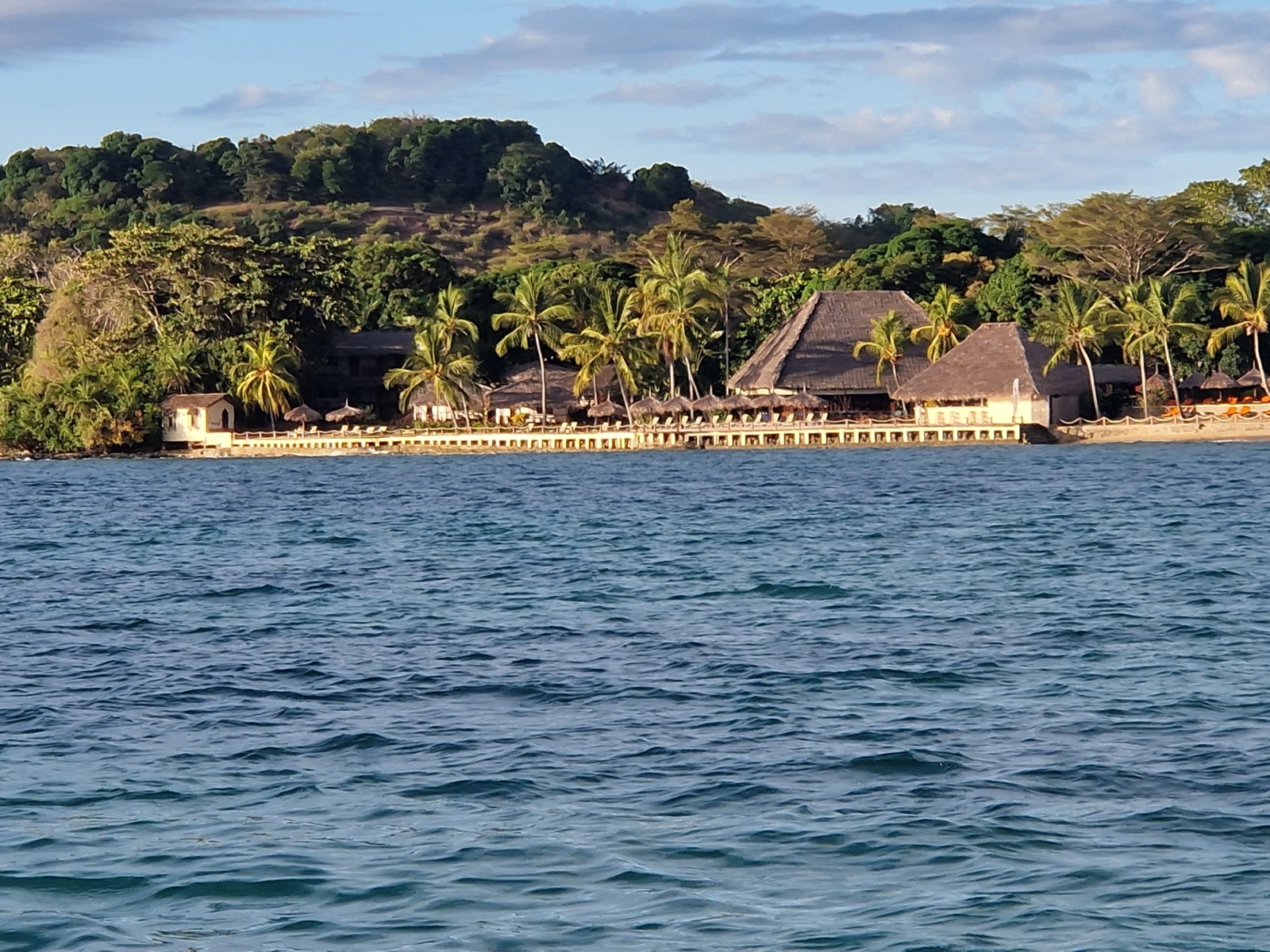
Dalış yapılan yer Madagascar
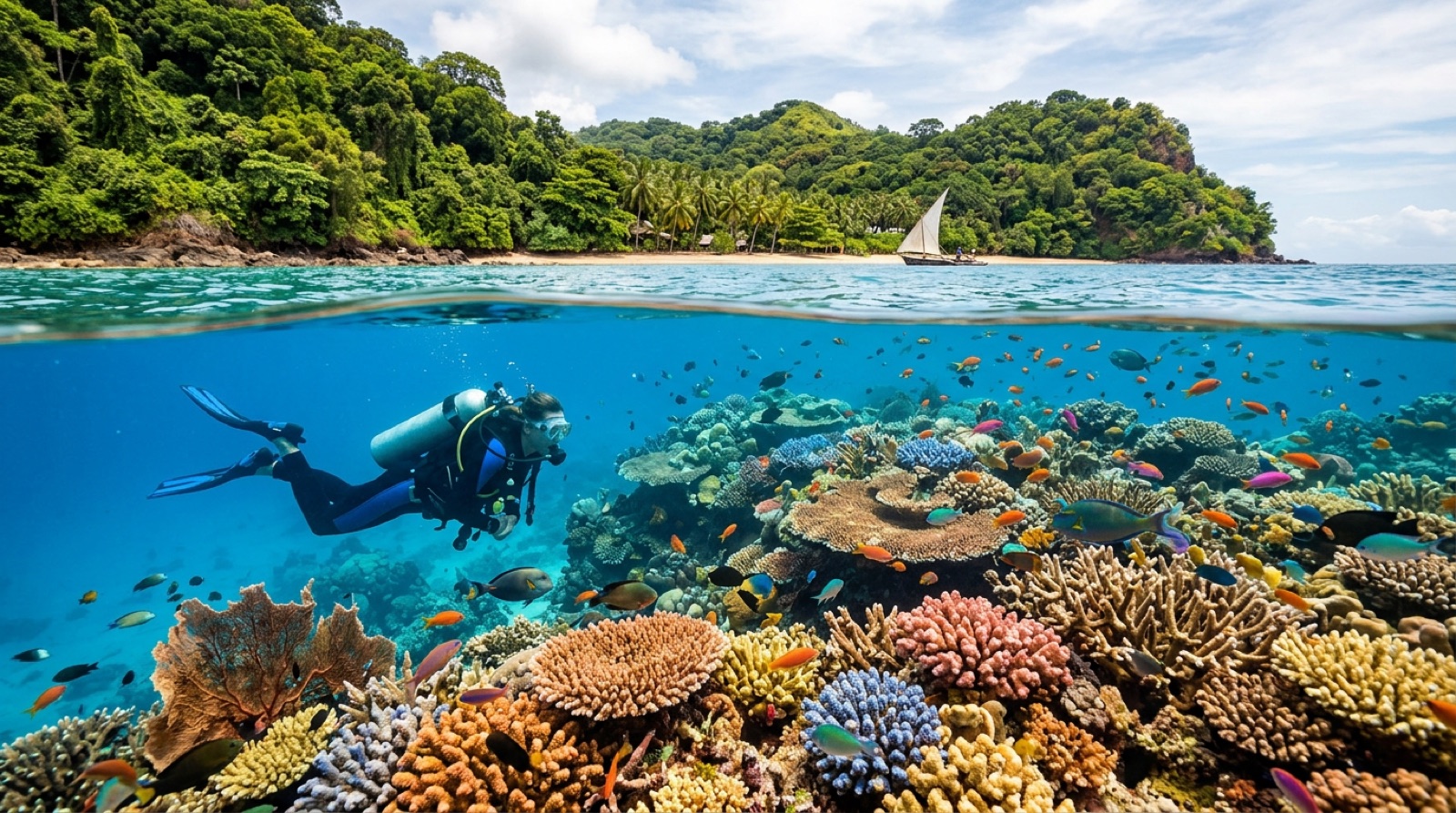
Madagascar applies its famous endemism to the sea more quietly than to its forests, but the northwest corner around Nosy Be has become the country's dive hub for solid reasons. The Mozambique Channel funnels big visitors past the island's satellite reefs: whale sharks aggregate in the warm months of the austral spring, humpback whales fill the channel from midwinter, and mantas and turtles work the outer banks. Reef diving around the Mitsio and Radama archipelagos mixes granite and coral topography with healthy fish life and very few other boats. Infrastructure is thinner than in mainstream destinations, and travel days are part of the price, but that same friction keeps sites uncrowded. Divers who accept the logistics get an Indian Ocean frontier feel with genuinely reliable megafauna seasons.
Nosy Be is the registry destination and the operational base: day boats work the fringing reefs and nearby islands like Nosy Tanikely's protected snorkel-friendly reef, while longer runs and mini-liveaboards reach the Mitsio archipelago to the north and the Radama group to the south, and seasonal blue-water trips chase whale sharks and mobulas off the outer banks.
Öne çıkan deneyimler: Whale-shark snorkel-and-dive days at the spring aggregation; humpback encounters and whale song from July into October; manta traffic on the outer seamounts; turtle-thick shallows at Nosy Tanikely; remote Mitsio pinnacles with barely another boat in sight.
Sezonlar: The dry season runs roughly April through December, and the standout window is late in it: September through December pairs calm seas with the whale-shark aggregation, after a July-to-September humpback overlap. January through March is cyclone season, when many operations wind down. Verify each operator's seasonal schedule.
Destinasyonlar
Öne çıkan dalış noktaları
| Nokta | Destinasyon | Tür | Derinlik | Seviye |
|---|---|---|---|---|
| Manta Point (Nosy Be) | Nosy Be | Reef | — | Intermediate |
| Nosy Be Whale Shark Grounds | Nosy Be | Blue water | 0–10 m | Beginner |
| Nosy Tanikely | Nosy Be | Reef | 2–18 m | Beginner |
| Sakatia Turtle Grounds | Nosy Be | Shore | 1–8 m | Beginner |
Tüm haritalanmış noktalar: Madagascar →
Pratik dosya
Oraya ulaşmak: International routes reach Antananarivo (TNR), with onward domestic flights to Nosy Be (NOS); some regional and seasonal international services fly into Nosy Be directly via Indian Ocean and African hubs. Boats and road-and-ferry transfers cover the last legs; schedules deserve generous buffers.
Giriş & vizeler: Most visitors obtain a tourist visa on arrival or an e-visa in advance. Verify current requirements and fees before travel, as procedures change.
Dalışın maliyeti: Two-tank boat dives typically run about USD 80-120, with whale-shark and safari trips priced above that; getting to Nosy Be is usually the largest cost in the trip.
Dil: Malagasy and French are the working languages; English is common in dive operations at Nosy Be but sparse elsewhere.
Bahşiş: Tipping is modest but meaningful; small notes for guides, crews, and hotel staff are appreciated, with an end-of-week tip customary for dive teams.
Seyahat güvenliği: Nosy Be's tourist areas are relaxed, but petty theft occurs, and mainland urban areas call for more care; Madagascar also went through significant political upheaval in late 2025, so check current advisories and allow for schedule disruption. Malaria prophylaxis is worth discussing with a travel-medicine physician, roads are slow, and cyclone season is real. Medical facilities are basic, making evacuation insurance important.
Recompresyon güvencesi: There is no dependable recompression option near Nosy Be; serious cases face evacuation, commonly toward well-equipped facilities on Réunion or the African mainland. Dive conservatively, and route any incident through your operator, local services, and DAN.