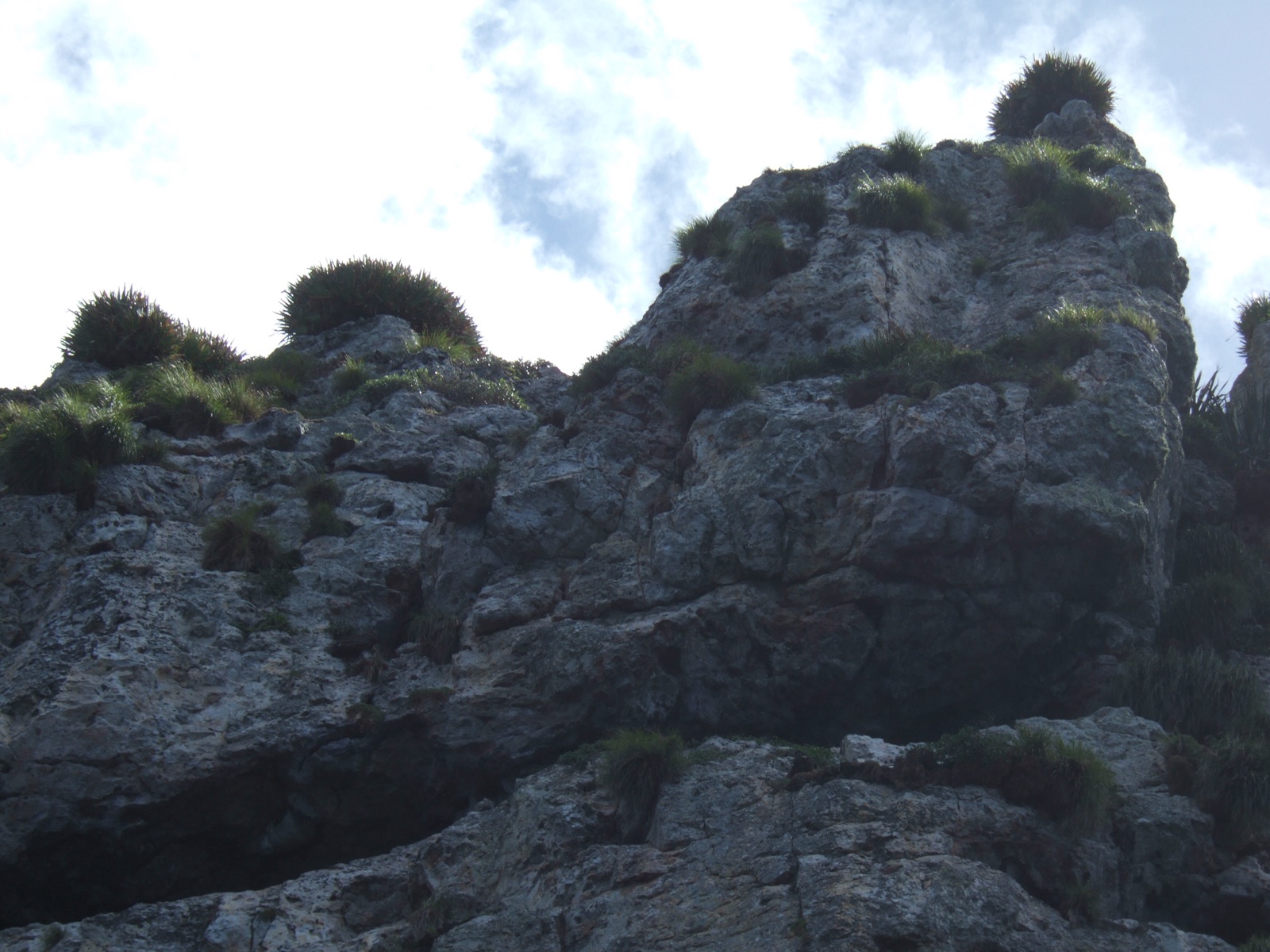
Дайвинг в New Zealand
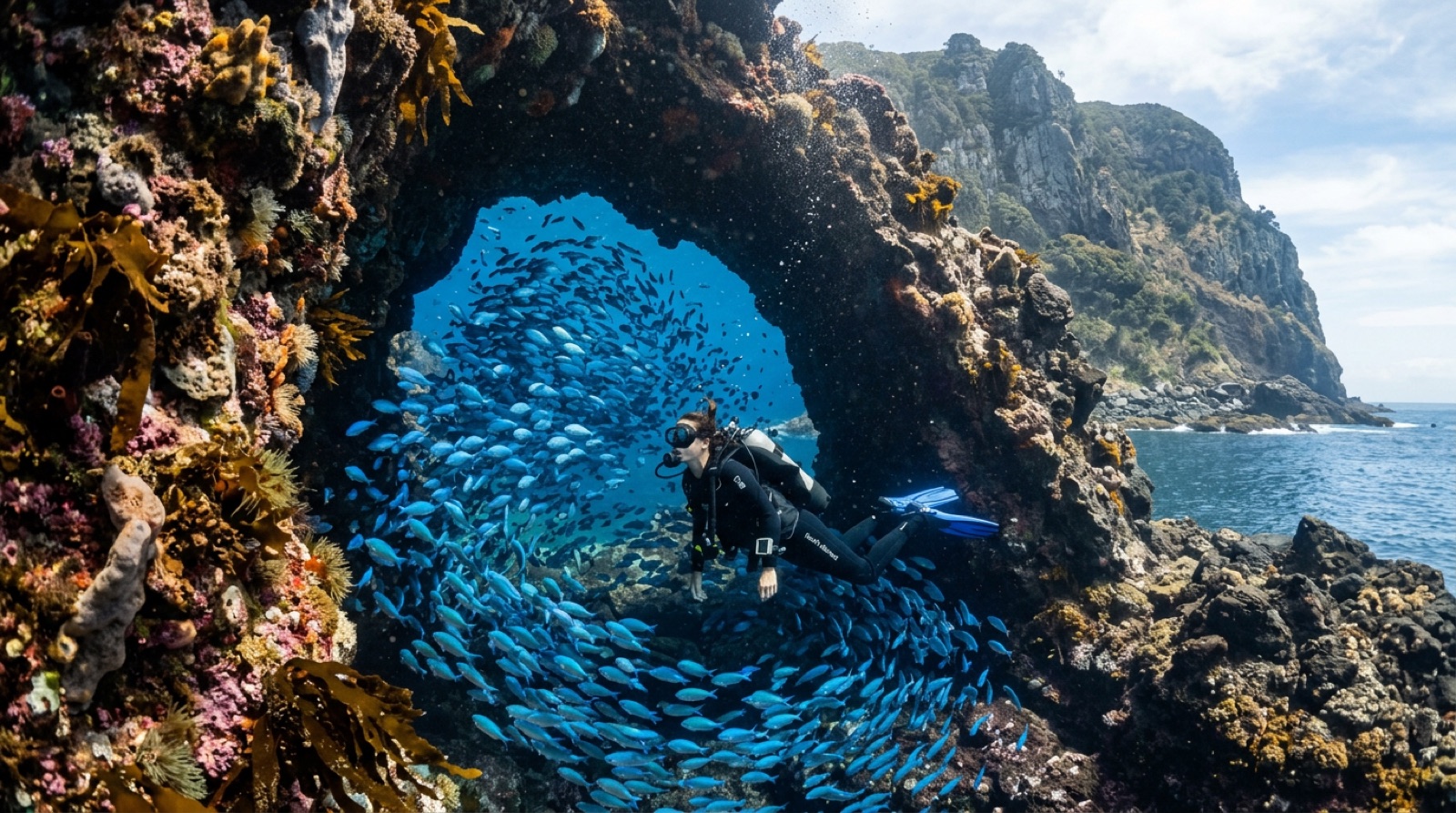
New Zealand offers temperate diving of unusual color and drama, and the Poor Knights Islands are the reason most traveling divers come. A subtropical current bathes these volcanic islets off Northland, so kelp forests and anemone-crusted archways share water with stingrays, schooling kingfish, and the odd tropical stray carried down on the East Auckland Current. Visibility stretches longest in late summer and autumn, when blue oceanic water pushes inshore. Expect a thick wetsuit or drysuit, professional boats running from Tutukaka, and decades of marine-reserve protection that have left fish genuinely unafraid of divers. The wider country adds wrecks, fiords, and seal colonies for those with time. This is diving that rewards a break from warm-water habit: caves, tunnels, nudibranchs in absurd variety, and seasons that change the sea's entire character.
The registry's focus is the Poor Knights Islands, a marine reserve roughly 20 km off the Tutukaka coast north of Auckland. Day boats cross in under an hour to dive walls, arches, and caverns such as the vast Rikoriko sea cave. Everything is boat diving; landing on the islands themselves is prohibited. Most visitors base in Tutukaka or Whangārei and dive two tanks a day.
Фирменные впечатления: Drifting through an archway at the Poor Knights while short-tailed stingrays stack in the current; hanging in Rikoriko Cave's half-light; fish balls of blue maomao so dense they dim the surface; late-season blue water when pelagics cruise the walls; and topside, the Northland coast's beaches and vineyards between dive days.
Сезоны: Diving runs year-round, but January through May brings the warmest water and the best chance of clear oceanic blue water at the Poor Knights. Winter (June-September) is colder and rougher yet often uncrowded, with good visibility windows between fronts.
Направления
Выдающиеся места для дайвинга
| Место | Направление | Тип | Глубина | Уровень |
|---|---|---|---|---|
| Blue Maomao Arch | Poor Knights Islands | Reef | 3–15 m | Beginner |
| Middle Arch | Poor Knights Islands | Reef | 5–24 m | Beginner |
| Northern Arch | Poor Knights Islands | Wall | 8–40 m | Advanced |
| Rainbow Warrior | Poor Knights Islands | Wreck | 14–28 m | Intermediate |
| Rikoriko Cave | Poor Knights Islands | Cave | 5–22 m | Intermediate |
Все нанесённые на карту сайты в New Zealand →
Морская жизнь
Рэки
Практическая документация
Как добраться: Fly into Auckland (AKL), New Zealand's main international gateway, then drive about 2.5-3 hours north to Tutukaka, or connect to Whangārei by regional flight. Rental cars are the practical option for the Northland coast.
Въезд и визы: Many nationalities enter visa-free but must obtain an NZeTA electronic travel authority before arrival, and a visitor levy applies; verify current requirements with New Zealand immigration before booking.
Сколько стоит дайвинг: Expect roughly US$150-220 for a two-tank charter to the Poor Knights including gear extra; New Zealand travel costs overall sit at developed-world levels, with mid-range lodging and food priced similarly to Australia.
Язык: English is universal; te reo Māori is also an official language and appears in place names you will hear daily.
Чаевые: Tipping is not customary in New Zealand and is never expected; exceptional service can be acknowledged with a small tip but no one will look for it.
Безопасность в путешествии: New Zealand is among the safest countries a diver can visit. The practical risks are the diving environment itself: cool water, exposed offshore crossings in changeable weather, and surge around the arches. Sandflies and strong summer sun are the topside complaints.
Покрытие декомпрессионного лечения: Hyperbaric medicine units operate at major hospitals, including Auckland and Christchurch. Availability and referral pathways change, so emergencies go through 111 and DAN, who will direct evacuation to the appropriate facility.